

Italian islands are not all created equal. Some are about barefoot beach days and quiet coves, others about late night spritzes, luxury resorts or car free simplicity. Choosing the right base can make or break your trip, especially if you are balancing different needs for couples, families or groups of friends. This guide compares Sicily, Sardinia, Capri, Ischia, Elba and a few smaller islands so you can match each destination to the holiday you actually want.
Sicily: Big Island Energy for Beaches, Culture and Nightlife
Sicily is the largest island in the Mediterranean, so where you stay matters far more than on a tiny isle. For first timers who want a mix of beaches, atmosphere and easy day trips, Cefalù on the north coast is one of the most practical bases. The medieval old town is pressed up against a sandy bay, with small hotels and guesthouses that are often better value than mainland Italy in high season. In July and August, expect mid range seafront rooms to start from roughly 160 to 220 euros per night, with family run B&Bs slightly inland from the promenade bringing prices down.
On the east coast, Taormina is Sicily’s most famous resort and scores high for couples who want views and nightlife as much as beaches. The town itself is perched on a hill, so you ride a cable car down to Mazzarò and Isola Bella coves for swimming, then come back up for rooftop cocktails and late dinners along Corso Umberto. Taormina’s popularity means prices are higher, and many of the most desirable hotels are boutique properties with fewer rooms. Booking several months ahead is wise if you plan to visit between late June and early September.
If beaches are your focus and you are flying into Palermo, San Vito Lo Capo has some of Sicily’s most striking Caribbean like sands, backed by limestone cliffs and turquoise water. The town is compact, so you can walk from most B&Bs to the shore in under 10 minutes, which suits families and visitors without a car. The trade off is that nightlife is relaxed rather than wild, more gelato strolls and casual bars than clubs open until sunrise. For a combination of beach and urban buzz, consider staying in Palermo itself but near the Mondello district, where locals escape to a crescent of pale sand that you can reach by bus or taxi.
Travelers looking for quieter holidays or a car free feel on Sicily should consider the satellite islands nearby rather than the main island itself. Ferries from Milazzo connect you to the Aeolian Islands, where Lipari offers the broadest choice of hotels, simple apartments and rooms to rent within walking distance of the port and waterfront. Smaller islands like Salina and Stromboli feel distinctly slower, and while you can bring cars on certain ferries, most visitors walk or rent small scooters, which keeps the atmosphere close to car free without the strict bans you find on tinier Italian islands.
Sardinia: Turquoise Bays, Family Resorts and Wild South Coast
Sardinia is the obvious candidate if your priority is long beaches and clear, shallow water. In the northeast, the Costa Smeralda has built its name on five star resorts and designer boutiques, particularly around Porto Cervo and Porto Rotondo. This area works best for travelers seeking polished marinas, high end beach clubs, luxury villas and hotel suites that can easily run 500 euros or more per night in peak summer. It is less ideal if you are hoping for an affordable, low key stay with local character.
Families and couples who want the same sea color with a more relaxed vibe often head to the Gulf of Orosei or the southeast. Towns like Villasimius or Costa Rei offer a spread of self catering apartments, family friendly hotels with pools and a few upscale options. Many properties sit a short walk or quick shuttle ride from wide sandy strands where you can rent sunbeds by the day or simply lay a towel in the free sections. In late June, you can still find simple rooms under 150 euros per night, though prices climb steadily into August.
The island’s south and southwest, around Pula, Chia and Teulada, suit those who prefer quieter holidays and hire cars. Here, beaches are strung out along a wild coastline of dunes and headlands, with only clusters of small hotels and agriturismo stays inland. You might drive 10 to 20 minutes each morning to reach a different cove, then return to your base for dinner under the vines at a country restaurant. Nightlife is limited to low key bars and occasional beach parties, so this is not the place for clubbing but excels for sunset walks and stargazing.
For a semi car free experience within Sardinia, consider basing yourself in La Maddalena town in the archipelago of the same name. You reach it by short car ferry from Palau, then many visitors leave the car parked for most of their stay. The compact historic center is easy to walk, and daily boat excursions carry you to uninhabited islets with pale sand and shallow blue water. Accommodation leans toward modest hotels and apartments rather than large resorts, which keeps the atmosphere informal and appealing to couples and small groups.
Capri: Glamour, Luxury and Car Free Lanes
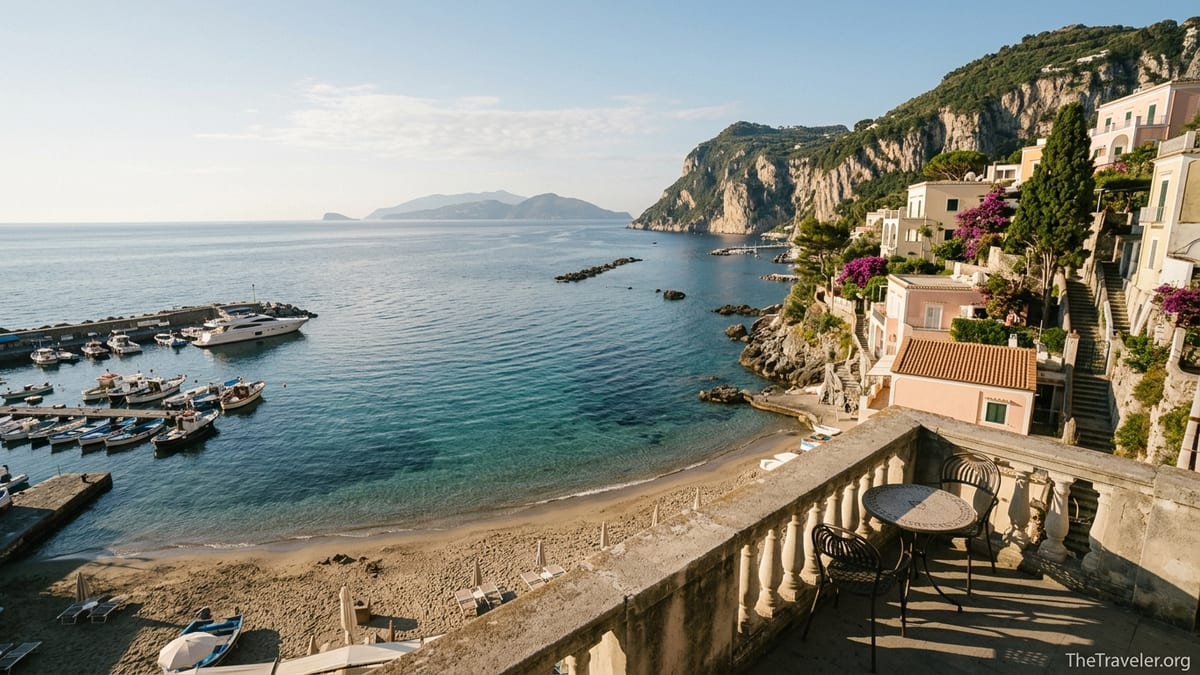
Capri is compact, upscale and entirely car free for visitors, which makes it a strong choice for couples and travelers who want to avoid driving altogether. The island has two main bases. Capri Town, around the famous Piazzetta and Via Camerelle shopping streets, is where you will find the highest concentration of designer boutiques, buzzy terrace bars and landmark hotels. Expect prices for well located four and five star properties to be among the highest in coastal Italy in summer, reflecting Capri’s status as a long standing luxury destination.
For a quieter feel without sacrificing comfort, Anacapri on the higher, western side of the island is the better base. Here, hotels and guesthouses are threaded through narrow whitewashed lanes, with many properties offering views toward the Bay of Naples or over terraced gardens. Top end stays range from classic five star hotels with art filled lobbies and destination spas to intimate design guesthouses set in converted historic buildings. Because Anacapri is less dense than Capri Town, it often feels more residential and relaxed in the evenings, even in peak months.
Capri suits travelers who value service and atmosphere more than square footage. Many hotels have relatively few rooms, and the star attractions are often shared spaces like sea facing pools, shaded lemon gardens and rooftop bars overlooking the Faraglioni rock formations. Beach clubs are typically reached by shuttle or by descending stone steps carved into cliffs, and you will usually pay a day rate for loungers and umbrellas. For a car free trip, the combination of island wide bus routes, funicular and boats means you can comfortably spend several days here without missing a vehicle.
Nightlife on Capri is sophisticated rather than chaotic. Capri Town has late opening bars and a handful of intimate clubs where people dress up and dance until the early hours, but anything resembling a large scale beach party is rare. If your focus is more on long dinners, people watching and early morning swims than on budget conscious bar hopping, Capri is likely to suit you. For younger groups on tighter budgets, the same money may stretch further on Ischia, Elba or larger islands where mid range hotels and apartments are more plentiful.
Ischia: Spa Island for Slower Stays and Car Free Corners
Ischia, in the Bay of Naples, is much larger than Capri and offers a broader range of prices and personalities. Ischia Porto and neighboring Ischia Ponte form the main arrival hub, with ferries docking near a compact town center. Staying here works well if you are traveling without a car, since buses radiate across the island from the port and you have plenty of restaurants, cafes and small hotels within walking distance. The waterfront promenade and views to the Aragonese Castle add atmosphere for evening strolls.
On the west coast, Forio is another strong base, especially for families or visitors planning a week or more. The town has both a historic center and long sandy stretches like Chiaia beach nearby, with a mix of mid range hotels, simple B&Bs and self catering apartments. Many places are within a 10 to 15 minute walk of the sea and offer access to pools or small wellness areas fed by thermal waters. From Forio you can reach famous thermal parks by taxi or bus, spending full days moving between hot and cold pools and shaded gardens.
For a true car free resort feel, Sant’Angelo in the south stands out. The village itself is pedestrian only, with luggage often transported by small electric carts from the nearest parking area. Hotels and guesthouses spill down a steep hillside to a natural bay, and several properties have direct access to thermal beaches where hot springs meet the sea. This area is particularly appealing for couples who want a self contained base with a handful of good restaurants, boutique shops and boat trips, all reachable on foot.
Compared with Capri, Ischia is usually more affordable and lends itself well to longer stays. You will find everything from budget friendly pensions and family run three star hotels to larger spa resorts that appeal to older travelers and wellness focused guests. Nightlife is low key across the island, more about live music at beach bars and hotel lounges than late night clubs, which makes Ischia better suited to relaxed evenings than party centered trips.
Elba: Understated Beaches and Laid Back Family Time
Elba, off the coast of Tuscany, is a favorite with Italian families and European visitors who want a softer, less showy alternative to Capri or Sardinia. The island is hilly but manageable, with a patchwork of small beaches, coves and pine backed bays. Portoferraio, the main port town, makes a practical base for first time visitors, offering a range of mid range hotels and apartments within walking distance of the harbor and nearby beaches. From here, local buses and small ferries connect you to neighboring bays without needing a car every day.
On Elba’s south coast, towns like Marina di Campo are especially popular with families thanks to their long, shallow beaches and promenade lined with gelaterias and casual restaurants. Many accommodations here are simple apartment complexes or small hotels with gardens, where children can play safely away from traffic. Prices are often more moderate than on higher profile islands, particularly in June and September, which appeals to travelers who can avoid the school holiday peak in August.
Elba is not known for high end nightlife or ultra luxury resorts. While you can find a few four star beach hotels and some stylish boutique properties, the overall mood is informal and practical rather than glamorous. This makes it ideal for travelers who prefer evening walks along the harbor, simple seafood dinners and early nights before another day of swimming and coastal walks. Boat rental is common, so even without your own car you can use small motorboats or organized excursions to reach coves that are otherwise accessible only by footpaths.
For those seeking quieter corners, the island’s western side and interior villages offer a slower rhythm. Small agriturismo stays and B&Bs are scattered among vineyards and chestnut woods, often within a 10 to 20 minute drive of the sea. Staying inland usually means lower prices and a sense of living among locals, with the option to choose a different beach each day. Because driving on Elba involves winding, occasionally narrow roads, it rewards unhurried itineraries rather than rushed sightseeing.
Smaller Italian Islands: True Car Free Escapes and Hidden Luxury
Beyond the big names, Italy has a constellation of smaller islands that are ideal for car free and low key holidays. Ponza, in the Tyrrhenian Sea between Rome and Naples, is one such example. The main village wraps around a colorful harbor, and almost all visitors get around on foot, by small bus or by hiring boats. Accommodation tends to be in family run pensions and apartments, though you can also find stylish B&Bs carved into old houses on the hillside. Days revolve around boat trips to rock formations and coves, returning to the harbor in time for aperitivo.
In Sicily’s Aeolian Islands, car free Panarea and largely car free Stromboli appeal to younger crowds and couples who like a touch of adventure. Panarea is small enough that you walk everywhere along narrow paths bordered by whitewashed villas and bougainvillea, with a handful of chic hotels and bars that stay lively in July and August. Stromboli adds black sand beaches and the constant presence of its active volcano, with night hikes and boat tours to see lava glowing above the sea. Both islands are best for travelers comfortable with a simple infrastructure and higher prices for a small selection of rooms.
In the south, the Aegadian Islands off western Sicily remain relatively low key. Favignana is the largest and has a small grid of streets around the port, with bikes and scooters the preferred way to get around. Many visitors stay in renovated farmhouses or modest hotels set back from the coast, then cycle to coves like Cala Rossa or Lido Burrone during the day. Nightlife revolves around piazza bars and summer events rather than clubs, and the mood stays family friendly even in peak periods.
If your priority is privacy and boutique luxury rather than a broad choice of restaurants or shops, consider lesser known tiny islands with one or two stand out accommodations. Some small private islets and converted lighthouses in Italy operate as high end retreats with limited room numbers, where guests arrive by private boat transfer and spend days rotating between small beaches, terraces and spa facilities. These stays are usually priced well above conventional island hotels and must be booked far ahead, but they deliver a very concentrated, low traffic experience.
Choosing the Right Island for Your Style of Trip
When deciding where to stay among Italy’s islands, begin with your priorities rather than the island’s reputation. For pure beach holidays with children, Sardinia’s long sandy stretches, Ischia’s family friendly towns like Forio and Elba’s shallow bays are often more practical than steeper, rockier islands. If you are a couple seeking drama and glamour, Capri, Taormina in Sicily or the Costa Smeralda around Porto Cervo are stronger candidates, accepting that your budget will need to stretch further and that advance bookings are essential.
For travelers who want culture layered onto sea views, Sicily stands out. Basing yourself in Cefalù or near Palermo’s Mondello beach lets you combine swims with day trips to historic sites, while staying near Taormina gives you access to the ancient Greek theater and Etna excursions. Ischia and Elba offer lighter doses of history and local life paired with a slower pace, suitable for trips where rest is just as important as sightseeing. Smaller islands like Ponza, Panarea or Favignana, meanwhile, are best treated as two to four night add ons to a broader itinerary, since their compact size and limited infrastructure can feel restrictive on longer stays.
Car free travel is easiest on Capri, Panarea, Ponza and in pockets of Ischia such as Sant’Angelo, where walking and boats are the norm. On larger islands like Sicily and Sardinia, staying completely without a car usually works only if you choose well connected resort towns or are happy to rely on transfers and occasional taxis. If you are comfortable driving on narrow, occasionally busy coastal roads, hiring a car opens up quieter beaches, inland villages and agriturismo stays in all regions.
Budget is the final major filter. Luxury focused areas such as Capri Town, Costa Smeralda and Taormina can absorb several hundred euros per night even for standard rooms in high season. By contrast, towns like Cefalù, Forio, Marina di Campo or Favignana often provide solid mid range options, especially if you book outside August or are willing to stay a few streets back from the waterfront. For truly tight budgets, mixing a few nights on a showpiece island with more time on the mainland coast or in inland towns can balance costs without sacrificing the magic of Italy’s seas.
FAQ
Q1. Which Italian island is best for a car free holiday?
Capri is the most straightforward fully car free choice for visitors, with good public transport and walking paths. Smaller islands like Panarea, Ponza and Sant’Angelo on Ischia also work very well if you are happy to rely on boats, local buses and taxis for any longer transfers.
Q2. Where should families with young children stay for easy beaches?
Families often do best on Sardinia’s southeast coast around Villasimius or Costa Rei, in Forio on Ischia or in Marina di Campo on Elba. These areas have gently shelving sandy beaches, a choice of family friendly hotels and apartments, and promenades where children can walk or cycle safely in the evenings.
Q3. Which island is best for couples seeking luxury and romance?
Capri, especially Capri Town for glamour and Anacapri for quieter luxury, is a classic choice. Taormina in Sicily and the Costa Smeralda in Sardinia also offer high end hotels with sea views, stylish restaurants and tailored services that appeal to honeymooners and couples marking special occasions.
Q4. Are there Italian islands with good nightlife as well as beaches?
For a mix of bars, restaurants and beach time, Taormina and Cefalù in Sicily or Capri Town on Capri offer the liveliest scenes. Sardinia’s Costa Smeralda has seasonal clubs and beach parties in summer, though these tend to be high priced. Smaller islands generally lean toward relaxed piazza bars rather than full scale nightlife.
Q5. Which islands are most budget friendly for accommodation?
Ischia and Elba usually offer more mid range and budget options than Capri or the Costa Smeralda. In Sicily, towns like Cefalù, San Vito Lo Capo and some of the Aeolian Islands have simple B&Bs and apartments that can be affordable outside August. Booking shoulder season dates in June or September keeps prices lower almost everywhere.
Q6. Do I need a car on Sardinia or Sicily to enjoy the beaches?
A car is very helpful on both Sardinia and Sicily if you want to explore multiple beaches and quieter coves. However, you can manage without one by choosing towns with good local transport, such as Cefalù, Taormina’s coastal districts, Villasimius or areas served by beach shuttles. Be prepared to rely more on walking, buses and organized excursions in that case.
Q7. Where can I find true peace and quiet away from crowds?
For quieter holidays, look at Sant’Angelo on Ischia, inland agriturismo stays on Sardinia’s south coast, Elba’s western villages or smaller islands like Favignana and Salina. Avoid weekends in August, when even laid back places can feel busy, and consider visiting in June or late September for a calmer atmosphere.
Q8. Which island is best if I want spas and thermal baths?
Ischia is the standout spa island, with numerous thermal parks and hotels built around natural hot springs. Many properties have extensive pools and wellness areas, making it easy to combine beach time with spa days. Certain hotels on the mainland near the Bay of Naples also offer thermal facilities, but Ischia has the broadest selection.
Q9. How far in advance should I book accommodation on popular islands?
For stays in July and August on Capri, Sardinia’s Costa Smeralda or Taormina, aim to book three to six months in advance for the best choice. On Ischia, Elba and in smaller Sicilian towns you can often find rooms closer to your dates, but booking earlier still helps if you want specific properties or sea view rooms.
Q10. Can I combine several islands in one trip?
Yes, but it is wise to limit yourself to one main base and one or two smaller islands per trip to avoid losing time to ferry transfers. Common combinations include Capri with Ischia, Sicily with the Aeolian or Aegadian Islands, or a Sardinia stay paired with a few nights in the La Maddalena archipelago. Planning your route around ferry timetables will keep the experience smoother.