


Picking the right Italian island for a family holiday is not just about finding clear water and pretty coves. With children in tow you also need short transfers, sandy beaches with shallow entry, easy meals, convenient accommodation and, ideally, a destination where renting a car and getting around does not turn into a full-time job. The good news is that several Italian islands tick most of these boxes, each with a slightly different personality and price point.
How to choose the right Italian island for your family
When families talk about “the best island in Italy,” they usually mean a place where the logistics are simple. That often starts on the mainland. At Elba, for example, ferries from Piombino take about one hour, and crossings are frequent in summer, which keeps waiting times manageable even with small children and luggage. Sardinia and Sicily have multiple international airports, including Cagliari and Olbia in Sardinia and Catania and Palermo in Sicily, with seasonal direct flights from many European cities, so you can often avoid a change in Rome or Milan.
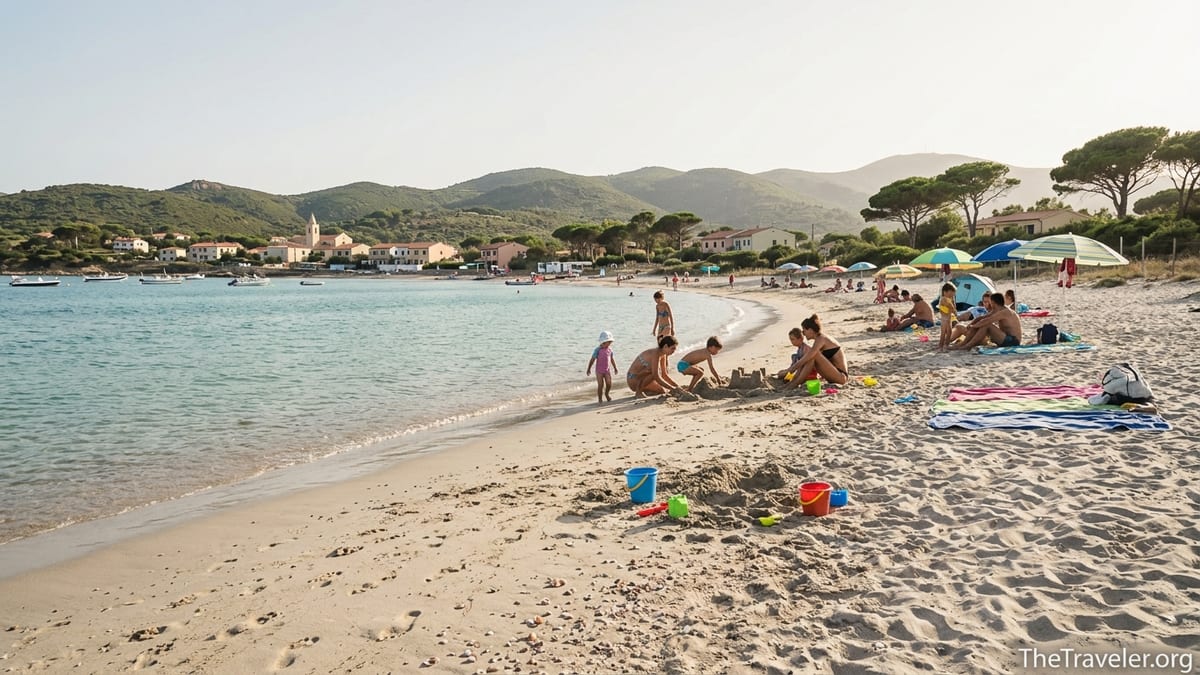
Beach type is just as important. Young children are usually happier on long, sandy beaches with shallow water rather than picturesque but pebbly coves. On Elba, Marina di Campo, Lacona and Fetovaia offer broad sandy bays with gentle entry, while in Sicily, San Vito Lo Capo and Giardini Naxos stand out for wide, family-friendly strands. In Sardinia, stretches such as Pittulongu and Porto Istana near Olbia are frequently mentioned by families for powdery sand and calm, shallow water.
You will also want to think about whether you prefer a self-contained resort or a local-town experience. Larger resorts, such as those lining Sardinia’s north-east coast, often include kids’ clubs, on-site pools, pizzerias and beach clubs, so you can go days without using a car. In contrast, on Elba or Ischia you might stay in a smaller family-run hotel or apartment and walk into town for gelato, playgrounds and supermarkets, which can feel more authentic but relies slightly more on local services.
Finally, consider how much driving you are willing to do. Sicily and Sardinia are big: two of the largest islands in the Mediterranean. Crossing them can take four to six hours by car, so they reward a week or more and a willingness to move around. Elba and Ischia, by contrast, can be crossed in under an hour, making them excellent choices if you want to settle in one base and explore short distances on day trips.
Sardinia: Caribbean colors with modern family resorts
For many families Sardinia is the first Italian island that comes to mind, largely because of its combination of short flights, modern infrastructure and beaches that look almost tropical. The north-east around Olbia and the famed Costa Smeralda is particularly convenient. Olbia airport sits within a 15- to 30-minute drive of beaches such as Pittulongu, Porto Istana and Marinella, where you will find long sandy bays, shallow turquoise water and plenty of beach clubs that rent umbrellas and loungers by the day. Families often report paying a modest daily fee for a set, which usually includes showers and a changing cabin.
Accommodation here ranges from large branded resorts with kids’ clubs and multiple pools to smaller family hotels and serviced apartments. Many resorts around San Teodoro, Budoni and Golfo Aranci cater specifically to families, providing supervised children’s activities, splash pools, playgrounds and on-site pizzerias where you can eat early and casually. Expect a mix of Italian and international guests in July and August, with a slightly calmer scene in June and September when sea temperatures are already pleasant but prices and crowds tend to ease.
On the south and east coasts, areas around Villasimius, Costa Rei and Orosei also work well for families wanting a slightly quieter feel. These stretches are known for long sandy arcs backed by pine forests or low dunes, and many hotels sit a short walk from the beach, which saves repeated packing and repacking of the car. Renting a car in Sardinia is extremely common and is the easiest way to reach the more scenic coves that sit outside the main towns. Major rental brands operate at Cagliari and Olbia airports, though in high season it is worth booking well in advance and checking for child-seat availability.
In terms of activities, Sardinia’s appeal goes beyond the sea. Simple boat trips to nearby islands, like the La Maddalena archipelago from Palau or cannons-and-towers walks around old coastal fortifications, work well with school-age children. Many beach towns also host small evening markets, summer festivals and playgrounds on the seafront, making it easy to combine an early dinner with a stroll and an ice cream before bed.
Sicily: big island energy with beach towns and culture
Sicily is substantially larger and more varied than Sardinia or Elba, which makes it ideal for families who want a beach holiday with a side of history and food. It has three main family-friendly coastal zones. On the north coast, the town of Cefalù combines a wide sandy strand backed by a medieval old town. Families can swim in the shallow water in the morning, then climb the Rocca di Cefalù or wander lanes full of gelaterias and trattorias in the afternoon. Many mid-range hotels and apartments line the seafront, putting you within walking distance of both the beach and evening restaurants.
On the north-western tip, San Vito Lo Capo has become one of the island’s most popular family beaches, with a long, gently shelving bay often highlighted in Italian travel guides as ideal for children. The town behind the beach is compact and flat, with plenty of simple restaurants and cafes. This area can be reached from Palermo airport in around 90 minutes by car, making it a good choice if you want to avoid long drives. To the east, the stretch between Taormina and Catania offers a string of resort towns such as Giardini Naxos and Letojanni, where sandy or mixed sand-and-pebble beaches run alongside a promenade lined with lidos, snack bars and small hotels.
Sicily is also rich in day-trip options that appeal to both adults and older kids. Families based near Catania can take a guided excursion to Mount Etna, while those on the south coast can combine a morning on the sand with a short drive to the Valley of the Temples near Agrigento. Boat trips from Trapani or Marsala to the Egadi Islands provide another soft adventure: a day hopping between coves with lunch stops at small harbors.
Transfers and driving distances do need a little more planning here than on Elba or Ischia. Catania and Palermo airports are the main gateways, and hiring a car is strongly recommended if you want flexibility, especially with beach gear. Roads between major cities are mostly dual carriageway, but coastal drives can be winding. Many families solve this by choosing just one or two bases and exploring within a 60- to 90-minute radius, rather than circling the whole island in a week.
Elba: compact, easy-going and ideal for younger kids
Elba, off the Tuscan coast, is one of the most practical islands for families with younger children, especially if you are already spending time in central Italy. Ferries from Piombino on the mainland to Portoferraio take about an hour, and there are several operators and sailings a day in peak season, so you can usually coordinate with your drive down from Florence or Pisa. Once on the island, driving distances are short and roads, while occasionally winding, are not especially intimidating.
What makes Elba particularly attractive for families is the number of sandy, gently shelving beaches packed into a relatively small area. Marina di Campo, on the south coast, is the island’s longest sandy beach, stretching for more than a kilometer with shallow water, a promenade, playgrounds and plenty of pedal-boat and kayak rentals. Lacona, further east, offers a similar recipe of wide sand, a gradual seabed and pockets of shade under pine trees at the back of the beach. Smaller coves such as Cavoli and Fetovaia add postcard scenery while still offering sand and a protected feel, and guides produced locally regularly highlight them as suitable for children.
Family-focused accommodation is easy to find. Several residence-style complexes and family hotels near Marina di Campo, Naregno and Procchio offer apartment units with kitchenettes, shared pools, sports courts and on-site animation for children during July and August. Some properties run mini clubs, organize simple beach games and arrange discounted sunbed hire at nearby beaches, which simplifies life for parents. For self-catering families, supermarkets in Portoferraio and Marina di Campo are well stocked, and many beach towns have at least one playground and evening paseo where children can run around safely.
Beyond the beach, Elba offers manageable activities for kids: a small aquarium near Marina di Campo featuring Mediterranean species, easy coastal walks that start directly from some coves, and short boat trips along the coastline to spot fish through glass-bottom sections. Older children can try beginner-level snorkeling from sandy coves and may enjoy straightforward hikes in the inland hills of Monte Capanne, reached by an unusual open cable car basket that departs from Marciana. None of these outings require long transfers, which is a major advantage with little ones.
Ischia and the Gulf of Naples: thermal waters and village life
Ischia, sitting in the Bay of Naples, blends beaches with spa culture and volcanic landscapes. It is reached by ferry or hydrofoil from Naples, with crossings typically taking around an hour depending on the route and vessel. For families arriving on flights into Naples, transfer times are manageable: a short taxi or shuttle to the port, then the boat ride, and usually another brief taxi or bus ride on the island to reach your hotel or apartment.
While some of Ischia’s most famous attractions are thermal parks that limit access for small children, there are also several sandy beaches well suited to families. Citara, near Forio, combines a broad sandy bay with a backdrop of low hills and easy access to cafes and simple restaurants. Maronti, one of the island’s longest beaches, has stretches of soft sand and clear water, and sections of the shore are equipped with lidos offering umbrellas, loungers and basic changing facilities. Smaller town beaches in Ischia Porto and Lacco Ameno can be convenient for a quick swim without leaving the main settlements.
Accommodation on Ischia ranges from simple guesthouses to four- and five-star spa hotels, many of which come with large pools, gardens and sea views. For families, properties in Forio and Ischia Porto tend to be most practical, with a good choice of restaurants, evening promenades and easy bus connections. Renting a car is possible but not strictly necessary if you pick a central base, as local buses loop the island. However, roads can be narrow and parking limited in high summer, so if you do drive it is worth checking whether your hotel offers a private car park.
Ischia’s appeal for families often lies in its slower pace compared to Naples, combined with short excursions such as boat trips around the island, castle visits to the Aragonese fortress connected to Ischia Ponte by a causeway, and simple coastal walks. Day trips to nearby Procida, a smaller island with pastel-colored harbors and small sandy coves, or even a long day into Naples for a museum or pizza lunch, give older children variety without committing to a full multi-stop itinerary.
Other practical islands: Procida, minor Sicilian isles and day-trip options
Beyond the headline islands, a handful of smaller Italian isles can work well for families with specific interests. Procida, near Ischia, is compact and characterful, with low-key sandy coves such as those near Chiaiolella and a fishing-village atmosphere that encourages slow days of swimming, eating and wandering. It is best suited to families happy with walking and using local buses rather than relying on large resorts and organized kids’ clubs.
Off Sicily, the Egadi Islands, reached by hydrofoil from Trapani, provide clear waters and simple accommodations, though many of the beaches are pebbly or rocky platforms, which can be less ideal for toddlers but good for confident swimmers and teenagers keen on snorkeling. Lampedusa, far to the south, is famous for the extraordinarily clear water and fine sand of viewpoints like Rabbit Beach, which regularly appears in lists of outstanding Mediterranean beaches. However, its remote position and extra flight or ferry legs mean it is better suited to longer trips or families used to independent travel.
Some families also use mainland coastal towns as a base and add islands as day trips. From Naples, day boats to Capri and Ischia run frequently, though Capri in particular tends to favor upscale shopping and narrow, stepped lanes over pushchair-friendly promenades. From Sicily, boat excursions from Milazzo to the Aeolian Islands give a taste of volcanic landscapes and black-sand or pebble shores without changing hotels. These options can be a good compromise if you want a single practical base but still want to show children a variety of landscapes.
Whichever smaller island you consider, examine the frequency of ferries, whether you can bring or rent a car, and how close your accommodation will be to a child-friendly beach. In very small islands, a beachfront apartment or hotel can be worth paying extra for, since alternative beaches may only be reachable by boat or long walks in the heat.
Transfers, rental cars and getting around with kids
How you move between airport, port, hotel and beach can make or break a family holiday. On Sardinia and Sicily, airport transfers are often easiest by rental car, which gives you flexibility with nap times and luggage. Major rental companies are present at airports such as Olbia, Cagliari, Palermo and Catania, and child seats can be reserved in advance. In high season, it is wise to arrive with printed or digital confirmation of car type and extras and to allow extra time for pick-up queues.
On smaller islands like Elba and Ischia, your decision will depend on where you stay. If you choose a beach town with most services in walking distance, such as Marina di Campo on Elba or Forio on Ischia, it is perfectly possible to rely on local buses, taxis and occasional boat taxis. This keeps costs lower and avoids the stress of driving and parking in peak summer. However, if you want to explore several beaches in a week or stay in more rural areas, a small hire car remains the most convenient option and allows you to carry sun umbrellas, snacks and spare clothes without worry.
Ferry and hydrofoil ports can be busy and hot in July and August, so prepare children for short waits and consider booking fixed departures in advance when possible. Many families find that early-morning crossings are calmer, with smoother seas and fewer crowds. When boarding ferries that allow cars, plan a simple system so that one adult can lead children to the passenger decks while the other parks and locks the vehicle, rather than trying to manage everything together in a tight space.
Once settled, daily beach logistics are similar across the islands. Most family-friendly beaches have a mix of free sections and private lidos that rent loungers and umbrellas. Prices vary by location and month, but the convenience of shade, showers and sometimes a simple playground or pedal-boat rental can be worth it with younger children. Many Italian families also bring their own lightweight pop-up tent for extra shade on free sections of beach.
The Takeaway
There is no single “best” Italian island for every family, but there is probably one that is best for yours right now. Sardinia suits those looking for modern family resorts, quick airport-to-beach transfers and long, Caribbean-style strands. Sicily is ideal if you want to blend days on the sand with ancient sites, volcanoes and lively towns, accepting slightly longer drives in return for more variety. Elba excels for younger children and multi-generational groups who value short journeys, safe sandy bays and compact, walkable resort towns.
Ischia, with its thermal waters and village-style resorts, offers a gentle pace and easy access from Naples, while smaller islands such as Procida or the Egadi group reward families who enjoy quieter, more local experiences. In all cases, focusing on a limited area, choosing accommodation within walking distance of a sandy beach and planning transfers carefully will do more for your holiday than chasing every “secret cove” on social media.
If you start by ranking what matters most to your family, whether that is a kids’ club, a short ferry, car-free days, restaurant choice or cultural side trips, the choice between Sardinia, Sicily, Elba, Ischia and their neighbors becomes much clearer. From there, it is simply a matter of matching your wish list to the island that fits it best and letting the children decide which gelato flavor becomes the taste of their Italian summer.
FAQ
Q1. Which Italian island is best for a first-time family beach holiday?
For a first trip with younger children, Elba or Sardinia’s north-east coast work particularly well thanks to short transfers, sandy beaches with shallow water and a wide choice of family-friendly accommodation.
Q2. Do we need a rental car on Italian islands with kids?
On large islands like Sardinia and Sicily a rental car is very useful, especially outside resort areas. On smaller islands such as Elba or Ischia you can manage without a car if you stay in a well-served beach town but a small hire car gives more flexibility.
Q3. When is the best time to visit Italian islands with children?
June and September are often ideal, with warm sea temperatures, long days and fewer crowds than in late July and August. May and early October can also work with school-age children if you are happy with slightly cooler water.
Q4. Which Italian islands have the sandiest beaches?
Sardinia and Elba offer many sandy, gently shelving beaches that are good for children, while Sicily has excellent sandy stretches around Cefalù, San Vito Lo Capo and Giardini Naxos. Parts of Ischia and Procida also feature soft sand, though some coves elsewhere in Italy are pebbly.
Q5. Are Italian beach lidos suitable for families?
Yes. Most lidos provide umbrellas, loungers, showers and sometimes a bar or snack area, and many are used by local families. They can be a convenient way to guarantee shade and services, especially with toddlers.
Q6. How child-friendly are restaurants on the islands?
Italian seaside restaurants are generally very welcoming to children. Many offer simple pasta, pizza and grilled fish, and are used to early diners in summer. High chairs may not be universal, so families with infants sometimes bring a portable booster seat.
Q7. Which island is best without a car?
Ischia and Procida in the Bay of Naples, and certain towns on Elba such as Marina di Campo, are manageable without a car if you stay centrally. Regular buses, taxis and walkable promenades help reduce the need to drive.
Q8. Are there family resorts with kids’ clubs on Italian islands?
Yes. Parts of Sardinia’s north and east coasts have several large resorts with kids’ clubs, pools and organized activities. On Elba and Ischia, smaller residence-style properties and holiday villages sometimes offer children’s entertainment in high season.
Q9. Is it worth combining more than one island on a single trip?
With children, most families find it easier to choose one main island and limit hotel changes. Short add-ons, such as a day or overnight trip from Naples to Ischia or Procida, can be rewarding without adding too much complexity.
Q10. How far in advance should we book for peak summer?
For travel in late July or August it is sensible to book flights, ferries, accommodation and rental cars several months ahead, particularly if you want specific family rooms, beachfront locations or properties with pools and kids’ facilities.