


From Capri’s limestone cliffs to the black-sand coves of Stromboli, Italy’s islands are close together on the map but surprisingly complex to combine in one trip. Ferries change by season, flights are limited, and travel times are often longer than they look on a screen. This guide walks you through realistic, current ways to hop between Italian islands, with concrete example routes, approximate prices and booking tips for Naples Bay, Sicily and its archipelagos, the Tuscan islands and Sardinia extensions.
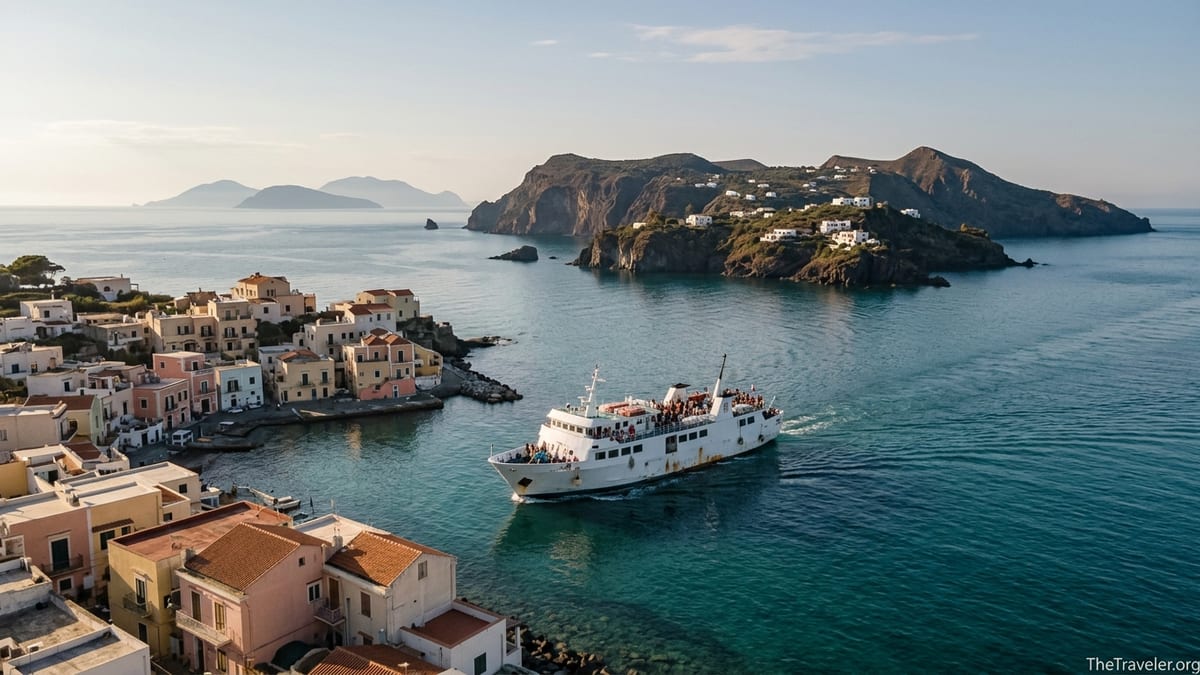
How Italian Island Hopping Really Works
On paper, many Italian islands look separated by only a thin strip of blue. In practice, island hopping is usually about going back to a mainland port, then out again on another route. Direct island to island ferries exist in just a few clusters, such as Capri to Ischia or Lipari to Stromboli. Most travelers underestimate how long even short hops can take once you factor in check-in, luggage and delays.
Ferries remain the backbone of island hopping around Italy. In the Bay of Naples, companies such as Caremar, SNAV, Alilauro and NLG run a mix of slow ferries and fast hydrofoils linking Naples, Sorrento, Capri, Ischia and Procida, with additional seasonal links from Amalfi Coast ports. In Sicily, Liberty Lines and Siremar operate the crucial routes from Milazzo, Messina and Palermo out to the Aeolian, Aegadian, Pelagie and Ustica islands. In Tuscany, Toremar runs services to Elba and the other smaller islands, while multiple operators connect Sardinia to mainland Italy and Corsica.
Flights play a supporting role rather than a primary one. You can sometimes use short domestic flights, for example from Naples to Catania or Palermo, then connect to ferries for island chains like the Aeolians. During high season there are also limited seasonal flights to larger islands such as Lampedusa or Pantelleria from cities like Palermo and Catania. However, for most island combinations within a single region, ferries remain the most practical and scenic option.
For planning purposes, think in half days rather than hours. Even if the sailing time is listed as 60 to 90 minutes, assume a half day is lost each time you change base. If you want to combine, for example, Procida, Capri and Ischia, allow at least five to seven days rather than trying to squeeze everything into a long weekend. This mindset will help you build an island hopping itinerary that feels relaxed instead of rushed.
Bay of Naples Classics: Capri, Ischia and Procida
The easiest cluster for island hopping in Italy is the Bay of Naples, where short distances combine with dense ferry schedules. From central Naples, fast hydrofoils to Capri typically take around 50 to 60 minutes, while slow ferries can take 80 to 90 minutes. Approximate one-way fares in high season often start around 25 to 35 euros on fast hydrofoils and somewhat less on the slower ships, with frequent departures from the Molo Beverello and Calata Porta di Massa piers.
Capri connects not only with Naples and Sorrento but also, in the main season, with other islands and Amalfi Coast ports. Alicost and other operators usually run at least one daily seasonal crossing between Ischia and Capri, often around an hour in duration and with ticket prices typically starting in the high twenties in euros for a one-way hydrofoil seat. This makes a triangle such as Naples to Capri to Ischia to Naples feasible over five or six days, with one or two nights on each island.
Ischia and Procida, sitting closer to the mainland, are linked by regular ferries and hydrofoils, as well as frequent services to and from Naples. Slow ferries can cost under 20 euros one way from Naples to Ischia, while high-speed services are usually a little more but save up to 30 minutes of sailing time. Travelers often combine a few days at a spa hotel or thermal garden in Ischia with one or two nights in colorful Procida, using a short inter-island hop that often takes under 30 minutes. Seasonal schedules can include multiple daily sailings between the two islands, especially in summer.
A realistic week-long Bay of Naples itinerary for first timers might start with two nights in Naples, followed by two nights on Capri, two nights on Ischia and a final night in Naples or Sorrento. You could, for example, sail from Naples to Capri in the morning, Capri to Ischia a few days later on a seasonal hydrofoil, then Ischia back to Naples. If you want to focus on smaller islands and keep costs down, a Procida and Ischia combination with Naples as your entry and exit point can be just as satisfying, with slightly cheaper accommodation on average than Capri.
Sicily and the Aeolian Islands: Lava, Wine and Hydrofoils
Sicily offers the richest island hopping possibilities in Italy, thanks to several distinct archipelagos. The most popular for travelers are the Aeolian Islands north of Sicily, which include Lipari, Salina, Vulcano, Stromboli, Panarea, Filicudi and Alicudi. Ferries and hydrofoils connect these islands extensively in season, usually operated by Liberty Lines for fast services and Siremar or Caronte & Tourist for slower ships that can also carry vehicles.
The workhorse port for the Aeolians is Milazzo on Sicily’s north coast. From Catania Airport, it typically takes about two and a half to three hours by pre-arranged shuttle or a combination of bus and train to reach Milazzo’s ferry terminal, which is why most travelers overnight in either Catania, Taormina or Milazzo before heading out. Fast hydrofoils from Milazzo to Lipari can take around 60 to 90 minutes depending on stops, while slower ferries can take closer to two and a half hours. One-way hydrofoil tickets on Liberty Lines commonly fall in the range of 25 to 40 euros in high season depending on route and demand.
Once in the islands, inter-island connections are straightforward in the main travel months from roughly April to October. Lipari acts as a central hub with boats fanning out to Vulcano, Salina, Stromboli, Panarea and the more remote Filicudi and Alicudi. For example, it is common to base in Lipari for four or five nights and make day trips by scheduled boats to Vulcano or Salina, then add two nights on Stromboli at the end of the stay. A sample route could be Milazzo to Lipari, Lipari to Salina for two nights, Salina to Stromboli, then Stromboli back to Milazzo, with individual legs usually lasting one to two hours each.
Palermo and Messina also offer seasonal connections into the Aeolians. In summer, fast ferries from Palermo to islands like Salina or Lipari often take around three to four hours, while routes from Messina are slightly shorter. These services are attractive if you are staying in Palermo and want to add a few island days without the overland transfer to Milazzo, but schedules are thinner and more likely to sell out in peak season. Booking at least a few weeks ahead is wise if you are traveling in July or August and have fixed accommodation reservations in the islands.
Beyond the Aeolians: Egadi, Pelagie, Ustica and Pantelleria
Sicily’s other archipelagos offer a wilder, less polished version of island life, and combining two of them is realistic if you allow enough time. The Aegadian Islands off the western tip of Sicily, with Favignana as the main hub, are easily reached from the port of Trapani by frequent hydrofoils that often take around 30 minutes to Favignana. Approximate fares can begin in the low teens in euros one way on basic tickets. Many visitors base in Trapani or Marsala and use Favignana as a day trip, but island hopping between Favignana, Levanzo and Marettimo is possible via local boats.
South of Sicily, the Pelagie Islands of Lampedusa and Linosa feel almost North African. Seasonal flights from Palermo and Catania typically provide the fastest access, with flight times often under an hour but limited seats. Ferries from Porto Empedocle on the southern Sicilian coast take significantly longer, often several hours, and schedules are more weather dependent. As a result, it is realistic to pair Lampedusa or Linosa with time on mainland Sicily but less practical to chain them directly with other island groups in a tight timeframe.
To the northwest of Palermo, the small island of Ustica can be reached by hydrofoil from Palermo’s port, typically in about 90 minutes to two hours depending on stops. This makes Ustica a convenient two or three night add-on to a Palermo city break. Travelers sometimes combine Ustica with the Aeolian Islands by returning to Palermo, taking a train to Milazzo or Messina, then continuing by ferry, which usually turns into a full travel day.
Pantelleria, between Sicily and Tunisia, is another outpost that rewards slower itineraries. Access is primarily by ferry from Trapani or by seasonal flights from Palermo and other Italian airports. Because sailings are less frequent and seas can be rough outside summer, Pantelleria works best as a standalone destination for five to seven nights or paired with western Sicily towns like Trapani and Marsala rather than as a quick stop on a multi-archipelago hop.
Tuscan Islands: Elba and Quiet Mediterranean Corners
Off the Tuscan coast, the Tuscan Archipelago offers smaller scale island hopping, with Elba as the main draw. The key mainland port is Piombino, which is linked year round to Elba by multiple operators, including Toremar and other ferry companies. Crossing times for standard ferries usually fall between 40 and 60 minutes depending on route and vessel, and prices for foot passengers can start in the low to mid teens in euros for a one way ticket, rising if you bring a car.
Within the Tuscan Archipelago, public ferries also connect other islands, though many have highly seasonal or limited services and some are heavily protected nature reserves. From Porto Santo Stefano, for example, ferries operate to Giglio, often around an hour in duration. Island combinations such as Elba and Giglio are realistic over a week, but typically require returning to the mainland in between and potentially changing ports, such as Piombino for Elba and Porto Santo Stefano for Giglio.
Given the relative tranquility of these islands, many travelers use a single base rather than night by night hopping. A common pattern is to spend four to six nights on Elba, perhaps splitting the stay between the more developed northern coast near Portoferraio and a quieter southern bay such as Marina di Campo, then add two or three nights on the Argentario peninsula or in inland Tuscany. Day trips to nearby islands may be available through local excursion boats even when public ferries are sparse.
If you are not bringing a car, pay attention to how you will reach the mainland ports. From Florence, for instance, train connections to Piombino often involve a change, and travel times can be two and a half to three hours each way. From Rome, reaching Porto Santo Stefano for Giglio typically requires a combination of train and bus. Building these inland transfers into your planning will keep your island days feeling unhurried.
Sardinia Extensions and Corsica Connections
Sardinia is a large island that functions as both a destination and a jumping-off point to smaller islands and even another country. In the north, Santa Teresa Gallura serves as the key port for ferries to Bonifacio on the French island of Corsica. In summer, multiple daily departures generally operate on this short crossing, which takes roughly 50 minutes to an hour. Return fares in peak season can start from around 60 euros per person for foot passengers, climbing with vehicle transport and late bookings.
Within Sardinia, the Maddalena Archipelago off the northeast coast is one of the most rewarding island extensions. Ferries from Palau to La Maddalena town typically take around 15 minutes, run many times per day in season and are priced accessibly enough to make day trips common. Travelers often base in Palau or the Emerald Coast and either take their car across or use local tours and public buses to explore the protected islands and beaches.
Sardinia also connects to mainland Italy through longer overnight or daytime ferries from ports such as Olbia, Golfo Aranci, Porto Torres and Cagliari to cities including Genoa, Livorno and Civitavecchia near Rome. While these are not island hopping routes in the strict sense, they allow you to integrate Sardinia into a wider itinerary that might include Tuscany or Lazio. For example, you could spend five nights in Elba, return to Piombino and travel by train to Livorno, then take an overnight ferry to Olbia and continue by car or bus to Palau and La Maddalena.
Weather and seasonality matter especially in the Sardinia and Corsica area. The short Santa Teresa to Bonifacio crossing is exposed, and high winds can cause cancellations or schedule changes, particularly outside the core summer months. During winter, the frequency of sailings is lower and some days may have no service at all. If your itinerary depends on this link, build in at least one buffer day on either side and consider refundable accommodation where possible.
Booking Ferries, Managing Costs and Reading Timetables
For most Italian island hops, you can either book directly with the ferry companies or through aggregators and booking platforms that compare routes and prices in one place. Direct booking usually offers clearer information about disruption policies and any resident or child discounts, while aggregators are useful for comparing multiple companies serving the same route, such as the various operators on Naples to Capri. Many travelers choose to research on a comparison site then purchase directly from the operator to avoid additional fees.
As a rough guide, short hydrofoil trips of up to an hour, such as Naples to Procida or Milazzo to Vulcano, commonly start in the 15 to 25 euro range one way for a foot passenger in high season, while longer or more remote routes, such as Palermo to the Aeolians or Sicily to Lampedusa, can run 40 euros or more per leg. Bringing a car dramatically increases costs, sometimes by several hundred euros for longer crossings, so many visitors rely on local buses, taxis and scooter or bike rentals instead.
Reading Italian ferry timetables requires close attention to seasonal notes, days of operation and footnotes about intermediate stops. Schedules often change between winter, shoulder season and the peak summer months, and individual services may run only on certain days of the week. For example, a route from Ischia to Capri may operate once daily only between April and October, while Naples to Ischia runs year round with more limited winter frequencies. Always check both the outbound and return legs for your exact travel dates before committing to non-refundable accommodation.
Buy your tickets in advance for busy routes in high season, especially on weekends and around holidays when Italian travelers also head for the islands. For less popular sailings outside peak periods, you can often purchase tickets at the port on the day of travel, but it is still wise to arrive at least 45 to 60 minutes before departure to allow time for queues, baggage and any last-minute schedule changes posted at the ticket office.
Realistic Island Combinations and Sample Itineraries
When you look at a map of Italy, it is tempting to try to connect every island group in one sweeping route. In reality, you will enjoy your trip more if you focus on one cluster, or at most two, and accept that moving between regions usually requires a long transfer via mainland airports or train stations. For most travelers, a satisfying island hopping trip lasts 7 to 14 days and concentrates on either the Bay of Naples, the Aeolian Islands or the Tuscan and Sardinian coasts.
A classic 10 day Bay of Naples itinerary could be structured as follows: arrive in Naples for two nights, including a day to explore the historic center and seafront, then take a morning hydrofoil to Capri for three nights. From Capri, travel by seasonal ferry to Ischia, spending three nights enjoying thermal parks and hiking on Monte Epomeo. Finally, return to Naples or Sorrento for a final night before departure. Each ferry leg in this itinerary is typically under 90 minutes, but you still dedicate part of each transfer day to moving between hotels and ports.
For a Sicily-focused two week trip, you might split time between mainland Sicily and the Aeolians. For example, spend three nights in Catania or Taormina, then transfer to Milazzo and catch an afternoon hydrofoil to Lipari for four or five nights. From Lipari, add two nights on Stromboli or Salina, then return via Milazzo to Palermo for three final nights, perhaps adding a day trip to Ustica if schedules align. This structure balances city, volcano and sea, while keeping individual boat rides generally under three hours.
If you want to include both Tuscany and Sardinia, a 12 day loop is realistic. You could begin in Florence, travel by train to Piombino and cross to Elba for four nights. Next, return to the mainland, continue by train to Livorno or Civitavecchia and take an overnight ferry to Olbia. From there, base yourself for three or four nights near Palau, using the short ferry to La Maddalena and local boats to explore the archipelago. Finish with a night in a Sardinian city such as Olbia or Alghero before flying out. This type of itinerary keeps the number of base changes low while still delivering a sense of movement and variety.
FAQ
Q1. How far in advance should I book Italian island ferries in summer?
For popular routes in July and August, such as Naples to Capri or Milazzo to Lipari, booking at least two to three weeks ahead is sensible, especially for weekend travel or if your accommodation is non-refundable. Outside peak season, you can often book just a few days in advance or even on the same day for less busy departures.
Q2. Is it better to choose fast hydrofoils or slower car ferries?
Fast hydrofoils are ideal if you are traveling without a car and want to minimize time at sea, as they can cut journey times by up to a third. Slower car ferries are usually cheaper, more spacious and more stable in rough conditions, and they are the only option if you are bringing a vehicle. Many travelers mix both types depending on schedule and price.
Q3. Can I island hop between Capri, Ischia and Procida without returning to Naples each time?
In season, you can often travel directly between Capri and Ischia, and there are regular links between Procida and Ischia as well as between both islands and Naples. However, schedules are limited compared with mainland routes, so you may still need to route one leg through Naples or Sorrento depending on your dates and the time of year.
Q4. Are ferries to the Aeolian Islands reliable outside summer?
Services run year round, but frequencies drop significantly outside the main season and bad weather can cause delays or cancellations. If you are traveling in late autumn, winter or early spring, allow extra flexibility in your itinerary and plan to base yourself on one of the larger islands such as Lipari, which keeps the most consistent connections.
Q5. Do I need a car for island hopping in Italy?
In most island groups, having a car is optional rather than essential. Places like Capri, Procida, the Aeolians and the Tuscan islands are manageable with a combination of walking, buses, taxis and rented scooters or bicycles. On larger islands such as Sardinia, Sicily or Elba, a car offers more freedom, but it also raises ferry costs and parking challenges.
Q6. How much should I budget for ferries on a one week trip?
Budgets vary, but many travelers on a seven day island hopping itinerary might spend in the region of 100 to 250 euros per person on ferries, depending on the number of legs, distance and whether they choose fast hydrofoils or slower ferries. Adding a car or booking at the last minute in peak season can increase this total.
Q7. What happens if my ferry is canceled due to bad weather?
If a ferry is canceled, operators usually rebook passengers on the next available sailing or offer a refund according to their conditions of carriage. In busy periods, seats on later departures may be limited, so it is wise to contact the company promptly, monitor announcements at the port and have a buffer day for connections to onward flights or trains.
Q8. Is it realistic to combine the Aeolian Islands with Lampedusa or Pantelleria in one trip?
It is technically possible, but only with substantial travel time via mainland Sicily and often with overnight stops. For most travelers on a one or two week holiday, it is more enjoyable to focus on either the Aeolians or the southern islands and save the other group for a future trip, rather than rushing between distant archipelagos.
Q9. Are there luggage limits on Italian ferries?
Most standard ferries are quite generous with luggage, especially compared with airlines, but fast hydrofoils may have informal size and weight guidelines and limited storage space. In practice, a typical suitcase and a small backpack per person are rarely an issue, though you may pay extra for oversized items or sports equipment on some routes.
Q10. What is the best season for Italian island hopping?
The most reliable period for warm weather, frequent ferries and open restaurants is usually from late May to early October, with July and August being the busiest and most expensive months. Late spring and early autumn can offer a good balance of pleasant temperatures, active schedules and slightly lower prices, though some services may already be reduced.