


Choosing where to stay in Southern Italy is the single biggest decision that shapes your trip. The same region that gives you cliffside Amalfi villages and Michelin-starred tasting menus also offers barefoot beach towns in Puglia, cave hotels in Matera, chilled seafront promenades in Calabria and lively, lived-in cities like Naples and Palermo. This guide compares the main bases across Southern Italy so you can match your destination to your priorities, whether that is beaches, food, nightlife, luxury, family time, a road trip or a car-free holiday.
How to Choose Your Base in Southern Italy
Before looking at individual places, it helps to be clear on how you like to travel. If you picture waking up to sea views and spending most of the day between a beach club and a waterfront promenade, focus on Puglia’s coastline, Calabria’s Tyrrhenian towns like Tropea, or the beach resorts of eastern Sicily such as Taormina and Cefalù. If food and nightlife matter more than sand, cities like Naples and Palermo deliver busy markets, street food and bars that stay open late, while Sorrento and Positano offer a polished, honeymoon feel with romantic restaurants and cocktail terraces.
Transport is the second major filter. Southern Italy’s rail network links the big hubs such as Naples, Salerno, Bari, Lecce, Reggio Calabria, Messina, Catania and Palermo, but smaller coastal villages often have limited public transport. If you want a car-free trip, look closely at Sorrento, Salerno, Naples, Bari, Lecce, Catania and Palermo, all of which work well with trains, ferries and organized day tours. If your dream is a long road trip between hill towns and wild beaches, then Puglia, Basilicata, Calabria and Sicily reward hiring a car, with enough small villages and coves to fill several weeks.
Budget also influences where you stay. In 2026, a midrange double in high season on the Amalfi Coast often costs roughly twice what you would pay for something similar in inland Puglia, Matera or much of Calabria. In peak July and August, it is common to see four-star hotels in Positano and Capri starting around the high hundreds of euros per night, while comfortable agriturismi in rural Puglia or Calabria may still offer doubles closer to the low or mid hundreds with breakfast and pool access. Traveling in May, June, September or early October is usually more affordable and more comfortable temperature-wise across the south.
Finally, consider how much you enjoy moving around. Some travelers like to spend a week in a single town and use it for day trips. Others prefer to split two or three bases over ten days. In Southern Italy, a sensible approach for a first visit is to anchor yourself in one hub in Campania, such as Naples, Sorrento or an Amalfi Coast village, and pair it with either Puglia and Matera for whitewashed towns and turquoise beaches or Sicily for a deeper dive into island culture, historic sites and volcanic landscapes.
Naples: Food, Culture and Urban Energy
Naples is the gateway to Southern Italy and one of the most atmospheric cities in Europe. It is not a beach destination in the classic sense, but it is a superb base for people who value food, history and nightlife, and who are comfortable in a big, noisy, lived-in city. You can get here by high-speed train from Rome in around one hour, and from the main station you can ride the metro or taxis to central neighborhoods like the Centro Storico, Chiaia or Vomero. Midrange hotels and guesthouses in central Naples often start in the low hundreds of euros per night in shoulder season, climbing in summer but usually remaining cheaper than the Amalfi Coast.
For food-focused travelers, staying in Naples lets you eat at the source. This is the birthplace of pizza, and you can find famous pizzerias in the historic center serving classic margherita or marinara for a price that is often under what you would pay for a cocktail in Positano. Street food like fried pizza, cuoppi of mixed fried seafood, and sfogliatella pastries is everywhere. Evenings are lively in areas like Piazza Bellini and the Spanish Quarter, with small bars, music and a mix of locals and visitors. It suits couples and groups of friends who enjoy atmosphere over formality and are less focused on resort-style luxury.
Naples also works well as a car-free exploration hub. From here you can ride local trains to Pompeii and Herculaneum, catch ferries to Capri, Ischia and Procida, and then continue along the Bay of Naples. Many visitors spend three or four nights in Naples before moving on to Sorrento or the Amalfi Coast, using organized day tours or local trains and buses rather than renting a car. Families who prefer calmer evenings might find Sorrento a more relaxed base, but older teenagers often enjoy the buzz and authenticity of Naples.
Where Naples is weaker is easy beach access and polished resort experiences. There are local lidos and small stretches of city coastline, but they do not match the wide sands of Puglia or the dramatic coves of the Amalfi Coast and Sicily. Luxury properties exist, particularly along the seafront in Chiaia and Posillipo, yet if your priority is a serene pool with a sea view and private beach club, other bases such as Sorrento or the Amalfi Coast are usually better matches.
Sorrento & the Amalfi Coast: Romance, Views and Car‑Free Convenience
Sorrento sits on a cliff above the Bay of Naples and is not technically part of the Amalfi Coast, but it is one of the best hubs for car-free travelers who want sea views, good dining and easy day trips. A local rail line from Naples reaches Sorrento in roughly 70 minutes, and from the station you can walk into the compact center or hop a short taxi to your hotel. Sorrento’s appeal is its mix of polished tourism infrastructure, flat and walkable streets and extensive connections by ferry and bus to Capri and the Amalfi villages. In high season, midrange hotels often range from the mid to high hundreds of euros per night, with sea-view boutique properties and five-star hotels higher than that.
For couples, Sorrento offers sunset aperitivo bars along the clifftop, al fresco seafood restaurants, and a generally relaxed but social atmosphere. It is easier to navigate than some Amalfi villages that come with serious staircases, which also makes it popular with older travelers and families with younger children. There are small bathing platforms and beach clubs at the base of the cliffs where you can swim from ladders or narrow strips of sand, though they are not wide beaches. You can spend a week here taking ferries to Capri, buses to Positano and Amalfi, and organized tours to Pompeii without ever renting a car.
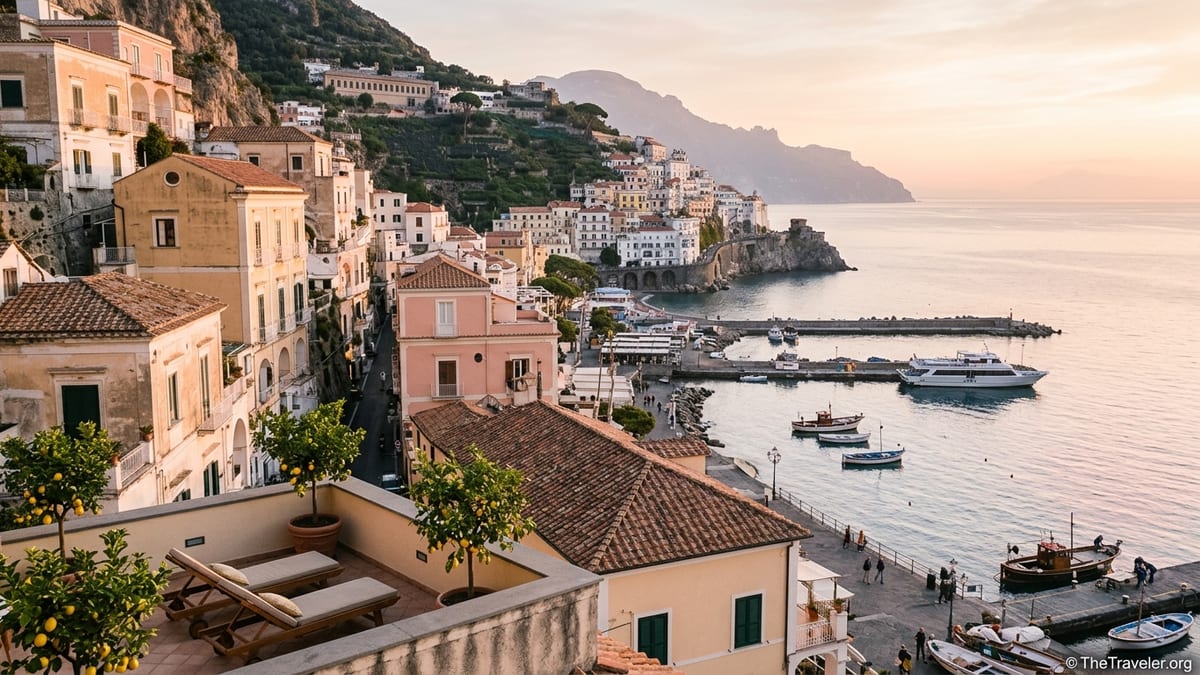
The Amalfi Coast proper, running from Positano through Praiano and Amalfi to smaller villages like Minori and Maiori, is one of the most scenic stretches of road in Europe. Villages cling to the cliffs, and many hotels are carved into the rock with infinity pools and terraces over the sea. This area is ideal for honeymoons, special occasions and luxury-focused trips. Positano is the most famous and often the most expensive, with beach clubs on Spiaggia Grande that rent sun loungers and umbrellas for premium prices and cocktail bars overlooking the bay. Amalfi town is more central and flatter, with easier access to boats and buses, while Praiano and Ravello offer quieter, more intimate stays.
The trade-off is cost and crowds. In July and August, the coastal road can be heavily congested, buses fill quickly, and hotel prices spike. Parking is scarce and expensive, so most visitors either arrive with a private transfer from Naples or rent a small car and book parking in advance. Families who want simple beach days and space for kids to run around often find better value and sandy beaches in Puglia or Calabria. For car-free travelers with a flexible budget, two or three nights directly on the Amalfi Coast paired with a few nights in Sorrento or Naples makes a strong combination.
Puglia & Matera: Beaches, Whitewashed Towns and Road Trips
On the Adriatic and Ionian seas, Puglia offers some of Southern Italy’s best beach and road trip territory. The coastline ranges from dramatic cliffs near Polignano a Mare to long sandy stretches around the Salento peninsula near towns like Otranto, Gallipoli and Torre dell’Orso. Inland, whitewashed hill towns such as Ostuni and Locorotondo sit among olive groves, and trulli houses cluster around Alberobello. Accommodation here is often in masserie, traditional farm estates converted into boutique hotels, where doubles in summer frequently cost less than comparable sea-view rooms on the Amalfi Coast.
Puglia works particularly well for couples and families looking for a blend of beach time and slow-paced countryside. With a rental car, you can base yourself near Ostuni or Fasano and drive 20 to 40 minutes to different beaches each day, stopping in hill towns for long lunches of orecchiette with local vegetables or grilled seafood. Families appreciate the shallow, calm water on parts of the Ionian coast, around towns that are known for child-friendly beaches. Teenagers will not be bored either, as busy seaside resorts like Gallipoli have beach clubs, early-evening bars and seasonal nightlife that peaks in August.
For car-free travelers, the main rail line from Bari to Lecce and Brindisi plus some regional trains and buses make it possible to base in Bari’s old town, Polignano a Mare, Monopoli or Lecce and take day trips. Polignano and Monopoli offer easy access to rocky coves and beach clubs within walking or short taxi distance from town centers, while Lecce is a baroque inland city with rich architecture and a growing food scene, from simple trattorie to more contemporary cuisine. Accommodation prices in these towns vary but are generally more moderate than the most famous corners of the Amalfi Coast.
Just over the border in Basilicata, Matera pairs beautifully with Puglia as a two or three night stop. The city’s Sassi districts, made up of cave dwellings carved into the rock, have been transformed into atmospheric hotels and guesthouses. Couples in particular enjoy staying in boutique cave hotels with terraces over the ravine, then exploring at night when day-tripping crowds have gone. Matera is not a beach base, but it is outstanding for photography, history and food, and it fits naturally into a Puglia road trip loop that also includes Polignano a Mare, Ostuni, Alberobello and the Salento coast.
Calabria: Underrated Beaches and Budget-Friendly Coast
Calabria sits at the toe of Italy, facing both the Tyrrhenian and Ionian seas. It remains less developed for international tourism than Puglia or the Amalfi Coast, which is exactly why many repeat visitors choose it. The Tyrrhenian coast around Tropea is particularly appealing, with a cliff-top old town overlooking a sandy bay and clear water often compared to the Caribbean in travel features. In summer, Italian families flock here for long stays, renting apartments or staying in midrange hotels that can be significantly cheaper than equivalent properties in Campania during the same period.
For beach-focused travelers, Calabria offers space. Long strands of sand on both coasts mean that even in August you can often find room if you are willing to walk a little away from the main access points. Beach clubs rent umbrellas and loungers at prices that can be more modest than on the Amalfi Coast, with simple seaside trattorie serving grilled swordfish, local pasta dishes and house wine for relaxed lunches. Towns like Scilla near the Strait of Messina provide a combination of castle-topped scenery and a pebbly beach lapped by deep blue water, while more low-key resorts up and down the coast cater mainly to Italian holidaymakers.
Calabria is ideal for a road trip. Much of the appeal lies in hopping between small towns, mountain villages and coastal outlooks that are hard to reach by public transport. Roads can be winding, and some towns show the unfinished concrete skeletons that are part of the region’s economic story, so expectations should be set accordingly. Travelers who value polished aesthetics and designer boutiques may prefer Puglia or the Amalfi Coast, but those who prioritize sea, food and value often find Calabria rewarding.
Families and couples who do not need nightlife beyond seafront bars and evening passeggiata will feel comfortable here. Nightlife is more subdued, though in July and August seasonal beach bars and outdoor concerts appear in larger towns. If it is your first time in Southern Italy and you have limited days, many itinerary planners suggest focusing either on Campania plus Puglia or on Sicily instead of trying to add Calabria as a short detour, purely because of travel time. For a second or third trip, Calabria is an excellent choice if you like the idea of quieter beaches and authentic southern cooking at more approachable prices.
Sicily: Island Culture, Beaches and Independent Exploring
Sicily, the largest island in the Mediterranean, is almost a country within a country, with its own distinctive food, dialects and rhythms. It is one of the best overall bases in Southern Italy for travelers who want a mix of beaches, major cultural sights and plenty of independent exploring. Main entry points include Palermo and Catania airports, with onward rail and bus connections to coastal towns like Cefalù, Taormina, Siracusa and the smaller resorts along the north and east coasts.
Cefalù and Taormina are two of the most popular bases for couples and families. Cefalù, on the northern coast, has a medieval town center, a long sandy beach and a promenade lined with small hotels, apartments and beach clubs. It is particularly suited to families with children who want to walk from their accommodation straight to the sand and spend days between the sea, gelato breaks and early evening strolls. Taormina, on the east coast, is perched above the sea with views of Mount Etna and an ancient theater. Hotels spill down the hillside toward beach areas such as Mazzarò and Isola Bella, reached by cable car and path. Taormina attracts honeymooners and travelers looking for boutique hotels, stylish bars and day trips to Etna and local wineries.
Palermo and Catania make compelling city bases. Palermo offers street markets, historic palaces, churches and a famous street food scene, along with access to nearby beach areas like Mondello. Catania has a gritty charm, bar-lined squares, and good transport links to Taormina, Siracusa and the baroque towns of Noto and Ragusa. In both cities, you can find a wide range of accommodation from budget guesthouses to luxury properties, with prices typically more moderate than the most exclusive Amalfi Coast addresses.
For road trippers, Sicily is a dream. A two-week loop might link Palermo, Cefalù, the archaeological park at Agrigento, the southern beaches near the baroque towns, and the east coast around Siracusa and Taormina. Drivers should be comfortable with local traffic patterns, especially in and around cities where scooters weave through narrow streets. Families often hire apartments with kitchens in coastal towns and use them as bases for both beach days and cultural excursions. Nightlife is present but not dominant; you will find cocktail bars and occasional clubs in resort areas and big cities, but the overall feel is more relaxed evenings on terraces and in piazzas rather than late-night party destinations.
Best Bases by Traveler Type: Beaches, Food, Nightlife and Car‑Free Trips
For pure beach holidays, focus on Puglia’s Salento coast, Calabria’s Tyrrhenian beaches and Sicily’s resort towns. Families who want wide sand and shallow water should look closely at Cefalù in Sicily, parts of the Puglian and Calabrian coasts, and the more spacious stretches of coast where beach clubs and free sections alternate. The Amalfi Coast is stunning, but beaches are often small pebbly coves hemmed in by cliffs, with paid loungers taking up most of the space, so it is better for scenic swims and boat days than endless sandcastle building.
Couples and honeymooners tend to gravitate to Sorrento, Positano, Ravello, Taormina, Cefalù, Matera and the country masserie of Puglia. A typical romantic itinerary might include three nights in Sorrento with a day trip to Capri, two or three in an Amalfi Coast village, two in Matera for cave hotels and atmospheric evenings, and three or four in a Puglian masseria with pool and nearby beaches. Another version might swap Campania for a week in Sicily split between Taormina and one of the baroque southern towns near the sea.
Food-driven travelers will be happy almost anywhere in the south, but Naples, Palermo, Catania, Lecce, Bari and smaller inland towns in Puglia and Basilicata are standouts. In Naples and Palermo, you can graze on street food, from arancini and panelle to fried pizza and seafood, at very reasonable prices compared with sit-down restaurants on the Amalfi Coast. Wine lovers will appreciate Sicily’s Etna region and Puglia’s Primitivo and Negroamaro areas, which are easy to visit via organized tastings if you prefer not to drive.
Car-free travelers should prioritize hubs with strong public transport. Naples, Sorrento, Salerno, Bari, Lecce, Catania, Palermo and some larger Sicilian and Calabrian towns fit this bill. From Sorrento you can reach most of the Amalfi Coast by bus or ferry; from Bari and Lecce you can visit several Puglian coastal and hill towns on regional trains and buses; from Palermo and Catania you can reach many of Sicily’s key sights without a car, especially if you are happy to join occasional day tours. Travelers who enjoy driving and want freedom to explore back roads will get more out of Puglia, Calabria, inland Basilicata and a full loop of Sicily.
The Takeaway
There is no single best place to stay in Southern Italy, only the base that best fits your style. If you are dreaming of cliffside villages, boats and romantic evenings, Sorrento and the Amalfi Coast are still the classic choice, especially paired with Naples for food and museums. If you want long beaches, good value and space for kids to play, Puglia, Calabria and Sicily’s coastal towns should be at the top of your list. For history and atmosphere away from the sea, Matera and the inland towns of Puglia and Sicily repay slow exploration.
Think first about whether you will rent a car and how often you want to move, then build your bases from there. A focused trip that combines two or three well-chosen hubs, such as Naples and Sorrento with Puglia and Matera, or Palermo with Cefalù and Taormina, will almost always feel richer and more relaxing than trying to see every region in one sweep. However you design it, Southern Italy rewards those who slow down, choose a few strong bases and let long dinners and late sunsets set the pace.
FAQ
Q1. Where should I stay in Southern Italy for the best beaches?
For classic sandy beaches, look to Puglia’s Salento coast, Calabria’s Tyrrhenian towns such as Tropea, and Sicilian resorts like Cefalù. These areas combine wide sands, clear water and a good mix of free beach sections and serviced beach clubs.
Q2. Is it better to base in Naples or Sorrento?
Naples suits travelers who prioritize food, museums, street life and lower prices, and who do not mind urban grit. Sorrento is better if you want a smaller, more polished seaside town with easier access to Capri and the Amalfi Coast, and you are happy to pay a bit more for that convenience and atmosphere.
Q3. Do I need a car to enjoy Puglia?
A car gives you far more freedom in Puglia and is ideal for visiting multiple beaches and hill towns in one trip. It is possible to travel car-free by basing in Bari, Polignano a Mare, Monopoli or Lecce and using regional trains and buses, but your choice of smaller villages and secluded beaches will be more limited.
Q4. Is the Amalfi Coast suitable for families with young children?
The Amalfi Coast can work for families, but it involves stairs, crowds and smaller, often pebbly beaches. Many families with young children prefer Sorrento, which is flatter and more practical, or they choose Puglia, Calabria or Cefalù in Sicily for easier beach days and more space on the sand.
Q5. Where should food lovers stay in Southern Italy?
Naples, Palermo, Catania, Bari and Lecce are excellent for food-focused stays, with strong street food cultures and good value trattorie. Inland Puglian and Sicilian towns, plus Matera, also offer memorable regional cuisine, often at lower prices than the most famous resort areas.
Q6. Is Sicily too big for a one-week trip?
Sicily is large, so for one week it is best to focus on one or two areas, such as Palermo and Cefalù, or Catania, Taormina and Siracusa. Trying to circle the entire island in seven days usually means rushing long drives and not having enough time to relax or enjoy beaches.
Q7. What is the best region for a budget-friendly beach holiday?
Calabria and parts of Puglia often offer better value than the Amalfi Coast, especially in Italian-style seaside towns where many accommodations are simple hotels or rental apartments. Some Sicilian resorts, particularly outside the most famous hotspots, also provide good beach access at more moderate prices.
Q8. Can I visit the Amalfi Coast without renting a car?
Yes. Many travelers reach Sorrento or Salerno by train and then use buses, ferries and organized tours to visit Positano, Amalfi and other villages. Roads and parking along the coast can be stressful and expensive, so going car-free here is not only possible but often more relaxing.
Q9. How many bases should I plan for a 10 to 14 day trip?
For a 10 to 14 day itinerary, two or three bases work best. A common pattern is to combine Naples or Sorrento with either the Amalfi Coast and Puglia, or to pair an Amalfi base with Sicily or Calabria. This keeps travel days manageable while still giving variety.
Q10. When is the best time to visit Southern Italy for good weather and fewer crowds?
May, June, September and early October usually offer warm weather, swimmable seas and fewer crowds than the peak of July and August. Prices are often lower outside the high season, and driving and public transport tend to be less congested, especially around the Amalfi Coast.