


On my most recent trip to Florence, I finally did what so many visitors either avoid or mishandle. I booked properly timed tickets to the Uffizi Gallery and spent a full afternoon inside Italy’s most crowded museum. Between comparing ticket types, choosing a time slot, standing in the security line, fighting through the Botticelli crush and emerging hours later with aching feet, I learned exactly which ticket options and timings are worth the money in 2026 and which I would do differently next time.
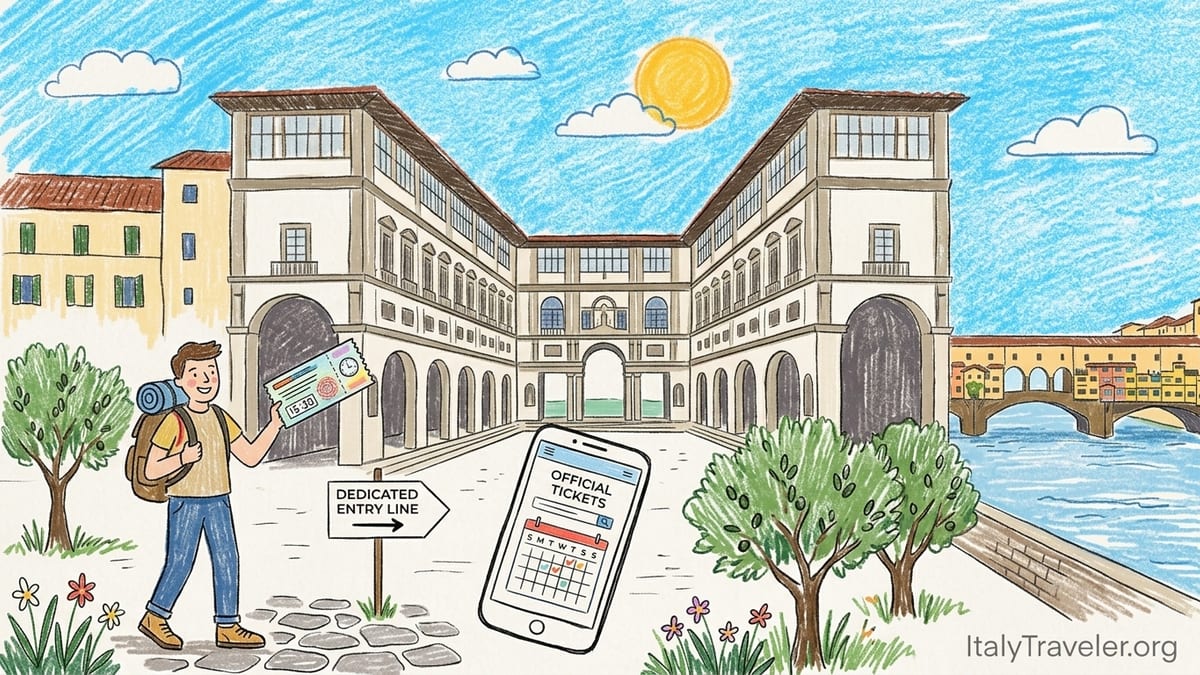
Why I Finally Committed to Booking the Uffizi Properly
I visited Florence in late May 2026, at the start of the busy summer season when the Uffizi is rarely quiet. On past trips, I had either skipped the gallery entirely or tried to walk up without a reservation and been turned away by the sight of a line curling around the loggia. This time I was determined to do it right, using the official system and paying attention to the new pricing the museum introduced in recent years.
On the official Uffizi website, a same day standard ticket to the Uffizi alone was listed at 25 euros, while an advance purchase ticket for a later date cost 29 euros. The Uffizi plus Vasari Corridor combination ticket ran 43 euros if bought for the same day and 47 euros in advance. There was also a five day cumulative PassePartout 5 Days pass, covering one entry to the Uffizi, Palazzo Pitti and the Boboli Gardens, priced at 40 euros, or 58 euros if you wanted it to include the Vasari Corridor. Those are the figures in effect as of October 2026 and they matched what I saw during my visit at the official ticket office under the Uffizi arcade.
Because I already had plans to wander the Boboli Gardens and see the Palatine Gallery at Palazzo Pitti later the same week, the 40 euro five day Uffizi / Pitti / Boboli pass made obvious financial sense. Bought separately on the day, Uffizi admission would have been 25 euros, Pitti 16 euros and Boboli 10 euros, for a total of 51 euros. With the pass, I paid 40 euros and committed to visiting the Uffizi first, which is required because you must book a specific entry time there when you buy the pass.
Booking My Time Slot and Why I Chose Mid Afternoon
I reserved my ticket directly through the official tickets platform about two weeks before arriving in Florence. By that point, many prime morning slots between 9:00 and 11:00 were full for my chosen date, especially on Friday and Saturday. Lunchtime slots around 13:00 were still available, but I remembered how mentally heavy a top tier museum can be right after a big Tuscan lunch.
In the end I chose a 15:30 entry time. This was a deliberate compromise. In high season the Uffizi tends to be most packed late morning and early afternoon, when tour groups arrive in waves. Late afternoon usually thins somewhat as organized tours finish and people drift off toward sunset at Piazzale Michelangelo or dinner reservations. At the same time, arriving too close to the final entry risks feeling rushed. A 15:30 entry meant I could stay until near closing without a sense of panic and still enjoy a proper dinner afterward.
The booking process itself was straightforward. After selecting the date and time for the Uffizi, the system automatically issued my five day pass and confirmed that my first museum had to be the Uffizi at the scheduled slot. I paid the 40 euros for the pass plus a modest booking fee. My confirmation email emphasized that the ticket was nominative, tied to my name, and that I needed to bring both the email and an ID. This matched the increasingly strict regulations the Uffizi has adopted to manage massive visitor numbers and prevent ticket scalping.
Looking back, the two week lead time was comfortable but not excessive. For visits between late spring and early autumn, I would now suggest booking at least 10 to 14 days ahead if you want your pick of mid morning or mid afternoon windows, especially on weekends. In shoulder season or on weekdays outside school holidays, a week in advance may still be enough, but the cost difference between day of and advance purchase is small enough that there is little downside in locking your time early.
Arrival, Security Queue and How Long It Really Took
I arrived at the Uffizi about 25 minutes before my 15:30 time slot, just to see how the flow worked in practice. The piazza in front of the loggia was crowded with school groups, flag bearing guides and independent travelers studying their phones. Signage directs people with reservations to one line and people without to another, although first timers understandably look confused at the tangle of entrances along the arcade.
With a dated, timed reservation, you do not skip security, but you avoid most of the ticket purchase queue. I first stopped at the dedicated reservation desk to convert my email into a physical ticket for the five day pass. That took about 5 minutes. Then I joined the security line, which was moving steadily as staff funneled people through bag checks and airport style scanners. From the moment I joined the security queue to the moment I stepped into the first staircase, exactly 18 minutes had passed. Friends who went in the late morning that same week reported closer to 30 to 40 minutes in line, so timing clearly matters.
Inside, the first ascent up the long stone stairs, surrounded by tour groups stopping periodically for breath, sets the tone. This is not a quick pop in and out sort of museum visit. By the time I reached the top level where the main chronological route begins, the clock read 15:55. I left the building a little after 19:30. In other words, I spent about three and a half hours inside, not including the 20 or so minutes between arrival and actually entering the galleries.
That duration felt about right for a first serious visit if you want to see the highlights and give yourself permission to linger occasionally. I did not read every label or study every room. I walked past several dense sections of Florentine altarpieces relatively quickly and took only a short break in the cafe. If you know that your attention span for paintings is limited to two hours, you may want to aim for a more targeted route or book a guided tour that focuses on the icons like Botticelli, Leonardo and Caravaggio.
Crowds, Fatigue and How the Museum Layout Affects You
Crowding at the Uffizi is not a vague notion. It is a physical reality you feel in your shoulders and lower back. At 16:00 on a May weekday, the upper corridor with its rows of Roman statues was busy but manageable. People spaced themselves out along the windows overlooking the Arno, taking photos of the Ponte Vecchio and peering down at the Vasari Corridor that runs across the bridge. The real compression points were inside specific rooms.
The Botticelli rooms, which now feature a refreshed display of The Birth of Venus and Primavera, were the tightest. At one point I counted over a hundred people in the Birth of Venus room alone, packed into a space that still preserves its Renaissance proportions. Guides in multiple languages raised their voices over the hum. It was still possible to approach the painting but only by edging sideways between tour groups and waiting for second long gaps to open near the central rope.
As I moved into the Leonardo and Michelangelo room, the pressure remained high. People clustered in front of the Annunciation and the unfinished Adoration of the Magi. Here, too, it was necessary to step back against the opposite wall and use those moments between group lectures to enjoy the work in relative peace. Farther along, the crowds thinned significantly around the northern European paintings and many of the later galleries. By the time I reached Caravaggio’s Medusa shield and Bacchus, the density dropped to a level where I could stand quietly for several minutes at a time.
Fatigue sets in gradually but predictably. The museum’s U shaped layout encourages you to keep moving forward, and there are few inviting resting spots inside the main sequence of rooms. After about two hours, I noticed my attention drifting and my feet starting to complain on the stone floors. I made a deliberate detour to the rooftop cafe, less for the coffee and more for the chance to sit for 20 minutes looking at the dome of Santa Maria del Fiore. That short break made the final hour vastly more pleasant. Next time, I would schedule a cafe pause into my mental plan from the beginning instead of waiting until I was exhausted.
The Artworks That Truly Stood Out In Person
No photograph and no reproduction can prepare you for the physical presence of The Birth of Venus. The first surprise is the size. It is larger than many visitors expect, almost two meters tall, with the shell nearly life size. Seeing the delicate greens of the shoreline and the subtle pattern on the cloak in person, under careful lighting, felt like meeting a famous actor off screen and realizing they actually inhabit three dimensional space. Standing slightly left of center, away from the densest clump in front, gave me a better angle and a precious two minute span where no one was directly in front of the canvas.
Primavera, hung in the same room, rewards slower looking. Where The Birth of Venus hits you with immediate icon status, Primavera draws you into tiny botanical details and overlapping mythological symbols. I found myself focusing on the translucent fabric of the Graces’ gowns and the tiny oranges on the arching trees. A nearby guide described it as a puzzle you are not meant to fully solve, which seemed appropriate watching visitors tilt their heads and point out new figures as they noticed them.
Further along, Leonardo’s Annunciation was the piece that stopped me in my tracks more than any other. The elongated proportions of the Virgin that have launched decades of scholarly arguments were less jarring in person than in reproduction. What pulled me in was the meticulously painted garden bench and the delicate plants at the front. I watched at least three people who had been briskly walking slow down and fall silent in front of it, as if the painting were emitting a calm of its own amid the gallery bustle.
In the later rooms, Caravaggio provided a final jolt of energy just when I thought I had peaked. The shield with the severed head of Medusa, painted on convex wood, looks almost like it is pushing into your space. Light catches the glossy surface in a way that makes the blood and scream feel freshly frozen. Nearby, Bacchus lounges with his bowl of fruit and flushed cheeks that seem even more human up close. After three hours of altarpieces and Madonnas, these works felt startlingly contemporary, like meeting a stranger on the train who insists on eye contact.
Was Paying in Advance and Choosing the Time Slot Worth It
For the Uffizi alone, the difference between a 25 euro same day ticket and a 29 euro advance ticket is four euros. At first glance, that surcharge might seem unnecessary, especially for budget travelers. After my visit, I consider it cheap insurance. What you are paying for is not faster security but control over your schedule and a much lower risk of disappointment.
On my day, by mid morning, the on site boards indicated that same day availability for popular slots had already evaporated. Walk up visitors were being offered late afternoon only, and some were told to try another day entirely. In peak months this can mean showing up at 10:00 and learning that the only remaining entries are at 17:30 or that your preferred day is sold out. For a city trip of only two or three days, that can throw off everything, from restaurant bookings to timed entries at the Accademia.
By booking my 15:30 entrance in advance as part of the 40 euro five day pass, I shaped the rest of my Florence day logically. I visited the Mercato Centrale in the morning, had a light lunch, then walked across the historic center with no anxiety about whether I would actually be admitted. The peace of mind had real value. If someone is traveling in low season, staying five nights or more in Florence and is comfortable with some flexibility, gambling on day of tickets could work. For most first time visitors in 2026, particularly between April and October, the small extra cost of advance purchase feels justified.
The five day pass itself proved excellent value. Over the next four days I used it for a leisurely visit to the Boboli Gardens one sunny morning and a separate afternoon at Palazzo Pitti. Being able to break these major sites into different days instead of cramming them into one marathon was a gift to both my feet and my attention span. The pass is also simple. There is no complicated zone system or need to pre book Pitti and Boboli entries. Only the Uffizi requires that timed reservation at purchase.
Vasari Corridor: Why I Skipped It and Whether I Would Add It Next Time
For this trip, I decided against booking the Uffizi plus Vasari Corridor combination ticket, which is priced at 43 euros if purchased on the day and 47 euros in advance. My reasoning was as much about stamina as money. The visit to the Corridor, which connects the Uffizi to the other side of the Arno including a section above the Ponte Vecchio, is structured so that you enter the Uffizi two hours before your corridor time. In other words, it essentially guarantees a long block of several hours standing and walking with little chance to sit.
Because this was my first truly in depth Uffizi visit, I wanted the freedom to leave once I felt saturated instead of being committed to another hour or more of focused viewing. I also knew I would be walking the streets and bridges of Florence extensively over the following days. At the time of booking, the idea of locking in a combined Uffizi plus corridor visit, at the higher 47 euro advance price and with less flexibility, felt like too much.
After seeing the Vasari Corridor’s exterior from inside the Uffizi and again later from the river, I did experience a twinge of regret. The corridor is an unusual historic space, lined with portraits and offering a perspective on Florence that you cannot get from the streets. The museum now treats it almost like a separate attraction, with dedicated rules on group size and access. For visitors who are passionate about Medici history or who want a rarer experience than the standard gallery route, the combined ticket would be worth budgeting both the time and the money.
If I were advising my past self, I would say this: on your first ever Florence trip with only two or three sightseeing days, keep it simple and book only the Uffizi or the 40 euro five day pass without the corridor. Focus on getting the rhythm of the city and its main churches and squares. On a second visit or a longer stay, when you already know how much museum time your body and brain can handle, seriously consider the 58 euro five day pass that includes the corridor or the 47 euro Uffizi plus corridor advance ticket. In that context, the added cost pays for depth rather than breadth.
Practical Lessons I Would Apply Next Time
Three practical lessons stand out from my afternoon inside Florence’s most famous museum. The first is about pacing. My 15:30 slot worked well, but I underestimated how tiring the combination of crowds, stairs and continuous visual input would be. Next time, I would aim for a slightly earlier 14:30 entry, arrive having already had a proper sit down coffee break, and commit from the start to a 20 minute pause in the cafe halfway through. That would still leave plenty of time before closing but distribute the energy more evenly.
The second lesson involves what to prioritize. Knowing now how busy the Botticelli and Leonardo rooms get, I would resist the temptation to linger too long in the opening galleries. Instead, I would move reasonably quickly until I reached the key works that matter most to me and then slow down there. On this first visit, I drifted at the pace of the crowd and only later realized that I had spent far more time than necessary with secondary pieces, while snatching relatively rushed glances at some personal favorites.
The third is about footwear and minimalism. It sounds obvious, but several people around me were clearly suffering in stylish shoes more suited to an aperitivo bar than a stone floored gallery. I was grateful for my well broken in sneakers and a small daypack instead of a large handbag. Security checks are smoother when you are not juggling multiple items, and moving easily through narrow gaps between groups becomes important when entire tour clusters try to enter or exit a room at once.
Finally, I would encourage anyone tempted to treat the Uffizi as a box to tick in under 90 minutes to reconsider. Even if your budget only covers the single 25 or 29 euro Uffizi ticket and nothing else, carve out at least three hours. Give yourself permission to skip entire sections that do not speak to you and double back to something that does. The gallery is not a test of endurance or a checklist. It is a chance to have a handful of real encounters with works that have survived centuries of politics, floods and fashions.
The Takeaway
Stepping back into the warm air of the Arno riverfront after three and a half hours inside the Uffizi, ticket stub in my pocket and the curve of Venus’s shell still hovering in my mind, I felt less overwhelmed than clarified. Booking ahead with a timed entry, choosing a mid afternoon slot, and using the five day pass rather than a one off ticket had all improved my experience in tangible ways. The crowds were still intense at times, the fatigue real, but I never felt that the logistics were out of my control.
For travelers heading to Florence now, the key is to align your ticket choice with both your budget and your energy. The 25 or 29 euro Uffizi ticket, the 43 or 47 euro Uffizi plus Vasari Corridor option, and the 40 or 58 euro five day passes each make sense in different scenarios. What matters is choosing deliberately. If you crave variety and have several days in town, the standard five day pass without the corridor can be a perfect framework. If you are a Medici devotee or a seasoned museum goer hungry for a deeper cut, paying extra for the corridor access on a return visit will likely feel justified.
Most of all, treat the Uffizi not as an obligation but as an opportunity to spend a few hours in genuine conversation with a handful of extraordinary works. Plan the ticket, respect your limits, and leave space for unexpected moments of quiet in front of a painting that might not even be on your original list. That balance of structure and serendipity is what will stay with you long after the ticket prices have changed again.
FAQ
Q1. How much do Uffizi Gallery tickets cost in 2026? Standard Uffizi tickets are 25 euros when bought on the day and 29 euros in advance. The Uffizi plus Vasari Corridor ticket is 43 euros same day or 47 euros in advance. The five day Uffizi / Pitti / Boboli PassePartout pass without the corridor is 40 euros, and 58 euros if you include the corridor.
Q2. Is it really necessary to book Uffizi tickets in advance? In busy months from roughly April to October, advance booking is highly advisable. While same day tickets may still exist, prime morning and early afternoon slots often sell out, leaving only late entries or different days, which can disrupt short trips.
Q3. What time of day is best to visit the Uffizi? Late morning and early afternoon are usually the most crowded. A mid afternoon slot between about 14:30 and 16:00 can strike a good balance, with heavy tour traffic starting to ease while still leaving enough time before closing.
Q4. How long should I plan to spend inside the Uffizi? For a first meaningful visit, plan on at least three hours inside the galleries, plus 20 to 30 minutes for security and ticket formalities. Art lovers could easily spend four hours or more, especially if they want a cafe break and time with specific masterpieces.
Q5. Does a timed ticket let me skip the security line? No. A timed reservation lets you avoid most of the ticket purchase queue and guarantees your entry window, but all visitors must pass through security checks. At busy times, that can still mean 15 to 30 minutes of waiting.
Q6. Is the five day Uffizi / Pitti / Boboli pass worth it? If you intend to visit at least two of the three sites, the 40 euro pass usually saves money compared with separate same day tickets and lets you spread visits over several days. It is particularly good value on trips of three days or longer.
Q7. Should first time visitors add the Vasari Corridor to their Uffizi ticket? For a very short first stay in Florence, it often makes sense to focus on the main Uffizi galleries only, as the combined visit can be very demanding. The corridor becomes more appealing on a second visit or a longer trip, when you already know your tolerance for long museum sessions.
Q8. How far in advance should I book for peak season? For visits in late spring, summer and early autumn, booking 10 to 14 days in advance is a good target, especially if you want mid morning or mid afternoon time slots or are limited to a specific day.
Q9. Are there ways to rest inside the Uffizi if I get tired? Seating inside the main galleries is limited, but there are occasional benches and a rooftop cafe where you can sit, have a drink and enjoy views of the Florence skyline before continuing.
Q10. What should I wear and bring for a comfortable Uffizi visit?Wear well cushioned walking shoes, light layers suitable for indoor temperatures, and carry only a small bag for essentials. Large backpacks and bulky items slow security and become a burden in tight rooms, while minimalist packing makes navigating crowds much easier.