


Southern Italy has a reputation for dreamy coastlines, long lunches and warm hospitality, but working out what a trip will actually cost in 2026 can be surprisingly confusing. Prices on the Amalfi Coast look eye watering, beach clubs in Capri charge more than some hotel rooms, while a week in Puglia or Calabria can still feel refreshingly affordable. This guide breaks down what you can realistically expect to spend on a Southern Italy vacation, with concrete examples for hotels, trains, rental cars, beach clubs, ferries, attractions and daily budgets from shoestring to splurge.
How Much Does a Southern Italy Trip Cost in 2026?
Southern Italy usually refers to Campania (Naples, Amalfi Coast), Puglia, Basilicata (Matera and Maratea), Calabria and Sicily, plus smaller islands like Capri, Ischia and the Aeolian Islands. Within these areas, prices can vary dramatically. A seafront room in Positano or Capri in July can cost ten times more than a similar standard room in coastal Calabria or inland Puglia on the same dates.
For 2026, many rates remain elevated after several years of strong demand and special events drawing extra visitors to Italy. Travelers report that small family run hotels along the Amalfi Coast that once charged around 250 euros per night in high season are now often quoting 500 euros or more for the same rooms, while luxury properties have pushed well beyond 1,000 euros per night in prime months. By contrast, seafront hotels in Puglia’s Salento region still regularly advertise double rooms in summer in the 120 to 220 euro range, and mid range places in Sicily sit in a similar band.
As a realistic frame, a careful, good quality trip focused on the more affordable parts of Southern Italy can be done from around 120 to 160 euros per person per day excluding flights if you share a room and avoid the most expensive hotspots and peak dates. A mid range trip with some treats, beach clubs and occasional guided tours usually falls between 200 and 350 euros per person per day. If you want upscale hotels, popular beach clubs and private transfers on the Amalfi Coast or Capri in summer, daily costs of 400 to 700 euros per person are common, and top luxury itineraries can climb much higher.
Season matters as much as destination. In July and August, double rooms in Amalfi, Positano, Capri and Taormina can easily be two to three times the rates seen in late April, May, late September or October. Beach club and rental car prices also climb with demand. If your budget is tight but you want that coastal experience, traveling in late May or from mid September onward can drop your overall spend significantly while still delivering warm sea temperatures and long, sunny days.
Accommodation Costs: From Albergo Diffuso to Amalfi Icons
Accommodation will be your single largest expense, especially along the famous coastlines. For 2026, seafront hotels on the Amalfi Coast often show summer ranges of roughly 180 to 350 euros per night for standard rooms in simpler three and many four star properties, with classic sea view doubles in Positano or Amalfi often pushing above that band. Iconic luxury hotels and suites with terraces can run well into four figures per night in June through September. In comparison, seafront hotels around Gallipoli or Otranto in Puglia, or in parts of Calabria, commonly advertise summer doubles from about 110 to 220 euros per night for respectable mid range options, with inland agriturismi and small town guesthouses often cheaper again.
If you are budget conscious, look at simple guesthouses and B and B style stays in neighborhoods slightly back from the water or up the hill from the main coastal strips. For example, in 2026 it is still common to see rooms in the hills above Sorrento or in villages above Amalfi listed in the 90 to 140 euro per night range in shoulder season, compared with 250 euros or more for a similar sized room directly on the seafront in town. In Sicily, accommodations a short walk inland from the beaches of Cefalù or Giardini Naxos can offer air conditioning and private bathrooms for under 100 euros per night outside peak weeks.
Alternative formats can stretch your budget. An albergo diffuso, where rooms are spread across restored village houses rather than contained in a single block, can offer character filled lodging in places like Matera or small Puglian hill towns at lower prices than polished design hotels. Rural agriturismi in Puglia, Basilicata and inland Sicily often bundle breakfast and sometimes a set dinner into rates that might start around 80 to 120 euros per night for two in low or shoulder season. Monasteries and convent guest accommodation, where available, usually sit at the simpler end of the spectrum with modest furnishings but central locations and comparatively gentle nightly rates.
To budget, assume for two people sharing in 2026: in expensive hotspots like Capri, Positano or Taormina, 300 to 600 euros per night for mid range in high season is realistic, sometimes more. In Puglia’s Salento, coastal Basilicata and much of Calabria you can still find comfortable, modern double rooms, often with breakfast, in the 100 to 200 euro range in summer if you book early. Inland towns away from the sea, southern cities like Lecce or Bari, and rural stays can come in from 70 to 130 euros per night in many periods, which makes a big difference to an overall trip budget.
Getting Around: Trains, Buses, Ferries and Rental Cars
The good news for your budget is that public transport in Southern Italy remains relatively affordable by Western European standards. On major routes like Naples to Salerno, regional trains operate several times per hour with typical advance or on the day fares often starting under 10 euros per person for a journey of around 35 to 40 minutes. Higher speed services from private operators and the national rail company run on the same corridor at a premium, but even then it is common to see economy tickets for less than 20 euros one way if you book sensibly.
Longer train journeys, such as Naples to Bari, Naples to Reggio Calabria or Palermo to Catania, usually fall into the 15 to 45 euro range for second class on regional or InterCity trains booked directly with the rail providers, depending on how early you buy and the exact train category. Overnight and high speed trains, where available, cost more. Buses can be a cost effective supplement, particularly along parts of the Amalfi Coast where the winding coastline makes rail impractical. Expect to pay just a few euros for local bus tickets between towns like Sorrento, Positano and Amalfi, though services in peak season can be crowded and slower than you might expect.
Ferries and hydrofoils are a larger line item in coastal itineraries. A straightforward ferry from Naples to Capri or Ischia can easily cost 20 to 30 euros per person one way in high season for the faster boats, with slower conventional ferries sometimes slightly cheaper. Shorter hops, such as ferry crossings between the Amalfi Coast towns or from Milazzo to the Aeolian Islands, usually sit somewhere between 10 and 40 euros per person each way depending on distance and vessel type. If you rely heavily on boats, as many Capri or Aeolian itineraries do, it is easy for a couple to spend 150 to 250 euros on ferries over a week without noticing.
Rental cars are where prices have moved noticeably since before the pandemic. In 2026, base compact rentals in Southern Italy in summer often start around 40 to 60 euros per day if booked in advance with major agencies, but can surge higher during peak weeks or for automatic transmissions. Insurance packages, one way fees and extras such as child seats all stack on top. Fuel adds another layer. With petrol in Italy frequently priced at levels that translate to roughly 1.7 to 2 euros per litre, a day of coastal driving and occasional motorway stints can easily cost 20 to 40 euros in fuel alone.
Food, Drink and Daily Living Costs
Daily food budgets in Southern Italy can be as restrained or generous as you choose, but the region still offers plenty of good value. A typical cappuccino at a standing bar away from the most touristy squares often costs around 1.5 to 2 euros, while sitting at a table on a prime piazza will add a premium. Simple pastries, arancini or slices of focaccia from bakeries in Sicily, Puglia or Campania commonly run between 2 and 4 euros, making a light breakfast for under 5 euros entirely feasible.
For lunch, a basic panino, slice of pizza al taglio or a plate of pasta at a neighborhood trattoria typically costs between 8 and 15 euros per dish in 2026, depending on location. In Sorrento, Amalfi or Taormina, main courses on seafront menus can climb into the 20 to 30 euro range even at casual places, while inland towns and less famous coasts often remain noticeably cheaper. A liter of house wine in a local trattoria in Puglia or Calabria might still be around 10 to 14 euros, whereas a glass of wine or an Aperol Spritz at a beach club bar on the Amalfi Coast can easily reach 10 to 15 euros per drink.
Dinner at a mid range restaurant in Southern Italy for two people, including a shared starter, two main courses, dessert and house wine, will often land in the 50 to 90 euro range before tip, depending largely on the destination. Street food dinners in cities such as Palermo, Catania or Bari can be dramatically cheaper. Think panelle, crocchè, fried seafood cones and slices of sfincione for a total of 10 to 15 euros per person if you are willing to eat standing up or on the move. Self catering can shave even more off costs: supermarket prices for fresh fruit, vegetables, cured meats, cheeses and bread are generally reasonable, and many travelers put together picnic lunches for a fraction of restaurant prices.
Other daily living costs to factor in include gelato, which typically ranges from about 2.5 to 4 euros for a couple of scoops, urban public transport, where single metro or bus tickets in big cities sit around 1.5 to 2 euros, and occasional taxis. Official taxis from stations or ports have regulated starting tariffs and supplements, but in popular tourist hubs short hops still often cost 15 to 25 euros. Ride hailing coverage is patchy in smaller towns, so if you anticipate needing many short point to point journeys, your budget should reflect that.
Beach Clubs, Attractions and Tours
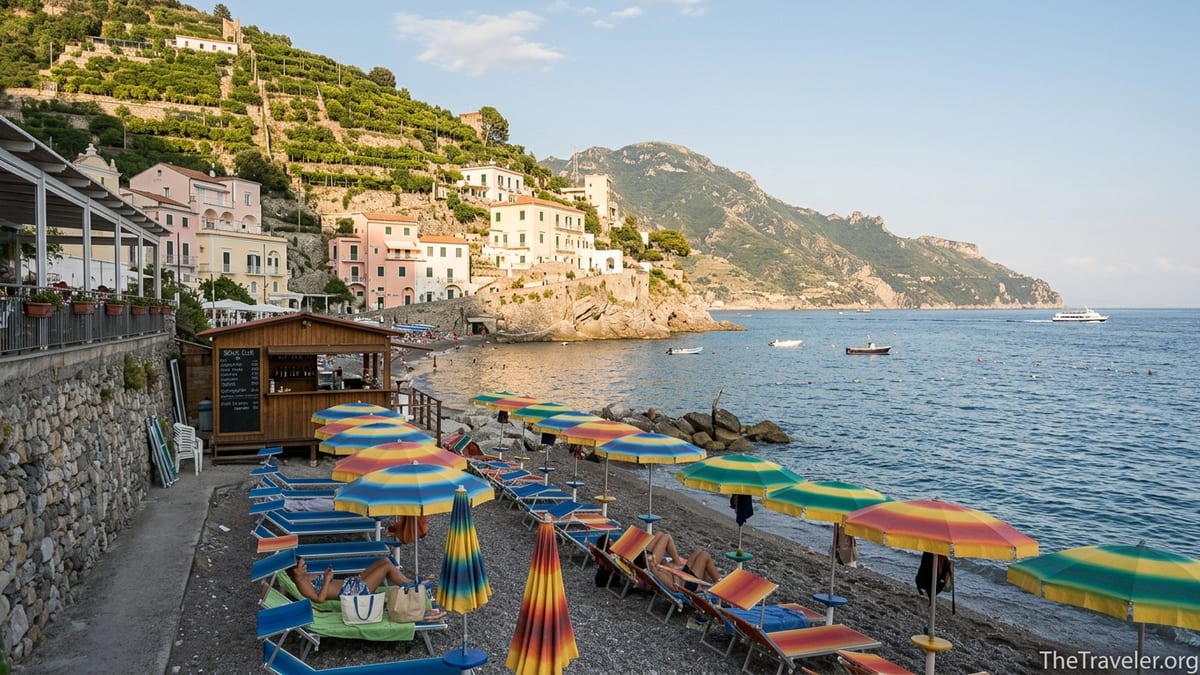
Beach clubs, known locally as lidi or stabilimenti balneari, are one of the key cost variables in a Southern Italy coastal trip. At a very simple level, you are paying for a bundle that usually includes access to private facilities, an umbrella and one or two sunbeds on a section of managed beach. Prices in 2026 depend heavily on region, exact club, row, and whether it is a weekday or weekend. In less fashionable corners of Calabria and parts of Basilicata, daily rates for an umbrella with two chairs in mid rows can still be found in the 20 to 30 euro range in summer.
In more popular destinations, the numbers change. On busy stretches of coastline near Naples, published price lists for 2024 and 2025 show weekday rates for a standard umbrella and two loungers starting in the low twenties and climbing to 30 or 40 euros on summer weekends, with first rows on the sand several euros higher. In Sorrento, Positano, Capri and top Sicilian clubs associated with luxury hotels, travelers report peak season day beds and sea platforms ranging widely from about 50 euros for back rows at simpler clubs through to 150 euros or more per person when bundled with restaurant dining at premier venues. At the highest end on islands like Capri, an afternoon at a club restaurant with set sunbeds and lunch can easily cross 150 euros per person before drinks.
Attractions and tours add another layer. Entrance to Pompeii or Herculaneum typically costs just over 15 euros per adult for a standard ticket, with combined tickets and add ons raising the cost. The archaeological park of Paestum and many museums in Naples and Palermo sit in a similar ballpark. Guided group tours of sites such as Pompeii, Mt Vesuvius, Etna or the Valley of the Temples in Agrigento often run between 50 and 120 euros per person depending on group size, inclusions and transport. Day long boat excursions along the Amalfi Coast, around Capri, or among the Aeolian Islands can range from about 80 to 150 euros per person in a shared group setting, with private boats commanding multiples of that.
For budgeting, assume that if you plan to spend three or four full beach club days in a week in an expensive area, a couple might easily allocate 200 to 400 euros to sunbed and umbrella fees alone, plus restaurant and bar spending on top. If you instead mix free public beaches with one or two paid club days in more modest regions, that line item can shrink to 60 to 150 euros in the same period. Visits to one or two major archaeological sites, a guided city walk, and a single organized day tour or boat trip might add 150 to 300 euros per person over a week, depending on your appetite for structured activities.
Sample Daily Budgets: Affordable, Mid Range and Luxury
Because everyone travels differently, it can help to frame budgets per person per day, assuming two people sharing a room and excluding flights. For an affordable yet comfortable trip that avoids the priciest destinations in peak weeks, think in the range of 120 to 160 euros per person per day. That might look like 60 to 80 euros each for a shared double room in Puglia, Calabria or inland Sicily, 25 to 35 euros for food and modest drinks if you mix trattorias with street food and self catering, 10 to 20 euros for local transport and occasional bus or train hops, and 20 to 30 euros averaged over a few paid attractions or a single beach club day spread across several days.
A mid range budget for 2026 in Southern Italy that includes better located hotels, regular restaurant meals and some organized excursions sits more realistically around 200 to 350 euros per person per day. A typical breakdown might be 100 to 150 euros each for good quality hotels in destinations like Sorrento, coastal Puglia or Taormina in summer, 40 to 60 euros for food and drinks per day including one sit down restaurant meal, 15 to 25 euros for transport including train segments and the odd taxi, and 30 to 60 euros for activities when you factor in beach club days, ferry tickets and site entrances over the course of a week.
For a luxury oriented trip that takes in the Amalfi Coast, Capri or high end Sicilian resorts in July or August, daily costs per person can increase quickly. At this level, it is common to budget 250 to 400 euros or more per person per night for accommodation alone in classic seaview rooms at upscale properties, 70 to 120 euros or more per person per day for dining and drinks if you favor renowned restaurants and beach club lunches, 20 to 40 euros per person for private transfers, taxis and higher class rail tickets, and 60 to 150 euros per person averaged across private boat outings, high end beach clubs and bespoke tours.
For families or groups, apartment rentals and villas can change the math. A three bedroom apartment in a non prime but pleasant coastal town in Puglia or Sicily in shoulder season might cost 180 to 250 euros per night, which split across four adults comes in at 45 to 65 euros per person. With access to a kitchen, food spending can also drop significantly. On the other hand, large private villas with pools on the Amalfi Coast or in upmarket parts of Sicily commonly rent for several thousand euros per week in summer, which can still be good value per person for big groups but will sit firmly in the luxury budget bracket.
Money Saving Strategies Without Spoiling the Trip
Keeping costs under control in Southern Italy is less about strict penny pinching and more about making a series of smart structural decisions. The first, and most powerful, is where and when you go. Shifting a week from mid July on the Amalfi Coast to late May in Puglia or early October in Sicily can deliver similar weather at a dramatically lower cost for accommodation and beach services. Consider using famously expensive spots like Positano or Capri as day trips or one night treats rather than full week bases, while spending most nights in more affordable hubs like Salerno, Maiori, Minori, Vietri sul Mare, or inland towns connected by train.
Transport choices matter too. Use regional trains instead of premium services for short hops wherever timings allow, and build itineraries that minimize one way drop fees on rental cars. On the Amalfi Coast and in the Sorrento Peninsula, buses and ferries can often replace taxis and private transfers if you allow extra time and avoid the most crowded departure windows. In cities like Naples, Bari or Palermo, staying in central neighborhoods within walking distance of key sights and transport terminals can reduce your reliance on taxis altogether.
On the food and beach front, follow local habits. Many Italians use free public beaches in the morning or late afternoon and only occasionally pay for a lido when they want comfort and services for a full day. You can mirror this rhythm by buying a simple picnic from a supermarket, using the public section of the beach, then perhaps booking a single paid beach club day at a more affordable spot later in the week. Eating your main meal at lunch, when some restaurants offer slightly better value set menus, and opting for lighter dinners can also help your budget without sacrificing quality.
Finally, book what needs to be reserved in advance but avoid over committing to expensive options you might not end up using. In 2026, key elements that usually warrant early booking at the best price include your main accommodations, any rental car segments, popular ferry routes in high season and special tours that run with limited capacity, such as small group boat trips to the Aeolian Islands or Etna summit excursions. For trains on high frequency regional routes, local buses and many beach clubs outside a handful of hottest addresses, it often remains possible to buy tickets or secure loungers closer to the day once you see the weather and your energy levels.
The Takeaway
A Southern Italy vacation in 2026 can be a blow out indulgence or a surprisingly manageable escape, depending on how you design it. Accommodation, beach clubs and transport between famous coastal hotspots are what will move your budget most dramatically, while food, basic public transport and entry fees to many sights remain relatively moderate by Western European standards. The key is understanding where the money tends to go and making conscious choices instead of getting swept along by the most heavily marketed options.
If you are prepared to be flexible with dates, choose Puglia, Calabria, Basilicata or much of Sicily over the most glamorous corners of the Amalfi Coast in peak season, use trains and buses where practical, and mix paid beach clubs with public beaches, it is still very possible to build a rich, memorable Southern Italian itinerary in the 120 to 220 euros per person per day bracket. If you crave marquee hotel names, private boats, front row sunbeds and tasting menus by the sea, your budget will need to rise accordingly, but going in with realistic expectations will help you enjoy every euro you spend rather than worrying about each bill as it arrives.
FAQ
Q1. How much should I budget per day for a Southern Italy trip in 2026?
For two people sharing, a realistic range is about 120 to 160 euros per person per day for a careful trip in more affordable regions, 200 to 350 euros per person for a comfortable mid range itinerary, and 400 euros or more per person per day if you want luxury hotels, high end beach clubs and private tours on the Amalfi Coast, Capri or similar hotspots in peak season.
Q2. Is the Amalfi Coast really more expensive than Puglia or Sicily?
Yes. In peak months, typical double room rates and beach club prices on the Amalfi Coast and Capri are often two to three times what you would pay for similar comfort in many parts of Puglia, Basilicata, Calabria or less hyped stretches of Sicily. That does not mean you should skip the Amalfi Coast entirely, but many travelers choose to stay there for fewer nights and base most of their trip in better value regions.
Q3. Do I need a car to explore Southern Italy?
You do not strictly need a car, but having one is helpful in rural Puglia, inland Basilicata and parts of Sicily or Calabria with limited public transport. For coastal hubs and islands like Naples, Sorrento, Amalfi, Salerno, Capri or the Aeolian Islands, trains, buses and ferries are usually adequate and parking a car can be expensive and stressful. A common strategy is to combine trains for long distances with short car rentals for specific countryside segments.
Q4. How much do beach clubs cost in Southern Italy?
In 2026, expect simple beach clubs in less famous areas to charge around 20 to 30 euros per day for an umbrella and two loungers. On busier coasts near Naples or in popular Sicilian resorts, weekday prices often rise into the 30 to 50 euro band, with weekends, front rows and glamorous venues on the Amalfi Coast, Capri or Taormina charging 50 euros per person or more, sometimes tied to restaurant spending.
Q5. Are trains in Southern Italy expensive?
Regional and InterCity trains in Southern Italy are generally good value. Short routes such as Naples to Salerno usually cost under 10 euros one way on regional services, and longer trips between major cities typically fall in the 15 to 45 euro bracket for second class, especially if booked in advance. Premium high speed trains and last minute purchases cost more, but overall rail remains a cost effective way to move between hubs.
Q6. What is a reasonable budget for food per day?
If you mix supermarket breakfasts, casual lunches and one sit down meal, plan on about 25 to 40 euros per person per day in more affordable towns, rising to 40 to 60 euros per person in expensive coastal resorts where restaurant prices are higher. Travelers who prioritize fine dining, long lunches at beach clubs and generous aperitivo hours should budget more, often 70 euros or beyond per person per day.
Q7. When is the cheapest time to visit Southern Italy?
Late April, May, late September and October usually offer the best balance of lower prices and pleasant weather. Hotel rates and beach club fees often drop noticeably outside July and August, while the sea remains swimmable in many places and crowds thin out. Winter can be cheaper still, especially in cities, but some coastal resorts and beach services close or operate on limited schedules.
Q8. How much should I set aside for attractions and tours?
For a typical week, allocating around 150 to 300 euros per person is sensible if you plan to visit major archaeological sites, join one or two guided tours and perhaps take a boat trip. Those who prefer to explore independently and focus on free activities such as wandering historic centers and enjoying beaches can get by with considerably less, while travelers keen on multiple private boat charters and specialist tours will spend more.
Q9. Is it cheaper to stay in one place or move around?
Staying in fewer bases generally saves money. Every hotel change usually involves extra transport costs and can push you toward short stays in expensive locations. Many visitors keep one main base in a good value area like Salento, Eastern Sicily or Salerno and then add day trips to more expensive neighboring destinations. This approach also simplifies logistics and often allows you to negotiate better nightly rates for longer stays.
Q10. How far in advance should I book to get good prices?
For peak season, it is wise to book key elements like coastal hotels, island ferries on popular routes and rental cars several months in advance to secure the best rates and availability. Shoulder season trips offer a bit more flexibility, but even then, reserving accommodations and any special tours a few months ahead usually yields better choice and pricing, while local trains, buses and many beach clubs can still often be handled closer to the date.