


Southern Italy is no longer a quiet secret. From the vertiginous roads of the Amalfi Coast to the cave hotels of Matera and the white towns of Puglia, this part of the country is now packed each season with travelers choosing where to spend limited days and a finite budget. The challenge is not finding beautiful places, but choosing the right mix of coastlines, cities, islands and quieter corners that match your travel style. This guide compares the headline destinations of Naples, Positano, Amalfi, Capri, Matera, Alberobello, Polignano a Mare, Lecce, Tropea, Taormina, Palermo and wider Sicily, with concrete examples of what each offers in practice for different kinds of travelers.
How to Choose Your Southern Italy Base: Big Picture Trade-offs
On a map, Campania, Basilicata, Puglia, Calabria and Sicily do not look huge, but in real travel time they are larger than most visitors expect. A fast train from Rome to Naples takes just over an hour, but driving the 60 kilometers of Amalfi Coast between Positano and Salerno in August can stretch to two or three hours with traffic. Choosing two or three smart bases often works better than trying to “collect” every famous town in one trip.
Costs vary sharply by area and season. In peak summer, a standard double room with sea view in Positano often starts around the price of a full week in a comfortable guesthouse in Lecce or Tropea. In shoulder months like late April, May, late September and October, you can still find mid-range hotel rooms in Matera or Palermo in the rough range of what a single night in Capri might cost in early August. Budget-conscious travelers, especially families, usually get better value by focusing on Puglia, Calabria and Sicily rather than sleeping on the Amalfi Coast itself.
Accessibility and infrastructure also differ. Naples and Palermo have busy international airports and high-speed train links; Capri, Positano and Amalfi rely on ferries and coastal roads that are vulnerable to summer congestion and weather disruption. Travelers who dislike hairpin roads may prefer to base in Naples or Salerno and explore the Amalfi Coast by ferry, or use flat, train-linked towns like Bari, Lecce or Catania as hubs for wider regional exploration.
Finally, overtourism is a real factor. On a Saturday in July, Capri’s main piazza can feel more crowded than central Rome, while the historic center of Matera now sees steady tour groups year-round. By contrast, a summer evening in the Calabrian town of Tropea or in a small Sicilian baroque town can still feel predominantly local. Building at least one lesser-known base into your route is usually the key to a more relaxed, better-value trip.
Naples, Amalfi Coast and Capri: High Drama for Food Lovers and First-Timers
Naples is the natural entry point to Southern Italy for many travelers. Its airport connects widely across Europe and budget airlines often make it the cheapest arrival city in the south. On the ground, Naples is noisy, intense and full of character, which suits urban travelers and food lovers who enjoy street life. A classic experience is walking down Via dei Tribunali at lunchtime and joining the line at a historic pizzeria for a margherita that typically costs only slightly more than a takeaway sandwich in northern Europe. Museums, such as the archaeological museum with its artifacts from Pompeii and Herculaneum, make Naples a strong choice for culture-focused trips.
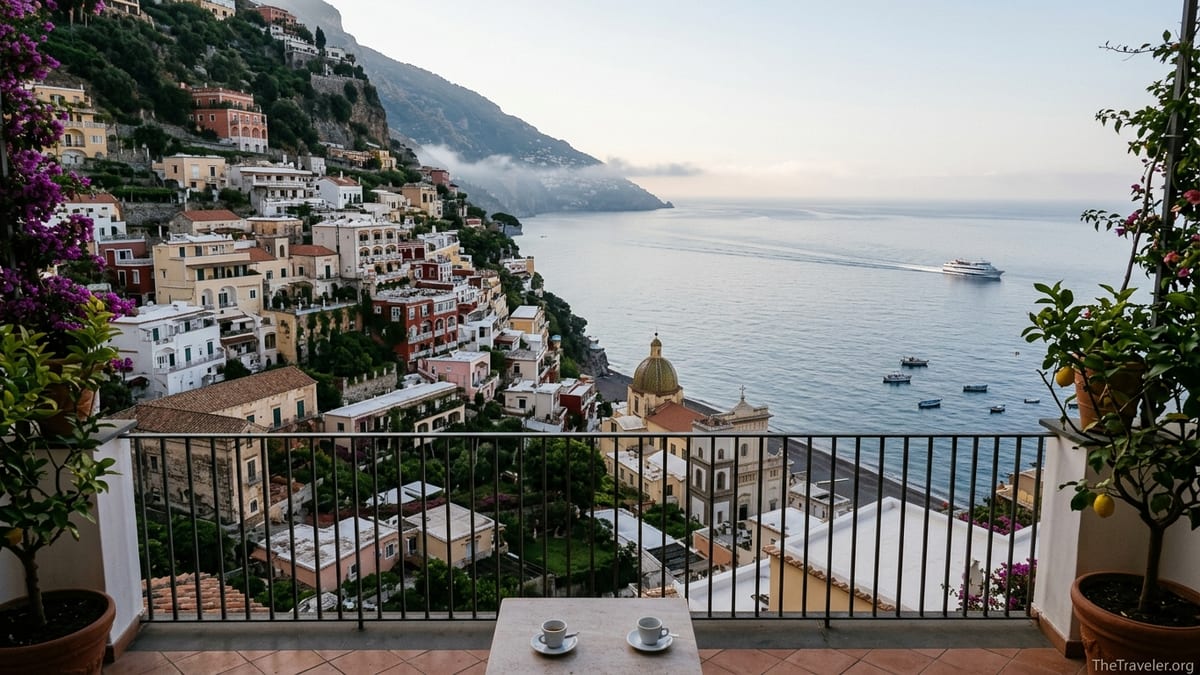
For scenery-focused travelers willing to tolerate crowds and higher prices, Positano and Amalfi are about visual drama. Expect steep staircases, boutique hotels carved into cliffs and beach clubs where a daybed in high season can cost as much as a mid-range restaurant meal in Naples. Many visitors now stay in more affordable Salerno, Sorrento or smaller towns like Minori, then use ferries to reach Positano and Amalfi for the day. This approach often suits families and older travelers who want Amalfi views without repeatedly climbing hundreds of steps with luggage.
Capri works best either as a splurge or a carefully timed day trip. Fast ferries from Naples generally take under an hour in summer, and many visitors book a mid-morning crossing, circuit the island by small boat to see coastal grottoes, then ride the chairlift from Anacapri to Monte Solaro for sweeping views. Accommodation on Capri in July and August is among the most expensive in the south, so couples or solo travelers on a moderate budget often stay in Naples or Sorrento and devote one long day to the island, picking an early ferry over and a late return to avoid the most crowded midday hours.
Overall, the Campania trio of Naples, Amalfi and Capri suits first-time visitors to Italy, food-motivated travelers and those who value iconic scenery even when it comes with lines, higher prices and busy streets. Travelers seeking quiet beaches, long hikes without crowds or more local-feeling nightlife usually find better matches elsewhere in the south.
Matera, Alberobello and Polignano a Mare: Characterful Bases for Slow Travelers
Matera in Basilicata has shifted in a decade from relative obscurity to a staple of Southern Italy itineraries. Its old “sassi” districts of cave dwellings, once associated with poverty, are now filled with boutique hotels and atmospheric restaurants. Many travelers now choose to sleep in cave rooms cut directly into the rock, where a mid-range option in spring or autumn can still cost roughly what you might pay for a basic room without a view on the Amalfi Coast. This makes Matera a rewarding choice for couples and photographers who value atmosphere and do not mind walking on steep stone alleys that can be slippery in rain.
Alberobello in Puglia draws visitors for its clusters of trulli, the conical-roofed white houses that photograph beautifully. The Rione Monti district is highly touristed, filled with souvenir shops by midday, but staying overnight lets you enjoy quieter early mornings and evenings when day trippers have gone. Many families appreciate the novelty of sleeping in a trullo that has been converted into an apartment, often at prices lower than coastal resorts. Independent travelers sometimes base instead in nearby Locorotondo or Martina Franca, using a rental car to visit Alberobello for a few hours while enjoying more local-feeling evenings elsewhere.
Polignano a Mare, perched on cliffs above the Adriatic, has become one of Puglia’s most photographed coastal towns. The view down to its pebble cove framed by white houses appears frequently in travel campaigns. In practice, this makes the historic center busy in summer, but the town works very well as a base for short trips: frequent local trains link it to Bari and Monopoli, and many agriturismo properties lie ten to twenty minutes inland by car. Food-oriented travelers, especially those who enjoy seafood, tend to appreciate Polignano’s waterfront trattorias where grilled fish, a carafe of local wine and simple sides can still be good value compared with Amalfi Coast menus.
This inland-and-coast triangle of Matera, Alberobello and Polignano a Mare rewards slow travelers who like to linger in one region for five to seven days. Renting a car unlocks small inland villages and masserie stays among olive groves, while those who prefer not to drive can still combine Matera and Puglia reasonably using regional trains and arranged transfers. For value and variety, it is one of the strongest options in the south for couples, digital nomads and repeat visitors to Italy.
Lecce, Salento and Tropea: Sunny Choices for Beach Time and Local Vibe
Lecce, often nicknamed the “Florence of the South” because of its golden baroque architecture, suits travelers who want a compact, elegant base with good restaurants and easy day trips. The historic center is mostly flat and walkable, making it comfortable for older travelers or families with strollers. Accommodation in well-located guesthouses or small hotels is often significantly cheaper than in Amalfi or Capri, especially outside August. From Lecce, frequent trains and buses run out toward coastal towns like Otranto and Gallipoli, so beach days are straightforward without a car.
The wider Salento peninsula offers miles of coastline that is busy in Italian holiday periods but still feels more local than many better-known resorts. Families often choose low-rise seaside towns where kids can play on gently shelving sandy beaches, while food travelers seek out agriturismi that serve their own olive oil and seasonal produce. As an example, a family of four might find a self-catering apartment near the Salento coast for the price of a single double room in Positano in the same month. Nightlife in July and August is lively, with open-air bars and local music festivals, while shoulder seasons are quieter and better for cycling and exploring inland towns.
Tropea in Calabria is increasingly appearing on “next big thing” lists, with its clifftop historic center stacked above one of the most photogenic beaches in Italy. Compared with Amalfi, the town still feels more relaxed and has a high ratio of Italian to foreign visitors in many months. Train connections along the Tyrrhenian coast make it relatively easy to reach without a car. Prices for seafront hotels or beach umbrellas and chairs are generally lower than on the Amalfi Coast, which appeals to younger travelers and long-stay visitors who want to be by the sea for a week without spending a luxury-level budget.
These southern coastal areas are particularly strong for travelers whose priority is swimming and relaxed evenings rather than ticking off multiple cities. Couples on a honeymoon budget might still prefer the drama of the Amalfi Coast or Taormina, but many beach-focused trips get better weather-to-cost value by centering on Salento or Tropea instead.
Taormina, Palermo and Sicily: Culture, Food and Varied Landscapes
Sicily could easily fill its own extended itinerary, and many experienced travelers now treat it as a separate trip from mainland Southern Italy. Taormina, hanging above the Ionian Sea with views of Mount Etna, remains the island’s most famous resort town. It offers upscale hotels, a restored Greek theater that hosts summer performances and easy access to pebble beaches below. Prices for central hotels and seaview terraces are on par with high-end Amalfi Coast properties in peak season, so Taormina suits honeymooners, special-occasion trips and travelers who prioritize comfort and dramatic views over budget.
Palermo, Sicily’s capital, offers a very different experience. It is a working city with grand boulevards, narrow old streets, busy markets and a mix of Norman, Arab and baroque architecture. Food travelers can spend days moving between street food stalls selling panelle, arancini and fresh sfincione, and sit-down restaurants that highlight local seafood and wines. Hotel rates in Palermo are generally more moderate than in Taormina, making it a strong base for urban explorers, history enthusiasts and travelers who want culture by day and a wide choice of evening options.
Beyond those two hubs, wider Sicily offers considerable variety. The baroque towns of the southeast, such as Noto and Ragusa, appeal to architecture and food enthusiasts, while Agrigento’s Valley of the Temples attracts history-minded travelers who do not mind summer heat. The north coast around Cefalù mixes family-friendly beaches with medieval lanes, and the slopes of Mount Etna support wine estates that increasingly attract travelers interested in vineyard visits. Because distances on Sicily are substantial and public transport can be slower than on the mainland, travelers who want to see more than one region in a week often find it worthwhile to rent a car or join an organized small-group tour.
In broad terms, Sicily works best for travelers who value strong regional identity, layered history and distinctive food as much as beaches. It also offers more shoulder-season appeal than some mainland resorts, since cities like Palermo, Catania and Syracuse remain interesting in cooler months when swimming is less of a focus.
Matching Destinations to Traveler Types and Trip Length
For first-time visitors to Italy with 7 to 10 days, a common and effective pattern is to pair Naples and the Amalfi Coast with either Matera and Puglia or a short taste of Sicily. For example, a couple might spend three nights in Naples, two nights in a mid-range hotel in Amalfi or nearby Salerno, and three to four nights divided between Matera and Polignano a Mare. This gives a mix of big-city street life, coastal scenery and slower inland time without excessive moving.
Budget-focused backpackers and digital nomads often skip overnight stays in Positano or Capri, visiting them on day trips from cheaper bases. Instead, they might structure a month-long stay around longer rentals in Palermo, Lecce and perhaps Catania or Bari, using weekly apartment discounts and cooking at home between street food and restaurant meals. In these cities, mid-term rentals and coworking spaces are increasingly available, and cafe culture provides flexible work-friendly environments.
Families with school-age children tend to prioritize easy logistics, walkable centers and access to calm beaches. Bases like Lecce, Polignano a Mare, Tropea or Cefalù often work better than Amalfi or Taormina, where steep steps and narrow roads make strollers and beach gear harder to manage. Many families now split their time between one cultural center such as Naples, Palermo or Matera and one beach base, staying at least four nights in each to avoid constant packing and unpacking.
Active travelers who enjoy hiking and day-long excursions might focus on a combination of Amalfi Coast paths, such as the Path of the Gods, the ravines and rock churches around Matera, and the flanks of Mount Etna above Catania or Taormina. In this case, shoulder seasons like May, June, late September and October often provide kinder temperatures and thinner crowds than July and August, while still offering long daylight hours and regular ferry and tour operations.
Hidden Gems and Alternatives When the Hotspots Feel Too Crowded
As Amalfi, Capri, Taormina and Alberobello grow busier, many travelers now look for second-line destinations that deliver similar qualities with fewer crowds. In Campania, the Cilento coast south of Salerno offers long sandy beaches, smaller resorts and archaeological sites such as Paestum, often at lower prices than Amalfi. Towns like Agropoli or Santa Maria di Castellabate give access to seaside promenades and boat trips with a more relaxed, family-oriented atmosphere.
In Basilicata, hilltop villages around the Lucanian Dolomites provide dramatic scenery and hiking without Matera’s visitor numbers. Some itineraries now combine one or two nights in Matera with time in smaller inland towns, staying in simple bed and breakfasts or family-run inns where dinners might be hosted-style meals rather than restaurant service. These locations appeal particularly to experienced travelers who enjoy language barriers, limited menus and slower evenings.
Puglia also hides alternatives behind its famous names. Instead of staying in crowded central Alberobello, some visitors base in Ostuni, Ceglie Messapica or the Itria Valley countryside, using rental cars or e-bikes to visit trulli zones, olive groves and local wineries. On the Gargano peninsula in northern Puglia, coastal towns like Vieste draw mostly Italian holidaymakers and provide good hiking and boat tours along a rugged coastline, though travel times from the main international airports are longer.
In Sicily, travelers looking to step away from the main circuit of Taormina and Palermo might consider smaller baroque towns of the southeast, the fishing villages around the Trapani and Marsala coasts, or the Aeolian Islands north of the mainland. These options usually require more planning in terms of transfers and ferry schedules, so they suit travelers who are comfortable stitching together multiple local services in exchange for quieter streets and more interaction with local life.
The Takeaway
Designing a trip to Southern Italy is less about identifying a single “best” place and more about matching each destination’s character to your own priorities. Naples, Positano, Amalfi and Capri provide high-impact scenery and famous experiences at correspondingly high cost and crowd levels. Matera, Alberobello and Polignano a Mare mix distinctive architecture with improving hospitality infrastructure, rewarding travelers who linger. Lecce, Salento and Tropea offer better beach-to-budget ratios and a more local feel, while Sicily, anchored by Taormina and Palermo, combines rich history, diverse landscapes and a strong sense of identity that can fill entire trips on its own.
For many visitors, the sweet spot lies in pairing one or two headline sights with at least one quieter base. That might mean a combination like Naples and Amalfi plus Matera, or Taormina plus an inland Sicilian town, or Lecce with a smaller Salento beach village. With realistic expectations about travel times, budgets and seasonal crowds, Southern Italy can deliver exactly the version of la dolce vita that suits you, whether that means sunset cocktails over Positano, a simple plate of orecchiette in a Puglian courtyard or a stroll through Palermo’s markets at dusk.
FAQ
Q1. How many days do I need to see the main highlights of Southern Italy?
For a first trip, 10 to 14 days is usually enough to combine Naples and the Amalfi Coast with either Matera and Puglia or a short taste of Sicily without rushing.
Q2. Is it better to stay in Positano or use a cheaper base nearby?
Staying in Positano offers iconic views but is expensive and full of steps. Many travelers now base in Sorrento, Salerno or smaller Amalfi Coast towns and visit Positano by ferry.
Q3. Do I need a car to explore Puglia and Matera?
You can reach Matera, Bari, Lecce and Polignano a Mare by train and bus, but a rental car gives far more flexibility for visiting trulli villages, countryside masserie and small coastal towns.
Q4. When is the best time to visit the Amalfi Coast and Capri?
Late April to early June and late September to October usually balance pleasant weather, regular ferry services and lighter crowds compared with the peak of July and August.
Q5. Is Sicily too big for a one-week trip?
Sicily is large, so one week is best spent focusing on one or two areas, such as Palermo and the northwest, or Taormina with Catania and Mount Etna, rather than trying to circle the entire island.
Q6. Which destinations are best for travelers on a tighter budget?
Cities and towns like Palermo, Lecce, Bari, Tropea and inland Puglian or Basilicatan villages generally offer better value for accommodation and dining than Capri, Positano, Amalfi or Taormina.
Q7. Are these Southern Italy destinations suitable for families with young children?
Yes, although steep towns like Positano and Taormina can challenge strollers. Many families prefer flatter bases such as Lecce, Polignano a Mare, Cefalù or Salento beach towns.
Q8. How far in advance should I book accommodation in peak season?
For July and August stays in hotspots such as Capri, Positano, Taormina or Alberobello, booking several months ahead is wise, especially for sea-view rooms and family apartments.
Q9. Can I visit Amalfi Coast towns and Capri without renting a car?
Yes. Ferries and buses connect Naples, Salerno, Sorrento, Amalfi, Positano and Capri in season. Many visitors prefer ferries to avoid coastal traffic and parking challenges.
Q10. How should I split my time between mainland Southern Italy and Sicily?
If you have two weeks, a common approach is one week on the mainland, around Naples, Amalfi, Matera and Puglia, and one week focused entirely on one or two regions within Sicily.