


Southern Italy rewards travelers who slow down. Between the volcanic drama of Naples, the cliffside villages of the Amalfi Coast, the cave dwellings of Matera, the whitewashed towns of Puglia, the wild coastline of Calabria and the timeless landscapes of Sicily, distances on the map can look short while journeys on the ground feel long. This guide lays out realistic 5, 7, 10, 14 and 21 day itineraries that combine these highlights with sensible overnight stops and travel times, so you can spend more time sipping an espresso in a sunlit piazza and less time wrestling with bus timetables.
How to Use This Southern Italy Itinerary Guide
The itineraries below are designed as modular building blocks starting in Naples, which has one of southern Italy’s best connected airports and rail hubs. From there, you can easily reach Pompeii, the Amalfi Coast, Matera, Bari and the rest of Puglia, or continue down to Calabria and across to Sicily. Each route balances headline sights with realistic transfer days based on current train, bus and ferry patterns, so you are not changing hotels every night.
Travel times mentioned are approximate and assume typical 2025–2026 schedules: for example, fast trains between Naples and Salerno often take around 40 minutes, local trains from Bari to Lecce around 1 hour 40 minutes, and ferries between Naples and Palermo generally 9 to 11 hours overnight. Actual departure times and seasonal services change frequently, so always check Trenitalia, Italo, regional bus operators and ferry companies when you book.
All itineraries assume you are comfortable using trains for long intercity stretches and local buses or ferries where rail lines do not exist, such as along the Amalfi Coast or parts of Calabria and Sicily. Renting a car is possible but not required for any of the routes described here, and in peak season you may find it more relaxing to rely on public transport and the occasional taxi or private transfer.
Prices fluctuate by season and how far ahead you book, but as a rule of thumb a high speed train from Naples to Bari might cost from 25 to 60 euros one way, while an overnight ferry from Naples to Palermo with a basic reclining seat can start around 50 to 70 euros and a private cabin notably more. Budget accordingly if you plan several longer hops in a short itinerary.
5 Days in Southern Italy: Naples, Pompeii and the Amalfi Coast
With only five days, the most rewarding strategy is to focus on the Bay of Naples and the Amalfi Coast. A typical pattern is three nights in Naples and two nights on or near the Amalfi Coast, or the reverse if you prefer more time by the sea. This avoids trying to rush across to Puglia or Sicily, which realistically require longer journeys and more time on the ground.
On Day 1, arrive in Naples and stay in the historic center or the seafront district of Santa Lucia. Spend the afternoon walking from Piazza del Plebiscito to Castel dell’Ovo, stopping for a classic margherita pizza in a traditional pizzeria. Day 2 is dedicated to Pompeii: from Napoli Centrale, the local Circumvesuviana train to Pompei Scavi takes around 35 minutes, and even allowing for queues at the site entrance you can comfortably spend five or six hours exploring before returning to Naples for dinner in the Spanish Quarter.
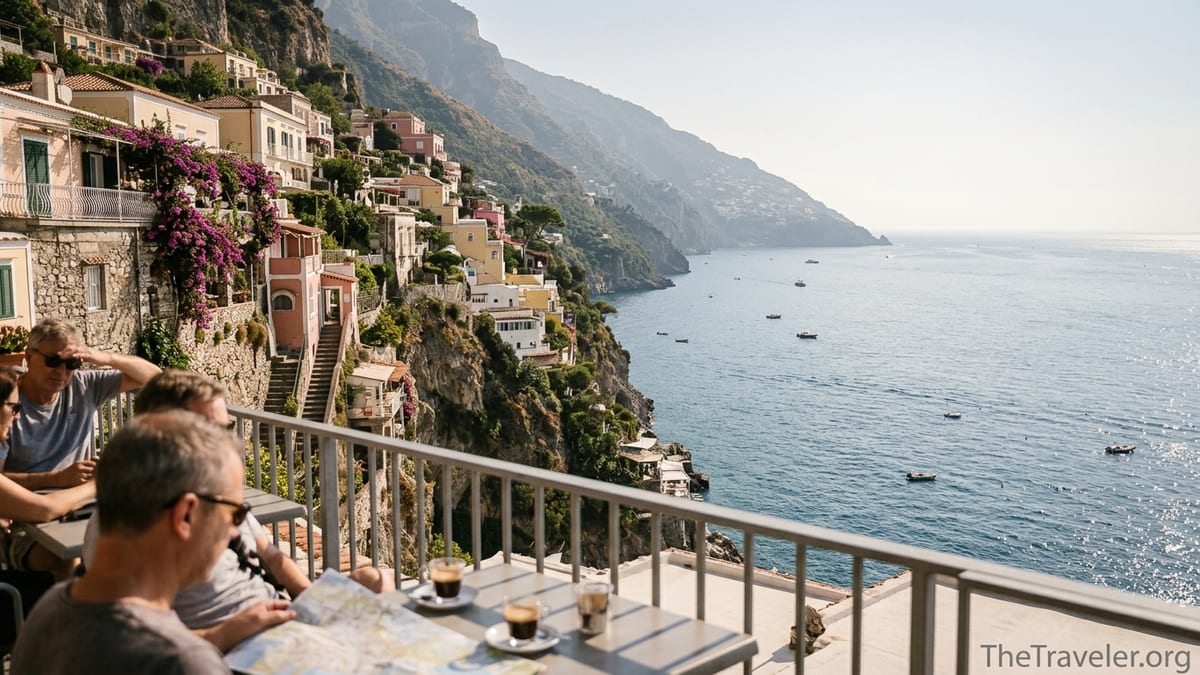
On Day 3, transfer to the Amalfi Coast. A common route is high speed train from Naples to Salerno in about 40 minutes, then a seasonal ferry to Amalfi or Positano, which typically takes 35 to 70 minutes depending on the route. Booking a mid morning train and a late morning ferry allows you to reach your hotel by early afternoon. Stay two nights in either Amalfi, Positano or quieter Minori or Praiano. Day 4 can then be a relaxed coastal day: perhaps a bus or taxi ride up to Ravello for its villa gardens, followed by a late afternoon swim back in Amalfi.
Use Day 5 to travel back to Naples for your departure. In season you can often take a morning ferry from Amalfi to Salerno, connect to a train to Naples, and be back in the city in under three hours total. In shoulder months when ferries are less frequent, SITA buses run from Amalfi to Salerno or Sorrento, but they are slower and prone to traffic. Allow generous buffers if you have a flight or long distance train to catch that day.
7 Days: Adding Matera or Extra Time on the Amalfi Coast
A week opens up the possibility of adding a second base beyond Naples and the Amalfi Coast. One popular choice is Matera, the UNESCO listed city of cave dwellings in Basilicata, which pairs well with Naples due to existing rail links through Salerno. Another is to extend the coastal stay and explore more of the Sorrento Peninsula and Capri at a slower pace.
For a Naples, Amalfi and Matera loop, you might spend Days 1 and 2 in Naples as above, Day 3 in Pompeii and transfer to the Amalfi Coast in the late afternoon, then Day 4 enjoying the coast. On Day 5, travel from the Amalfi Coast to Matera. The simplest version is to take a morning ferry or bus back to Salerno, a regional or fast train to Bari in around 3 hours, then a local train or bus from Bari to Matera in roughly 1 hour 30 minutes. With connections, this day can easily take 6 to 7 hours door to door, so treat it as a travel day.
Stay in Matera for two nights, ideally in a converted cave hotel in the Sassi districts, and use the evening of Day 5 and all of Day 6 to explore. Concrete experiences might include a guided walking tour of the cave churches, dinner at a trattoria carved into the rock with views over the ravine, and a sunrise walk when the city is at its quietest. On Day 7, take a morning bus or train back to Bari and a fast train from Bari to Naples, often scheduled around 3 hours 30 minutes, then connect to your onward transport.
If Matera feels like too much travel, another 7 day option is to split your time as three nights in Naples and four nights split between Sorrento and Positano. For instance, base in Sorrento for three nights, using the frequent local train for a half day at Pompeii and a day trip by ferry to Capri, then move to Positano for one finale night. The ferry from Sorrento to Positano usually takes about 40 minutes in good weather, and this pattern limits hotel changes while still giving you different flavors of the coast.
10 Days: Puglia Joins the Picture
With ten days you can comfortably add Puglia to Naples and the Amalfi Coast, without feeling as if you are spending every other day in transit. The cleanest route is to move steadily east: Naples to Amalfi, on to Matera, then across to Puglia’s Adriatic coast, finishing in either Bari or Lecce for an easy train or flight out.
One realistic structure is Days 1 and 2 in Naples, Day 3 in Pompeii and transfer to the Amalfi Coast, Day 4 on the coast, and Day 5 as your travel day to Matera. Day 6 is then a full day in Matera. On Day 7, head for Puglia by bus or train from Matera to Bari, typically around 1 hour 30 minutes. From Bari, regional trains run down the coast to Polignano a Mare, Monopoli, Ostuni and Brindisi, with journey times between 30 minutes and 1 hour 30 minutes depending on distance and stops.
For a first taste of Puglia, many travelers base either in Polignano a Mare or Ostuni. Polignano perches on cliffs above clear water and works well if you want seaside views and quick access to Bari’s airport and station. Ostuni, known as the White City, sits on a hill inland amid olive groves. Spend Days 7 and 8 here, exploring old towns and nearby masseria farm estates that often offer dinners sourced from their own fields. A typical dinner in a countryside agriturismo might cost around 35 to 50 euros per person for multiple courses and local wine.
On Day 9, travel further south to Lecce, the baroque “Florence of the South”. Trains from Bari to Lecce are frequent, and the full route from Bari via Polignano, Ostuni and Brindisi to Lecce usually takes about 1 hour 40 minutes on a direct regional service and a little less on faster Intercity trains. Spend your final two nights in Lecce, taking a day trip by bus or rental car to the beaches around Gallipoli or Otranto if the weather is warm, or simply lingering in Lecce’s honey colored streets and cafes. Day 10 is for departure by train north or by flight from nearby Brindisi or Bari.
If you prefer fewer hotel changes, you can simplify this into three bases only: four nights split between Naples and the Amalfi Coast, three nights in Matera, and three nights in either Polignano a Mare or Lecce, skipping smaller stops. This version sacrifices some variety for longer stays, which can be invaluable in high summer when crowds and heat slow movement.
14 Days: Continuing to Calabria and Sicily
Two weeks lets you trace the full curve of southern Italy from the Bay of Naples across to Puglia and down through Calabria to Sicily. The key is to accept that certain legs, such as crossing the toe of Italy or transiting Sicily, will consume much of a day, so you should cluster overnights and avoid one night stays where possible. In return, you gain enough time for at least two bases in Sicily and one in Calabria.
A sample 14 day route might look like this: Days 1 and 2 in Naples, Day 3 for Pompeii and transfer to the Amalfi Coast, Day 4 on the coast, Day 5 to Matera, Day 6 in Matera, Days 7 and 8 in Puglia (for example Polignano a Mare and Lecce), Day 9 as a long transfer to Calabria, Day 10 in Calabria, and Days 11 to 14 in Sicily. To reach Calabria from Puglia without backtracking to Naples, you can travel from Lecce or Brindisi by train to Taranto, then onward along the Ionian coast to Sibari and finally to Reggio Calabria, though schedules vary and connections can be sparse outside summer.
A more straightforward, though slightly longer, alternative is to return towards Salerno and then continue down the Tyrrhenian side by Intercity trains to Calabria. For example, you might travel Lecce to Bari, Bari to Salerno, then Salerno to Tropea or Reggio Calabria, accepting a full day of trains. Tropea is a popular base thanks to its clifftop old town and sandy beach directly below, reachable via a staircase from the historic center. Spending at least two nights in Tropea of this 14 day plan allows time for a boat excursion to the Aeolian Islands or a lazy beach day.
The last segment is your hop to Sicily. From Reggio Calabria, frequent short ferries cross to Messina, usually in around 30 minutes, then trains continue along the coast to Taormina and Catania. Alternatively, there are overnight ferries from Naples to Palermo, typically taking around 9 to 11 hours, but these make more sense if you restructure the itinerary to head south from Naples earlier. Within Sicily, trains between Palermo and Catania currently take about 2 hours 45 minutes on conventional services, though upgrade works are expected to shorten this over time. Plan at least three to four nights across Palermo and the eastern side around Taormina or Catania.
With 14 days, a balanced Sicilian finale is one night in Messina on arrival if needed, two nights in Taormina or nearby Giardini Naxos for coastal views and access to Mount Etna excursions, and two nights in Palermo to experience its markets and Norman architecture. From Palermo, you can fly out or, with extra time, continue by ferry back to mainland Italy or onward to another Mediterranean destination.
21 Days: A Grand Southern Italy Circuit
A full three weeks allows a generous circuit that threads Naples, Amalfi, Matera, Puglia, Calabria and multiple corners of Sicily without rushing. Rather than adding more destinations, it is usually better to deepen your stays with extra nights and slow days, whether that means lingering on a Puglian beach or booking a second cooking class in Palermo.
One grand 21 day route could be structured as follows. Days 1 to 3 in Naples, including Pompeii as a day trip and perhaps a half day on the island of Procida or an evening food tour in the historic center. Days 4 to 6 on the Amalfi Coast, splitting time between Sorrento for ease of transport and Positano or Amalfi for scenery. Days 7 and 8 in Matera. Days 9 to 12 across Puglia, with two nights in Polignano a Mare and two nights in Lecce, taking optional day trips to Alberobello for its trulli houses or to the beaches of the Salento peninsula.
On Day 13, aim for Calabria. Travel from Lecce to Reggio Calabria via a combination of regional and Intercity trains, accepting that you may spend 7 to 9 hours in transit with one or two changes, often via Taranto or Sibari. Spend Days 13 and 14 in Reggio Calabria or Tropea, according to your preference for a larger city with a famous waterfront promenade and archaeological museum, or a smaller resort town focused on beaches and sunsets over Stromboli.
Day 15 is your crossing to Sicily. From Reggio Calabria, the short ferry ride to Messina is followed by a regional train along the coast to Taormina-Giardini station, which often takes around 1 hour 30 minutes. Spend Days 15 to 17 based in Taormina or nearby, exploring the ancient Greek theater, taking a cable car down to the beach and booking a small group excursion to Mount Etna. Day 18 is then your transfer to Palermo by train, usually 4 to 5 hours with views of the interior mountains and coastline.
End the trip with three nights in Palermo, from Day 18 to Day 20, and use Day 21 for departure. In Palermo, concrete experiences might include a street food tour through Ballarò and Vucciria markets, a visit to Monreale Cathedral by bus or taxi, and an afternoon on the beach at Mondello, about 20 minutes away by taxi or around 30 to 40 minutes by city bus depending on traffic. If you prefer a circular route, you could instead take an overnight ferry from Palermo back to Naples, returning to your starting point by sea while sleeping in a cabin.
Practical Transport Tips and Seasonal Considerations
Southern Italy’s infrastructure combines modern high speed rail lines with older single track routes, slow regional trains and bus networks that can be thin on Sundays and in winter. For example, the fast Frecciarossa and Italo trains connect Naples with Bari in under 4 hours on many departures, but along parts of Calabria and Sicily you may be limited to regional trains that stop frequently and average much slower speeds. When planning moves between bases such as Lecce and Reggio Calabria or Taormina and Palermo, assume you may need a full morning or afternoon.
In summer, ferries are a highlight but also a potential bottleneck. Companies run seasonal services along the Amalfi Coast, such as ferries from Salerno to Amalfi and Positano, with travel times typically between 35 minutes and 1 hour 10 minutes. On busy days, afternoon departures can sell out, so buying tickets earlier in the day or online is sensible. Ferries from Naples to Palermo are overnight and cross open sea, so pack motion sickness remedies if you are sensitive, and consider paying extra for a cabin rather than the cheapest reclining seats, which are dormitory style.
Shoulder seasons in April, May, late September and October often strike the best balance of reasonable weather and lighter crowds, but some beach clubs, smaller boat services and coastal restaurants may still operate on reduced hours. In winter, Amalfi Coast ferries largely stop, certain bus timetables shrink and daylight is short, so if you travel from November to March factor in earlier sunsets when planning days that require multiple connections.
Buying tickets in advance is particularly helpful for long distance trains between major cities such as Naples and Bari or Bari and Rome, where advance purchase fares can be much cheaper than buying on the day. For regional trains, you can often buy on the day at station machines, but remember to validate paper tickets in the small green or yellow machines on platforms where required. In smaller stations, staff may not speak much English, so having your route and departure time written down on your phone can smooth the process.
The Takeaway
Southern Italy rewards travelers who match their ambitions to the realities of its geography and transport. On paper, Naples, Matera, Lecce, Tropea and Taormina line up neatly; in practice, mountains, winding coastal roads and older rail lines turn some of those short distances into long days. Building a route around a few well chosen bases and accepting that some days are dedicated to travel will often yield a far richer experience than trying to see everything at once.
Whether you have five days or three weeks, the common thread of every successful itinerary is a willingness to slow down. That might mean spending an extra night in Matera so you can wander its stone lanes at both sunrise and sunset, choosing one or two towns in Puglia instead of four, or lingering over a long lunch on the Amalfi Coast rather than squeezing in another bus ride. Start with the routes outlined here, factor in your own interests and energy levels, and you will find a version of southern Italy that feels both inspiring and achievable.
FAQ
Q1. Is it realistic to visit Naples, Amalfi Coast, Puglia and Sicily in 10 days? It is technically possible but not advisable for most travelers. You would spend a large percentage of your time on trains and ferries, with several full or half days lost to transfers. For 10 days, it is usually better to choose Naples, Amalfi and Puglia, or Naples and Sicily, rather than attempting all four regions.
Q2. Do I need a rental car for these southern Italy itineraries? No, all the suggested routes can be done using trains, buses, ferries and taxis where needed. A car can be useful in rural Puglia or parts of Calabria and Sicily, but driving along the Amalfi Coast is stressful in peak season due to narrow roads, traffic and limited parking. Many visitors prefer to avoid a car there and only rent for a short segment if necessary.
Q3. How far in advance should I book trains and ferries? For high speed and Intercity trains between major hubs like Naples and Bari, booking 2 to 8 weeks ahead often secures better fares and seat reservations, especially in summer. Regional trains can usually be booked closer to departure. For ferries on popular summer routes, including Amalfi Coast services and overnight crossings between Naples and Palermo, it is wise to buy at least a few days ahead for peace of mind and cabin availability.
Q4. Which town is the best base on the Amalfi Coast for first timers? Amalfi and Positano are the most popular because they combine scenery, frequent ferries and a good range of hotels and restaurants. Amalfi is slightly flatter and better connected by buses and boats, while Positano is more vertical and stylish but often more expensive. Sorrento is not technically on the Amalfi Coast but works very well as a base thanks to its rail link to Naples and Pompeii and its busy ferry port.
Q5. How many nights should I spend in Matera? Two nights is ideal for most itineraries. This gives you an arrival evening and a full day to explore the Sassi districts, cave churches and viewpoints without feeling rushed. With only one night, you may arrive late after a transfer day and have limited time before moving on again. Three nights is worthwhile if you enjoy slow exploration and photography.
Q6. Is Puglia better as a beach destination or a cultural stop? Puglia works well as both, depending on where you base. Towns like Polignano a Mare, Monopoli and the Salento coastline are strong for sea and swimming, while Lecce, Ostuni and Alberobello emphasize baroque architecture, whitewashed hill towns and traditional trulli. Many travelers mix the two by staying in one inland town and one coastal location.
Q7. What is the best season to follow a full 21 day southern Italy circuit? Late April to early June and late September to mid October usually offer the best balance of pleasant temperatures, open seasonal services and manageable crowds. July and August are hot and busy, with higher prices and crowded buses and ferries, while winter sees reduced schedules, especially on coastal and island routes, although cities like Naples and Palermo remain lively year round.
Q8. Can I do day trips from Naples to both Pompeii and the Amalfi Coast? Yes, but they are better on separate days if possible. Pompeii is an easy half or full day trip by local train from Naples. A day trip to the Amalfi Coast is longer, often involving a train to Salerno and a ferry along the coast, or a bus or private tour from Naples. Combining both in one day would be rushed and leave little time to enjoy either destination properly.
Q9. How much should I budget per day for transport within these itineraries? Budgets vary widely, but many travelers find that allowing around 20 to 40 euros per person per day for local and regional transport works for trips that mix a few longer train or ferry segments with several short hops. On days when you take a high speed train or overnight ferry, your transport cost may be higher, offset by lighter transport days when you stay in one town or walk.
Q10. Is it safe to travel solo on trains and buses in southern Italy? In general, yes, as long as you take standard city travel precautions. Trains and buses between major destinations are commonly used by tourists and locals alike. Keep valuables secure, be mindful of pickpockets in busy stations and on crowded buses, especially around Naples and popular coastal hubs, and try to arrive in new towns during daylight when possible. Many solo travelers, including women, report positive experiences following these basic guidelines.