


Southern Italy is made for slow, scenic road trips. Between Naples and the Strait of Messina you will find dramatic coastal highways, quiet country lanes, hilltop villages and turquoise coves. Driving is often the most flexible way to connect Campania, Basilicata, Puglia and Calabria, provided you understand how Italian rentals, tolls, fuel, parking rules and ZTL zones work. This guide focuses on the practicalities, with concrete examples and suggestions for extending your journey across the Strait to Sicily.
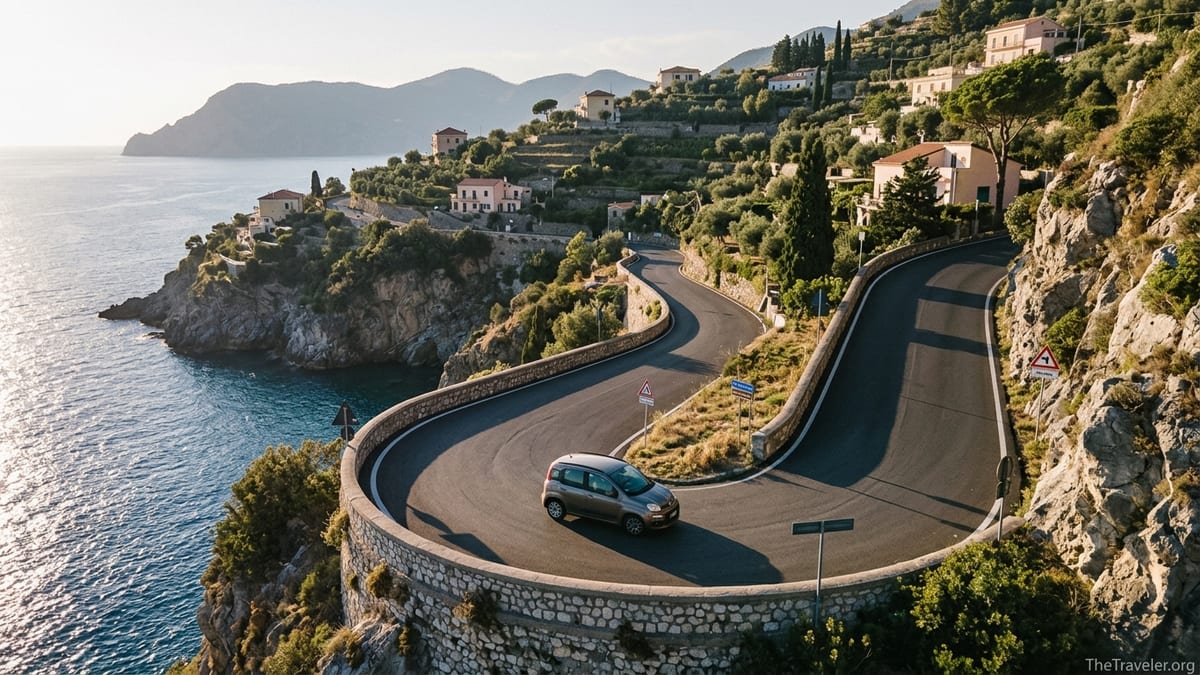
Choosing and Renting the Right Car for Southern Italy
Most visitors begin this road trip by flying into Naples, Bari or Brindisi and collecting a car from an international brand such as Hertz, Avis, Europcar or Sixt, or from reputable local firms at the airport. For a route that may include the Amalfi Coast, the Gargano Promontory and the Calabrian coast, a compact car in the Fiat 500, Renault Clio or VW Polo category is usually ideal. It is small enough for narrow village streets and tight coastal hairpins while still comfortable for two to three adults with luggage.
Manual transmission is still the norm and usually the cheapest option. Automatic cars are widely available but can cost noticeably more and sell out in peak months. In high summer a compact automatic from a major agency at Naples Airport might cost roughly as much as a mid-size manual in shoulder season. Booking several months ahead, and again checking prices two to three weeks before departure, often yields better rates and lets you lock in free cancellation deals.
Pay close attention to insurance at the rental counter. Standard packages typically include mandatory third-party liability but carry a high excess for body damage and theft. Many travelers either purchase full cover directly from the rental company or rely on a premium credit card that includes collision damage waiver, in which case the card issuer reimburses you if the rental firm charges for damage. Photograph the car carefully when you pick it up, noting pre-existing scratches on doors, bumpers and wheels, which are common on cars that have spent time on coastal and village roads.
For a one-way itinerary, it is realistic to pick up in Naples and drop in Bari, Brindisi, Lamezia Terme or even Villa San Giovanni in Calabria, though a one-way surcharge normally applies. Collecting and returning at the same airport, then looping through Campania, Basilicata, Puglia and Calabria, will almost always be cheaper, especially in July and August when fleets are stretched.
Understanding Italian Roads, Tolls and Speed Controls
Southern Italy combines long-distance motorways with slower regional roads and spectacular but demanding coastal drives. The main north-south artery is the A2 Autostrada del Mediterraneo, which you may join near Salerno and follow through Basilicata and Calabria towards Villa San Giovanni. Parts of this motorway are toll-free, while nearby stretches such as the A3 and others in Campania use closed toll systems where you take a ticket at the entrance and pay in cash or card at the exit. A mid-length hop, for example from the Naples ring road area towards Salerno, typically costs a handful of euros for a standard car.
Many rental cars are equipped with Telepass, the Italian electronic toll transponder that allows you to drive through dedicated yellow-signed lanes without stopping. The toll cost is the same as paying at the machine, but some rental agencies charge a fixed daily or trip fee for Telepass on top of normal tolls. If your contract includes Telepass, drive slowly through the Telepass lane and listen for the beep that confirms the system has read the device. If you prefer not to use it, stick to lanes marked for cash and cards and take a paper ticket when you enter.
Beyond the motorways you will spend time on state and provincial roads marked "SS" and "SP". Sections such as the SS163 Amalfitana in Campania, bits of the SS18 along the Tyrrhenian coast in Calabria, or the coastal roads to Vieste in Puglia are visually stunning but much slower than the autostrade. Expect average speeds closer to 30 to 50 km/h once you factor in bends, local traffic and occasional roadworks. Time estimates from online maps often prove optimistic, so build in extra time between stops.
Speed cameras are common, including average-speed systems that track your speed between two points. Fixed cameras on the Amalfi Coast, the Bari ring road and the highway approach to Reggio Calabria, for example, are well signposted but easy to miss if you are concentrating on navigation. Fines are typically issued by post via the rental company months after your trip. Adhering to posted limits, especially 50 km/h through towns and lower limits in construction zones, is the simplest way to avoid expensive surprises.
Navigating ZTL Zones, Parking and City Driving
Most historic centers in Campania, Basilicata, Puglia and Calabria are protected by ZTL zones. These Limited Traffic Zones are monitored by cameras and often operate at specific hours, though in famously dense centers such as Naples, Lecce or Matera restrictions may be active for much of the day. Entering without authorization, even by accident, usually triggers an automatic fine. Signs are in Italian, but the key phrase to watch for is "Zona Traffico Limitato" often with times, license plate categories or environmental rules underneath.
To avoid fines, plan to park outside historic cores and walk or take local transport into the center. In Matera, for instance, many visitors leave their cars in large paid lots around Via Lanera or at hotel garages just above the Sassi then explore the cave district on foot. In Lecce, it is common to park in blue-lined pay-and-display bays on streets like Viale dell'Universita or in underground garages close to Porta Napoli, rather than attempting to drive through the baroque core.
Parking colors are important. Blue lines indicate paid parking, where you buy a ticket from a nearby machine or local tobacconist and display it on your dashboard. White lines typically indicate free parking, though time limits may still apply in busy towns, while yellow lines are reserved for residents or specific user groups. In coastal resorts such as Positano, Vieste or Tropea, private garages and hotel parking can be expensive in peak summer, but they save time and stress compared with circling for on-street spaces when every village is full.
In big cities like Naples or Bari it is often easier to avoid driving into the center entirely. Many travelers pick up their car only when they are ready to leave town, or drop it upon arrival and rely on trains, taxis and metro lines for urban sightseeing. For example, you might explore central Naples car-free for two days, then collect a rental from the airport or a suburban office and immediately join the motorway towards Salerno or the Cilento coast.
Fuel, Service Stations and Driving Costs
Fuel prices in Italy are among the higher in Europe, and southern regions are no exception. Recent national averages for self-service petrol (benzina) have hovered around the mid 1 euro range per liter, with diesel (gasolio) usually slightly cheaper. This means that filling a typical compact car with a 45 to 50 liter tank can cost in the tens of euros. Prices are generally higher at motorway service areas than at independent stations on local roads, so many drivers top up in towns before returning to the autostrada.
Autostrada service areas are frequent on routes such as the A2 and A16, with fuel pumps, cafes, toilets and often small supermarkets. On regional roads in Basilicata's interior or the Gargano peninsula you may go longer stretches without a station, so avoid running very low on fuel in rural areas. Self-service pumps are common, but some are "prepay" machines where you insert cash or a card before filling. Full-service lines, often labeled "servito", may cost a few cents more per liter but can be easier if you are unsure of the system.
Most rentals in this region still run on petrol or diesel, though hybrid models are appearing more often. Electric charging infrastructure is improving along major routes and in larger cities like Naples, Bari and Reggio Calabria, but it is not yet widespread in remote hill towns or smaller coastal villages. If you intend to drive extensively through the Pollino mountains, the Cilento interior or the smaller Calabrian coastal roads, a conventional engine still offers the greatest flexibility.
When budgeting your trip, factor in tolls, fuel, parking and any extras like Telepass rental. A two-week loop from Naples through the Amalfi Coast, Matera, Alberobello, the Salento, the Ionian coast and back north via the Calabrian Tyrrhenian side can easily involve several hundred kilometers of driving. While the precise total varies with your route and driving style, it is realistic to allocate a few hundred euros for road costs over a fortnight, especially if you make frequent motorway hops and pay for secure parking in popular towns.
Suggested Scenic Routes Through Campania, Basilicata, Puglia and Calabria
Campania offers some of the most famous and challenging driving in Italy. The SS163 Amalfitana between Vietri sul Mare and Positano is a narrow ribbon carved into cliffs, with intense bus traffic and tight curves. Many travelers now choose to park in Salerno or Sorrento and use ferries or buses to reach Positano and Amalfi, saving their car for the less stressful Cilento coast to the south. There, the drive from Agropoli to Palinuro and Marina di Camerota offers sea views, Greek ruins at Paestum just inland and far lighter traffic than the Amalfi classic.
Heading east, you can cross into Basilicata via the A3/A2 motorway, then exit towards Potenza and continue to Matera. The last approach to Matera involves rolling countryside and then the dramatic drop into the ravine of the Sassi. From Matera, a particularly atmospheric route runs via small towns like Miglionico and Montescaglioso towards the Ionian coast at Metaponto, where straight, pine-fringed roads meet long, sandy beaches. This stretch of Basilicata is ideal for relaxed, low-stress driving and nights in agriturismi just a short detour from the main road.
In Puglia, three zones stand out for drivers: the Valle d'Itria, the Salento peninsula and the Gargano promontory. From Bari or Brindisi, the journey through Alberobello, Locorotondo and Ostuni meanders between trulli farmhouses, olive groves and vineyards on a network of local roads. Continuing south, the coastal drive between Otranto and Santa Maria di Leuca traces limestone cliffs and small coves, with viewpoints where you can pull off for photos or a swim. To the north, the Gargano's twisting roads towards Vieste and Peschici reward confident drivers with forested headlands and Adriatic panoramas.
Calabria, often quieter than its neighbors, offers spectacular yet less crowded coastal roads. The Tyrrhenian side from Maratea (just over the border from Basilicata) through Praia a Mare, Scalea and Tropea combines beaches, old towns and sunsets over the sea. South of Tropea, the drive past Capo Vaticano and toward Scilla skirts dramatic rock outcrops and small fishing ports. On the Ionian side, routes between Crotone, Rossano and Catanzaro Lido follow long, open beaches that make for easy driving with plenty of space to park and walk to the shore.
Driving Safety, Local Etiquette and Seasonality
Italian driving has a reputation for assertiveness, but in southern regions the rhythm is often more relaxed outside big cities. Expect fast motorway traffic in the left lane and slower vehicles hugging the right, with drivers sometimes overtaking more closely than you might be used to. Using your indicators clearly, checking mirrors frequently and avoiding sudden moves goes a long way. On narrow country and coastal roads, locals often know the bends by heart; let them pass when safe rather than feeling pressured to speed up.
In villages and towns, watch for scooters, pedestrians and delivery vans appearing from side streets. It is normal for cars to be parked very close together, sometimes with light bumper kisses when maneuvering into tight spaces. When parking a rental, leave yourself extra room at the front and back where possible. In hilly towns such as Vietri, Ravello or certain Calabrian villages, engage the handbrake firmly, leave the car in gear and turn wheels towards the curb on steep slopes.
Season makes a big difference. July and August bring heavy traffic to the Amalfi Coast, the Cilento, the Gargano and the Calabrian seaside. In those months you may find yourself crawling behind buses for stretches and struggling to park near the beach after mid-morning. By contrast, May, June, September and early October usually offer warm weather, open services and much easier driving and parking. Winter can be peaceful on the coasts but may bring snow and ice to higher inland passes, especially around the Lucanian Apennines and parts of Calabria's interior.
Carry some coins for smaller parking meters and rural fuel stations that may not accept foreign cards. Keep your rental contract, insurance details and identification within easy reach for any roadside checks. In case of breakdown, use the emergency number supplied by your rental company; on the autostrade you will also find orange emergency call boxes and dedicated roadside assistance numbers printed on the back of toll tickets.
Extending Your Road Trip Across the Strait to Sicily
Continuing from Calabria to Sicily is straightforward and adds a memorable chapter to your southern Italy drive. The usual route involves following the A2 south towards Reggio Calabria and exiting for Villa San Giovanni, the ferry port facing Messina across the Strait. At the port, you queue for roll-on, roll-off ferries operated throughout the day and night, with departures typically every 20 to 40 minutes in daylight hours. Crossing times are short, often around 20 minutes of sailing plus loading and unloading.
As of mid 2026, typical published one-way fares for a standard car with passengers on this route sit in the tens of euros bracket, with discounts for night crossings and return tickets valid for several days or months. Many travelers simply arrive at Villa San Giovanni, purchase a ticket at the port and drive onto the next available ferry without advance booking, even in summer. If you prefer certainty at peak times such as August weekends, buying a ticket in advance through the operator or a ticketing platform can help you plan around specific ferry times.
Once in Messina, you can drive straight off the ferry and follow signs for the A20 or A18 motorways towards destinations like Taormina, Catania or Palermo. Sicily's main motorways use the same toll systems and signage as mainland Italy, though some stretches are toll-free. Be prepared for similar driving patterns: fast traffic in the overtaking lane, quiet rural roads between baroque towns or coastal villages, and additional ZTL zones in historic cities such as Palermo, Catania, Siracusa and Ortigia. If your rental agreement restricts the car to the mainland, confirm in advance that crossing to Sicily is permitted.
For a classic extended itinerary, many drivers travel from Tropea to Taormina in a single day. The drive from Tropea to Villa San Giovanni can take two to three hours depending on traffic, followed by the ferry, then another hour or so from Messina to Taormina. Allow generous margins for queues at the port and for locating parking at your destination. In Taormina, it is common to use multi-story car parks outside the old town and then take elevators or shuttle buses up to the historic center.
The Takeaway
A road trip through Campania, Basilicata, Puglia and Calabria rewards travelers who combine flexibility with preparation. Choosing a compact, well-insured rental, understanding how Italian motorways and tolls work, and respecting ZTL zones and parking rules eliminates many common frustrations. Once those basics are in place, you are free to enjoy the quiet lanes of the Valle d'Itria, the drama of the Tyrrhenian coast, the ravines of Basilicata and the wide horizons of the Calabrian seafront.
Driving in southern Italy is not about speed. It is about leaving time for viewpoints, village coffee stops and detours down promising side roads. With realistic daily distances, seasonal awareness and a clear-eyed view of costs like fuel, tolls and parking, your car becomes a tool for exploration rather than a source of stress. And if the lure of Sicily proves irresistible, the short hop across the Strait of Messina allows you to continue your journey effortlessly on the island's equally rich roads.
FAQ
Q1. Do I really need a car for this southern Italy itinerary?
While trains and buses link major cities like Naples, Bari and Reggio Calabria, a car makes it much easier to connect hill towns, agriturismi and small coastal villages where public transport can be infrequent.
Q2. Is driving the Amalfi Coast safe for visitors?
Yes, provided you are confident on narrow, winding roads and comfortable with tight parking. Many travelers now prefer to visit the Amalfi Coast by bus or ferry and save their driving for quieter stretches like the Cilento and parts of Calabria.
Q3. How expensive are tolls between Naples and Calabria?
Toll costs depend on your exact route, but for a standard car you can expect to spend a modest sum for segments between Naples, Salerno and certain stretches on the way south, with other parts of the A2 motorway being toll-free.
Q4. Can foreign visitors use Telepass?
Yes, many rental companies offer cars already fitted with Telepass and charge a daily or trip fee for its use. The device does not reduce toll rates but lets you pass through dedicated lanes without stopping.
Q5. How can I avoid ZTL fines in cities like Naples, Lecce and Matera?
Plan to park outside the historic centers in signed lots or blue-line street bays and walk in. Keep an eye out for "Zona Traffico Limitato" signs and avoid camera-controlled gates unless you are certain your hotel has registered your plate.
Q6. What fuel type should I choose for a southern Italy road trip?
Either petrol or diesel is fine for this itinerary. Diesel cars may be slightly more fuel-efficient on long motorway stretches, but availability of both fuels is good across Campania, Basilicata, Puglia and Calabria.
Q7. Is it easy to find parking near popular beaches in summer?
Parking near beaches such as those near Tropea, Vieste or along the Amalfi Coast can be challenging in July and August. Arrive early in the morning, consider paid private lots and be prepared to walk a short distance.
Q8. Do I need to book the Villa San Giovanni to Messina ferry in advance?
Most drivers simply arrive at Villa San Giovanni, buy a ticket at the port and board the next available ferry. In peak holiday periods it can be wise to allow extra time or purchase tickets in advance if you want a specific sailing.
Q9. Can I take my mainland rental car into Sicily?
Many rental contracts permit travel to Sicily, but some have restrictions. Always confirm with your rental company before booking and make sure any cross-island travel is noted in your agreement.
Q10. What is the best season for a southern Italy road trip?
Late spring and early autumn, especially May, June, September and early October, usually offer warm weather, open services and easier driving and parking compared with the crowded peak of July and August.