


Italy may be a single country, but planning a trip often feels like choosing between three different worlds: the refined north, the historic heart in the center, and the sun‑drenched south. Each region offers its own mix of cities, countryside, beaches, mountains, food and price points. Understanding those differences will help you decide where to spend your limited vacation days, especially if you are choosing just one area for a first visit.
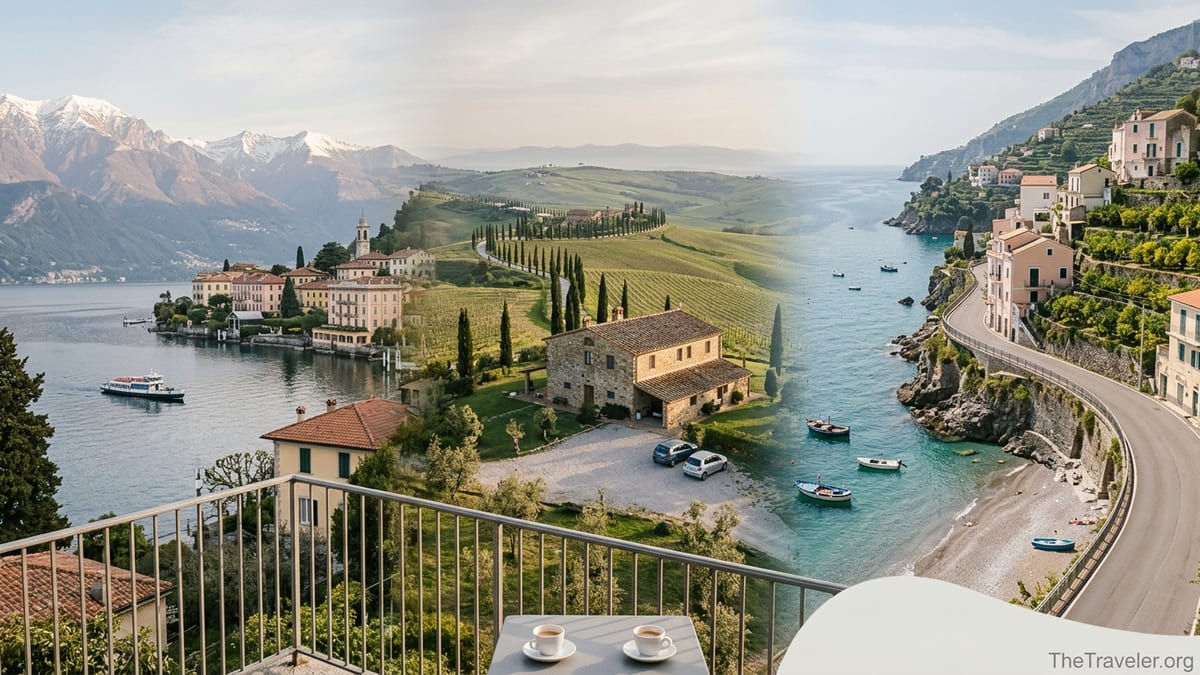
How Italy Is Divided: North, Center and South in Practice
When travelers talk about “northern,” “central” and “southern” Italy, they are usually speaking in broad strokes rather than strict administrative borders. For trip planning, it helps to group places by how they feel and how easily they connect, rather than worry about political regions.
Northern Italy typically includes Lombardy, Veneto, Piedmont, Liguria, Trentino‑Alto Adige and Friuli Venezia Giulia. Major hubs are Milan, Venice, Turin, Verona, Bologna and the Italian Lakes such as Como and Garda. This is the Italy of the Alps, high‑speed trains, design hotels, ski resorts and polished lakefront promenades.
Central Italy usually means Tuscany, Umbria, Lazio and Le Marche, anchored by Florence and Rome. Here you get Renaissance cities, hill towns like Siena and Assisi, cypress‑lined roads and a mix of Tyrrhenian and Adriatic coastline. It feels slower than the north but still well organized, with dense layers of history in walkable cities.
Southern Italy includes Campania, Puglia, Basilicata, Calabria, Molise and often the islands of Sicily and Sardinia. Naples, Bari, Palermo and Catania are key entry points. Expect stronger sun, more dramatic coastlines, smaller roads, slower trains in some areas and prices that are often lower once you are away from famous luxury spots like Capri or the Amalfi Coast.
Cities, Culture and Urban Energy
Northern Italy is the most urban and businesslike. Milan is the country’s finance and fashion capital, with neighborhoods like Brera and Navigli full of design boutiques and contemporary restaurants. Venice and Verona offer Gothic palaces and opera festivals, while Turin mixes royal boulevards with grand cafes serving thick hot chocolate. If you like modern art museums, sleek cocktail bars and efficient public transport, the north delivers.
Central Italy is dominated by two of Europe’s most significant historic cities: Florence and Rome. Florence is compact and walkable, with the Duomo, Uffizi and Ponte Vecchio all within minutes on foot. Rome offers a different kind of grandeur, from the Colosseum and Roman Forum to Baroque piazzas like Piazza Navona and Trevi Fountain. Smaller cities such as Siena, Perugia and Urbino give you medieval streets and strong local traditions without big‑city intensity.
Southern Italian cities feel more chaotic and intensely local. Naples is known for scooters darting through narrow streets, laundry strung between buildings, and pizza sold for a few euros in simple pizzerias that locals line up for. Bari Vecchia’s maze of alleys gives onto the Adriatic Sea, and Palermo combines Arab‑Norman churches with lively street food markets where you can eat panelle and arancini standing up. These cities can feel less polished but also more visceral and memorable.
For first‑time visitors who want iconic sights in a manageable dose, central Italy’s Florence and Rome are usually the best city bases. Travelers who enjoy creative industries, contemporary culture and nightlife often prefer Milan, Turin or Bologna in the north. Repeat visitors and adventurous eaters may gravitate toward southern hubs like Naples or Palermo for a stronger sense of local everyday life.
Countryside, Mountains and Beaches
If mountains and lakes are your priority, northern Italy is hard to beat. The Dolomites in Trentino‑Alto Adige and Veneto offer some of Europe’s most accessible alpine scenery, with villages like Ortisei and Cortina d’Ampezzo serving as bases for well‑marked hiking trails and ski slopes. Lake Como, Maggiore and Garda give you villa gardens, ferry boats and waterfront promenades, with many hotels directly on the water and regular train links from Milan.
Central Italy excels at gentle countryside. Classic Tuscan landscapes around Val d’Orcia and Chianti are filled with agriturismi, which are farm stays where you might pay a moderate nightly rate for a stone farmhouse room, homemade breakfast and sometimes dinner made with the property’s own olive oil and wine. Umbria offers similar hill town scenery around Orvieto and Spello, usually with fewer tour groups than Tuscany and slightly lower prices for vineyard stays and countryside apartments.
For beaches, all three parts of Italy have coastline, but the feel and cost differ. The Ligurian coast in the north, including the Cinque Terre and Portofino area, has pebble coves and colorful fishing villages stacked on cliffs. Here you often pay beach clubs for a pair of sunbeds and an umbrella, with recent summer surveys in Liguria showing common ranges from around 30 to 60 euros per day for two chairs on popular stretches, more for prime front‑row spots in fashionable resorts. In central Italy, Tuscany’s Maremma and Lazio’s Sperlonga offer spacious sandy beaches with both free public areas and paid clubs. Southern Italy brings some of the country’s most celebrated coastlines, such as the Amalfi Coast and Puglia’s Salento, where high season prices on famous beaches can climb, but cheaper public sections are still available if you walk a little farther.
Travelers who dream of hiking and lakefront villages should prioritize the north. Those who imagine rolling vineyards and stone farmhouses are likely to be happiest in central Italy. Beach‑focused travelers who want warm water and long days by the sea might gravitate to southern or central coasts in late spring through early autumn, keeping in mind that peak August on iconic stretches such as Amalfi or Cinque Terre is both the busiest and most expensive time.
Food, Wine and Everyday Costs
Prices fluctuate but some patterns are consistent across the country. A basic espresso at the bar counter is often around 1 to 1.50 euros in many cities, while a cappuccino might average around 1.60 to 2 euros according to recent consumer price surveys, with some of the highest averages in the north and slightly lower in parts of the center and south. Sit‑down tourist cafes on famous piazzas in Venice, Florence or Rome can charge several times that, particularly when table service and location surcharges are included.
Food styles also change as you move down the peninsula. In northern cities like Milan and Turin, you will see risotto alla milanese, polenta with braised beef and buttery pastries. Lake regions offer freshwater fish such as lavarello grilled simply with lemon. Central Italian menus lean toward ribollita soup, Bistecca alla Fiorentina in Florence, and carbonara or cacio e pepe in Rome. In the south, pizza from wood‑fired ovens in Naples, seafood pastas along the Amalfi and Cilento coasts, and vegetable‑heavy dishes in Puglia take center stage.
On average, a simple lunch of pizza al taglio or a panino with a drink might cost around 6 to 10 euros in many Italian cities, while a sit‑down dinner with a pasta course, shared main dish and house wine can easily stay under 30 euros per person at a family‑run trattoria away from major tourist squares. High‑end tasting menus in Milan, Venice or on the Amalfi Coast will cost many times more, particularly at starred restaurants or hotel dining rooms with famous views. In general, everyday food and coffee become slightly cheaper as you head from north to south, while peak‑season beach prices in the most famous southern resorts can match or exceed northern rates.
Wine follows regional identity too. Piedmont in the north is known for Barolo and Barbaresco, Tuscany in the center for Chianti Classico and Brunello, and Sicily and Puglia in the south for robust reds and increasingly respected whites. At a casual trattoria, a half‑liter of local house wine might be only a few euros, making it one of the better value drinks on the menu regardless of region.
Transportation, Weather and Road Trips
Transportation is a major factor in deciding which part of Italy works best for you. The densest high‑speed rail network is in the north and center. Trains between Milan, Bologna, Florence and Rome frequently cover the routes in a few hours or less on fast services, which makes a multi‑city itinerary without a car realistic. From Rome to Naples, high‑speed trains also run in around one hour on a dedicated line, while slower regional or intercity trains take longer but cost less. In many smaller southern regions, particularly away from the Naples area and the main Adriatic spine, trains and buses run less frequently, so you need to plan connections more carefully.
Weather patterns matter too. Northern Italy has hot summers in cities like Milan and Venice, but the Alps and Dolomites offer cooler air even in July and August. Winters can be foggy on the plains and snowy in the mountains, ideal for ski trips. Central Italy sees warm to hot summers, comfortable spring and autumn, and generally mild winters except at higher elevations. Southern Italy is the warmest, with beach weather typically starting earlier in the year and lasting later into autumn. By July and August, cities like Naples and Palermo can be very hot and humid in the middle of the day.
For road trips, the north has excellent highways and clear signage, but parking in historical centers like Florence, Verona or Bologna can be limited and subject to restricted traffic zones. Central Italy is ideal for scenic drives through Tuscany or Umbria, hopping between hill towns and wineries while staying in agriturismi. In the south, spectacular drives such as the Amalfi Coast road or Puglia’s coastal routes reward confident drivers but include narrow, winding stretches, tight parking and seasonal congestion. Many visitors choose to combine trains for long stretches with short local car rentals in the countryside to avoid urban driving.
If you prefer to rely entirely on trains and avoid cars, the north and center are the easiest to navigate. Travelers who are comfortable renting a car and managing narrower roads can explore more remote villages and beaches in southern regions that buses reach infrequently.
Costs and Value: North vs Center vs South
Daily travel budgets in Italy vary widely based on hotel category, time of year and how much you spend on dining and paid attractions, but broad comparisons are useful. Northern cities like Milan, Venice and the lake regions typically have the highest average hotel rates, especially in spring and autumn when business travel and tourism overlap. Central cities such as Florence and Rome sit just behind, with significant spikes during Easter, summer and major events. Southern regions, particularly Puglia, Calabria and inland Sicily, often offer better value for money once you step away from famous luxury pockets.
Beach costs highlight the contrast. Recent reports on Italian seaside pricing show average daily costs for an umbrella and two sunbeds in Campania, the region that includes the Amalfi Coast, sitting among the highest in the country, with prime spots in very popular areas sometimes approaching or exceeding 80 euros per day during peak season. On parts of the Ligurian coast in the north, published price lists for 2026 show many beach clubs charging roughly 30 to 60 euros per day for two chairs, with surcharges for front‑row placement and weekends. Less famous stretches of coast in regions such as Abruzzo, Molise or parts of Calabria can come in considerably cheaper, especially outside August.
In everyday terms, you may notice that a basic coffee, public transport ticket or casual lunch in a southern city like Bari or Catania is often slightly cheaper than in Milan or Venice, assuming you are not sitting on a landmark square. However, this advantage can reverse in highly touristed southern enclaves where demand far outstrips supply, such as Capri or Positano, where hotel rates and restaurant prices can rival or surpass those on Lake Como or in central Florence.
Travelers focused on overall value, rather than the cheapest possible trip, often find that mixing regions works well. For example, spending a few nights in an expensive but iconic city like Venice, then several days in a more affordable Umbrian hill town, or pairing a splurge stay on the Amalfi Coast with quieter, lower‑cost time on the nearby Cilento coast, can keep average costs manageable while still delivering headline experiences.
Who Each Region Suits Best
For first‑time visitors, central Italy is usually the easiest and most satisfying choice. A classic route might be Rome, Florence and a few nights in the Tuscan countryside, which delivers ancient ruins, Renaissance art, vineyard views and straightforward train connections. This area concentrates many of the images people associate with Italy in a relatively small geography, so you lose less time to long transfers.
Couples often gravitate to both central and northern Italy, depending on the mood they want. Lake Como or Lake Garda in the north appeal to those who like elegant waterside hotels, boat trips and mountain backdrops. Tuscany and Umbria in the center are ideal for wine‑tasting, cooking classes and quiet farm stays. For couples who prefer something wilder and more dramatic, the south offers cliffside villages on the Amalfi Coast, Baroque towns in Sicily like Noto and Ragusa, and whitewashed coastal villages in Puglia such as Polignano a Mare and Ostuni.
Families may find northern and central regions easiest, especially on a first visit. Cities like Bologna and Turin offer kid‑friendly museums and parks along with reliable public transport and family‑sized apartments. The Adriatic coast of Emilia‑Romagna, though technically in the north, is famous for long sandy beaches, shallow water and family facilities. In central Italy, Tuscan and Umbrian agriturismi often provide pools, casual on‑site dinners and space for children to play. Southern regions can work very well for families too, particularly in Puglia and on quieter stretches of Sicily, but parents should be prepared for longer travel times between major sights and, in some cases, more limited stroller‑friendly infrastructure in older historic centers.
Repeat travelers and those seeking fewer international crowds frequently enjoy the south and less famous parts of the center. Exploring Basilicata’s hill towns, driving the interior of Sardinia, or spending time in Le Marche’s inland villages offers a different rhythm from Florence or Venice. Even in the north and center, regions such as Friuli Venezia Giulia, inland Liguria or northern Lazio see far fewer foreign visitors compared with their better known neighbors, while still offering good local food, historical sites and lower prices.
The Takeaway
There is no single “best” part of Italy, only the region that best matches your priorities for a particular trip. Northern Italy is ideal if you value efficient train travel, modern cities, alpine and lake landscapes, and are comfortable with somewhat higher average prices. Central Italy offers history‑rich capitals, iconic art, rolling countryside and a balanced mix of city and rural experiences that suits many first‑time visitors.
Southern Italy rewards travelers who want stronger sun, dramatic coastlines, intense local character and, outside the most famous resort pockets, often better value for everyday expenses. It asks for more planning in terms of transport and timing but pays you back with memorable food, landscapes and a slower rhythm of life.
When in doubt, start with the center, add a taste of the north or south that excites you most, and leave room to return. Italy tends to be a country that travelers revisit, each time exploring a different slice of this varied peninsula.
FAQ
Q1. Which part of Italy is best for a very first visit?
For most travelers, central Italy is the best starting point, combining Rome, Florence and nearby countryside so you see major highlights with relatively short train rides.
Q2. If I only have one week, should I choose north, center or south?
With one week, it is usually best to focus on one area. A common choice is central Italy, for example Rome and Florence plus a small town, to avoid losing time to long transfers.
Q3. Where are beaches both good and relatively affordable?
Less famous stretches of coast in regions like Abruzzo, parts of Calabria, southern Marche or northern Puglia often offer wide sandy beaches and lower‑priced beach clubs than iconic resorts.
Q4. Is driving in southern Italy really much harder?
Driving in the south is not necessarily dangerous, but roads such as the Amalfi Coast are narrow and busy in summer, and parking is tight, so confident drivers who can handle tight spaces will feel more comfortable.
Q5. Which region is best if I want to travel only by train?
Northern and central Italy are best for train‑only travel, with frequent high‑speed services linking Milan, Venice, Bologna, Florence, Rome and Naples, plus regional trains to many smaller cities.
Q6. Where can couples find the most romantic settings?
Romantic options exist everywhere, but many couples favor Lake Como or Lake Garda in the north, Tuscan and Umbrian countryside in the center, and the Amalfi Coast or Puglia’s whitewashed villages in the south.
Q7. Which area is generally cheapest for food and daily expenses?
Everyday items like coffee, snacks and local restaurants are often slightly cheaper in many southern cities and towns than in the north, though luxury resorts in any region can be expensive.
Q8. Is northern Italy better in winter than the rest of the country?
Northern Italy is excellent in winter for ski trips in the Alps and Dolomites and for atmospheric city breaks, while some beach areas in the south feel quiet and largely shut between late autumn and early spring.
Q9. Where should families with young children base themselves?
Families often do well in central or northern regions with easy logistics, such as agriturismi in Tuscany or Umbria, or family‑oriented seaside towns along the Adriatic coast of Emilia‑Romagna.
Q10. Which part of Italy is best for repeat visitors seeking fewer crowds?
Repeat visitors may prefer southern regions like Basilicata, inland Sicily or lesser‑known parts of Puglia, as well as quieter central and northern areas such as Le Marche, Friuli Venezia Giulia or inland Liguria.