


Central Italy is where most travelers fall in love with the country for life. Tuscany’s vineyards, Umbria’s stone hill towns and Rome’s ancient streets all sit within a few hours of each other, but there are very different ways to experience them. You can book a fully escorted multi-day tour, base in one city and take day trips, hire a private driver or simply rent a car and wander. The right choice depends less on a single “best” option and more on how you like to travel, your budget and how much time you have.
Understanding the Main Ways to See Central Italy
When travelers talk about “doing” Tuscany, Umbria and Rome, they are usually choosing between a handful of concrete formats. At one end of the spectrum, large operators offer escorted multi-day itineraries such as nine to twelve day “Country Roads of Umbria & Tuscany” or “A Week in Tuscany & Umbria” programs that include Rome, several countryside bases and daily sightseeing by coach. These typically start around 3,400 to 4,000 US dollars per person for 9 to 12 days before flights, based on double occupancy, and run on fixed dates with a set route.
In the middle, there are short regional tours and Rome-based excursions. A traveler staying five nights in Rome might add a full-day Val d’Orcia countryside tour from Rome to Montepulciano and Pienza with winery lunch, or a small-group Tuscany and Assisi day trip looping through both Tuscany and Umbria in one long day. Prices for these organized day trips commonly fall between 180 and 260 euros per person, including transport, guiding and at least one tasting or lunch.
At the more flexible end are independent trips centered on rental cars or trains, sometimes with private drivers for specific days. For example, a couple might spend three nights in Florence without a car, then rent one in town to spend four nights in a farmhouse outside Pienza and explore wineries with prebooked tastings, or hire a private driver in Chianti for one dedicated wine-touring day. This approach gives more freedom and quiet moments, but shifts responsibility for navigation, reservations and timing onto you.
Most travelers end up mixing formats. It is increasingly common to see an escorted small-group tour that covers the trickier driving and logistics in rural Tuscany and Umbria, with independent days bookmarked in Rome at the start or end. Others reverse it: they plan the itinerary themselves but plug in one curated day from Rome to Tuscany or Umbria with a specialist operator when they want to relax and let someone else handle the details.
Multi-day Central Italy Tours: Who They Suit and What They Include
Escorted multi-day tours remain popular for Central Italy because they solve several practical headaches at once. A typical nine to twelve day itinerary focused on Rome, Umbria and Tuscany will include airport transfers, centrally located hotels or countryside villas, most breakfasts and many dinners, and coach transportation between cities and towns. You might spend two nights in Rome, three in an Umbrian hill town such as Perugia or a countryside estate near Assisi, and three or four nights in a Tuscan base like San Gimignano, Cortona or the Chianti hills, with day trips to places such as Siena, Pienza, Montalcino and Florence built into the program.
Examples currently on the market include a nine day “Country Roads of Umbria & Tuscany” itinerary starting in Rome and ending in Florence, and small-group “Tuscany & Umbria” food and wine tours that move travelers between Rome, Cortona, Orvieto and rural estates. These tours often cap group sizes around 20 to 28 guests, and some have limited “small group” departures at a supplement. They tend to bundle experiences that are harder to arrange on your own, such as after-hours visits, special wine lunches in Brunello or Montefalco wine country, or private tastings in historic cellars in Montepulciano or Torgiano.
The trade-off is cost and flexibility. At roughly 350 to 450 US dollars per person per day before incidentals, a couple is likely spending upwards of 7,000 to 8,000 dollars for just over a week. In return they get a professional tour director, all intercity transport, luggage handled from coach to hotel and a guaranteed set of highlights. If this is your first time in Italy, you dislike driving abroad or you are traveling with older relatives who prefer not to manage day-to-day logistics, that premium can be well worth it.
On the other hand, travelers who enjoy lingering in a single town, revisiting a favorite café or following spontaneous recommendations may chafe at the structure. The itinerary is set months in advance. Free time windows, usually a few hours in towns such as Siena or Orvieto, are real but limited. If you decide you would rather skip a church to sit on a terrace and watch local life for an afternoon, you are technically free to do it, but you will miss the group program you paid for.
Tuscany Wine Trips: From Group Coaches to Tailored Tastings
Tuscany’s vineyards are often the centerpiece of a Central Italy itinerary, and there are three main ways people actually experience them: group coach tours, small-group or semi-private outings, and fully private wine days designed around your interests. From Florence, full-day group wine tours that combine Chianti classico tasting with a stop in San Gimignano or Siena typically range from around 50 to 200 euros per person depending on group size, the number of wineries visited, whether lunch is included and how premium the estates are.
A mass-market coach tour at the lower end of that range might have 40 or more people on board, quick tastings and brief village stops. A more mid to upper-level small-group experience around 150 to 220 euros per person may limit groups to eight to sixteen travelers, include a proper multi-course lunch at a winery, and visit two or three estates in areas such as Chianti, Brunello di Montalcino or Montepulciano. Specialty operators focused solely on Tuscany wine tours sometimes publish comparison charts of their own itineraries, helping you see at a glance whether an outing focuses more on Chianti classico blends or longer-aged Brunello, and how much time is spent in the van versus in vineyards and cellars.
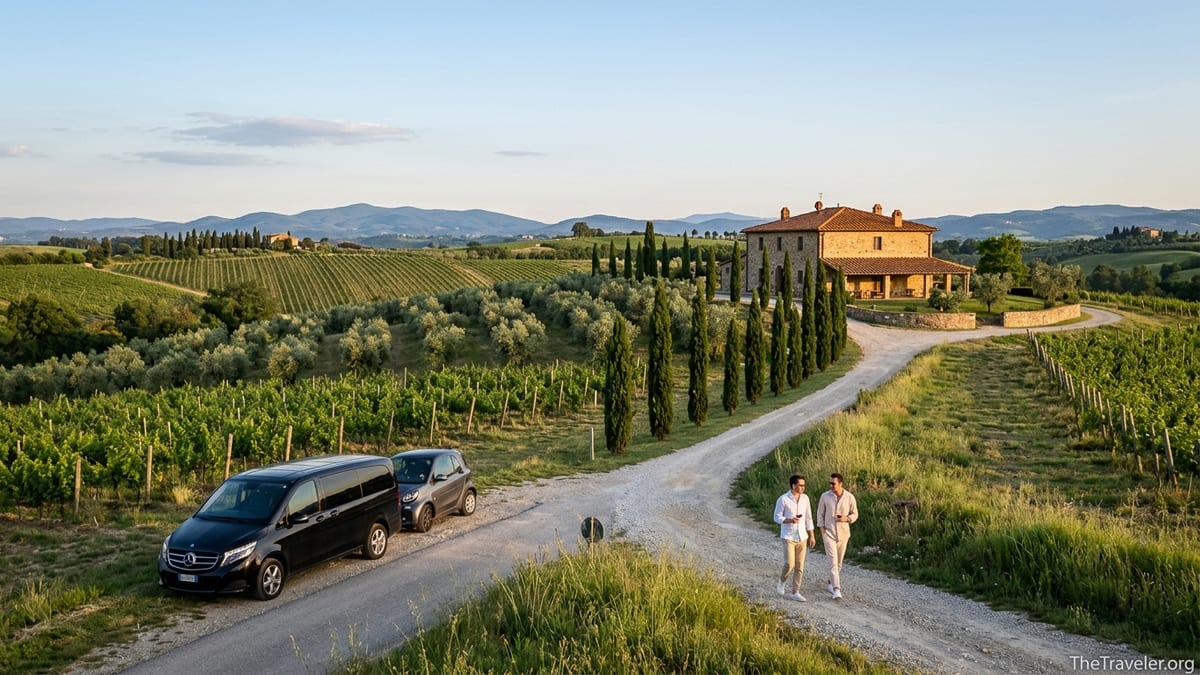
If you are already based in the countryside, another option is hiring a private driver to take you on a customized winery circuit. Many chauffeur companies working in Florence, Siena or Pisa publish sample daily routes such as “Florence and Chianti” or “Montalcino and Val d’Orcia,” with full-day car and driver packages typically priced as a flat daily rate rather than per person. A full eight hour day with a professional driver in a modern sedan or van often starts somewhere around 400 to 700 euros for the vehicle, depending on the distance, vehicle class and season. Tasting fees and lunches are usually extra and must be reserved ahead because most small wineries do not accept unscheduled drop-ins for full visits.
For some travelers, an organized wine tour from Florence or Siena is a smart splurge. If you only have one day in the region, if you want to taste Brunello or Vino Nobile without worrying about driving after multiple pours, or if you appreciate a guide’s commentary on appellations and local food pairings, the extra structure enhances the day rather than limits it. In contrast, if you are staying several nights in a village such as Pienza or Greve in Chianti and are comfortable arranging a couple of tastings directly with wineries or agriturismi, then renting a car and exploring independently can keep costs down and give you maximum freedom.
Private Drivers vs Self-drive in Tuscany and Umbria
Driving in rural Tuscany and Umbria is very manageable for many visitors, but it does come with learning curves: narrow white roads between vineyards, limited parking inside walled towns, and strict drink-driving laws that are enforced. A standard compact rental car in Central Italy often costs around 40 to 70 euros per day in shoulder season before fuel and tolls, potentially more in peak summer. Figure another 15 to 30 euros per day for fuel if you are covering moderate distances between hill towns.
By contrast, hiring a private driver for a full-day bespoke excursion generally starts in the mid-hundreds of euros per vehicle, rising with distance and group size. A couple based in Rome might spend 550 to 750 euros for a full-day private trip to Orvieto and Civita di Bagnoregio in Umbria, including pick-up and drop-off at their hotel, while a family of four in Siena might find an eight hour private countryside and winery day for a similar total. The value proposition improves as the number of travelers increases, since the cost is spread across the group rather than per person.
Private drivers shine on days when either alcohol, complex routing or mobility challenges are involved. If you want to visit three wineries and have a long lunch in Montepulciano, it is safer and more relaxing to have someone else handle the road. If your itinerary from Rome to your farmhouse near Cortona can double as a sightseeing day that stops in Orvieto and an Umbrian hill town, a car and driver transfer can feel like a rolling tour rather than a simple relocation.
Self-drive, though, has its own rewards. It lets you explore lesser-known corners of Umbria such as Bevagna, Montefalco or Città della Pieve at your own pace, or detour via a small village that caught your eye from the highway. It also avoids waiting for group departures and can bring your daily costs down if you are traveling as a couple and do not need door-to-door service every day. A common hybrid approach in Central Italy is to hire a private driver for one or two intensive days, such as wine country or a multi-stop transfer day, and self-drive or rely on trains and buses the rest of the time.
Rome-based Excursions to Tuscany and Umbria
Rome is a practical launchpad for tasting Central Italy beyond the capital without changing hotels. Numerous operators run long but carefully planned day trips from Rome into Tuscany and Umbria that bundle transport, guiding and food into one price. One example is a full-day countryside tour from Rome to Cortona in Tuscany and Montepulciano, including a wine cellar visit and tasting of Vino Nobile alongside lunch. Another combines Tuscan landscapes with a stop in Umbrian towns such as Assisi, allowing you to see two regions in a single (long) day.
Large-group coach tours from Rome to Tuscany or Umbria tend to be the most affordable, often in the 120 to 200 euro per person range depending on inclusions. These depart early, sometimes around 7 a.m., and return to the city late in the evening after 12 or more hours on the road. Small-group minivan excursions may cost closer to 200 to 260 euros per person, but limit the group to around eight travelers and move more quickly between stops. Common destinations include Val d’Orcia villages such as Pienza, Montalcino and Montepulciano in Tuscany, and Assisi, Orvieto and Civita di Bagnoregio in Umbria.
These Rome-based excursions are worth paying for when you have limited vacation time and want to see hill town landscapes without changing bases. For instance, a traveler with four nights in Rome and no plans to rent a car can still enjoy vineyards and cypress-lined roads by joining a curated Val d’Orcia day that visits medieval streets, offers a proper winery lunch and allows unhurried free time in at least one village. They are less sensible if you already plan to spend several nights in Florence, Siena or Perugia, where local day trips into the surrounding countryside are shorter, cheaper and less tiring.
Travelers should also be realistic about pace. A day trip from Rome to Tuscany or Umbria is a sample platter, not a deep dive. Expect a few hours total in actual villages plus time at lunch and tastings, with significant time on the highway there and back. For many first-time visitors, that trade-off is acceptable. But if you prefer slower travel, you might be happier shortening your time in Rome by a night and sleeping closer to the countryside instead.
Independent Travel: Building Your Own Central Italy Itinerary
Travelers who prefer independence can absolutely build their own Central Italy route, stitching together cities, villages and countryside stays with trains, buses, rental cars and occasional private drivers. A classic ten night independent itinerary might look like this in practice: three nights in Rome, three nights in an Umbrian base such as Spoleto or Orvieto, and four nights in southern Tuscany around Pienza or Montepulciano. Rome and Florence are connected by fast trains in under two hours, and regional rail lines climb into hill towns such as Orvieto and Cortona from the main north-south spine.
Costs for an independent trip vary widely, but it is reasonable to budget a mid-range of 150 to 250 euros per night for a well-located hotel or agriturismo in 2026, with countryside properties sometimes including breakfast and occasional dinners. Add rental car costs for the countryside portion, train fares between major cities (often 20 to 60 euros per person depending on timing and class) and a few organized day tours or private driver days where they add real value. Many visitors use local operators for just one or two specialist days, such as a guided food and wine circuit in Umbria’s wine villages, a cooking class in a farmhouse near Cortona or a wine and olive oil trail experience in the hills outside Florence.
The main advantage of independent travel is the ability to tailor your days around what you enjoy rather than around group timing. You can spend an entire afternoon at the Basilica of Saint Francis in Assisi or wandering backstreets in Perugia instead of leaving right after a quick photo stop. In Tuscany, you can choose to explore lesser-known villages, return to a favorite enoteca or schedule downtime at a spa or pool when you need it. This style suits repeat visitors, photographers, families with children who benefit from flexible schedules and anyone who enjoys researching and planning.
The downside is that the work of coordinating stays, tickets and logistics falls on you. In peak spring and autumn seasons, you will need to reserve popular winery visits, top restaurants and even some smaller museums weeks in advance. Navigating ZTL (limited traffic) zones in historic centers, understanding parking rules and working around occasional train delays is all part of the experience. If that feels like a fun challenge rather than a burden, independent travel can offer more depth for the same or even lower overall cost compared with all-inclusive tours.
When an Organized Trip Is Worth Paying For
Organized tours, whether multi-day itineraries or single-day excursions, are not just about convenience. They make particular sense in Central Italy in a few repeatable situations. The first is short stays with ambitious wish lists. If you are in Rome for only three or four nights and dream of seeing the Tuscan countryside, a well-reviewed small-group Val d’Orcia tour or a Tuscany and Assisi circuit is a rational splurge that delivers on scenery and wine without the stress of renting a car for just one day.
The second situation is complex routing. For example, some operators structure itineraries that start with a transfer from Rome’s airport up into Umbria, weave through towns like Orvieto and Cortona, then end in Florence or back in Rome. A culinary-focused small-group tour might move you from Rome to an Umbrian village, onward to a Tuscan wine estate, and then return you to the capital, bundling cooking classes, winery visits and most meals along the way. Recreating that exact chain independently is possible but time-consuming and can be more expensive by the time you add up private transfers, guided tastings and upgraded hotels.
The third is any day centered heavily on wine or when you are traveling with people who have mobility limitations. A private driver or curated small-group wine tour removes both the need to worry about alcohol and driving and the physical demands of managing parking, hills and directions. In towns like Assisi, Montepulciano or San Gimignano, which are steep and cobbled, being dropped closer to historic centers by authorized vehicles can make touring much easier for older travelers.
Finally, an organized trip can be worth the premium if insider access matters greatly to you. Some upscale tours include experiences such as private visits to family-run wineries that do not open to the general public, after-hours entry to major sites in Rome or special lunches in heritage estates in Tuscany and Umbria. For travelers who value those curated touches and prefer to treat the trip as a once-in-a-decade splurge, paying a tour operator to orchestrate everything can be a rational choice.
The Takeaway
Planning Central Italy starts with an honest look at how you like to travel, not with a fixed rule about tours versus independence. Escorted multi-day itineraries through Rome, Umbria and Tuscany trade spontaneity for reassurance and efficiency; they work particularly well for first-timers, multigenerational families and those who prefer not to drive. Rome-based excursions offer a way to “borrow” countryside experiences for a day without changing hotels, ideal for shorter city breaks.
Wine-focused days in Tuscany and Umbria are where private drivers and small-group tours often earn their keep, especially when you factor in safety and the pleasure of not counting glasses. Independent itineraries built around a mix of trains, rental cars and a handful of specialist tours offer the most room for serendipity, often at similar or slightly lower overall cost if you are willing to do the planning work yourself.
However you structure it, leave space in your schedule. The most memorable Central Italy moments tend to be unscripted: a quiet evening in an Umbrian piazza, a spontaneous chat with a winemaker in southern Tuscany or a sunset walk back to your guesthouse in the Roman Trastevere neighborhood. Use organized trips where they solve real problems for you, then protect enough unplanned hours for the region to reveal itself at its own pace.
FAQ
Q1. Is it better to base in Rome and do day trips, or to stay in Tuscany or Umbria?
For short trips of four or five nights, basing in Rome and adding one curated countryside day trip is efficient. If you have a week or more, sleeping at least three nights in a Tuscan or Umbrian base lets you slow down, cut highway time and explore smaller villages in depth.
Q2. How much should I budget per day for a small-group Tuscany wine tour?
From Florence or Siena, expect roughly 150 to 220 euros per person for a quality small-group full-day tour that includes transport, guided tastings at two or three wineries and a proper lunch. Larger coach tours can be cheaper, while private driver wine days usually cost more overall but are priced per vehicle rather than per person.
Q3. Are private drivers in Central Italy worth the cost?
They are worth it when you want to combine multiple wine tastings, navigate complex routes, or accommodate travelers with mobility issues. For a couple, a private day may feel like a splurge; for a family or small group sharing the cost, the per-person rate can be close to or even below some high-end group tours.
Q4. Do I need a car to enjoy Umbria?
You can see major sights such as Orvieto and Assisi using trains and local buses or guided day trips from Rome or Florence, but a car or private driver greatly expands your options. Many of Umbria’s most atmospheric hill towns and countryside restaurants are far easier to reach with your own wheels or on a private tour.
Q5. When is an escorted multi-day tour of Central Italy the best option?
Escorted tours work best if it is your first time in Italy, you dislike driving, or you are traveling with older relatives who want minimal logistical stress. They are also good when your time window lines up exactly with a published itinerary that already visits the places at the top of your wish list.
Q6. Can I visit both Tuscany and Umbria in one day from Rome?
Some long day trips from Rome do include stops in both regions, for example combining a Tuscan hill town with an Umbrian destination such as Assisi. You will see a lot in a single day, but time in each place is limited and the schedule is tight, so this works best as an overview rather than a deep visit.
Q7. Is it safe to drive in Tuscany and Umbria as a visitor?
Yes, most visitors manage fine as long as they drive cautiously, respect speed limits and avoid entering ZTL restricted zones in historic centers. The countryside roads are generally quiet and pleasant, but you should avoid driving after wine tastings and be prepared for narrow lanes and limited parking in old towns.
Q8. How far in advance should I book wine tours and tastings?
In popular months such as May, June, September and October, it is wise to book organized wine tours and individual winery visits several weeks in advance. Smaller family-run estates often host only one or two tasting appointments per day, and the best-reviewed group tours can sell out for peak dates.
Q9. Are Rome-based day trips to Tuscany and Umbria too rushed?
They are full days with significant highway time, but many travelers still find them rewarding because they deliver iconic landscapes, a good meal and one or two charming towns without changing hotels. If you prefer a very relaxed pace, consider shortening your Rome stay and spending a couple of nights in the countryside instead.
Q10. How can I keep costs down on a Central Italy trip without missing key experiences?
Travel outside peak weekends where possible, stay in smaller towns rather than only in Florence or central Rome, and use trains for major city transfers. Combine independent days with just one or two carefully chosen organized tours, such as a single wine-focused day in Tuscany or a countryside excursion from Rome, to access complex experiences without paying for a fully escorted itinerary.