


Central Italy rewards travelers who slow down long enough to let its layers reveal themselves. Between Rome’s ancient stones, Florence’s Renaissance streets, and the hill towns of Tuscany and Umbria, it is easy to overpack an itinerary and spend half your holiday hauling luggage between train stations. This guide breaks down realistic 5, 7, 10, 14 and 21 day routes through Rome, Florence, Tuscany and Umbria, with practical overnight allocations, sample train times and on-the-ground examples so you can plan a trip that feels rich rather than rushed.
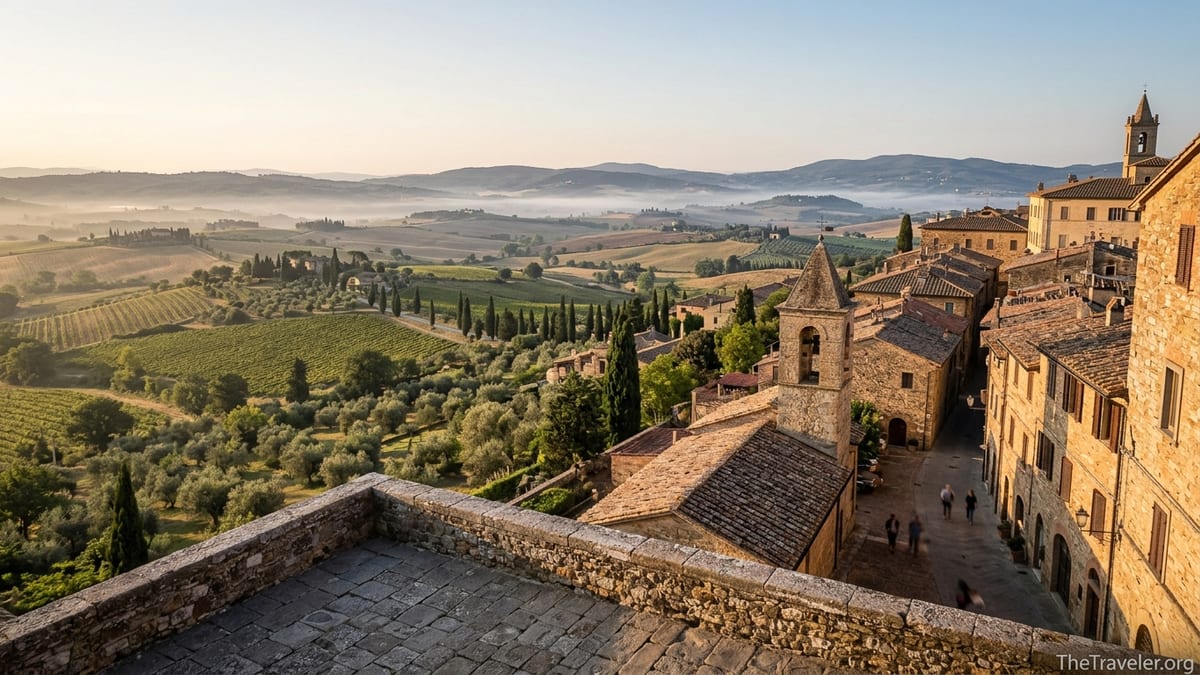
How to Think About a Central Italy Itinerary
Central Italy is compact on the map, but travel times, hill town logistics and check in schedules can quickly eat into sightseeing hours. As a rule of thumb, any move between bases will cost you about half a day once you factor in checking out, walking or taxiing to the station, the train itself and getting settled at the next hotel or agriturismo. For example, a midmorning high speed train from Rome to Florence typically takes about 1.5 hours on the Frecce or Italo services, but in real life the door to door journey from a Rome guesthouse near Campo de’ Fiori to a Florence hotel near the Duomo is closer to 3.5 hours.
Train networks make most of this region easily reachable. High speed trains link Rome and Florence in roughly 1 hour 20 to 1 hour 30 minutes, while regional trains connect Florence with Pisa and Siena in about 1 to 1.5 hours and Rome with Orvieto and Assisi in roughly 1.5 to 3 hours depending on the route and number of changes. Regional tickets on routes such as Rome to Orvieto or Rome to Assisi often start around 10 to 15 euros if bought from the official rail operators’ websites or station machines, while high speed tickets between Rome and Florence can start under 20 euros for advance purchases but climb to 40 to 60 euros at the last minute in standard class.
Because train frequency is high on the main corridors, the main decisions are not about whether you can get from A to B, but whether a stop deserves an overnight or is better as a day trip. Orvieto, for example, sits about 1.5 to 2 hours from Rome by direct regional train and works well as a long day trip. Siena, by contrast, is about 1.5 hours by bus from Florence and feels more rewarding as either an overnight or the focus of a full day, rather than squeezed into an afternoon after a morning in Chianti.
For each of the itineraries below, overnight counts are designed around a late morning arrival on day one and a morning or early afternoon departure on the final day. You can adjust the sequences to fit your flights, but keeping the same number of nights per base will help preserve the relaxed pacing.
5 Days in Central Italy: Rome and Florence Focus
With five days, the most satisfying approach is to focus on Rome and Florence, using each city as a base and saving hill towns for a future trip. A typical split is three nights in Rome and two in Florence or the reverse depending on whether your flight arrives in Rome Fiumicino or Florence Peretola. If you fly into Rome and out of Florence, three nights in Rome followed by two in Florence avoids backtracking.
On a three night Rome stay, your first afternoon might be as simple as checking into a small hotel in the Monti neighborhood, stretching your legs with a walk past the Colosseum and picking up a casual dinner of cacio e pepe at a trattoria near Via Cavour. Day two can be devoted to Ancient Rome with a prebooked Colosseum and Forum visit in the morning, followed by Capitoline Hill and a sunset stroll to the Trevi Fountain and Spanish Steps. On day three, reserve early timed entry to the Vatican Museums and St Peter’s Basilica, then spend the afternoon wandering Trastevere and perhaps taking a guided food walk that includes tastings at a local market and a gelato shop that lists its ingredients.
Late on day three or early on day four, you can take a high speed train from Roma Termini or Roma Tiburtina to Firenze Santa Maria Novella. If you choose a midmorning departure you might leave your Rome hotel around 9:00, board a 10:10 Frecciarossa, arrive in Florence just after 11:30 and be checked in near Santa Maria Novella or the Duomo by around 12:30. With two nights in Florence, spend your first afternoon walking from the Duomo to Piazza della Signoria and across Ponte Vecchio, with a reserved timed slot for the Accademia to see Michelangelo’s David either late that day or on the next morning. Your final full day can cover the Uffizi Gallery plus a sunset climb to Piazzale Michelangelo.
If you are tempted to add Pisa or Siena as a day trip in a five day plan, be realistic. The regional train from Florence to Pisa Centrale usually takes about one hour, to Siena roughly 1.5 hours, each way. By the time you factor in station transfers and lunch, you will have very limited hours on the ground. Unless you have a specific reason, most travelers are happier staying in Florence and deepening their experience there in such a short trip.
7 Days: Adding Either Tuscany or Umbria
A week gives you room to add either a Tuscan or Umbrian hill town base without turning your holiday into a race. A balanced structure is three nights in Rome, three in Florence or Tuscany and one in a smaller town, although many travelers prefer to settle into two bases of three nights each and use a day trip for the third destination. The choice often comes down to whether you want vineyard landscapes or medieval spiritual sites.
For a Tuscany leaning week, consider three nights in Rome and four in Florence with one of those Florence days dedicated to the countryside. On day four, travel from Rome to Florence by late morning high speed train, then use day five for a guided small group Chianti tour that departs from central Florence around 9:00, visits two wineries near Greve or Castellina with lunch and tastings, and returns around 17:00. This kind of tour typically costs in the range of 90 to 140 euros per person depending on group size and inclusions. Day six can be kept for Florence itself, possibly adding a food market visit to Mercato Centrale. Day seven is reserved for a relaxed morning and your onward flight or train.
If you are drawn to Umbria’s quieter hill towns, a week also works well split between Rome and either Orvieto or Assisi. From Rome, regional trains reach Orvieto in around 1.5 to 2 hours, with tickets often around 10 to 15 euros in second class. At Orvieto’s station you ride the short funicular up to the walled town, where you can stay right in the historic center near the striped Duomo. Two nights here give you time for a tour of Orvieto’s underground tunnels and Etruscan caves, a wine tasting focused on Orvieto Classico at an enoteca on Corso Cavour, and a leisurely lunch with a terrace view over the Umbrian countryside.
Assisi requires about 2.5 to 3 hours from Rome by train plus a short bus or taxi up to the old town. Tickets on regional trains can start around 10 to 15 euros, with at least one direct service most days and others requiring a change at Foligno or another junction. Two nights in Assisi allow a full day to explore the Basilica of San Francesco, the quieter churches of Santa Chiara and San Damiano, and to walk a stretch of the olive groves trail just outside town. Between Orvieto and Assisi, choose Orvieto if you are connecting onward to Florence, because getting from Orvieto back down to Rome and then up to Florence on the high speed line is logistically cleaner than from Assisi, which has fewer fast onward connections.
10 Days: Rome, Florence and One Hill Town Base
With ten days, you can enjoy three distinct bases without feeling rushed. A practical pattern is four nights in Rome, four in Florence and two in either Siena, Orvieto or Montepulciano as a Tuscan countryside base. This structure gives you three full days in each major city plus time in smaller towns with vineyards or medieval streets.
On a four night Rome stay, plan to build in at least one flexible day that is not prebooked with timed museum entries. After an initial two days covering major sights, allocate day three to a neighborhood focus such as Trastevere and Testaccio, with a food tour or cooking class in the afternoon. Cooking classes in central Rome that include a market visit, hands on pasta making and a shared meal typically cost in the region of 90 to 150 euros per person in small groups. Day four might be a relaxed day to revisit a favorite piazza, see the Galleria Borghese on a timed ticket, or wander the Appian Way and the catacombs with rented bicycles.
From Rome, head to Florence for four nights. With this much time, you can dedicate one full day to Florence’s art highlights, another to artisans and lesser known churches, and one to a day trip. Siena is a classic choice. Buses from Florence near the Santa Maria Novella area reach Siena’s historic center in about 1.5 hours, avoiding the somewhat inconvenient location of Siena’s train station below the town. A full day there lets you climb the Torre del Mangia for views over the fan shaped Piazza del Campo and visit the Duomo complex without rushing back for an early bus.
Alternatively, instead of treating Siena as a day trip, you can shift your last two nights from Florence to a Tuscan base. For example, spend three nights in Florence, then on day seven pick up a rental car from a major outlet near the Florence airport and drive about 1.5 hours to an agriturismo outside Pienza or Montepulciano. In the Val d’Orcia countryside, many farm stays offer rooms from around 130 to 250 euros per night in peak season, often including breakfast and access to a pool overlooking vineyards and cypress lined lanes. Two or three nights here are ideal for visiting Montalcino wineries producing Brunello, soaking in the hot springs at Bagno Vignoni, and enjoying unhurried dinners in stone villages.
If you prefer to avoid driving, Orvieto again makes sense as a hill town base on a ten day itinerary. In that case, you could spend four nights in Rome, two in Orvieto, and four in Florence, taking the regional Rome to Orvieto train, then from Orvieto back to Rome or up to Florence via a change at another junction. Regional trains require a bit more attention to schedules but tickets are usually flexible on the selected date, which reduces stress if you decide to linger over a café breakfast before catching a midday departure.
14 Days: Layering in Tuscany and Umbria
A two week trip lets you combine both Tuscany and Umbria with Rome and Florence, creating a layered picture of Central Italy. A coherent structure is four nights in Rome, four in Florence, three in Tuscany’s countryside and three in Umbria, though you can also reverse the order or swap one night from Florence to the countryside if you are less interested in museums.
One sample route begins with four nights in Rome. After exploring the main sights and neighborhoods, day four can be left intentionally light, perhaps reserving just one timed visit such as Palazzo Massimo or the Domus Aurea and otherwise enjoying slow café time and shopping in the Monti or Prati areas. On day five, travel to Orvieto by late morning regional train, arriving in time for lunch and an afternoon stroll. Two nights in Orvieto give you a full day to visit the Duomo, St Patrick’s Well and the underground tunnels, while three nights allow for a half day trip to nearby Civita di Bagnoregio with a prearranged driver or local bus connections.
From Orvieto, continue north to Florence. Depending on timetables, you might take a regional train back toward a major junction and then a fast service up to Florence, arriving in the midafternoon. Four nights in Florence give you time for both headline attractions and slower pleasures such as browsing the Oltrarno’s artisan workshops, sampling lampredotto sandwiches at a street stall and lingering over aperitivo in Sant’Ambrogio. Set aside at least one day for a structured excursion, whether to Chianti wineries, Pisa and Lucca pairing the Leaning Tower with Lucca’s walls, or a cooking class in a farmhouse outside the city.
After Florence, shift to a Tuscan countryside base for three nights. Without a car, Siena is the most practical choice because you can reach it by direct bus in around 1.5 hours, then rely on local buses or day tours to nearby villages. With a rental car, you have more options around Val d’Orcia, Chianti or the Crete Senesi. For example, you might check into a stone farmhouse near San Quirico d’Orcia, spend one day exploring Pienza and the cypress framed road to the Vitaleta chapel, and another visiting Montalcino and the Abbey of Sant’Antimo. Allow time for simple experiences like stopping at a small village bar for an espresso and going for an early evening walk along gravel strade bianche.
To add Umbria without too many moves, consider ending your trip with three nights in Assisi or Spello. From Siena or Val d’Orcia you would typically drive across by rental car in around two to three hours, or if you are traveling by public transport, take a bus or train back to Florence or Rome and then a train onward. Once in Assisi, the atmosphere slows: early mornings when pilgrims gather quietly in the upper basilica, lunches of strangozzi pasta with truffles, and short walks out to rural churches framed by olive groves. By the time you return to Rome or Florence for your flight, you will have seen both the grand and the intimate sides of Central Italy.
21 Days: A Deep Dive into Central Italy
Three weeks in Central Italy opens the possibility of staying in apartments, traveling more slowly and building in true rest days. A thoughtful 21 day plan might include five nights in Rome, five in Florence, five in a Tuscan base such as Siena or Val d’Orcia, three in Umbria and three nights reserved as flexible buffers that you can add where you find yourself happiest.
With five nights in Rome, you can live more like a temporary resident. Rather than staying only in a hotel, consider an apartment in neighborhoods such as Trastevere, Prati or Testaccio, which come alive in the early evening with families out for a passeggiata. You will have time not only for the Colosseum and Vatican but also for lesser known sites like the Appian Way, the Baths of Caracalla and contemporary galleries in the MAXXI or MACRO. Groceries at local markets such as Testaccio can be surprisingly affordable, with seasonal produce often costing only a few euros per kilo, which makes occasional home cooked meals a pleasant contrast to daily restaurant dining.
Five nights in Florence allow a similar rhythm. Beyond the Duomo, Uffizi and Accademia, you can visit the Medici Chapels, the Brancacci Chapel in Oltrarno, and take a morning to climb the bell tower of San Miniato al Monte before descending along the Viale Michelangelo. With this much time you can also schedule a couple of structured experiences such as a textile workshop visit or an artisan leather tour, along with a day trip to smaller Tuscan towns. Trains or buses make it realistic to visit Lucca, Arezzo or even Bologna for a long day, as long as you keep most evenings quiet.
In the countryside, five nights in a Tuscan base give you space to see multiple corners without packing and unpacking. Travelers with a rental car often choose Val d’Orcia and use their days for loops that include Montalcino, Montepulciano, Pienza and smaller villages like Monticchiello. Wineries range from well known estates that require advance booking to small family run operations that may host tastings by appointment for 20 to 40 euros per person. If you prefer to rely on public transport, basing in Siena or even smaller towns like Cortona, reachable by regional train plus a short bus or taxi up to the hill, can work well because many tour companies offer day trips by minivan to surrounding vineyards and villages.
For Umbria, three to five nights split between Assisi and a secondary base such as Spello, Perugia or Orvieto allow you to explore hill towns that see fewer international day trippers. Perugia’s historic center, perched high above the modern city, has a lively university atmosphere and summer jazz and cultural festivals, while Spello charms with its narrow flower lined lanes and Roman gates. Train connections between these towns are reasonably frequent, though stations often sit below the historic centers, so plan for short uphill walks or taxis. With three full weeks you also have the flexibility to add a final stop such as Orvieto on your way back toward Rome, breaking up the journey and leaving your trip on a calm, high note.
Practical Tips for Trains, Overnights and Costs
Across all itinerary lengths, a few practical strategies make Central Italy easier to navigate. For train travel, booking high speed tickets between major cities such as Rome and Florence 2 to 8 weeks ahead typically yields the best prices, sometimes under 20 euros each way in second class. Regional train tickets, by contrast, often have fixed prices and can be bought closer to departure without heavy penalties. However, they are sometimes tied to specific dates, so check the fare rules and validate paper tickets in the machines at the station before boarding if required.
When estimating daily budgets, remember that accommodation tends to be the largest line item. In city centers like Rome and Florence, centrally located midrange hotels often start around 150 to 250 euros per night for a double room in high season, with simpler guesthouses and B&Bs somewhat cheaper and design hotels noticeably more. In smaller towns such as Orvieto or Assisi, well situated three star hotels or agriturismi can frequently be found in the 120 to 200 euro range outside peak holiday weeks. Meals vary widely: a quick lunch of pizza al taglio and a drink might cost 8 to 12 euros per person, while a sit down dinner with a shared antipasto, pasta, main course, dessert and a bottle of local wine can easily reach 30 to 50 euros per person in popular neighborhoods.
To keep moves manageable, try not to change bases more often than every two to three nights, even on a longer itineraries. That might mean skipping a tempting overnight in a tiny hill town and visiting instead on a day trip, or choosing between Pisa and Lucca rather than trying to sleep in both. Check in times at Italian hotels and apartments often start at 14:00 or 15:00, and early check in is not guaranteed, so plan to leave your bags with reception and explore until your room is ready rather than scheduling museum entries immediately after you arrive in a new city.
Taxi availability can vary by town and time of day, especially in smaller hill towns where taxis may need to be prebooked. In Rome and Florence, official taxis queue at designated stands outside major stations and squares and are usually the simplest way to transfer with luggage to or from your hotel. Ride hailing apps exist but are regulated differently than in some other countries, so many visitors rely mainly on trains, buses and walking, with taxis reserved for arrival, departure and late evening journeys.
FAQ
Q1. Is it realistic to visit Rome, Florence and Venice in 7 days if I also want to see Tuscany?
In a week it is better to focus on two main bases and one countryside area. Adding Venice plus Tuscany to Rome and Florence in 7 days usually leads to rushed days and high transport time. For Venice, consider a separate Northern Italy focused trip or extend your stay to 10 days or more.
Q2. Should I rent a car for Tuscany and Umbria or rely on trains and buses?
A rental car offers more freedom in rural areas like Val d’Orcia or the hills outside Montepulciano, where public transport is limited. However, many travelers successfully base in towns like Siena, Orvieto or Assisi and use regional trains, buses and small group tours, which avoids city driving and parking costs. If you are nervous about Italian roads, choose well connected bases and let local drivers handle the countryside.
Q3. How far in advance should I book high speed trains between Rome and Florence?
For the best fares and seat selection, booking 2 to 8 weeks ahead is a sensible window for popular months. Closer to departure you can still find seats, but prices often rise and families or groups may not be seated together unless they pay for seat selection.
Q4. Is Orvieto better as a day trip from Rome or an overnight stop?
Orvieto works well both ways. As a day trip, you can leave Rome midmorning, arrive around lunchtime, explore the Duomo, underground and viewpoints, then return in the evening. As an overnight, you gain quiet early mornings and evenings in the historic center and can enjoy slower meals and possibly a side visit to nearby Civita di Bagnoregio.
Q5. Can I see the highlights of Florence in just one full day?
You can see a selection of highlights in one day, such as the Duomo complex, Ponte Vecchio and either the Uffizi or the Accademia, but you will need to prioritize and reserve timed tickets. Two or three nights in Florence provide a more relaxed pace and allow time for neighborhoods like Oltrarno and additional museums.
Q6. What is a sensible daily budget for Central Italy excluding flights?
Budgets vary widely, but many midrange travelers find that 150 to 250 euros per couple per day covers accommodation in simple hotels or guesthouses, local transport, meals at modest restaurants and small entry fees. Higher end stays, frequent taxis and fine dining will increase this figure significantly.
Q7. Is it safe to travel by train with luggage in Central Italy?
Trains are widely used and generally safe, but you should keep your bags within sight and use common sense precautions. On busy routes such as Rome to Florence, stow large suitcases in overhead racks or luggage areas and keep valuables on your person. At stations, be cautious of unofficial helpers who offer to carry your bags or assist with ticket machines.
Q8. How many nights should I spend in the Tuscan countryside versus Florence on a 10 day trip?
A balanced split is four nights in Florence and three in a countryside base such as Siena or Val d’Orcia, with the remaining nights in Rome. This gives you time for major city sights plus multiple relaxed days among vineyards and hill towns.
Q9. Are museums and major sights in Rome and Florence open every day?
Many museums close one day each week, often on Mondays or Tuesdays, and some churches or smaller sites may have limited hours or midday closures. Before fixing your schedule, check opening days for priority visits such as the Vatican Museums, Uffizi and Galleria Borghese to avoid disappointment.
Q10. When is the best season for a Central Italy itinerary that includes both cities and countryside?
Late April to early June and late September to October are often ideal, with generally mild temperatures, long daylight hours and active vineyards and olive groves. July and August can be very hot and crowded in cities, while winter months bring fewer tourists and lower prices but also shorter days and some seasonal closures in small towns.