


Planning a trip to Italy often starts with a big strategic question: should you focus on the north with its grand cities, lakes and Alps, or head south for sun‑bleached coastlines, ancient ruins and slow, seaside towns? With limited vacation days and rising costs, choosing between northern and southern Italy can shape the entire feel of your journey, from how much you spend to how you move around and what you eat.
North vs South at a Glance
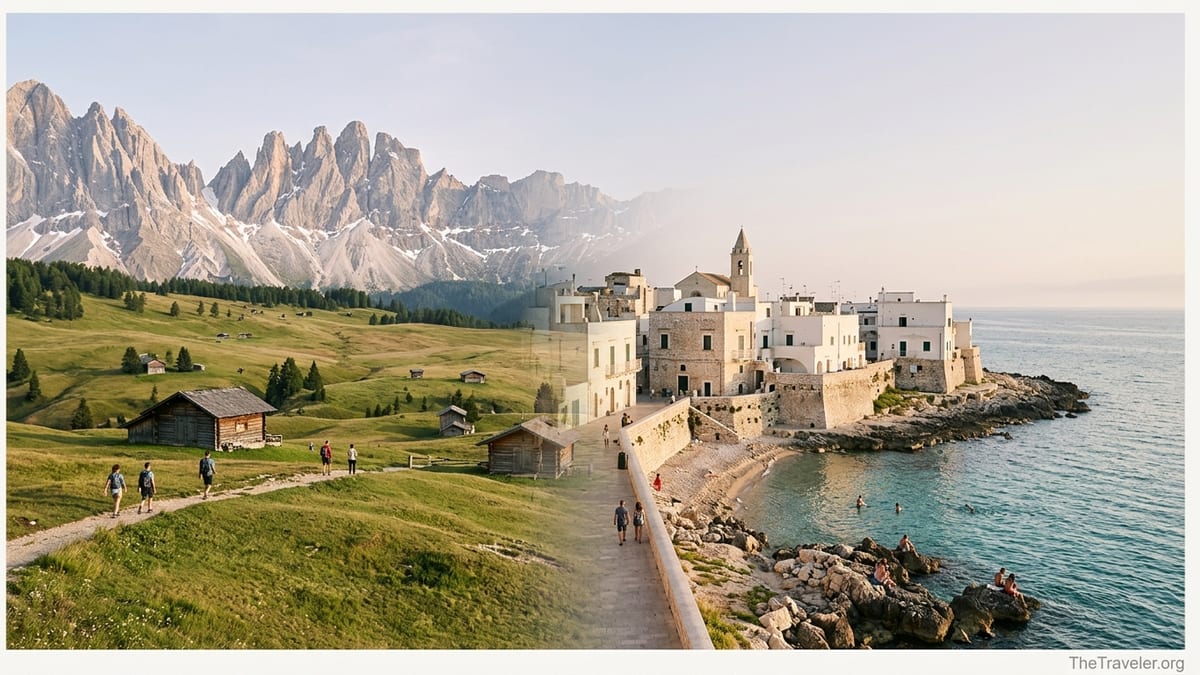
Northern and southern Italy offer such different travel experiences that it almost feels like visiting two countries. In the north you have financial hubs like Milan, art powerhouses such as Venice, Florence and Turin, the glassy lakes of Como and Garda, and the jagged Dolomites that look made for postcards. In the south, the mood slows down: Naples, the Amalfi Coast, Puglia, Basilicata, Calabria and Sicily come with warmer seas, whitewashed towns and lava‑soiled vineyards.
For many first‑time visitors, the north is easier to navigate. High‑speed trains connect Milan, Venice, Bologna, Florence, Rome and Naples in just a few hours, with services from operators such as Trenitalia’s Frecce and Italo linking major cities like Milan and Rome in under 3 hours in some cases. This makes it simple to base yourself in one city and hop to others on day trips without renting a car.
Southern itineraries feel more relaxed and coastal. You are more likely to be riding small regional trains through Puglia’s olive groves, taking ferries between Amalfi Coast villages or driving winding coastal roads in Sicily. Schedules can be less frequent and journeys longer, but the reward is a sense of place that feels distinctly Mediterranean and often less polished than the north.
Choosing between them comes down to what you want most: museum‑hopping and efficient logistics, or lingering aperitivi by the sea and a slower rhythm of life. Many travelers eventually do both on different trips, but if it is your first time and you have under 10 days, you will get more out of Italy by picking one half and doing it well.
Cities, Culture and Everyday Atmosphere
Northern Italy is made for city lovers. Milan delivers designer shop windows, the Duomo and Leonardo’s Last Supper, while Venice offers canals, palazzi and a maze of back alleys where you can still find a cicchetti bar full of locals on a weekday night. Bologna, Turin and Verona give you porticoed streets, large piazzas and excellent regional food scenes without the same tourist volumes as Venice in peak season.
In practice this means your days might be filled with museum visits and urban strolls: an afternoon at the Pinacoteca di Brera in Milan, a guided walk through the Doge’s Palace in Venice, or wandering Bologna’s university district with a coffee in hand. Cafes and aperitivo bars are everywhere, and evenings often center around aperitivo spreads near the main piazza, followed by dinner at a trattoria where a mid‑range main course might run roughly 15 to 25 euros per person in many northern cities, higher around landmark squares.
Southern cities feel more chaotic and lived‑in. Naples is a prime example, with scooters weaving through narrow streets and laundry lines draped between balconies. Instead of formal aperitivo buffets, you might grab a folded pizza al portafoglio for a few euros and eat it standing in a side street, then continue to a simple trattoria where a generous plate of seafood pasta or a full meal can still feel relatively affordable compared with Milan or Venice. Inland cities like Matera, with its cave dwellings, or Lecce in Puglia, often mix baroque beauty with a smaller‑town pace.
If you want grand art museums, fashion and polished historic centers, the north wins. If you prefer gritty, energetic street life, chaotic markets and families in the piazza late into the night, you will likely connect more with the south, especially in places like Naples, Palermo or Catania.
Lakes, Mountains and Beaches
For mountains and lakes, northern Italy is hard to beat. The Dolomites are among Europe’s most famous ranges, with resort towns like Cortina d’Ampezzo and Val Gardena popular for skiing in winter and hiking in summer. Lakes Como, Garda and Maggiore offer villa‑lined shores, small ferry networks and waterfront promenades. A classic trip might pair a few days in Milan with two or three nights in a lakeside town such as Varenna on Lake Como or Sirmione on Lake Garda, reached easily by train plus a short ferry or bus ride.
While the north has coastline around Liguria and Friuli Venezia Giulia, southern Italy is where beaches and classic “Mediterranean summer” really shine. The Amalfi Coast, Capri and Ischia near Naples have dramatic cliffs and small pebble coves, though they are among the priciest and busiest coastlines in the country. Puglia offers long sandy stretches around the Salento peninsula, with towns like Polignano a Mare or Otranto providing clear water and more relaxed beach clubs. Sicily adds black‑sand beaches near volcanic areas, along with resort towns like Taormina and Cefalù overlooking the sea.
For travelers deciding between mountain air and sea breezes, the divide is straightforward. If you imagine your trip filled with alpine hikes, cable cars and lakeside strolls, northern Italy is the obvious choice. If your priority is beach days, coastal drives and warm evenings near the water from late spring through early autumn, the south is usually more satisfying.
One practical factor is seasonality. In July and August, high‑altitude areas in the Dolomites and around the lakes can feel fresher than the humid south, which regularly experiences hot, still days. In shoulder seasons like May, June, September and early October, sea temperatures in the south are typically more pleasant for swimming than in the north, making regions like Puglia, Campania and Sicily ideal for shoulder‑season beach breaks.
Food and Wine: What You Will Actually Eat
Italy’s food changes dramatically from north to south, and for many travelers this is the deciding factor. In the north, especially around Lombardy, Piedmont and Emilia‑Romagna, you encounter rich risottos, polenta, braised meats and egg pasta. Classic examples include Milanese risotto, tagliatelle al ragù in Bologna and filled pastas like tortellini in broth. Butter and cream appear more often, and wine regions such as Barolo, Barbaresco and Franciacorta reward anyone interested in winery visits and tastings.
Daily dining in northern cities can vary hugely in price. In central Milan, a sit‑down dinner with a pasta course, a second course and wine at a mid‑range restaurant can often land around 30 to 50 euros per person depending on location and choices, with prices rising near icons like the Duomo or along major shopping streets. Step two or three blocks away from main sights and you can still find trattorie and osterie that feel more local and better value, particularly in university or residential neighborhoods.
Southern Italy is a paradise for simple, ingredient‑driven cooking. Naples is famous for its pizza, often priced far below what you would pay in northern Europe or North America for similar quality. Classic street‑food items like fried pizza or cuoppi (paper cones filled with fried fish or vegetables) sit alongside sit‑down pizzerias where you can still order a margherita and a drink without spending much more than a modest meal in many northern cities. In Puglia, you will find orecchiette with turnip greens, burrata, fresh seafood and tomatoes that taste like sunshine. In Sicily, dishes such as pasta alla norma, arancini and cannoli dominate many menus.
Wine and liqueurs also differ. Northern regions lean into sparkling wines and structured reds, while southern vineyards in Sicily, Campania and Puglia produce bold reds, mineral whites and sweet wines, often at prices that feel approachable for visitors. On the Amalfi Coast or in Sorrento you are likely to end dinner with a shot of limoncello made from local lemons, while in the north you might be offered grappas or herbal digestivi.
If dining is a core part of your trip, think about variety and cost. The north offers high‑end gastronomy and winery visits that can fill an entire week. The south delivers generous portions and intense flavors, with many travelers reporting that their restaurant bills in cities like Naples or Lecce feel noticeably lower than in Milan or Venice for similar quantities of food.
Weather, Seasons and When to Go
Italy stretches from the Alps to the center of the Mediterranean, so climate differences between north and south are real. In broad terms, northern Italy has more pronounced seasons: cold winters with possible snow in cities like Milan and Turin, and hot but often less humid summers than the deep south. Mountain areas can see snow cover from late autumn through spring, making them popular for winter sports.
Southern Italy, particularly coastal regions in Campania, Puglia and Sicily, stays milder in winter and hotter in summer. In July and August, temperatures in cities like Naples or Palermo can feel intense, especially combined with humidity and crowds. However, this same climate means that you can often enjoy outdoor dining and seaside walks comfortably in late October or even November, which would be much cooler and foggier in many northern cities.
For a first‑time visitor focused on sightseeing in major cities and enjoying comfortable temperatures, April to early June and late September to October are usually sweet spots in both halves of the country. During these months, Milan, Florence and Venice are busy but not yet at full summer peak, while in the south the sea may already be warm enough for swimming, especially from late May onward.
If you are tied to travel in July or August and do not enjoy heat, the lakes and Dolomites in the north can offer relief, although popular resort towns will be busy and accommodations can book out far in advance. Conversely, if your main goal is a warm‑weather, beach‑centric trip and you do not mind high temperatures, a southern itinerary in midsummer can be rewarding, especially if you build in siesta time and choose accommodations with air conditioning and access to the sea.
Costs, Transport and Road Trips
In general, northern Italy is more expensive than the south for accommodations, dining near major landmarks and some attractions, especially in Milan, Venice and around the most famous lakes. Traveler reports and pricing data suggest that a typical daily food budget in a northern city can often run significantly higher than in many southern destinations, especially if you are eating most meals in sit‑down restaurants. By contrast, in places like Naples or smaller towns in Puglia, simple meals of pizza, street food or seafood can still be relatively budget‑friendly, even as prices have risen in recent years.
Transport is where the north holds a clear advantage. High‑speed rail lines link Turin, Milan, Bologna, Florence, Rome and Naples, with some services covering the Milan to Rome route in under 3 hours and Milan to Florence in under 2 hours. Florence sits on this main north‑south axis, making it a natural hub for trips that combine several northern cities without a car. Multiple operators run frequent services, so it is usually possible to choose between cheaper economy fares booked in advance and more flexible tickets bought closer to departure.
In the south, high‑speed trains serve cities such as Naples, Salerno and Bari, but many of the coastal and rural areas that travelers dream about, like the Amalfi Coast, parts of Calabria and much of inland Sicily, rely on a mix of regional trains, buses and ferries. These can work well with planning, but schedules are generally less frequent and journey times longer. For example, reaching a cliff‑top town on the Amalfi Coast typically means a train to Salerno or Sorrento followed by a ferry or bus along winding roads, which can be thrilling but time‑consuming in high season.
If you dream of an Italian road trip, both halves of the country can deliver, with caveats. In the north, driving between lakes, mountain villages and wine regions can be a pleasure, though you will need to factor in tolls, parking costs and limited‑traffic zones in many historic centers. In the south, a rental car opens up Puglia’s countryside, lesser‑known parts of Basilicata and Sicily’s interior, yet driving in cities like Naples or Palermo can feel intense to those unused to southern traffic patterns. Travelers on a budget or uncomfortable with driving may find a mostly train‑based itinerary in the north simpler and more predictable.
Which Is Better for First-Time Visitors?
If this is your first visit to Italy and you have roughly a week to ten days, prioritizing either northern or southern Italy will give you a more relaxed and coherent experience than trying to do both. For most first‑timers, a northern route built around cities and easy train connections is the most straightforward introduction. A classic example might be Milan, Lake Como, Florence and Venice, all linked by frequent rail services and offering a mix of art, architecture, lake scenery and food without the need to rent a car.
This kind of itinerary suits travelers who enjoy museums, historic centers and day trips by train or ferry. You could, for instance, spend three nights in Florence with side trips to Bologna or Pisa, then continue by high‑speed train to Venice for canals and island‑hopping in the lagoon. With well‑timed train bookings, you spend more time exploring and less time navigating complex logistics.
However, if your mental image of Italy is dominated by cliff‑side villages, olive groves, warm sea swimming and long lunches in the shade, starting in the south may make more sense. A first‑timer southern itinerary might involve flying into Naples, spending a few days exploring the city and nearby Pompeii, then moving to a base on the Amalfi Coast or in Sorrento, and finishing in Puglia around Bari or Lecce for quieter beaches and baroque towns. This route requires a bit more planning for regional trains, buses and ferries, but rewards you with landscapes and food that many people find unforgettable.
For travelers highly sensitive to budget, the south often comes out on top, especially outside the most famous luxury zones. Overnight rates in smaller southern cities and towns, particularly away from the Amalfi Coast and high‑end resorts, can be easier on the wallet than equivalent properties around Lake Como or in central Venice. Add lower day‑to‑day food costs in many southern destinations, and a two‑week stay can feel more affordable than a similar period spent entirely in northern hubs.
The Takeaway
There is no single “better” choice between northern and southern Italy, only a better fit for the kind of trip you want and the time of year you can travel. If you value efficient trains, iconic cities packed with art and architecture, and the possibility to combine lakes, mountains and historic centers without renting a car, northern Italy is likely your best starting point. You can always return for a southern trip once you are comfortable with the country’s basics.
If instead your priorities are warm seas, dramatic coasts, leisurely meals of pizza and seafood, and days that revolve more around the beach than the museum, then southern Italy will likely feel closer to the Italian dream you have in mind. Expect slightly more complex logistics and higher summer heat, but also memorable landscapes and often friendlier everyday prices away from the busiest luxury strips.
For many travelers, the ideal strategy over several years is to alternate: one trip built around the north’s cities, lakes and mountains, followed by a separate journey through the south’s coasts and islands. Whether you start in Milan or Naples, what matters most is that you give each area enough time, resist the urge to do everything in one go, and build an itinerary that matches your own travel style, budget and pace.
FAQ
Q1. Is northern or southern Italy better for a first trip?
For most first‑time visitors, northern Italy is simpler because of the dense high‑speed train network and compact city centers, but southern Italy is better if beaches and warm seas are your highest priority.
Q2. Where is cheaper, northern or southern Italy?
In general, southern Italy offers lower everyday costs for food and mid‑range accommodation, though luxury areas like the Amalfi Coast can rival or exceed northern hotspots around Lake Como or Venice.
Q3. Which part of Italy has better beaches?
Southern Italy is stronger for classic beach holidays, with the Amalfi Coast, Puglia and Sicily providing warmer seas and longer beach seasons than most northern coasts.
Q4. Is it easier to get around the north or the south without a car?
The north is easier without a car thanks to frequent high‑speed trains linking Milan, Venice, Bologna, Florence and Rome, while the south often relies more on regional trains, buses and ferries to reach smaller coastal areas.
Q5. Which region is better in summer?
In peak summer, the cooler air of the lakes and Dolomites in the north can feel more comfortable, while southern coasts offer warm seas but also higher heat and humidity.
Q6. Can I see both northern and southern Italy in one week?
You can technically visit both, but the experience may feel rushed. With only a week, focusing on either the north or the south usually leads to a more enjoyable and less stressful trip.
Q7. Where will I eat better food, in the north or the south?
Both halves of Italy eat very well, but the styles differ. The north excels in risottos, rich pastas and wine regions, while the south focuses on pizza, seafood and sun‑ripened vegetables at generally lower prices.
Q8. Is driving in southern Italy really difficult?
Driving in rural parts of the south can be pleasant, but city driving around Naples or Palermo and on narrow coastal roads can feel intense if you are not used to local traffic and parking challenges.
Q9. Which side is better for a romantic trip or honeymoon?
Both work well, but many couples choose the north for lakes and Dolomite views or the south for dramatic coastal towns like Positano and peaceful villages in Puglia or Sicily.
Q10. If I love hiking and nature, should I choose the north or the south?
If hiking and alpine scenery are priorities, northern Italy, especially the Dolomites and the lake regions, is usually the stronger choice, though southern islands like Sicily also offer good coastal and volcanic trails.