


Few trips capture the drama of Northern Italy like combining Lake Como’s deep-blue shores with the jagged limestone peaks of the Dolomites. With Milan as the natural gateway, this loop can fit into 5, 7 or 10 days, provided you are realistic about driving times, choose overnight bases wisely, and understand when you truly need a car versus when the regional train network will serve you better. This guide lays out practical, real-world route options that travelers are using today, including approximate travel times, typical rental and transport choices, and concrete examples of bases that work in each timeframe.
Getting in via Milan and Choosing Your Transport
Milan remains the most practical international entry point for a Lake Como and Dolomites itinerary. Most long-haul travelers arrive at Milan Malpensa or Milan Linate, while some European flights also use Bergamo Orio al Serio. From Malpensa, direct regional trains run into Milano Cadorna and Milano Centrale, where you can connect to Como and other northern cities. Many travelers now land at Malpensa in the morning, take the airport train to Cadorna, and board a Trenord service to Como Nord Lago or Como San Giovanni by early afternoon, reaching Lake Como without ever renting a car in the city.
For Lake Como alone, trains and ferries are usually enough. Regional trains from Milano Centrale to Como San Giovanni often take around 40 minutes, and second-class tickets typically cost a few euros, which makes rail more convenient than driving into Como and searching for parking. From Como town, ferries connect to Bellagio, Varenna and Menaggio, so visitors who plan to stay along the central lake can comfortably go car-free at this stage of the trip.
The Dolomites are different. Public transport exists, but the most flexible way to explore mountain passes, smaller trailheads and lakes such as Lago di Braies or Passo Giau is still to rent a car. Many travelers collect a vehicle on the day they leave Lake Como, either at Como itself, in central Milan, or at an airport rental center where it is easier to exit directly toward the autostrade. When comparing prices, it is common to see compact rentals in summer starting from roughly the cost of a few long-distance train tickets for two, so couples and families often find the flexibility worth the additional fuel and tolls.
One important consideration around Milan is restricted traffic areas, known locally as ZTL. Central districts and some residential neighborhoods use cameras to enforce limited-access zones where unregistered vehicles can be fined. To avoid issues, many road trippers pick up or return their rental at Milan’s airports or larger suburban stations instead of driving into the historic center. This approach allows you to enjoy Milan by metro and tram at the end of your trip, without worrying about accidentally crossing a camera-controlled zone in an unfamiliar city.
Lake Como: Best Bases and How Long to Stay
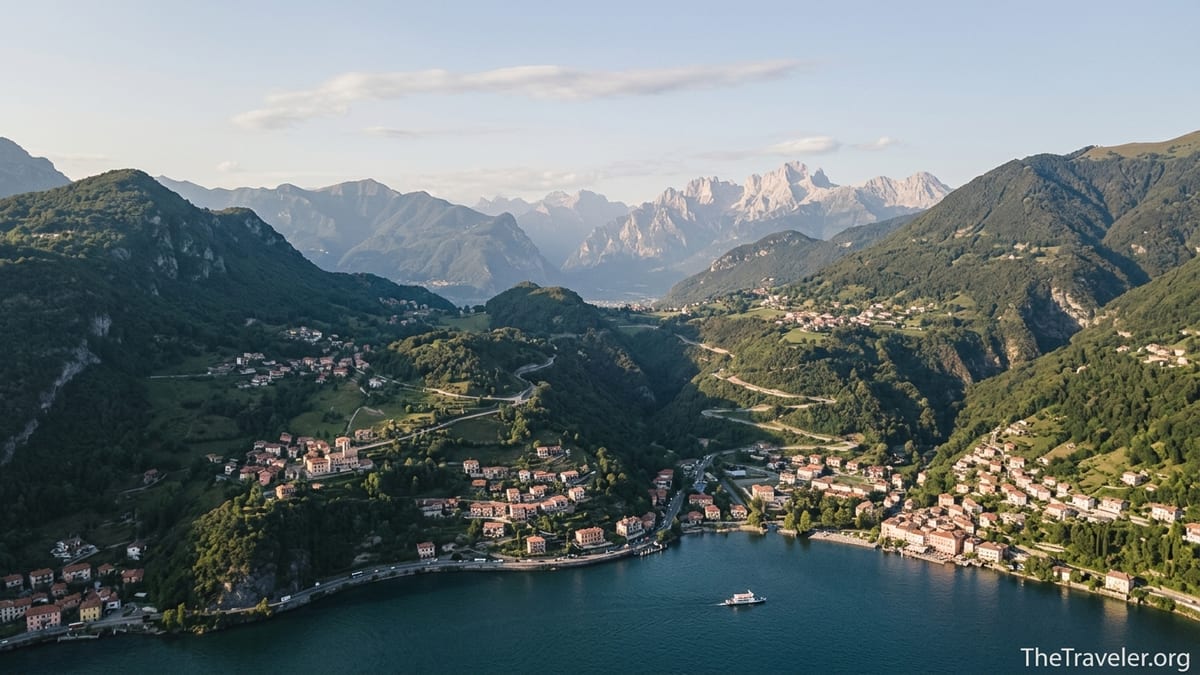
Lake Como is far more than the often-photographed town of Como itself. For a combined itinerary with the Dolomites, most travelers focus on the mid-lake triangle of Bellagio, Varenna and Menaggio, which offers classic lake views, frequent ferry connections, and straightforward onward travel. A typical pattern is to arrive in Como by train from Milan, take a fast ferry up the lake, and base for two or three nights in one of these central villages before heading into the mountains.
Varenna is particularly practical if you are arriving by rail and want to delay renting a car. The village has its own station on the line between Milan and Tirano, which means you can ride a Trenord train from Milano Centrale directly to Varenna-Esino in about an hour, then walk or take a short taxi ride to your hotel. This avoids juggling luggage on ferries on your arrival day and makes departure easier, since you can travel back to Milan by train or continue east by rail if you plan to connect to the Dolomites via Verona or Bolzano.
Bellagio, perched at the lake’s fork, is more atmospheric and often slightly more expensive. Many boutique hotels overlook the water, and evening strolls along the waterfront are a highlight. However, getting to Bellagio requires either a ferry transfer or a longer, winding drive, which can be tiring immediately after a long-haul flight. For a short, five-day itinerary, staying in Varenna or Menaggio can save an hour or more of transit while still giving access to Bellagio by day-trip boat.
As for time allocation, two nights on Lake Como is the minimum that feels worthwhile, giving you one full day to ride ferries, visit a villa garden such as Villa Carlotta in Tremezzo, and linger over aperitivo. With three nights, many visitors add a second excursion, perhaps a boat tour toward the quieter northern reaches around Gravedona, or a relaxed hike above Varenna with lake views. Beyond that, additional days may be better spent in the Dolomites if your priority is hiking and alpine scenery.
Driving Between Lake Como and the Dolomites
The journey from Lake Como to the Dolomites is a full travel day, and how you tackle it shapes the rest of your itinerary. Most travelers leaving the mid-lake area first drive along the lake road to Como or Lecco, then connect to the A4 or A22 motorways toward Verona, Bolzano and the mountain valleys. For example, driving from Varenna to Ortisei in Val Gardena often takes in the region of four to five hours in normal traffic, not counting stops. From Bellagio to Cortina d’Ampezzo, you should plan for six hours or more, especially in peak summer when mountain roads can slow significantly.
Using the main autostrade means paying tolls, which you settle at toll booths along the way. Travelers commonly report toll costs adding up to the equivalent of a modest restaurant meal over several days of driving, so it is worth factoring this into your budget alongside fuel. Service areas along the autostrade are generally well maintained, with cafes and restrooms, making them practical places to break the drive and switch drivers if you are traveling as a pair.
Once you enter the Dolomite valleys, driving conditions change. Roads become narrower, with frequent hairpin bends and steep gradients. Distances that look short on the map, such as Ortisei to Cortina d’Ampezzo, can easily take around an hour and a half because you are crossing high passes and slow-moving traffic. Mountain weather can also affect visibility, especially in shoulder seasons, so it is wise to avoid starting a long pass drive late in the afternoon if heavy cloud or storms are forecast.
For those who prefer not to drive at all, it is still possible, though more complex, to reach the Dolomites by train and bus. One common strategy is to travel from Milan to Bolzano or Bressanone by high-speed and regional trains, then connect by local bus into towns like Ortisei or Selva. However, this adds multiple connections and fixed schedules, which can feel limiting if you want to move between basins or reach more remote trailheads. For a combined Lake Como and Dolomites route in under 10 days, a rental car remains the more efficient choice for most visitors.
Choosing Your Dolomites Bases
Picking the right base in the Dolomites is as important as choosing your hotel on Lake Como. The region is large and fragmented by deep valleys, so staying in one town and trying to day-trip across the entire range leads to long, tiring drives. Many experienced travelers now split their stay between a western base such as Ortisei or Selva di Val Gardena and an eastern base such as Cortina d’Ampezzo or Dobbiaco, which reduces daily driving and allows you to focus on specific clusters of sights.
Ortisei, in Val Gardena, works well for a first-time visit. The town has lively pedestrian streets, a mix of mid-range hotels and apartment-style stays, and direct gondola access to Seceda and Alpe di Siusi. This means that even if you are slightly tired from the drive, you can step onto a lift in the town center and be walking among alpine meadows within minutes. Many travelers comfortably spend three or four nights here, using it as a base for hikes on the Sella pass and day trips to nearby viewpoints.
Cortina d’Ampezzo, known historically as a ski resort, transforms into a hiking hub in summer and early autumn. From here, road access to Tre Cime di Lavaredo, Passo Giau and the Cinque Torri area is relatively straightforward, with many trailheads within an hour’s drive. Accommodation ranges from traditional family-run inns to modern hotels, and advance booking is essential in peak months like July and August, when availability in both Cortina and surrounding villages can tighten significantly.
In a 7 or 10-day itinerary, staying in both a western and an eastern base lets you see more without rushing. For example, three nights in Ortisei followed by three in Cortina gives you separate windows of good weather to target key hikes in each sector. This strategy also adds a change of atmosphere: Val Gardena blends Ladin and Italian culture, while Cortina has a slightly more understated, alpine-resort feel. If you are restricted to five days total, it is usually better to pick just one Dolomites base and explore that valley well rather than attempt to cover the entire area.
A Compact 5-Day Lake Como and Dolomites Itinerary
A five-day itinerary works best for travelers who want a taste of both regions without fitting in every landmark. In this timeframe, you will spend more hours in transit relative to your total days, so choosing direct routes and minimizing hotel changes is crucial. This outline assumes arrival and departure from Milan, with a focus on one lakeside base and one Dolomites base.
On Day 1, arrive in Milan and use the train to reach Lake Como. For example, if you land at Malpensa in the late morning, you might catch the airport train into the city, then connect to a Trenord service from Milano Centrale to Varenna, arriving by mid-afternoon. Settle into a lakeside hotel, walk the promenade, and enjoy dinner overlooking the water. Day 2 is your full Como day: take ferries to Bellagio and Menaggio, visit a lakeside villa, and plan an early night so you are rested for the drive.
Day 3 is your transfer day to the Dolomites. Collect a rental car in the morning, ideally from a provider near the train station or in Lecco or Como if you lodged there. Drive via the autostrade toward your chosen base, such as Ortisei, stopping at a motorway service area for lunch. Expect four to five hours on the road, then a gentle stroll through town and a simple dinner. On Day 4, make the most of your single full Dolomites day by focusing on one area, such as taking the Seceda cable car and walking the ridge trails, or driving to a single mountain pass and enjoying shorter walks and roadside viewpoints.
On Day 5, drive back toward Milan, allowing enough buffer time for rental return and airport check-in. If your flight leaves late in the day or the next morning, consider spending your final night in Milan rather than trying to go directly from the Dolomites to the airport in one stretch. Even with clear roads, the mountain-to-airport journey can feel long, and staying in the city gives you a brief taste of Milan’s neighborhoods before you fly home.
Balanced 7-Day Route: Two Nights on the Lake, Three in the Mountains
With seven days, you can add a second full mountain day and slow the pace slightly. This timeframe suits visitors who enjoy both lakeside relaxation and moderate hiking. It still relies on Milan as the entry and exit point but allows one or two nights in the city if desired. The key is to keep hotel moves to three bases at most to avoid spending your holiday packing.
A typical pattern is to spend Days 1 and 2 on Lake Como, Days 3 to 5 in the Dolomites, and Days 6 and 7 in Milan or another city on your departure corridor. For example, you might fly into Milan on Day 1, head straight to Varenna, and use Day 2 to explore Bellagio and the mid-lake by ferry. On Day 3, collect your rental and drive to Ortisei, arriving in time for an evening walk through the pedestrian center.
During Days 4 and 5, focus on two distinct Dolomites experiences rather than trying to see everything. One day might be devoted to the Alpe di Siusi plateau, reached via gondola from Ortisei or nearby towns, where you can walk gentle trails between alpine huts and stop for lunch with mountain views. The other day could involve a longer drive over a pass such as Gardena or Sella, with time for a mid-level hike or simply photo stops and coffee at refuges along the route. If weather intervenes, use one of these days for a lower-altitude excursion or a spa afternoon at your hotel.
On Day 6, drive back to Milan, return your car at the airport or an accessible city location, and shift into urban mode. An evening in the city might include an aperitivo in the Navigli district or a stroll around the Duomo area. Day 7 is then reserved for last-minute shopping and sightseeing before your flight. Some travelers reverse this order, beginning with Milan and finishing on Lake Como for a quieter finale, but the total structure remains similar: two nights on the lake, three in the mountains, and two in or near Milan.
Extended 10-Day Itinerary With Two Dolomites Bases
Ten days opens up the most rewarding version of a Lake Como and Dolomites route, allowing you to split your mountain time between western and eastern sectors. This structure minimizes backtracking and makes long driving days more manageable by threading in stopovers. It also gives you flexibility to adjust your hiking plans based on changing weather over the course of a week.
One effective pattern looks like this: Days 1 to 3 on Lake Como, Days 4 to 6 based in Val Gardena, and Days 7 to 9 in Cortina d’Ampezzo or the Tre Cime area, finishing with Day 10 in Milan for departure. In practice, this means arriving in Milan and traveling directly to Varenna or Bellagio for the first three nights, with time for ferry excursions, villa visits, and a slower pace to recover from jet lag. On Day 4, you pick up a rental car and drive to Ortisei, planning one or two short walks in the late afternoon after check-in.
Days 5 and 6 in Val Gardena can be devoted to marquee highlights like Seceda, the Sella passes, or Alpe di Siusi. With two full days, you might choose one demanding hike and one lighter day of lift-assisted viewpoints and casual walks. On Day 7, drive east toward Cortina d’Ampezzo, which usually takes several hours including a mountain pass crossing. Many travelers treat this as a scenic drive day, stopping for coffee at refuges and taking short walks near viewpoints rather than scheduling a major hike.
In Cortina or nearby Dobbiaco, Days 8 and 9 can focus on the eastern Dolomites. This is the time to visit Tre Cime di Lavaredo, where many visitors either hike the classic loop trail or walk to one of the refuges for lunch with views of the three peaks. Another day might involve exploring Passo Giau or the Cinque Torri area, both of which combine relatively accessible walking with dramatic scenery. On Day 10, drive back toward Milan, return your rental car, and either fly home that evening or stay one more night in the city if you prefer not to combine a long drive with an international departure.
Within this 10-day frame, some travelers adjust the balance, taking one night from Lake Como and giving it to the Dolomites, or adding an overnight stop near Bolzano or Verona to break up driving days. The strength of this longer itinerary is flexibility: even if heavy rain hits one sector, you still have multiple days to catch clear conditions in another valley, which is a real-world benefit in a mountain region where weather can change quickly.
The Takeaway
Combining Lake Como and the Dolomites into a single Northern Italy trip is not only possible but increasingly popular among travelers who want both lakeside relaxation and high-alpine hiking in one itinerary. The practical key is to use Milan as an efficient hub, rely on trains and ferries while you are on Lake Como, and then switch to a rental car for the Dolomites section, where distances are deceptive and public transport is slower and more fragmented.
In five days, you will get a tasting menu: one lakeside base, one mountain base, and full travel days in between. Seven days let you deepen the experience with three nights in the Dolomites and time for both plateau walks and pass drives. With ten days, you can split your mountain stay between two valleys, dramatically reducing daily driving and giving yourself more chances for clear views and unhurried hikes. Whichever version you choose, building your route around realistic driving times, limited hotel changes, and simple connections from Milan ensures the journey between Lake Como and the Dolomites feels like part of the holiday rather than just a long transfer.
FAQ
Q1. Is it better to rent a car in Milan or closer to Lake Como for this itinerary?
Many travelers find it easiest to reach Lake Como by train first, then rent a car when they leave the lake for the Dolomites. Collecting your vehicle in or near Como, Lecco or at an airport avoids driving through Milan’s central restricted traffic zones and lets you enjoy the lake car-free, while still giving you the flexibility you need once you head into the mountains.
Q2. How long does it take to drive from Lake Como to the Dolomites?
Driving times vary depending on your exact start and end points, but you should generally plan for four to six hours including rest stops. For example, traveling from Varenna or Bellagio to Ortisei in Val Gardena often takes around four to five hours using the main motorways, while reaching Cortina d’Ampezzo can take longer because of additional mountain passes and narrower roads.
Q3. Can I visit both Lake Como and the Dolomites using only trains and buses?
It is possible, but it requires more planning and tolerance for fixed schedules. You can comfortably reach Lake Como by train from Milan, and then continue to cities like Bolzano or Bressanone by rail before using buses to reach mountain towns. However, without a car you will be more limited in accessing remote trailheads, scenic passes and smaller lakes, so this option is better suited to travelers who are happy focusing on a few well-connected hubs rather than covering a wide range of sites.
Q4. When is the best time of year to combine Lake Como and the Dolomites?
The most reliable months for this itinerary are typically late June through September, when Dolomites hiking trails and cable cars are fully operating and snow has receded from most summer routes. Lake Como is pleasant from late spring through early autumn, though July and August can be busy along the waterfront promenades. Shoulder months like May and October can work for Lake Como but may bring lingering snow, closed passes or reduced lift operations in the higher Dolomites.
Q5. How many nights should I spend in the Dolomites versus Lake Como?
On a balanced one-week trip, many travelers allocate two nights to Lake Como and three or four to the Dolomites, giving more time to the mountains where hiking and driving between valleys require full days. On a 10-day itinerary, you might spend three nights on the lake and six in the Dolomites, split between two bases, which allows for rest days, weather flexibility and a richer sample of different landscapes.
Q6. Are the mountain roads between Dolomites towns difficult to drive?
Dolomites roads are generally well maintained but can feel challenging if you are not used to alpine driving. Expect frequent hairpin bends, changing gradients and slower traffic, especially on weekends and in high summer. Distances between towns such as Ortisei and Cortina d’Ampezzo can take longer than they look on a map, so it is wise to start earlier in the day, drive cautiously and allow extra time for unexpected delays or scenic stops.
Q7. Do I need to worry about parking and restrictions around Lake Como and Milan?
Yes, it pays to plan ahead. Lake Como towns have limited central parking, so booking accommodation with a dedicated space or clear parking guidance is helpful. Milan and some lakefront areas have restricted traffic zones where unregistered vehicles can be fined. To avoid issues, consider using trains and ferries on Lake Como and only renting a car when you are leaving for the Dolomites, and return it before entering central Milan at the end of your trip.
Q8. Is a 5-day itinerary enough to see both Lake Como and the Dolomites?
Five days is the minimum for a combined route and will feel fast-paced. You can still have a rewarding trip if you accept that you will visit only one lakeside town and one Dolomites base, and treat the journey itself as part of the experience. Longer stays of seven to ten days give you more freedom to recover from travel fatigue, adjust to weather, and enjoy both regions without rushing.
Q9. How should I budget for tolls and fuel when driving this route?
Exact costs vary with fuel prices and route choices, but travelers often find that tolls and fuel for a Lake Como and Dolomites loop amount to the equivalent of several restaurant meals over the course of the trip. Using the main autostrade between Milan and the Dolomites usually means multiple toll booths, while local mountain roads are typically toll-free. When comparing car rental against train and bus tickets for two or more people, the overall cost is often comparable, with the car providing added flexibility.
Q10. Can I comfortably add another destination, like Venice or Verona, to this itinerary?
It is possible to add a city like Verona or Venice, particularly on a 10-day trip, but each extra stop increases hotel changes and travel time. If you want to include another city, consider trimming a night from Lake Como or splitting your Dolomites stay differently, and be realistic about how many full days you will actually have in each place. Many travelers choose to focus on Lake Como and the Dolomites for one trip and save Venice or other cities for a separate visit, to keep the itinerary manageable and enjoyable.