


Northern Italy compresses fashion capitals, Alpine peaks, storybook lakes and Renaissance cities into a relatively compact region, but trying to see "everything" in one trip can quickly turn into a blur of train stations and hotel check-ins. This guide lays out realistic 5, 7, 10, 14 and 21 day itineraries that combine Milan, Lake Como, Lake Garda, Verona, the Dolomites, Venice and nearby highlights, with sample travel times and overnight allocations that actually work on the ground.
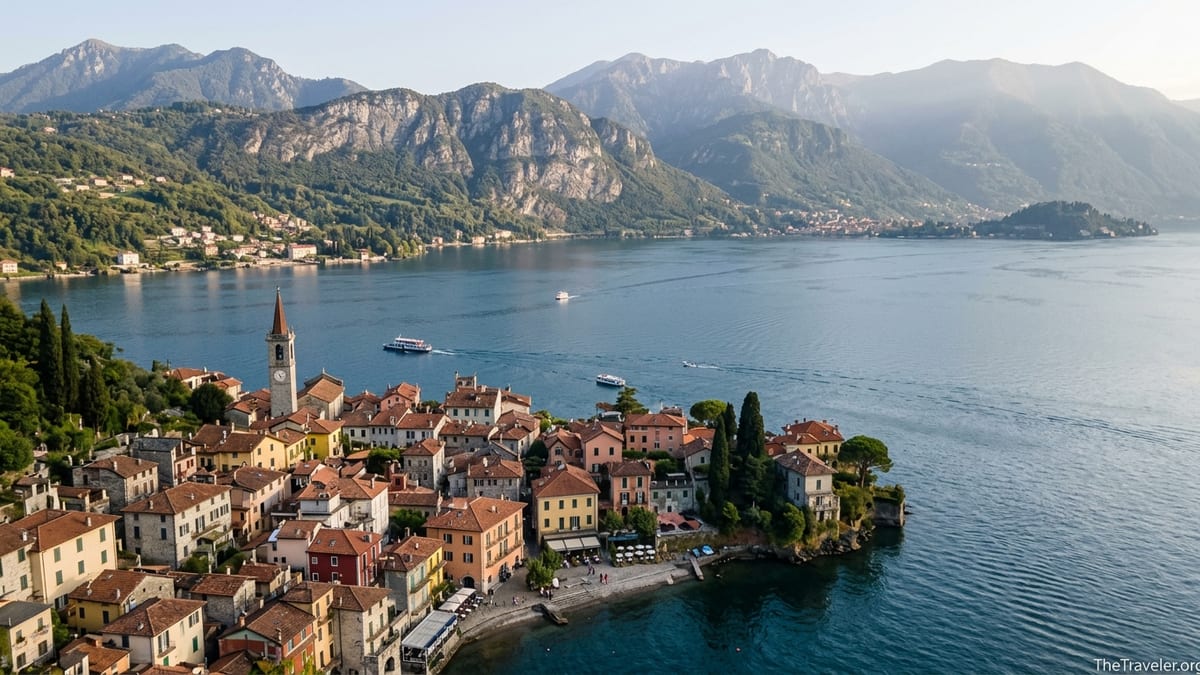
How to structure a Northern Italy trip
The key to planning Northern Italy is to cluster destinations by region and rely on trains for cities and lakes, while using a rental car only when it genuinely saves time, such as in the Dolomites or around smaller lakes. Milan is the main international gateway, with frequent high speed trains to Venice taking roughly 2.5 to 3 hours depending on the departure. From Venice, regional and high speed services reach Verona in about 1 hour, which makes it straightforward to link these cities in a single route.
Lake destinations require a bit more thought. Lake Como sits about 45 to 60 minutes by train or car from central Milan, depending on traffic and whether you head to Como town, Lecco or Varenna. A typical visitor might land at Milan Malpensa, transfer into Milan by train or bus, and then reach Como San Giovanni or Varenna-Esino by direct regional train for a first taste of the lake, before continuing deeper by ferry. Lake Garda is slightly farther east; fast trains from Milan to Desenzano del Garda or Peschiera del Garda take roughly 1 to 1.5 hours, which is still manageable even on a shorter itinerary.
The Dolomites, including bases like Cortina d'Ampezzo or Val Gardena, are where a rental car or private transfer becomes most efficient. Driving from Bolzano to Cortina along the historic Great Dolomite Road takes around 2 hours in good conditions, though you will want to allow more time for stops at passes and viewpoints. Unlike the straightforward train connections between cities, these mountain roads are winding and can be slow in peak summer or during thunderstorms, so itineraries that include the Dolomites work best from 10 days upward.
For most travelers, a logical structure is to start in Milan, head to Lake Como, continue east toward Verona and Lake Garda, then finish in Venice. If adding the Dolomites, you can break the journey between Lake Garda and Venice or between Verona and Venice, picking up a rental car for a 3 to 6 day loop through the mountains before dropping it again in Venice or Bolzano.
5 day Northern Italy itinerary: Milan and Lake Como with a city add-on
With 5 days, it is best to focus on Milan and a single lake, accepting that you will only have time for a quick taste of Northern Italy. A popular pattern is 2 nights in Milan and 3 nights on Lake Como, structured so you are not constantly packing and unpacking. Many visitors arrive on a morning or midday flight into Milan Malpensa or Linate, spend the afternoon walking from the Duomo to Galleria Vittorio Emanuele II and the Castello Sforzesco, and then recover from jet lag with an aperitivo in the Navigli canal district.
On day two you can explore Milan in more depth. Booking a timed afternoon slot for the Last Supper allows a relaxed morning browsing Brera or the Quadrilatero d'Oro fashion district, followed by a lingering lunch at a neighborhood trattoria. In the early evening, pick up your train tickets for the next day and confirm departure times. It is common to see direct regional trains from Milano Centrale to Como San Giovanni or Varenna-Esino running roughly every hour, with journey times right around an hour in normal conditions.
Days three to five are dedicated to Lake Como. Base yourself in Bellagio, Varenna or Menaggio to be near the central ferry crossroads, and allow some buffer for ferry timetables, which can stretch to 30 to 60 minutes between departures outside peak hours. A realistic single day on the lake might include a mid-morning ferry from Varenna to Bellagio, a stroll through the lanes and lakeside promenade, a visit to gardens such as Villa Melzi, and a late afternoon excursion by boat to Menaggio. Figure on 2 full days at the lake if you want a short villa visit and at least one easy hike or e-bike ride, then return to Milan on the fifth day in time for an evening flight or one more night near the station or airport.
Travelers who prefer to skip Milan can invert this plan: head straight from the airport to Lake Como on arrival day, spend 3 nights on the lake to recover from the journey, and conclude with 2 nights in Milan for museums, dining and last minute shopping before departure.
7 day Northern Italy itinerary: Milan, Lake Como and Venice
A week opens up the classic triangle of Milan, Lake Como and Venice. A balanced allocation is 2 nights in Milan, 2 or 3 nights on Lake Como and 2 or 3 nights in Venice, depending on how much time you want in cities versus by the water. A typical route might be Milan on days 1 and 2, Lake Como on days 3 and 4, then transfer by train via Milan or Verona to Venice on day 5 for a 2 night finale.
The transfer from Lake Como to Venice usually involves backtracking through Milan, although confident travelers sometimes route via Bergamo or Brescia. In practice, the simplest option is to take a morning train from Varenna-Esino or Como San Giovanni into Milano Centrale, allow at least 45 minutes between trains, then connect onto a Frecciarossa or similar high speed service to Venice. The high speed leg between Milan and Venice generally takes about 2.5 hours, travelling via Brescia, Verona, Vicenza and Padua before arriving at Venezia Santa Lucia station on the edge of the Grand Canal.
In Venice, 2 nights gives time for one classic sightseeing day and one looser day for the lagoon islands or quieter sestieri. On the first full day, start early at Piazza San Marco, climb the campanile for a panoramic view and tour the Doge's Palace before day trippers arrive. In the afternoon, you can cross the Rialto Bridge, visit the market area and wander through Cannaregio or Dorsoduro, where small bacari serve cicchetti and spritz. On the second full day, consider a morning vaporetto to Burano and Murano or a slow walk from the train station area through Santa Croce and San Polo, finishing with an evening drink along the Zattere promenade.
Seven days goes quickly, so travel days should be structured carefully. On the day you go from Como to Venice, check out early, aim for a mid-morning train to Milan, and book a midday or early afternoon high speed train east. Build in at least 30 to 45 minutes for platform changes and coffee stops at Milano Centrale, especially if travelling with luggage or children. This keeps the total door to door journey to about 5 to 6 hours, including station time and a vaporetto ride from Venezia Santa Lucia to your hotel.
10 day Northern Italy itinerary: adding Verona or Lake Garda
With 10 days, you can add either Verona, Lake Garda or both, turning the Milan–Como–Venice triangle into a more layered loop. One workable pattern is 2 nights in Milan, 2 nights on Lake Como, 2 nights in Verona or near Lake Garda, and 4 nights in Venice. Another is to shorten Venice slightly and give Lake Garda more time if you are travelling in hot weather and value swims, boat trips and lakeside walks over city museums.
A common way to reach Verona or Lake Garda from Milan is by high speed or regional train. Fast trains from Milan to Verona Porta Nuova typically take between 1 and 1.5 hours, and many continue on to Venice. On the southern shore of Lake Garda, Desenzano del Garda and Peschiera del Garda both have stations on the main Milan–Verona line with similar journey times. This makes it easy to spend one or two nights by the lake without renting a car, using ferries to shuttle between towns such as Sirmione, Desenzano, Bardolino and Garda itself.
In a 10 day route that includes Garda, you might leave Lake Como on day 5, travel back through Milan and out to Desenzano del Garda in a single day, then spend days 6 and 7 exploring the lake. For example, you could overnight in Sirmione, known for its medieval castle and Roman ruins, and take a short ferry ride to Lazise or Bardolino for lakeside promenades and wine bars. On day 8, take a direct or one stop train from Desenzano or Peschiera to Venice, usually a journey of around 2 hours in total, then finish with 3 nights in Venice.
If you choose Verona over Garda, plan on at least 2 nights in the city. That allows a full day to see the Roman arena, Castelvecchio bridge and museum, the views from Castel San Pietro and the compact historic center, plus an evening performance at the arena if your dates align with the opera season. Verona is a relaxed gateway between lakes and Venice, and its station sees frequent trains to both Desenzano del Garda and Venezia Santa Lucia, so you can easily route Milan–Como–Verona–Venice or Milan–Garda–Verona–Venice without backtracking.
14 day Northern Italy itinerary: including the Dolomites
Two weeks lets you layer in a meaningful Dolomites stay, usually 3 to 5 nights in one or two bases. A popular 14 day structure begins with 3 nights in Milan, 3 on Lake Como, 3 in the Dolomites, 2 in Verona or Lake Garda and 3 in Venice, with travel days woven in. This keeps one long mountain driving segment in the middle and uses trains on both ends of the trip for efficiency.
From Lake Como to the Dolomites, many travelers route via Milan and Verona to Bolzano or Bressanone by train, then pick up a rental car to reach Val Gardena, Alta Badia or Cortina d'Ampezzo. The train from Verona to Bolzano typically takes around 1.5 to 2 hours, and the onward drive from Bolzano into Ortisei or Selva di Val Gardena can be as short as 45 minutes in light traffic. If continuing toward Cortina, allow roughly 2 hours from Bolzano via the Great Dolomite Road, plus extra time for scenic stops at passes such as Passo Pordoi and Passo Falzarego.
In the Dolomites, 3 full days gives time for at least two major hikes or cable car excursions and one more flexible day for shorter walks or wellness. A real world pattern might look like this: one day on the Seceda plateau or Alpe di Siusi, one day at Tre Cime di Lavaredo or Lago di Braies, and one day split between a leisurely lunch in a mountain rifugio and a spa session back at your hotel. When booking, note that cable car operations and rifugio openings are highly seasonal, with most hiking infrastructure functioning from late June through late September and ski operations dominating from December through March.
After the Dolomites, drop the rental car in Bolzano, Trento, Verona or even Venice, depending on the loop you have driven and the policies of your rental company. Many people like to end the mountain segment in Verona, which sits at the junction of routes from both Bolzano and Trento. From Verona it is about 1 hour by train to Venice and just under that to Desenzano del Garda, so you can tack on 2 nights in either location before ending in Venice. With 14 days, slowing the pace in your final days is often more enjoyable than squeezing in yet another city.
21 day Northern Italy grand route: deep dive into lakes, cities and mountains
Three weeks opens the door to a grand circuit of Northern Italy that balances cities, lakes and mountains without constant rushing. A sample 21 day route could be 3 nights in Milan, 4 on Lake Como, 3 in the Dolomites, 3 around Lake Garda, 2 in Verona and 4 in Venice. This still leaves one flex day to absorb flight schedules or to add a night in a secondary stop like Bergamo or Padua.
Longer stays at the lakes let you explore lesser known corners. On Lake Como, 4 nights allows you to divide your time between the busy central triangle of Bellagio, Varenna and Menaggio and quieter towns such as Nesso, Tremezzo or Lenno. You might spend one day visiting Villa Carlotta and Villa del Balbianello, another focused on water activities like kayak rentals from a local outfitter in Bellagio, and a third wandering hill villages above the shoreline, perhaps using the greenway paths above Lenno or the trails above Varenna.
A 3 night stay on Lake Garda can support two distinct bases, such as Sirmione or Desenzano on the south shore and Malcesine or Riva del Garda in the north, where the scenery is more Alpine and wind sports are common. With 21 days, renting a car for this portion can be worthwhile, especially if you want to explore wineries in the Valpolicella hills, drive up Monte Baldo or visit smaller lakeside villages that are slower to reach by bus and ferry. The drive from the southern Garda towns to Verona is usually under an hour in normal traffic, while Garda to Venice by train via Verona can be done in roughly 3 hours door to door including station time.
For Venice, 4 nights gives enough margin for slow, crowd avoiding exploration, day trips to islands like Burano and Torcello, and simply getting lost in residential quarters. One flexible day can be left unplanned to adjust for weather; if a thunderstorm rolls through in the afternoon, retreating to a quiet museum or a long lunch is often preferable to queueing for major monuments. With a 21 day itinerary, it also makes sense to plan for laundry days in larger cities like Milan or Verona, where self service laundromats and hotel services are more common and usually cheaper than in small mountain villages.
Practical timing, trains, driving and overnight strategies
Across all these itineraries, travel timing choices can make or break the experience. In Milan, Venice and Verona, high speed trains run frequently on main routes, but booking popular times in advance is still wise, especially in May, June, September and early October. Morning departures between 8 am and 10 am and late afternoon trains between 4 pm and 6 pm are often the busiest, but also the most convenient for check in and check out patterns. When possible, avoid stacking two long travel sessions back to back, such as a late evening flight into Milan followed by an early morning train the next day.
For lakes and the Dolomites, ferries, cable cars and mountain roads add complexity. On Lake Como and Lake Garda, shoulder season ferry timetables can be thinner, with gaps of 60 to 90 minutes between boats on some routes, so check schedules a day or two ahead and plan your lunch and sightseeing windows around them. In the Dolomites, afternoon thunderstorms are common in summer, so starting hikes early and scheduling scenic drives for mid to late morning is usually safer and more enjoyable than pushing long walks into the late afternoon.
Overnight allocation should align with your highest priorities. If Venice is the highlight, give it an extra night and shave one from Milan, where key central sights can be seen in two focused days. If you are an avid hiker, consider adding a night in the Dolomites at the expense of a lake town. Families with young children often do better with longer stays in fewer bases, even on a 21 day trip, such as 5 nights on Lake Garda at an apartment style property with a pool, broken up by day trips to Verona or smaller hill towns, rather than changing hotel every two days.
Finally, keep in mind that arrival and departure days are rarely full sightseeing days. A midday arrival into Milan followed by immigration, luggage collection and transfer into the city can easily consume 3 hours. On departure, leaving Venice for an international flight from Milan or Venice airports requires accounting for boat transfers, train times and airport check in windows. Building a buffer night in your final departure city is often the simplest insurance against delays.
The Takeaway
Northern Italy rewards travelers who narrow their focus, cluster destinations sensibly and allow enough time for boats, mountain roads and the simple pleasure of lingering in a piazza. A 5 day trip that concentrates on Milan and Lake Como can feel as satisfying as a 21 day circuit that adds Verona, Lake Garda and the Dolomites, provided travel days are realistic and overnights are not spread too thin. Trains connect the major hubs efficiently, while rental cars are best reserved for specific segments in the mountains or around larger lakes.
Whether you are planning a short city and lake escape or a multi week immersion, use the sample itineraries in this guide as frameworks rather than rigid rules. Adjust night counts based on your own pace, interests and season, and remember that Northern Italy is a region you can return to, not one you must "complete" in a single trip. Leaving Verona or the Dolomites for next time can be the difference between a rushed blur and a memorable, balanced journey.
FAQ
Q1. Is it realistic to visit Milan, Lake Como and Venice in 5 days?
It is physically possible but not ideal. A 5 day trip is better spent on Milan and Lake Como alone, or Milan and Venice, to avoid constant packing and long travel days.
Q2. Do I need a car for Lake Como and Lake Garda?
No. Both lakes have train access to major towns and extensive ferry networks, so many travelers rely on trains and boats. A car can help for exploring smaller villages, but parking and traffic can be challenging in high season.
Q3. How many nights should I spend in Venice on a 7 day itinerary?
On a 7 day trip that also includes Milan and Lake Como, 2 or 3 nights in Venice is usually enough for key sights, a lagoon islands visit and some unstructured wandering.
Q4. When is the best time to combine the Dolomites with lakes and cities?
Late June through September works well for hiking, with most cable cars and rifugi open. May and October can be beautiful but some high altitude facilities may be closed and weather more unpredictable.
Q5. Can I do a day trip to Lake Como from Milan instead of staying overnight?
Yes, many people take early regional trains from Milano Centrale to Como or Varenna and return in the evening. However, an overnight stay allows a calmer experience and time to enjoy early morning or late evening light on the lake.
Q6. How far in advance should I book trains in Northern Italy?
For high speed trains between Milan, Verona and Venice, booking several weeks ahead can secure better fares and preferred times, especially in peak months. Regional trains to lakes can often be bought closer to departure but may be busier on weekends and holidays.
Q7. Is it better to base on Lake Como or Lake Garda for a first visit?
Lake Como is closer to Milan and has iconic scenery and villas, while Lake Garda offers more space, varied landscapes and family friendly activities. With limited time and a Milan arrival, Lake Como is usually the simpler choice.
Q8. How many days do I need in the Dolomites on a 14 day trip?
Three full days, plus travel days on either side, is a good minimum to experience one or two major hiking areas and at least one scenic drive. Hikers and photographers often extend to 5 or more nights.
Q9. Can I fly into Milan and out of Venice on these itineraries?
Yes, open jaw tickets that arrive in Milan and depart from Venice work very well for Northern Italy. They reduce backtracking and make routes like Milan–Lake Como–Verona–Venice more efficient.
Q10. Are these itineraries suitable for families with children?
Yes, though families usually benefit from longer stays in fewer bases, such as several nights at a lake with pool access. Adjust hiking intensity in the Dolomites and allow downtime between travel days for a smoother trip with kids.