

Northern Italy is one of Europe’s easiest regions to explore by train. High speed lines link Milan, Venice, Bologna and Turin in a matter of hours, while dense regional networks fan out to lakes and hill towns. Add in car rental for a few targeted stretches and you can cover a huge amount of ground without spending your holiday in traffic or hunting for parking in medieval streets.
How the rail network in northern Italy fits together
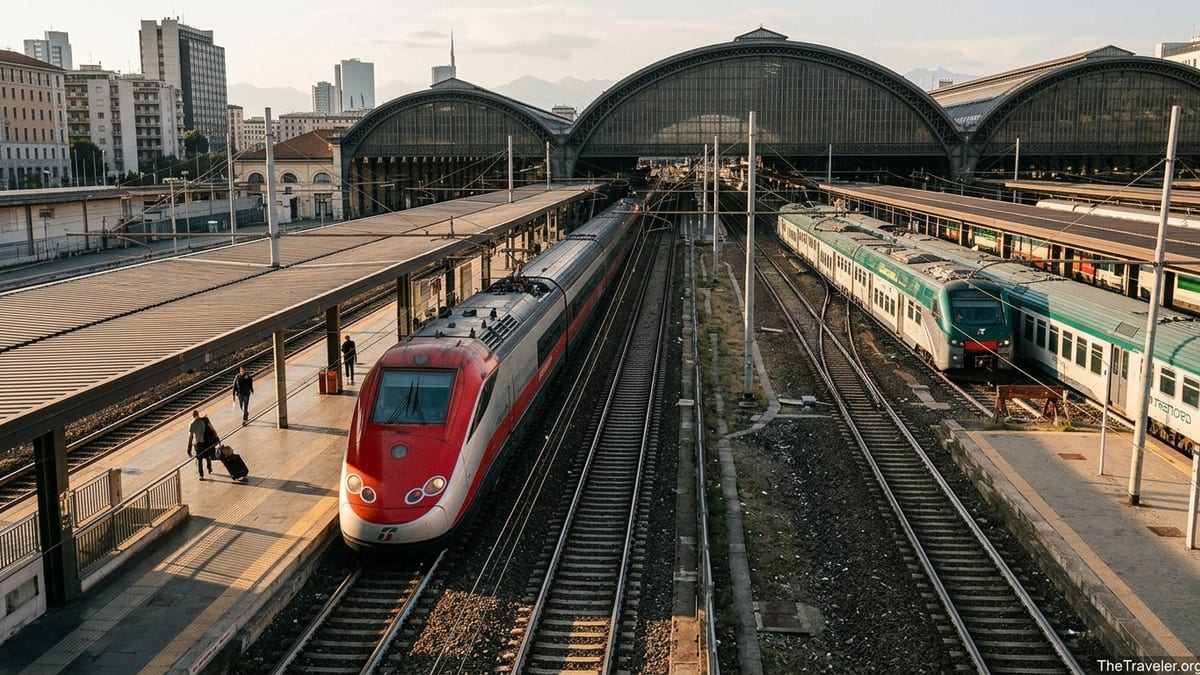
For trip planning, it helps to think of northern Italy’s trains in two layers. The backbone is the high speed network operated by Trenitalia’s Frecciarossa and Italo services, which race between major cities such as Milan, Venice, Verona, Bologna and Turin on dedicated or upgraded tracks at speeds up to about 300 km/h on key stretches. These are your best choice when you want to move quickly between big hubs, for example Milan to Venice or Turin to Bologna, with reserved seats, air conditioning and space for luggage in every car.
Overlaying this is a dense web of regional and suburb-style services. In Lombardy many of these are run by Trenord, while in other regions Trenitalia operates most local trains. These slower services connect cities to airports and lakes, and link medium sized hubs such as Verona, Padua, Brescia and Parma with surrounding towns. A typical example is the Milan to Como route, where Trenord regional trains from Milano Centrale or Milano Cadorna reach Como in roughly an hour with multiple departures each hour during the day.
For a classic first or second visit, you can plan a loop that touches Milan, Venice, Verona, Bologna and at least one lake with trains alone. For instance, you might land in Milan, continue to Lake Como, then return through Milan to Verona, onward to Venice, and finish in Bologna or Turin before flying home. On these routes the train is usually cheaper, faster and far less stressful than renting a car for the whole trip, particularly once you factor in parking, tolls and city driving restrictions.
Only in more rural corners, such as the less connected sides of Lake Garda, the Langhe wine country south of Turin or the Apennine hills between Emilia Romagna and Tuscany, does the rail map begin to thin out. That is where a short car rental can add value, ideally picked up and dropped off at rail served cities so you avoid driving into historic centers with restricted traffic zones.
Key high speed routes: Milan, Venice, Verona, Bologna, Turin and Genoa
Most long distance moves in northern Italy will use high speed trains. A common stretch is Milan to Venice, served by Frecciarossa and Italo trains that run from Milano Centrale to Venezia Santa Lucia in roughly two and a half hours, often stopping in Brescia, Verona, Vicenza and Padua along the way. On many departures you can book months in advance and pay significantly less than last minute Base fares, especially if you choose Economy or Super Economy tickets, which trade flexibility for price.
Another popular corridor runs Milan to Bologna and then onward toward Florence and Rome. Between Milan and Bologna, high speed trains routinely cover the distance in about an hour, a fraction of the three hours or more that driving can take when traffic around the Po Valley cities backs up. For travelers planning to connect Bologna with Venice and Florence, it often makes sense to anchor in Bologna and use fast trains for day trips in each direction rather than hop with luggage between three separate hotel bases.
Turin and Genoa also fit neatly into the high speed picture, though service is less frequent than on the Milan to Venice spine. From Turin Porta Susa to Milan Centrale, Frecciarossa trains usually take around an hour. Some continue east all the way to Venice or south to Bologna and beyond, which lets you ride a single direct train from Turin to Venice or Turin to Florence if you choose your departure carefully. Genoa is linked by a mix of faster Frecciargento or Frecciarossa services and slower intercity or regional trains. On the fastest runs, Milan to Genoa takes around an hour and a half, while older routes that hug the Ligurian coast can take closer to two hours.
For these city to city jumps, high speed trains are often easier than flying. You arrive in and depart from central stations such as Milano Centrale, Venezia Santa Lucia, Bologna Centrale or Torino Porta Susa, with simple transfers to local buses or metro lines. Security procedures are lighter than at airports, and you generally need to be on the platform only 10 to 20 minutes before departure. Families with luggage, couples on short breaks and business travelers alike tend to appreciate stepping off the train directly into the heart of each city instead of commuting in from a remote airport.
Regional trains for lakes and smaller cities
Once you have reached a major hub, regional trains are the workhorses that carry you to lakeside towns and mid sized cities. The Milan area is particularly well served. From Milano Centrale, Trenord regional trains to Varenna Esino reach the mid lake area of Como in roughly an hour, putting you within walking distance of the ferry pier to Bellagio and Menaggio. Separate services from Milano Centrale and Milano Cadorna run to Como San Giovanni and Como Lago stations near the southern end of Lake Como, again in about an hour, making Como one of the easiest lakes to add to a Milan city break.
Lake Garda is similarly accessible, although the rail line runs along the southern shore rather than hugging the entire lake. High speed and regional trains stop at Desenzano del Garda and Peschiera del Garda on the Milan to Verona line, both roughly an hour from Milan and less than 20 minutes from Verona on many services. From there, buses and ferries fan out to towns such as Sirmione, Garda and Malcesine. If your focus is on the northern or eastern shores with limited bus connections, a car rental from Verona or Peschiera for a few days can make sense, especially for travelers with children or luggage.
Elsewhere, regional trains link Verona with Trento and Bolzano to the north, Padua with Vicenza and Bassano del Grappa, and Bologna with Modena, Parma and Ferrara. For example, a regional train from Verona to Bolzano takes around an hour and a half, climbing into the South Tyrol region with vineyard and mountain views from the windows. These routes are slower than high speed lines but often more scenic, and tickets are usually priced at flat regional fares, which can be appealing to budget travelers.
Service frequencies on regional routes vary. Milan to Como or Varenna can see multiple trains per hour in daytime, while smaller lines may have hourly or even two hourly departures, especially on weekends or in the late evening. When planning a tight itinerary, it pays to check current timetables for your specific dates rather than assume metro style frequencies everywhere. During summer peak periods some lake trains can be very busy, so arriving at the station a bit early and boarding as soon as your train is posted improves your chances of finding seats together.
Tickets, classes and how to book
On high speed trains, the main decision is between ticket types and travel classes. Trenitalia typically offers Base, Economy and Super Economy fares on Frecciarossa and related services. Base fares are the most flexible, often allowing changes or refunds closer to departure. Economy fares usually allow changes with a fee or fare difference, while Super Economy is generally the cheapest and least flexible, often non changeable and non refundable. Italo uses its own names for similar concepts, combining different levels of flexibility with classes such as Smart, Prima and Club Executive. In practice, travelers who know their dates often book discounted fares a few weeks or months ahead to save money, accepting the reduced flexibility.
Seats on high speed trains are always reserved and included in the ticket. Families may prefer four seat tables, while solo travelers often choose single seats in certain layouts where available. When buying online through operators’ official sites or apps, or through third party platforms, you can usually see a seat map or select preferences such as window or aisle. In second class on Frecciarossa or Italo you can expect air conditioning, power outlets, overhead luggage racks and dedicated storage areas near the doors for larger suitcases, though space at busy times can still feel tight.
Regional trains work differently. Tickets are typically sold at fixed prices based on distance or regional rules, with no seat reservations. Many visitors now buy digital regional tickets through the Trenitalia or Trenord apps or other platforms, which show a QR code on your phone and no longer require validation in the traditional way. Paper regional tickets bought at station machines may still need to be time stamped in a small green or yellow validation machine on the platform before boarding, after which they are valid for a limited time window. Conductors walk through the train to scan QR codes or check stamped paper tickets, and fines can be significant if you board without the correct ticket or fail to validate when required.
For a typical itinerary such as Milan to Venice, then Venice to Bologna and Bologna to Florence, many travelers simply book the high speed segments as soon as their dates are fixed, then add regional tickets for lakes, day trips or airport transfers closer to departure. If you prefer everything settled, you can book almost all segments online in advance, but for short regional hops like Verona to Lake Garda or Milan to Como it is usually safe to buy a few days out or on the day, as fares are standard and trains are frequent even when busy.
Stations, luggage and navigating your travel days
Major northern Italian stations are substantial buildings that function more like small airports, with multiple levels of shops and services. Milano Centrale has a large departures hall, plentiful self service ticket machines, staffed ticket counters, left luggage storage and food options from quick snacks to sit down cafes. Platforms are numbered sequentially, and overhead screens list departure times, destinations and track numbers, with trains usually posted around 15 to 20 minutes before departure. Venezia Santa Lucia, Bologna Centrale, Verona Porta Nuova and Torino Porta Susa offer similar layouts, though on a smaller scale.
Luggage is generally straightforward on Italian trains, but planning helps. On high speed trains, most travelers place small suitcases and backpacks on overhead racks and larger cases in dedicated luggage bays near the doors or between seat backs. There are no formal weight limits for ordinary tickets, but you must be able to lift your bags yourself up the few steps into the carriage and into the racks. On regional trains, storage space can be more improvised, with bags placed on racks, in the open areas near doors or at your feet. At peak commuter times some routes can be crowded, so if you have big suitcases it can be worth targeting departures outside weekday rush hours around 7 to 9 in the morning and 5 to 7 in the evening.
Allow enough station time, especially at unfamiliar hubs. For city to city high speed trips, arriving 20 to 30 minutes before departure is usually sufficient, giving you time to find your platform and board without rushing. For regional connections to lakes, 10 to 15 minutes can be enough at smaller stations, but bear in mind that Italian trains sometimes arrive on different tracks from earlier days if there are works or disruptions. Always confirm the platform on the live departure boards rather than relying on printed timetables or old screenshots.
If you have to change trains, aim for at least 15 to 20 minutes between high speed and regional services when possible. Walking from a Frecciarossa platform in the lower high speed section of Bologna Centrale up to a regional platform can take 5 to 10 minutes, especially if you move slowly with luggage. In Milan, connecting from a long distance arrival to a Trenord regional service within the same station is usually simple, but you still want a cushion in case of minor delays. If a late incoming high speed train causes you to miss a protected connection on one ticket, railway staff can often move you to the next departure; with separately booked tickets, goodwill varies, so building in extra time is a safer strategy.
When a rental car becomes useful
Despite the strength of northern Italy’s rail network, there are times when a car adds genuine convenience. One classic example is exploring the quieter sides of Lake Garda or Lake Iseo, where bus timetables can be sparse, especially outside summer. If you plan to stay in a hilltop agriturismo near Garda’s eastern shore, attending wineries and viewpoints scattered across the countryside, collecting a rental car in Verona or Peschiera del Garda for two or three days can let you explore at your own pace and reach trailheads or villages that would be difficult by bus.
Another situation where a car helps is in wine and food regions between the main rail corridors. South of Turin, the Langhe and Monferrato hills are rich with vineyards and small towns such as Barolo, La Morra and Nizza Monferrato that are not well linked by train. Similarly, parts of Emilia Romagna’s countryside between Parma, Modena and Bologna host dairy farms, balsamic vinegar producers and countryside restaurants that are easier to reach by car. In these cases, a good pattern is to travel by train to a gateway city, pick up a rental from an office near the station, spend a few days touring in a loop and then return the car to the same place before continuing by rail.
However, you generally do not want a car in the historic centers of major cities. Most Italian cities operate limited traffic zones marked with ZTL signs at the entrances to old town areas. Cameras automatically record plates, and unauthorized entries generate fines that can be mailed internationally months later. Even experienced drivers can be caught out if they follow navigation apps blindly into a restricted street near a cathedral or main square. Parking garages close to, but outside, the ZTL boundaries are often an acceptable compromise if you do end up driving in, but for most itineraries it is simpler to avoid city driving and instead rely on walking, trams or buses inside urban areas.
Driving standards in northern Italy are generally high, and highways are well maintained, but tolls on the autostrade add up over long distances. Speeds are higher than in many countries and enforcement can be strict, especially through camera controlled stretches. For visitors unused to dense, fast moving traffic, the combination of toll booths, unfamiliar rules and sensitivity about ZTL zones can turn driving into a source of stress. For that reason, many travelers limit car use to rural segments and day trips, with the rest of the journey anchored on predictable train schedules.
Sample rail focused itineraries across northern Italy
To see how trains and occasional car rentals fit together in practice, imagine a ten day loop starting and ending in Milan. On arrival you spend two nights in the city, using trams and the metro to reach sights such as the Duomo and Brera district. On day three you take a Trenord regional train to Varenna Esino on Lake Como, walk down to the waterfront and cross by ferry to Bellagio. After two nights on the lake, you return by ferry and train to Milan, then board an afternoon Frecciarossa to Verona, arriving in time for an evening stroll through Piazza delle Erbe and across the river to Castel San Pietro.
From Verona you might take a short train ride to Desenzano del Garda for a lakefront lunch and a walk around Sirmione, then return to Verona for a second night. The next morning a high speed train carries you to Venice in around an hour and a half, depositing you at Venezia Santa Lucia directly on the Grand Canal. After two days exploring Venice by vaporetto and on foot, you continue south by train to Bologna for food focused days in the markets and porticoed streets. From Bologna, you return to Milan by high speed train on day ten for your flight home, having used trains exclusively and avoided the need for a car.
Alternatively, build in a short rental. Fly into Turin, spend two nights exploring the city by tram, then rent a car from an office just outside the center and drive into the Langhe hills for three nights of winery visits and countryside walks. Return the car to Turin, catch a Frecciarossa to Milan and connect onward to Genoa for the sea, or to Verona for Lake Garda and Venice. Because all city to city legs are by train and the car is used only in rural zones, you minimize your exposure to ZTL fines and city parking, yet still gain the flexibility to explore areas that trains do not reach.
In both scenarios, the structure is similar: anchor nights in rail served cities, use regional trains to access lakes and smaller cities, and insert short, focused car rentals only where they clearly improve access. That approach keeps logistics manageable while still giving you the variety of Alpine lakes, Renaissance cities and countryside food regions that make northern Italy so compelling.
The Takeaway
Planning a rail based trip across northern Italy is largely about understanding where high speed trains, regional lines and roads each make the most sense. High speed services such as Frecciarossa and Italo are ideal for the main axes between Milan, Venice, Verona, Bologna, Turin and, with a bit more time, Genoa and Florence. Regional trains handle the finer detail, carrying you from hubs to lakes, satellite towns and mid sized cities with straightforward, flat fares and frequent service on the busiest lines.
Car rental then becomes a useful tool rather than the backbone of your trip. Instead of collecting a car at the airport and wrestling with unfamiliar roads and ZTL rules in every city, you can reserve one only when you need it for rural detours: a few days in the hills south of Turin, time exploring the back roads around Lake Garda, or countryside food pilgrimages between Parma and Modena. The rest of the time, you travel light by rail, stepping off trains in central stations and walking or hopping on local transit to your hotel.
With realistic station transfer times, a basic understanding of ticket types and validation, and a cautious approach to driving in historic areas, you can cover a large and varied slice of northern Italy in a week or two. The combination of fast city to city rail links, scenic regional lines and the occasional targeted car rental offers a practical and rewarding way to see the region, without letting logistics overshadow the pleasures of the journey.
FAQ
Q1. Do I need to book high speed train tickets in advance in northern Italy?
For Frecciarossa and Italo trains it is smart to book in advance, especially on popular routes such as Milan to Venice or Milan to Bologna. Buying early usually gives access to cheaper Economy or Super Economy fares, while last minute purchases often mean paying the more expensive flexible Base type fares.
Q2. How early should I arrive at major train stations like Milano Centrale or Venezia Santa Lucia?
For high speed trains, arriving 20 to 30 minutes before departure is usually enough to find your platform and board without rushing. For regional trains from smaller stations, 10 to 15 minutes is normally fine, but allow extra time if you have heavy luggage or need to buy tickets at a machine.
Q3. Do I have to validate train tickets in Italy?
Digital tickets bought through official apps or online platforms generally do not need validation, as the QR code itself shows the travel time. Paper regional tickets bought at machines often still need to be time stamped in a validation machine before boarding, after which they are valid for a limited window. Always check your ticket instructions carefully and look for validation machines on the platform.
Q4. Is first class worth it on Italian trains?
On high speed trains, higher classes such as Premium, Business or Prima usually offer slightly wider seats, more legroom and sometimes quieter carriages or small refreshments. For many travelers second class is perfectly comfortable, but on busy routes or long journeys some people appreciate the extra space. On regional trains, where available, first class mainly offers a better chance of a seat and a less crowded environment.
Q5. Can I take large suitcases on Italian trains?
Yes, you can take large suitcases on both high speed and regional trains as long as you can manage them yourself. High speed trains have overhead racks and luggage spaces at the end of cars, while regional trains have simpler racks and open areas near doors. There are no strict weight limits for ordinary tickets, but space can be tight at peak times so packing as light as possible makes journeys easier.
Q6. When is it better to rent a car instead of taking the train?
A rental car is most useful in rural areas with limited public transport, such as the countryside around Lake Garda away from the main rail stations, the Langhe wine region south of Turin, or farm and food visits between Parma and Modena. In major cities and on main corridors between hubs, trains are usually faster, cheaper and less stressful than driving.
Q7. How do ZTL zones affect driving in northern Italian cities?
ZTL, or limited traffic zones, restrict access to many historic centers in cities such as Milan, Turin, Bologna and Verona. Cameras monitor entry points, and unauthorized vehicles can receive fines. As a visitor you should watch for ZTL signs and avoid driving into central old town areas unless you have confirmed permission from your hotel or local authorities.
Q8. Are trains reliable for day trips to lakes like Como and Garda?
Yes, trains are generally reliable for lake day trips. From Milan, frequent regional services reach Como, Varenna and Desenzano del Garda in around an hour, making same day visits practical. Delays do occur, but schedules are usually robust enough that most travelers have no trouble reaching and returning from lakes in a single day.
Q9. Can I use one base city for several rail day trips?
Many travelers base themselves in a central city such as Milan, Verona or Bologna and use trains for day trips. From Milan you can reach Lake Como, Lake Maggiore and even Turin or Verona. From Verona you can visit Lake Garda and Trento, while Bologna offers fast links to Florence, Modena and Parma. This strategy reduces hotel changes while still allowing you to see several destinations.
Q10. What should I do if my train is delayed and I miss a connection?
If both trains are on the same through ticket and an official connection is missed due to a delay, railway staff can usually rebook you on the next available service. If you bought separate tickets for each leg, assistance is more discretionary, so building in extra time between trains is wise. In any case, go to the customer service desk or approach staff on the platform as soon as you realize you may miss or have missed your onward train.