


Planning a first trip to Italy can feel overwhelming. Rome, Florence, Venice, the Amalfi Coast, Tuscany, the lakes, the Dolomites and islands like Sicily and Sardinia all compete for space on a limited itinerary. This guide brings the essentials together in one place, with concrete examples of routes, budgets and on-the-ground choices to help you design a realistic, rewarding first visit.
How Long to Spend and Where to Go on a First Trip
For a first visit, many travelers underestimate distances and try to fit too much into a short stay. As a practical baseline, 10 to 14 days allows you to see a mix of cities and landscapes without spending your entire trip in transit. With one week, a classic route is Rome, Florence and Venice, giving you ancient history, Renaissance art and a unique lagoon city. With two weeks, you can add either the Amalfi Coast and Naples or head north to the Italian Lakes and Dolomites.
A popular 10-day example itinerary might be four nights in Rome, three in Florence with a day trip into Tuscany, and three in Venice. This is enough time to see the Colosseum and Vatican Museums, visit the Uffizi and Duomo in Florence, and wander Venice’s quieter sestieri beyond Piazza San Marco. If you have 14 nights, you could add three nights in the Amalfi Coast via Naples, or a three-night stay on Lake Como combined with two nights in the Dolomites, using Milan as a gateway.
First-timers often try to add too many regions such as Rome, Florence, Venice, Cinque Terre, Amalfi Coast, Tuscany countryside, Sicily and Milan in 10 days. In practice, that would mean changing hotels almost every night and seeing little beyond train stations. A more grounded approach is to focus on two or three bases and then use day trips to nearby highlights, such as visiting Cinque Terre from La Spezia or Levanto, or exploring Chianti villages from Florence or Siena.
Season matters as much as route. Summer from June to August brings hot weather, crowded cities and higher prices, especially in coastal areas like the Amalfi Coast and Cinque Terre. Shoulder months such as late April to early June and September to mid-October often combine pleasant temperatures, fewer crowds and more availability, which can make a first trip less stressful when you are still learning how Italian transport, tickets and restaurant reservations work.
Rome, Florence, Venice and Milan: The Big Four
Rome is usually the anchor of a first Italy trip. A realistic first stay is three to four nights, giving you two full days for major sites and another day for neighborhood exploring. Many visitors buy a combined Colosseum, Roman Forum and Palatine Hill ticket and prebook timed entry to the Vatican Museums and Sistine Chapel to avoid long queues. For accommodation, central neighborhoods such as Monti, the historic center around Piazza Navona, and Trastevere balance access to sights with walkable evening dining options.
Florence works well as a three-night stop. Its historic center is compact enough to traverse on foot, so staying within a 15-minute walk of the Duomo or Santa Maria Novella train station keeps logistics simple. First-time visitors often prebook the Uffizi Gallery and the Accademia (for Michelangelo’s David) to avoid queues. From Florence, you can easily do a day trip to Pisa and Lucca by regional train, or join a small-group tour that combines a winery visit in Chianti with a hill town like San Gimignano, which is helpful if you do not want to rent a car just for a day.
Venice rewards slower travel. Two nights is an absolute minimum; three nights lets you explore beyond Rialto and San Marco, ride the vaporetto along the Grand Canal at dusk, and visit islands such as Murano or Burano. Because Venice can be very crowded near the main sights, first-timers might consider staying in neighborhoods like Dorsoduro or Cannaregio, where you can still reach key attractions on foot but step away from cruise-ship crowds. Plan for higher accommodation prices than inland cities, especially for hotels with canal views.
Milan is Italy’s business and fashion capital and is often used as a transport hub. For a first trip focused on classic sightseeing, one or two nights can be enough to see the Duomo, Galleria Vittorio Emanuele II and Leonardo da Vinci’s Last Supper with advance reservations. Milan is also the main gateway to Lake Como and the broader Italian Lakes region. If you land in Milan and fly out of another city, you can use it as a one-night jet lag stop before heading directly by train to Florence, Venice or the lakes.
Southern Icons: Naples, Amalfi Coast, Sicily and Sardinia
Naples and the Amalfi Coast often sit high on first-time wish lists. Naples itself is a lively, sometimes chaotic port city with world-famous pizza and access to Pompeii and Mount Vesuvius. Many travelers base themselves in central Naples for two or three nights to explore the historic center and take a local train to Pompeii, or join a guided tour that combines the ruins with a short hike on Vesuvius. A typical margherita pizza in a historic pizzeria might cost around 6 to 8 euros, making Naples one of the more affordable big cities for food.
The Amalfi Coast is strikingly beautiful but logistically demanding, especially in high season. Towns like Positano, Amalfi and Ravello cling to cliffs and are connected by narrow, winding roads. Public SITA buses and ferries link the towns, but in July and August both can be crowded and slow. Prices here reflect demand: a simple sea-view room in Positano can run several hundred euros per night in summer, while in shoulder season you may find family-run guesthouses in villages like Praiano or Minori for noticeably less. First-time visitors without a car often find it easiest to base in Sorrento, using frequent ferries and buses to reach Amalfi Coast towns and Capri.
Sicily, the largest island in the Mediterranean, deserves at least 7 to 10 days on its own, which means it is usually better suited to a second Italian trip or a focused first itinerary. A classic route might include Palermo, the Valley of the Temples near Agrigento, the baroque cities of the southeast such as Noto and Ragusa, and the Etna region near Catania and Taormina. Distances between these areas are significant, and trains can be slower than on the mainland, so many travelers rent a car for part of their Sicilian visit, particularly to reach rural areas and beaches.
Sardinia, known for clear turquoise water and white-sand beaches, has a short peak season focused on late June through early September. The Costa Smeralda in the northeast is famous for luxury resorts, while the Gulf of Orosei and the island’s west coast offer quieter options. Without a car, getting around Sardinia can be limiting, as public buses are less frequent outside main routes. For a first Italy trip focused on classic art cities, many visitors choose to leave Sardinia for a future, beach-centered vacation when they can allocate at least a week to the island alone.
Tuscany, Cinque Terre, Lakes and the Dolomites
Tuscany is often imagined as rolling hills, vineyards and stone farmhouses, but the region also includes art cities like Florence, Siena and Pisa. For a first trip, combining Florence with either a night or two in the countryside or a day trip often strikes the right balance. As an example, you might spend three nights in Florence, then move to a farmhouse agriturismo near Montepulciano or San Gimignano for two or three nights, renting a car for that portion to explore small villages and wineries at your own pace.
Cinque Terre, the string of five fishing villages on the Ligurian coast, fits well into itineraries between Florence and Milan or as an add-on from Tuscany. The villages are linked by a coastal walking trail and frequent local trains. Because accommodation in the villages is limited and prices can be high in peak months, some travelers stay in nearby towns such as Levanto or La Spezia, where you can often find slightly lower hotel rates and still reach the Cinque Terre villages by train in under 15 minutes.
The Italian Lakes region, particularly Lake Como, Lake Garda and Lake Maggiore, offers a slower, scenic contrast to the cities. From Milan, frequent trains reach towns such as Como, Varenna and Desenzano del Garda in around one to 90 minutes, where ferries connect lakefront villages. A typical first-timer base on Lake Como is Varenna or Bellagio, with a two or three-night stay giving time for boat trips, easy hikes and relaxed meals on a lakeside terrace.
The Dolomites in northeastern Italy appeal to hikers and mountain lovers, with dramatic peaks, meadows and alpine huts. A common base is the area around Val Gardena or Alta Badia, with towns such as Ortisei, Selva di Val Gardena or Corvara. Reaching the Dolomites by public transport usually involves a train to Bolzano or Trento followed by a regional bus, so many travelers choose to rent a car for this segment. In winter, the area becomes a major ski destination, while in late June through September it serves as a hub for summer hiking.
Getting Around: Trains, Driving and Domestic Flights
Italy’s main cities are connected by a dense high-speed rail network, which makes trains the default choice for most first-time visitors. High-speed services such as Frecciarossa, Frecciargento and Italo link Rome, Florence, Venice, Milan and Naples in a matter of hours. For example, a Rome to Florence high-speed train journey typically takes around 1.5 hours, while Florence to Venice is about two hours. When booked in advance, economy fares can sometimes be found under 30 euros per person for shorter legs, though prices rise closer to the travel date and at peak times.
Regional trains connect smaller cities and towns, such as Florence to Pisa or La Spezia to the Cinque Terre villages. These services are slower and usually cheaper, with fixed pricing. On many regional routes, you can simply buy a ticket on the day of travel, then validate it in the small green or yellow machines on the platform before boarding. Failing to validate can result in a fine, so it is worth taking a moment to look for the machines, especially at smaller stations.
Driving can be useful in specific regions like rural Tuscany, Umbria, Puglia, Sardinia and the Dolomites, but is often more of a headache in big cities. Historic centers in many Italian towns are covered by ZTL, or limited traffic zones, where only vehicles with special permits may enter at certain times. Cameras monitor these zones, and unauthorized entry can result in significant fines sent to you later via your rental company. Because of this, a common strategy for first-time visitors is to rely on trains between major cities, then rent a car only for countryside segments, parking outside historic centers and walking in.
Domestic flights are sometimes useful for long north–south jumps, such as from Milan to Palermo or Venice to Catania, especially if you are short on time and willing to factor in airport transfers and security. However, for distances like Rome to Milan or Rome to Venice, high-speed trains usually compete very well with flying in overall door-to-door time, while dropping you directly in the historic center rather than at an outlying airport.
Accommodation, Tourist Taxes and Typical Costs
Accommodation in Italy ranges from simple family-run guesthouses and B&Bs to luxury hotels and countryside agriturismi. In large cities such as Rome, Florence and Milan, you might expect to pay roughly 150 to 250 euros per night for a well-rated midrange double room in a central area during shoulder season, though prices can be lower or significantly higher depending on location and demand. In smaller towns or in the countryside, similar quality can often be found for less, while areas like the Amalfi Coast, Portofino or central Venice can easily exceed these figures, especially in summer.
Most Italian municipalities charge a tourist tax, usually calculated per person per night, with amounts that vary by hotel category and city. In practice, this might mean paying a few euros per person each night in a three-star hotel, rising to higher amounts in four or five-star properties in major tourist centers. The tax is typically paid directly to the hotel at check-out and is often not included in quoted room rates. For a couple staying four nights in a city, this can add up to an extra 20 to 60 euros or more, so it is worth factoring into your budget.
Food costs can be moderate if you eat like locals rather than focusing only on restaurants directly beside major sights. A simple sit-down lunch of pasta and a glass of house wine in a neighborhood trattoria might come to around 15 to 20 euros per person. A takeaway slice of pizza and a soft drink from a bakery or bar could be 5 to 7 euros. A three-course dinner for two in a midrange restaurant, with shared antipasto, two main pasta or meat dishes, dessert and a carafe of local wine, may often land in the range of 50 to 80 euros depending on the city, with tourist-heavy areas at the higher end.
Overall daily budgets vary with travel style, but many first-time visitors find that a midrange budget of roughly 120 to 200 euros per person per day can cover accommodation in a central three-star hotel or similar, meals in a mix of cafes and trattorie, local transport and one or two paid attractions. High-speed train tickets between major cities and splurge meals, such as a multi-course tasting menu in a Michelin-starred restaurant, will push costs higher. At the budget end, travelers willing to stay in basic guesthouses or hostels, cook some meals and rely on regional trains and buses can manage on less.
Food Culture, Ordering and Practical Etiquette
Italian food culture emphasizes seasonal, regional products and relatively simple preparations. Even on a short trip, you will notice differences: in Rome, you might try cacio e pepe or carbonara; in Naples, classic Neapolitan pizza; in Florence, bistecca alla fiorentina and ribollita; in Venice, cicchetti bar snacks such as baccalà mantecato and spritz. Ordering a house wine by the glass or carafe is common and often good value, especially in smaller, family-run places.
Meals typically follow a structure of antipasto (starter), primo (pasta, risotto or soup), secondo (meat or fish) and contorno (side dish such as vegetables or salad), finished with dessert and coffee. You are not expected to order every course; many locals simply have a primo and share an antipasto. Cappuccino is usually considered a breakfast drink, and later in the day most Italians switch to espresso or macchiato. In a bar, you may pay a small extra fee to sit at a table instead of standing at the counter, but the experience of sipping a quick espresso at the bar is both affordable and authentically Italian.
Service charges vary. Some restaurants add a coperto, a per-person cover charge that may be a few euros and covers bread and table service. Others may list a servizio charge for larger groups. Tipping is not mandatory in the way it can be in North America, and service staff are paid wages, but rounding up the bill or leaving a small amount, such as a couple of euros on a cafe table or 5 to 10 percent in a restaurant for good service, is appreciated. When you ask for the bill, remember that you usually need to request it explicitly rather than expecting it to arrive automatically.
For snacks and quick lunches, look for bakeries, neighborhood bars and panini shops away from major tourist squares. For example, rather than eating on Piazza San Marco in Venice, where prices are much higher, you might walk a few streets back and find a local bacaro serving cicchetti at far more reasonable prices. In Rome, small pizza al taglio shops selling pizza by weight offer a quick, inexpensive lunch between museum visits. Being flexible and walking a few extra minutes often results in better food and better value.
First-Time Planning Tips and Logistics
When planning your route, a useful principle is to move in a logical line without backtracking, using open-jaw flights if possible. For example, you might fly into Milan, travel by train to Lake Como, then on to Venice, Florence and Rome, and finally depart from Rome. Alternatively, you could arrive in Rome, work your way south to Naples and the Amalfi Coast, then fly home from Naples. This approach saves both time and money compared with returning to your arrival city purely to catch a flight.
Booking high-speed train tickets in advance for popular routes such as Rome to Florence or Florence to Venice can secure better fares and reserved seats, particularly on weekends and during busy months. For regional trains, same-day purchase usually works fine. In cities, local public transport systems vary: Rome has metro, buses and trams; Florence is mostly buses and walking; Venice relies on vaporetti waterbuses; Milan has an extensive metro. Buying day passes or multi-ride tickets can be cost-effective if you expect to use public transport several times in a day.
For attractions with strict capacity limits, such as the Colosseum’s underground areas, the Vatican Museums or Leonardo’s Last Supper in Milan, booking timed-entry tickets or small-group tours weeks ahead is wise, especially in high season. Many first-time visitors also benefit from leaving some unplanned time in each destination for simply walking through markets, lingering in a piazza with a coffee, or visiting a lesser-known church or neighborhood recommended by a hotel receptionist.
Travel insurance that covers medical emergencies, trip interruption and lost luggage can be particularly helpful, given the number of moving parts in a multi-city trip. It is also a good idea to carry both a primary payment card and a backup, as smaller establishments may prefer specific card networks or occasionally be cash-only. ATMs are widely available, especially in cities, and withdrawing cash as needed usually offers better rates than exchanging large amounts of currency in advance.
The Takeaway
A first trip to Italy is less about checking every famous destination off a list and more about choosing a manageable slice of the country that you can experience at a human pace. Balancing big-name cities like Rome and Florence with one or two quieter bases in the countryside, on a lake or in a coastal village can create a richer, more varied journey.
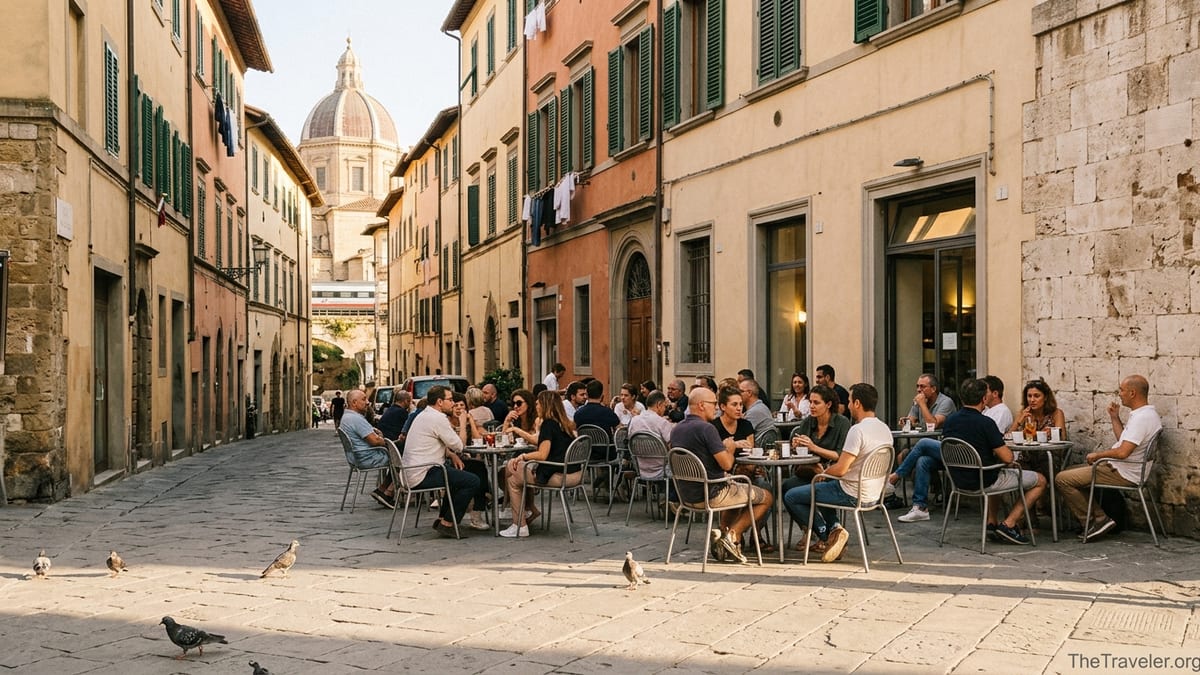
By relying on trains between major cities, being strategic about when to rent a car, and understanding basics like tourist taxes, meal structures and ZTL driving restrictions, you can avoid many of the common frustrations that new visitors encounter. Starting with realistic expectations about distance, cost and crowds makes it easier to enjoy what Italy does best: beautiful streets, good food, and the simple pleasure of sitting in the sun on a piazza, watching daily life unfold.
FAQ
Q1. How many days do I need for a first trip to Italy? Most first-time visitors find that 10 to 14 days allows them to see a mix of cities and one scenic region without feeling rushed, such as Rome, Florence and Venice plus the Amalfi Coast, Tuscany countryside or the Italian Lakes.
Q2. Is it better to travel Italy by train or by car? For major routes between cities like Rome, Florence, Venice, Milan and Naples, high-speed trains are usually faster and more convenient. Renting a car makes sense mainly for countryside regions such as rural Tuscany, Umbria, Puglia, Sardinia or the Dolomites where public transport is limited.
Q3. How much should I budget per day in Italy? A midrange daily budget of roughly 120 to 200 euros per person can often cover a central three-star hotel or similar accommodation, meals in cafes and trattorie, local transport and a couple of paid attractions, though very popular coastal areas and peak summer travel can push costs higher.
Q4. Do I need to book trains and museum tickets in advance? It is wise to book high-speed train tickets in advance on busy routes and to prebook timed-entry tickets for major attractions such as the Colosseum, Vatican Museums, Uffizi Gallery and Leonardo’s Last Supper, especially in peak season. Regional trains and smaller museums can often be arranged closer to the date.
Q5. What is a ZTL and how do I avoid fines? A ZTL is a limited traffic zone in many Italian towns where only authorized vehicles may enter at certain times, monitored by cameras. To avoid fines, do not drive into historic centers without checking local rules; park in designated lots or garages outside the zone and walk or use public transport.
Q6. What is the tourist tax and how is it paid? Most Italian municipalities charge a per-person, per-night tourist tax that varies by city and hotel category. It is usually paid directly to your accommodation at check-out and is often not included in the advertised room rate, so you should budget a little extra for this charge.
Q7. Is Italy safe for first-time visitors? Italy is generally safe for travelers, including solo visitors, with most issues limited to petty theft such as pickpocketing in crowded areas and on public transport. Using common-sense precautions like keeping valuables secure and being cautious with bags in busy spots usually prevents problems.
Q8. Can I drink tap water in Italy? Tap water is widely considered safe to drink in most Italian cities and towns, and many public squares have drinking fountains where locals refill bottles. In more rural areas or older buildings you can always ask your hotel or host if the tap water is potable.
Q9. How important is it to speak Italian? In major tourist areas, many people in hotels, restaurants and transport services speak at least basic English. Learning a few key Italian phrases, such as greetings and how to order in a restaurant, is appreciated and can make everyday interactions smoother, especially in smaller towns.
Q10. When is the best time of year to visit Italy? The most comfortable periods for a first trip are usually late April to early June and September to mid-October, when temperatures are milder and crowds a bit thinner than in peak summer. July and August bring hotter weather, higher prices and more visitors, particularly in coastal and island destinations.