


The Italian Tyrrhenian Coast stretches from the marble-pale sands of northern Tuscany down to the rugged coves of Calabria, facing sunsets over an almost uninterrupted sweep of Mediterranean sea. It is also one of Europe’s most mature package-holiday markets. Major tour operators and online platforms maintain dedicated inventories for these shores, bundling flights, beach resorts, car hire and multi-centre itineraries into ready-made deals. Understanding how those packages work, where the real value lies, and how Tuscany and Lazio compare with Campania and Calabria can make the difference between overpaying for a fragmented trip and securing a streamlined, good-value escape.
How Tyrrhenian Coast Vacation Packages Are Typically Structured
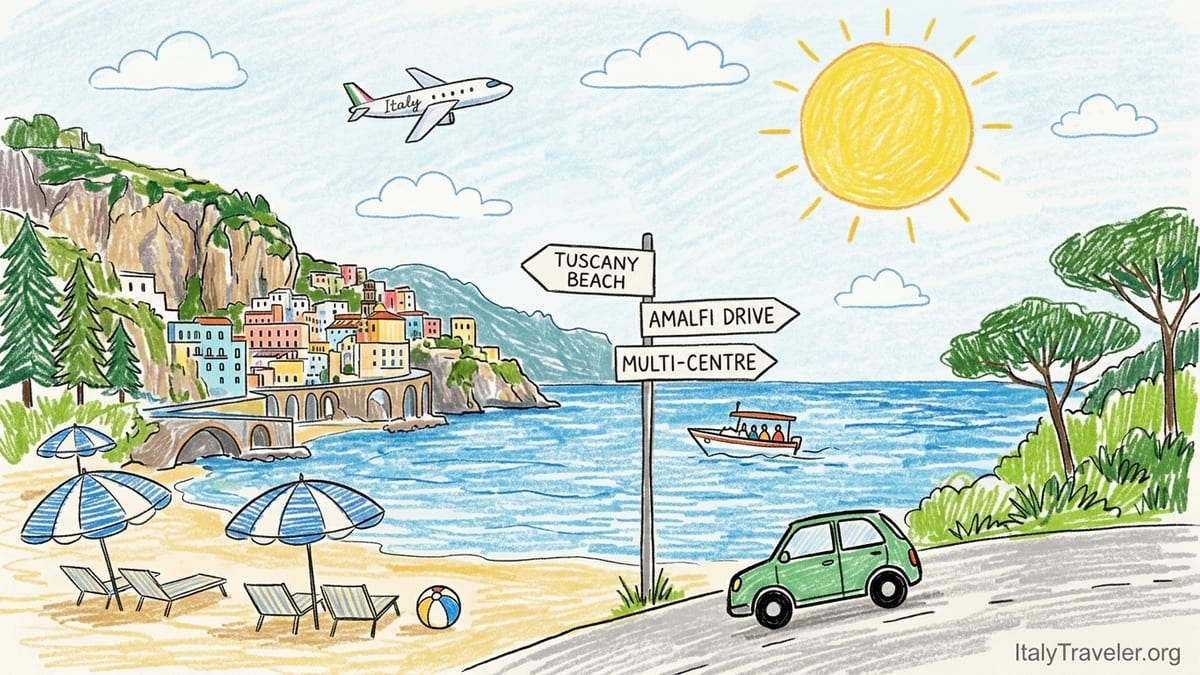
On the Tyrrhenian Coast, packages usually fall into four broad types: classic beach resort stays, flight plus hotel bundles, hotel plus car hire, and multi-centre itineraries that combine two or more coastal bases. At the simplest end, a beach resort package to somewhere like Viareggio or Follonica in Tuscany is sold at a per-person price including a set number of nights, specified meal plan, and often pre-reserved beach services such as a parasol and loungers in a private lido. A recent offer for a four-star resort in Follonica, for example, priced three nights with breakfast, air conditioning, bed linen and included beach service from around 750 euros total for two to three guests at the end of August, illustrating how much is folded into a single figure.
Flight and hotel bundles dominate major booking platforms for Campania and the Amalfi Coast. For instance, a seven-night bed and breakfast package at a mid-range hotel in Amalfi in 2026 was recently advertised from about 535 pounds per person including flights and checked baggage from the United Kingdom, with local taxes extra. In that case, the operator contracted a block of airline seats and rooms, then wrapped them into a single ATOL-protected price, so travelers did not see line-by-line fares or nightly rates, just one inclusive holiday cost.
Hotel plus car packages are especially common for more spread-out stretches of the Tyrrhenian such as southern Tuscany’s pine-backed beaches or Calabria’s hilltop towns above the sea. A typical fly-drive brochure for Italy might, for example, combine five days of automatic car rental with a week in small coastal hotels, with taxes and basic insurance included and optional damage waivers extra. The per-person price is often calibrated for two adults sharing a car and a double room, which becomes important when you compare it with booking the same vehicle independently.
Multi-centre trips are marketed heavily for the Tyrrhenian Coast because rail and road connections run roughly parallel to the shore. A tour operator might package two nights in Florence with five nights on the Tuscany Coast, or several nights in Rome followed by a beach stay in Sorrento or on the Cilento coast. One current example sells a week divided between Florence and the Tuscany Coast from around 1,200 pounds per person including flights, luggage, transfers and even a rail segment between city and seaside, removing almost all of the logistical planning from the traveler.
Tuscany and Lazio: Easy Beach Access and City Pairings
Tuscany’s Tyrrhenian shoreline is one of Italy’s most straightforward regions for packaged beach holidays. Resorts such as Viareggio and Lido di Camaiore in Versilia, and Follonica further south, sit within a couple of hours of Florence by road and even closer to Pisa Airport. Package inventories are rich in classic seaside hotels with private or partner lidos, as well as holiday villages set behind pine forests a short walk from the sand. One Follonica resort aimed at families, for instance, offers bungalow-style accommodation within a holiday village where children’s clubs, pools and direct beach access are sold as part of a weekly package.
Packages along the Tuscan coast often highlight Blue Flag beaches and easy rail access. A recent five-night deal at a seafront hotel in Viareggio, marketed to British travelers, included flights, checked luggage and shared transfers for around 700 to 750 pounds per person in shoulder season. For guests, this translated into stepping off a plane at Pisa, being met by a transfer representative, and arriving on the seafront promenade with their baggage already accounted for within the package price. City-and-sea pairings such as Florence plus Tuscany Coast are popular, offering a few days of museums and vineyards followed by a coastal rest without having to arrange multiple tickets and transfers individually.
Lazio’s Tyrrhenian beaches, stretching from towns such as Fiumicino and Fregene south toward Sabaudia and Gaeta, appear in regional Italian tour operator catalogues and on large online platforms as “Rome and beach” combinations. International packages more commonly use Rome as the main draw, then bolt on two or three nights at a Lazio seaside hotel as an optional extension. Transfers here may be by private car or scheduled shuttle from Rome’s airports or rail stations, and the total price can be competitive compared to arranging taxis and separate hotel bookings, especially in high summer when last-minute transport becomes both scarce and costly.
The key advantage of Tuscany and Lazio packages is convenience and infrastructure. Airports at Pisa, Florence and Rome handle substantial seasonal traffic, which allows operators to negotiate fares, and coastal trains mean that even if a transfer is not explicitly included, travelers can easily add a pre-booked rail ticket within the booking engine. For visitors flying transatlantic into Rome or Florence, this makes a Tyrrhenian beach add-on structurally easier and often cheaper than trying to piece together separate low-cost flights to more distant islands.
Campania and Calabria: Dramatic Scenery and Higher Logistics
By contrast, Campania’s Tyrrhenian coast packages tend to trade on drama and prestige. The Amalfi Coast, Sorrento Peninsula and islands like Capri feature heavily in international brochures and on mainstream online platforms. Yet the infrastructure is more complex: steep coastal roads, limited parking and busy ferry routes all raise the logistical stakes. That is precisely where packages often prove their worth. A typical seven-night Amalfi Coast deal might include flights into Naples, a private or shared transfer skirting the Bay of Naples, and a mid-range hotel in Sorrento or Amalfi on a bed and breakfast or half board basis. One family-focused itinerary, for example, specifies private car transfers from Naples Airport to a Sorrento hotel, seven nights of bed and breakfast, and return transfers back to the airport, all priced as a single product.
Pricing in Campania reflects global demand. Whereas a modest three-star beach hotel in Tuscany might be included in a five-night package from under 700 pounds per person outside peak season, even a basic Amalfi town hotel with sea views can command similar rates for fewer nights once flights and transfers are factored in. Some independent travelers attempting to assemble their own week-long Amalfi Coast road trip report that once they add private drivers, boat excursions and parking, their total costs approach or exceed curated packages that bundle airport pick-up and a full-day tour.
Calabria’s Tyrrhenian shore, with cliff-framed towns such as Tropea and quiet bays further south, is still less international but increasingly present in Italian and European package catalogues. Here, packages often focus on all-inclusive or full-board seafront resorts paired with charter or low-cost flights into airports like Lamezia Terme. Compared with Campania, nightly rates can be markedly lower, but independent access via public transport is more limited, which means package transfers and shuttle buses are particularly valuable. For a traveler without Italian language skills, securing a package that includes the airport transfer in Calabria can remove a significant point of stress.
Overall, Campania and Calabria packages skew more toward resort stays and guided days out than DIY exploration. In Campania, multi-centre products might combine a few nights in Naples or Rome with seaside stays in Sorrento, often incorporating coach excursions to Pompeii, Capri or the Amalfi coastal towns. In Calabria, itineraries typically keep you in one or two resorts, using organized excursions to inland villages or coastal boat trips, which can be more economical than sporadically booking private tours once you arrive.
Understanding Transfers, Meal Plans and Beach Services in Packages
Transfers are one of the least glamorous but most consequential line items in Tyrrhenian packages. In Tuscany and Lazio, many packages rely on shared shuttle coaches or even suggested rail connections rather than private cars, especially when the hotels sit near well-connected stations like Viareggio or coastal stops south of Livorno. In these cases, the package documents usually state clearly whether train tickets are included or simply recommended. In Campania and parts of Calabria, private or small-group transfers are more common due to the topography and dispersed accommodation. For example, some Amalfi Coast hotel deals spell out inclusive round-trip transfers between Naples Airport and the hotel, with surcharges for late-night arrivals.
Meal plans range from room only to all-inclusive, with half board proving popular in resort-style properties. A summer package at a coastal hotel in Campania might include seven nights of half board, breakfast and dinner, but not drinks with meals, which would be paid locally. Family resorts along the Tuscany coast, on the other hand, often advertise “comfort plus” formulas in which breakfast and beach service are covered, leaving guests free for informal lunches and dinners in town. When comparing offers, travelers should check whether drinks, especially at dinner, are included or chargeable, since over a week this can shift the value equation significantly.
Beach service is a distinctive feature along the Tyrrhenian Coast, where many stretches of sand are managed by private lidos that rent umbrellas, loungers and cabins. Packages often pre-book lido access. A luxury beach resort near Follonica, for instance, recently promoted “beach service free of charge” as part of the room package, meaning guests had a reserved patch of sand at zero extra cost. In more urbanized resorts such as Viareggio, package descriptions might specify discounted access agreements with particular bagni, or separate per-day charges. For a family of four, bundled beach service can save a substantial amount over booking loungers day by day.
Checked baggage is another element frequently incorporated into Tyrrhenian Coast packages. Many European-based operators advertise that their prices include at least one checked bag per person on standard economy fares, a notable advantage compared with booking separate low-cost flights where luggage and seat selection are priced as extras. Especially for longer coastal holidays where guests pack beach gear and smarter clothes for city add-ons, included baggage can prove more than a minor perk.
When a Package Is Cheaper or Easier Than Going Independent
On routes with strong competition and straightforward logistics, such as flights from major European hubs to Pisa or Rome, booking flights and hotels independently can sometimes undercut package prices, particularly outside school holidays. Yet even here, packages can surprise. Because tour operators pre-purchase blocks of airline seats and hotel allotments, they occasionally release offers where the combined price is close to, or even lower than, the cost of flights alone during high-demand weeks. For example, a time-limited Amalfi Coast tour that briefly priced a full week with hotel, half board, airport transfers and a full-day excursion for under 1,000 pounds per person demonstrated how negotiated rates can create short-lived value windows.
In regions where transfers are complicated or accommodation is spread out, packages grow more compelling. The curving roads of the Amalfi Coast, the hillside towns of southern Calabria, and the island connections off Campania all impose logistical costs that are not evident at first glance. Once an independent traveler factors in private transfers from Naples Airport to coastal hotels, ferry tickets for island side trips, parking fees, tolls and fuel, plus the time spent coordinating these from abroad, the relief of an all-in-one package can be worth a modest price premium.
Travelers with specific accessibility needs, children or substantial luggage may also find packages materially easier. A Rome plus Tuscany Coast or Florence plus Versilia package that includes station-to-hotel transfers, for instance, eliminates the need to navigate busy train platforms with suitcases and strollers. Similarly, older travelers often value group tours and escorted multi-centre itineraries along the Tyrrhenian that integrate guided visits to Capri, Pompeii or medieval inland towns, recognizing that the incremental cost buys professional logistics, local expertise and reduced travel stress.
There are, however, circumstances where going independent is more attractive. Repeat visitors who know their preferred beach club in Viareggio or favorite guesthouse in Tropea, or who travel outside peak dates and are comfortable driving, might find that searching for dynamic flight deals and booking apartments directly offers more space and flexibility. For these travelers, the best compromise can be a hybrid: securing a flight plus hotel bundle for the first leg, then hiring a car and adding extra nights or self-catering stays on their own.
Car Bundles and Multi-Centre West-Coast Road Trips
Car-inclusive packages along the Tyrrhenian Coast are particularly popular in shoulder seasons, when road traffic eases and coastal drives become part of the appeal. A typical fly-drive itinerary from a specialist operator might route travelers from Rome down to the Amalfi Coast and then further along the Campania shoreline, or from Florence through the Tuscan interior to the coast before continuing south. These packages usually include a mid-range automatic car, basic insurance, specified mileage and accommodation in either seaside hotels or agriturismo-style stays set a short drive from the sea.
On the northern Tyrrhenian Coast, a multi-centre package might begin with two nights in Florence, followed by several nights in a Versilia resort such as Lido di Camaiore, then continue to the Maremma coast near Follonica or the Argentario peninsula. With a car, guests can split time between beach days and inland towns or vineyards, while the package framework assures reserved parking and, where necessary, limited traffic zone exemptions in cities. Such itineraries are often priced per person but are most economical when two or more travelers share both the car and hotel rooms.
Further south, multi-centre packages often stitch together Rome, Sorrento, Amalfi and Capri or Ischia. In these cases, the car may be used only on the mainland segments, with ferry transport and port transfers handled by local partners. Brochures sometimes list specific inclusions such as full-day regular tours of Capri ex Sorrento, hotel pick-ups, or guided excursions along the Amalfi Drive. While it is possible to recreate such a trip using individual bookings for car rental, hotels, ferries and guided tours, the cumulative coordination effort and potential for schedule mismatches can be substantial.
Calabria is still emerging as a multi-centre destination in international packages, but domestic Italian operators already offer combinations of inland villages, Tyrrhenian beaches and sometimes onward ferries to Sicily. Car-inclusive bundles here often stress the contrast between unspoiled hill towns and uncrowded lidos, providing clear daily driving distances and pre-booked parking at seafront hotels. For travelers attracted by that mix of authenticity and sea views yet wary of negotiating mountainous roads without backup, a structured package can provide helpful guardrails.
Cancellation Terms, Protection and What to Check Before You Book
Cancellation and change terms vary widely across Tyrrhenian Coast packages and have become a key differentiator since recent travel disruptions. Many European operators now offer tiered flexibility: lower-priced “basic” packages with stricter cancellation conditions, and higher-priced flexible rates that allow changes up to a specified number of days before departure. Some Italy-focused tour firms publish seasonal tables indicating from which date cancellation penalties escalate, for example from a small administrative fee several weeks out to a high percentage of the package cost in the final days before travel.
Travelers booking flight plus hotel bundles on large online platforms should pay close attention to which elements are refundable. In some cases, the hotel component can be canceled without penalty until a few days before check-in, while the flights follow the airline’s separate fare rules. In more traditional package models, especially where a tour operator is selling an ATOL or equivalent-protected holiday, the entire product may be governed by a unified set of terms, which can simplify claims in the event of major disruption.
Baggage and service charges deserve similar scrutiny. While many Tyrrhenian packages include at least one checked bag, some lower-cost bundles rely on hand luggage only, mirroring budget airline fare structures. Optional extras such as seat selection, priority boarding or in-resort tourist taxes may be excluded from the headline price, appearing instead in the detailed booking summary. This is particularly true in high-demand areas like the Amalfi Coast, where municipal tourist levies are typically payable locally per person per night.
Before committing to a package, travelers should also check whether airport-to-hotel transfers are included, whether beach service is guaranteed throughout the stay, and what exactly is meant by terms such as “all-inclusive” or “soft all-inclusive” in resort descriptions. On the Tyrrhenian Coast, some all-inclusive offers cover three meals, house wine and selected drinks alongside entertainment and sports, while others adopt a more limited scope, bundling only meals and leaving most beverages and activities as optional extras.
The Takeaway
The Tyrrhenian Coast’s long ribbon of sand, cliffs and islands is one of Europe’s classic package-holiday laboratories, and that maturity works in favor of well-informed travelers. From the family-friendly, pine-backed beaches of Tuscany and Lazio to the photogenic headlands of Campania and the quieter bays of Calabria, there is an established ecosystem of flight and hotel bundles, beach resort stays, car-inclusive deals and multi-centre itineraries that can remove much of the friction from planning an Italian coastal escape.
For visitors focused on straightforward beach time with easy city access, Tuscany and Lazio packages built around airports at Pisa, Florence and Rome tend to offer the best balance of cost and convenience. Those drawn to the drama of the Amalfi Coast or the authenticity of Calabria may find that curated packages more than earn their keep by simplifying transfers and excursions, particularly when private drivers, ferries and mountainous roads are involved. Across the coast, understanding how transfers, meal plans, beach services, baggage and cancellation terms are structured inside a package allows travelers to judge whether that single price represents genuine value, or whether the same trip could be assembled more flexibly on their own.
In many cases, especially in high season or in logistically complex stretches such as Campania, the evidence points toward well-chosen packages being both easier and, once all hidden costs are accounted for, often no more expensive than independent arrangements. For experienced travelers comfortable with Italian roads, timetables and booking systems, a hybrid approach that combines targeted packages with self-planned segments may provide the ideal Tyrrhenian Coast journey.
FAQ
Q1. When is the best time to book a Tyrrhenian Coast package for good value?
The best value typically appears in late spring and early autumn, when sea temperatures remain pleasant but school holiday surcharges and peak August demand have eased, and operators still run frequent flights.
Q2. Are Tuscany and Lazio beaches suitable for families compared with Campania and Calabria?
Tuscany and Lazio generally offer wider, gently shelving sandy beaches with extensive lido facilities and short transfer times, while Campania and Calabria mix small coves, pebble stretches and hilltop towns that may be less convenient with very young children.
Q3. Do Tyrrhenian Coast packages usually include airport transfers?
In Campania and Calabria, many packages include at least shared or private transfers due to more complex logistics, while in Tuscany and Lazio some bundles rely on public rail or optional add-on transfers, so it is important to check the inclusions carefully.
Q4. Is it cheaper to book flight and hotel separately for the Amalfi Coast?
Sometimes independent bookings undercut packages outside peak dates, but once you add private transfers, baggage, and any guided excursions, curated Amalfi Coast packages can be cost competitive or even cheaper in busy periods.
Q5. What meal plan should I choose for a Tyrrhenian beach resort stay?
Half board is popular where guests plan relaxed evenings in the hotel, while bed and breakfast or “comfort plus” formulas suit travelers who want the flexibility to dine in town and sample local trattorie without feeling tied to the resort.
Q6. How important is included beach service in a Tyrrhenian package?
Included beach service can materially affect daily costs, as renting loungers and umbrellas at private lidos often adds up over a week, so packages that bundle a reserved space on the sand may offer better overall value.
Q7. Are car-inclusive packages recommended for driving the Amalfi Coast?
Car-inclusive packages are more comfortable in Tuscany, Lazio and Calabria’s open stretches; on the Amalfi Coast, narrow roads and limited parking mean many travelers prefer packages with transfers and local excursions instead of self-driving.
Q8. What protection do I get when booking a Tyrrhenian Coast package?
Packages sold under recognized financial protection schemes typically safeguard travelers if an airline or hotel supplier fails, and they simplify refunds or rebooking in the event of major disruption compared with separate reservations.
Q9. Can I customize a multi-centre Tyrrhenian trip within a package framework?
Many Italy specialists and large platforms allow tweaks such as adding extra nights, upgrading meal plans or inserting an additional stop, letting you keep the advantages of a package while tailoring the route.
Q10. How far in advance should I book to secure the best Tyrrhenian Coast package deals?
Booking several months ahead is advisable for peak summer, but shoulder-season deals often appear closer to departure when operators discount remaining flight seats and hotel allotments, so flexible travelers can sometimes wait longer.