


The Italian Adriatic has quietly become one of Europe’s best value beach playgrounds. From the classic resort strip of Rimini and Riccione to the whitewashed coves of Puglia, 2026 packages now bundle flights, luggage and transfers into easy, book-and-go deals. At the same time, dynamic hotel and flight pricing means independent booking can still win on flexibility. This guide unpacks how packages on the Adriatic really work today, where they make sense, and when it pays to go it alone.
Why the Italian Adriatic Is a Package-Holidays Stronghold
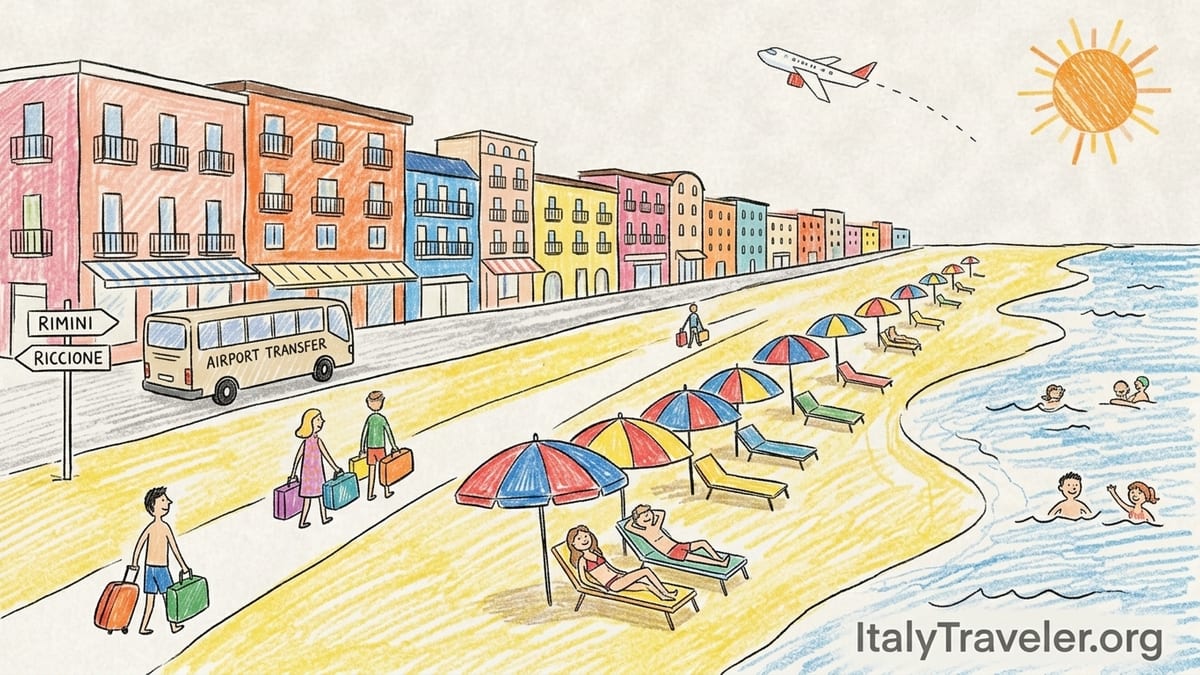
The Adriatic side of Italy has been built around the package model since the 1960s, and it still shows. Along the Emilia Romagna coast, a 110-kilometre ribbon of sand runs from roughly Cattolica past Rimini to Ravenna. This “Riviera Romagnola” is dense with medium-size, family-run hotels that traditionally sell rooms in blocks to tour operators on half board or full board. In 2026, that tradition has evolved into modern packages that combine return flights, checked luggage and airport transfers with a beach hotel, often at prices that undercut DIY bookings on the same dates.
Tour operators focused on the Emilia Romagna Coast promote exactly this type of bundle: seven nights in a three or four-star hotel in the Rimini–Riccione area including flights, baggage and shared transfers. One specialist advertises week-long stays from around 1,400 to 1,500 pounds per person in high season at iconic beachfront properties in Rimini, explicitly listing flights, luggage and transfers in the price. That level of clarity matters when comparing against separate flight and hotel searches that initially look cheaper but do not include bag fees or ground transport.
Local operators still charter coach loads of visitors from northern Italy, Germany and Eastern Europe, selling Emilia Romagna “mare Italia” weeks that include coach or low-cost flights, board at a three-star hotel and daily beach service. A sample 2026 brochure from an Italian tour operator for Rivazzurra di Rimini shows two-week stays packaged at a three-star hotel, with all meals, entertainment and beach service sold as one price per person. Even if you are flying in from outside Italy, you will be joining a well-honed machine designed around predictable package weeks.
This maturity is why the northern Adriatic deserves the strongest focus for package buyers. The region has dedicated tourism boards, such as the Riviera di Rimini, actively promoting how to reach the coast by air, train and coach, including new summer-season connections from hubs like Munich to Rimini Airport from April 2026. That connectivity underpins the package ecosystem and makes door-to-door offers dependable for international travelers.
Rimini and Riccione: How Flight + Hotel Packages Really Work
For 2026, Rimini and Riccione are front and center on major online travel agencies. On Expedia’s dedicated Rimini pages, you can build packages that pair a flight into Bologna, Rimini or even Ancona with hotels all along the Riviera di Rimini. The interface encourages you to assemble “Flight + Hotel” or “Flight + Hotel + Car” for specific dates, with dynamic discounts applied when you book them together. For example, a July week for two adults might surface a three-star hotel near Rimini’s beachfront and direct flights from London to Bologna as a combination that prices out 10 to 15 percent lower than booking each component separately on the same platform.
Another Expedia section focuses on “Riviera di Rimini Vacations” and emphasizes saving by combining hotel with flight or car hire. Rimini Riviera “cheap vacations” marketing highlights that many packages offer free cancellation on hotels and flexibility to change flights for a fee. That can be useful if you want the security of a package price but need more flexibility than a traditional charter week. In practice, travelers often pick a mid-range seafront hotel in Rimini or Riccione, lock in flights from their nearest European hub, and add either a small rental car or rely on an included shared transfer.
Traditional British and European tour operators still sell classic one or two-week “Rimini holidays,” particularly aimed at families and older couples. One British airline’s holiday arm, for instance, promotes Rimini as a city-and-beach base, packaging its flights with a choice of hotels and promising that the holiday price will not change once booked, even if their internal costs increase later. Packages of this sort sometimes include added value such as a checked suitcase allowance and a 24-hour local assistance line, which first-time visitors find reassuring.
On the ground, resorts like Grand Hotel Rimini in Rimini or four-star properties in Riccione anchor the higher end of the Adriatic package market, while simpler two and three-star hotels a block or two from the sand offer half-board deals aimed squarely at price-conscious families. Many of these properties appear in both traditional tour operator brochures and OTA package builders, which means you can often price-check the same stay through multiple channels before you commit.
Family Packages, Board Plans and Beach Services on the Emilia Romagna Coast
One of the most distinctive features of Rimini and Riccione packages is the emphasis on board basis. Classic Adriatic packages rarely sell just “room only.” Instead, you will see half board, full board and increasingly soft all-inclusive options that cover drinks at meals and basic bar service. Group-touring companies focused on Riccione and Rimini advertise four-night stays in three-star hotels “on half board basis,” which typically means breakfast and a multi-course dinner, leaving lunch free for days out or beach snacks.
Italian summer brochures for the Riviera often highlight “pensione completa” full-board formulas with house wine and water at meals. For a family of four, this can simplify budgeting. Rather than wondering how much you will spend every lunchtime along the promenade, you eat breakfast and dinner in the hotel restaurant and top up with inexpensive snacks between. That said, full board can feel restrictive in an area known for its trattorie and piadina kiosks, so couples and food-focused travelers might lean toward half board or even bed and breakfast paired with a larger dining budget.
Beach service is another key component. The Emilia Romagna seafront is dominated by organized “stabilimenti balneari” that rent sunbeds and umbrellas by the day or week. Many three and four-star hotels include a basic beach package in their weekly rates or as a low-cost add-on, giving guests a fixed umbrella in a particular row along the sand. Italian Puglia brochures for 2026 make this explicit with lines like “servizio spiaggia” listed beside each resort: up to one umbrella and two loungers per room, sometimes with a kids’ mini club. In Rimini and Riccione, check whether your package includes beach service or just a discount card for local lidos, as paying separately for a week’s sunbed rental can easily add a few hundred euros to a family’s costs.
Family-specific offers remain strong on the Adriatic. Many coastal resorts advertise “kids stay free” or “child reductions” when sharing a room with two paying adults. A Puglia-focused catalog for 2026 lists multiple resorts with dedicated kids’ clubs and animation programs, which mirrors similar offerings in Emilia Romagna family hotels. The value for money is clearest outside the peak week around Ferragosto in mid-August. For example, a June or early July week at a three-star Rivazzurra di Rimini hotel on full board with beach service can price out hundreds of euros less than a comparable August stay, even with flights held constant.
Transfers, Luggage and Car Hire: What Packages Cover vs DIY
Airport transfers are where packages along the Adriatic can quietly save time and stress. Rimini’s airport, though small, has seasonal flights from cities across Europe and is well connected by bus and taxi to the Rimini and Riccione strips. The local tourism board highlights how Rimini, Riccione, Misano and Cattolica are “quick to reach” from the airport, and tour operators leverage this with bundled shared buses waiting for incoming flights. On a typical British or German package, your transfer is pre-arranged and included. You clear baggage, find your brand logo in the arrivals hall and board a coach that drops at a string of hotels down the coast.
Independent travelers often underestimate the cost and complexity of doing this alone, especially late at night or with kids in tow. A couple booking separate low-cost flights to Bologna or Ancona and a hotel in Riccione may find themselves piecing together regional trains and local buses, or paying 150 euros or more for a private transfer each way once they add up tolls and late-night surcharges. A recent complaint from package travelers in southern Italy who discovered their deal did not include transfers underlines how easy it is to overlook this component until the last minute. Along the Adriatic, mainstream operators now make “transfers included” a central selling point for Emilia Romagna Coast holidays precisely to avoid that confusion.
Luggage is another advantage. Citalia’s 2026 offers for the Emilia Romagna Coast, for example, clearly note that their week-long stays at seafront hotels near Rimini include flights, luggage and transfers. That means at least one checked suitcase per person, a meaningful saving when budget airlines often charge substantial fees for hold baggage each way. If you book your own low-cost flights then add a hotel separately, you will need to factor these baggage charges into your overall budget.
Car hire sits somewhere in the middle. On Expedia and similar sites, you can build a package that combines hotel, flight and car in one reservation, usually with a modest “bundle” discount. For Puglia and for exploring hill towns behind the Emilia Romagna coast, this makes sense. Travelers planning to base in Monopoli or Polignano a Mare, for example, might want a compact rental to explore Ostuni, Alberobello or the Gargano headland. Packaging the car with your flights and hotel can slightly lower the total cost and centralize customer support if something goes wrong, although drivers must still pay for fuel, tolls and parking. On the other hand, if you only plan a couple of day trips from Rimini or Riccione, local trains and buses may make a car unnecessary.
Puglia Beach Packages: Monopoli, Polignano and Gargano
While the Adriatic package market is most mature around Rimini and Riccione, Puglia’s Adriatic coast has built its own beach product, particularly for Italian and northern European travelers willing to fly into Bari or Brindisi. Specialized agencies curate six or seven-night “mare” stays in and around Monopoli, Polignano a Mare and the Gargano peninsula, sometimes combining them with inland nights in the Valle d’Itria or Salento. A recent idea from an Italian travel agency, for instance, features flights from Italy plus six nights in a bed-and-breakfast in Monopoli, pitched as a base for an “estate tra mare e borghi” summer between sea and villages.
Larger Italian tour operator catalogs for “Mare Italia Estate 2026” list multiple Puglia properties along the Adriatic. In the Gargano, they feature resorts near Peschici and Vieste with private coves and half or full-board options. Further south, resorts near Polignano a Mare and Carovigno, plus larger complexes in the Salento around Porto Cesareo, offer “servizio spiaggia” included in club-style packages. Many add kids’ clubs, sports activities and evening shows that mirror the entertainment on the Emilia Romagna coast, though Puglia’s coastline tends to feel wilder and more varied, with a mix of sand, rock platforms and turquoise coves.
Independent travelers increasingly stitch together their own Puglia “packages” using OTAs. It is common to book a flight into Bari, then a hotel or agriturismo near the Adriatic and a rental car in a single basket on a platform like Expedia. Reddit trip reports from 2026 describe six to eight-night stays in towns such as Monopoli, with day trips by train or car to Polignano a Mare and Ostuni. One widely shared testimonial about Puglia mentions using local “Beach Bus” services from Monopoli out to nearby lidos, highlighting how DIY travelers can approximate many of the conveniences that come baked into Italian domestic packages.
Compared with Rimini and Riccione, Puglia’s Adriatic resorts see more independent visitors and fewer traditional charter packages from northern Europe, though Italian agencies do run week-long full-board “club village” stays that include flights from major Italian cities. For foreign travelers, this often means deciding whether to buy into an Italian-language package where you are one of few non-Italians, or assemble your own flight plus boutique hotel plus car rental combination and enjoy more flexibility.
Packages vs Independent Booking: Cost, Flexibility and Risk
Choosing between a package holiday and independent booking on the Italian Adriatic is not simply about headline price. Packages excel in predictable, beach-focused scenarios. If you want a straightforward week on the sand near Rimini, with minimal moving around, and you are flying from a country served by charter or inclusive tour operators, a package that includes flights, luggage and transfers will usually compare well against DIY options. You gain a single point of contact, consumer protections under package travel regulations, and fewer moving pieces that can go wrong.
In contrast, independent booking shines when you value flexibility and variety. Travelers who want to combine a few nights in Rimini with some time inland in Bologna, or to pair Polignano a Mare with Lecce and Matera, will find rigid week-long packages constraining. Booking flights and hotels separately lets you mix city bases, agriturismi and boutique seafront stays that mainstream packages do not feature. It also makes it easier to tack on rail journeys, like continuing up to Venice after a week on the Adriatic coast.
Price comparisons should be as like-for-like as possible. Take a typical July week from London or Manchester to the Emilia Romagna coast. A package with a British operator might list seven nights half board in a three-star hotel in Rimini, with flights, one checked bag each and shared transfers, for the equivalent of perhaps 1,000 to 1,300 pounds per adult, depending on early booking discounts. To compare independently, you would need to price direct or one-stop flights on similar dates including hold luggage, a comparable hotel on half board or with a realistic food budget, and a private or shared transfer from your arrival airport. Once you add everything and convert to a per-person cost, packages often come out slightly ahead for straightforward beach weeks.
Risk is the hidden variable. Package holidays usually offer better protection if an airline cancels flights or a hotel closes, since the organizer is obligated to offer alternatives or refunds. When you assemble flights, hotels and car hire yourself, you bear the burden of dealing with each provider separately in a disruption. During peak summer on the Adriatic, where flights and hotels can sell out, that difference can matter if something goes wrong last minute.
Practical Booking Strategies for 2026 Adriatic Coast Packages
Timing is critical on the Italian Adriatic. The main season runs from late May to mid-September, with peak demand around the Italian holiday of Ferragosto on 15 August, when both the Emilia Romagna coast and Puglia’s beaches are at their busiest. Families bound by school holidays often find it cheaper to travel in the last week of August or the first half of June, when temperature and sea conditions are still excellent but package prices soften. Early booking discounts are common in Italian tour-operator catalogs, so securing a package six to nine months in advance can deliver meaningful savings over last-minute searches.
When comparing offers, pay attention to board basis and inclusions. For Rimini and Riccione, consider whether you truly want full board in the hotel or if half board better fits your plans to explore local restaurants. Look for clear wording about beach service: is your umbrella and lounger included, discounted or entirely separate? In Puglia, double-check whether the advertised “servizio spiaggia” refers to a public beach concession across a road, a private cove or a shuttle to an off-site lido, as this shapes daily logistics.
Use OTAs strategically. Platforms like Expedia treat the Adriatic Riviera as a distinct product line, encouraging users to pair flights with hotels or rental cars. Use their packages as a benchmark, then cross-check the same hotel’s rates directly and with specialist tour operators. Occasionally, a traditional tour operator focused on Italy will offer better value on a particular four-star Rimini or Riccione hotel, thanks to long-standing room allocations and charter flight contracts. Conversely, flexible travelers might find a better deal by flying into Bologna or Venice on a low-cost airline and using the train network to reach the coast, booking a room-only or bed-and-breakfast rate and paying for meals and beach access on the spot.
Finally, think about your tolerance for language and logistics. Packages that cater to British or northern European markets often include English-speaking reps and printed information packs. Local Italian packages for Puglia or the Riviera Romagnola may offer better value but assume Italian-speaking guests and do not bundle international flights. For confident travelers comfortable navigating Italian train timetables, bus schedules and rental car counters, this is not a barrier. For others, the comfort of a single, English-language booking for “Rimini Riviera Flight + Hotel + Transfers” will outweigh any small cost savings from DIY arrangements.
The Takeaway
In 2026, the Italian Adriatic remains one of Europe’s most package-friendly coastlines. The Emilia Romagna coast around Rimini and Riccione leads the way, with operators explicitly bundling flights, luggage and transfers into week-long stays that still feel rooted in the region’s full-board seaside tradition. Online travel agencies now mirror that model with flexible flight and hotel combinations, often adding car hire to create modern, mix-and-match “Riviera” packages. For straightforward beach weeks and family holidays, those bundles are hard to beat on convenience and usually competitive on price.
At the same time, Puglia’s Adriatic, from the coves of Monopoli and Polignano a Mare to the Gargano headland, shows how independent booking can open up a more varied, exploratory seaside experience. Here, boutique hotels, agriturismi and club resorts coexist with a lighter package infrastructure, encouraging travelers to tailor flights, stays and car hire to their own rhythm. Wherever you choose along Italy’s eastern shore, the smart move is to compare a true like-for-like DIY itinerary against a couple of targeted package quotes, paying close attention to what is included: board basis, beach service, transfers and luggage. With that clarity, the Italian Adriatic can deliver exactly the holiday you want, whether that is a no-decisions-needed week on a Rimini sunbed or a road-trip along Puglia’s luminous coast.
FAQ
Q1. Is it cheaper to book a package or to arrange flights and hotels separately on the Italian Adriatic?
It depends on your travel style and dates, but for simple one-week beach holidays around Rimini and Riccione, packages that include flights, luggage and transfers often work out slightly cheaper than buying equivalent flights, hotels and transfers separately. For more complex itineraries with multiple stops, independent booking usually offers better value and flexibility.
Q2. Which airports are best for Rimini and Riccione package holidays?
Rimini’s own airport is the closest and is served by seasonal flights from several European cities, feeding many classic packages. Bologna and Ancona are the main alternatives, with frequent trains connecting their stations to Rimini and Riccione. Packages aimed at the Emilia Romagna Coast may use any of these gateways, so check which airport your deal is based on before booking.
Q3. What is the difference between half board, full board and all inclusive on the Adriatic?
Half board typically includes breakfast and dinner at your hotel, full board adds lunch, and all inclusive extends to some drinks and sometimes snacks. On the Emilia Romagna Coast, half and full board are very common, especially in family hotels, while full all inclusive is more typical of club-style resorts. Your choice should reflect how much you plan to eat at the hotel versus local restaurants.
Q4. Do Adriatic Coast packages usually include beach service?
Not always. Some packages, especially Italian domestic ones, include a fixed beach umbrella and loungers for the week at a partner lido, while others only provide discounts or leave you to arrange beach rentals yourself. Because sunbed and umbrella hire can be a significant extra cost, it is worth confirming exactly what “servizio spiaggia” or beach service means in your chosen package.
Q5. How do family discounts work in Rimini and Riccione resorts?
Many Adriatic hotels offer child reductions when kids share a room with two adults, such as a free or heavily discounted stay for younger children and reduced rates for teenagers. Some also include kids’ clubs and entertainment in the package. The details vary by hotel, so check age limits, whether discounts apply in peak season and if any resort fees still apply for children.
Q6. Is it worth hiring a car as part of an Adriatic package?
A car is rarely essential if you plan to stay put in Rimini or Riccione, which have good public transport along the coast. However, for exploring Puglia’s Adriatic towns or the inland hills behind the Emilia Romagna Coast, adding a rental car to your flight and hotel package can be useful. Bundling the car into a package sometimes reduces the total cost slightly and centralizes your customer support if plans change.
Q7. When is the best time to book Adriatic Coast packages for good value?
The shoulder periods of early June and early September generally offer the best balance of price, weather and crowd levels. Booking six to nine months in advance can secure early booking discounts, especially for family-sized rooms on the Emilia Romagna Coast. Prices peak around mid-August, when Italian holiday demand is highest, so expect to pay more if you must travel then.
Q8. How does Puglia compare with Rimini and Riccione for package holidays?
Puglia’s Adriatic coast has fewer traditional northern European charter packages and more Italian-focused full-board resorts, plus a growing independent market of boutique hotels and agriturismi. It suits travelers who are happy to book flights into Bari or Brindisi, add a hotel and possibly a rental car, and enjoy a more varied coastal landscape. Rimini and Riccione are better if you want a classic, well-structured package scene with dense hotel options.
Q9. What protections do I have if something goes wrong with a package holiday?
Under European-style package travel regulations, organizers of qualifying packages are generally obligated to provide assistance, alternatives or refunds if major elements such as flights or accommodation change significantly. That can be an advantage over independent arrangements, where you must negotiate separately with airlines, hotels and car hire firms if plans are disrupted.
Q10. Can I still get flexibility if I book an Adriatic package through an online travel agency?
Many online travel agency packages for the Adriatic now allow you to choose refundable or semi-flexible hotel rates and offer options to change flights for a fee. Look for packages that clearly label cancellation rules and change fees, and consider paying slightly more for flexible terms if your dates are not fixed. This hybrid approach can offer much of the security of a package with some of the adaptability of DIY travel.