


Central Italy is where many first-time visitors fall in love with the country: Renaissance cities, medieval hill towns, vine-covered hills, quiet Adriatic beaches and food that somehow tastes better after a day on a train or wandering cobbled lanes. For a first trip, this region offers a manageable mix of culture, countryside and coast, with reliable transport and plenty of choice at different budget levels. This guide focuses on Rome, Tuscany, Umbria, Marche and Abruzzo, with concrete examples of routes, prices and experiences to help you plan a realistic, rewarding first visit.
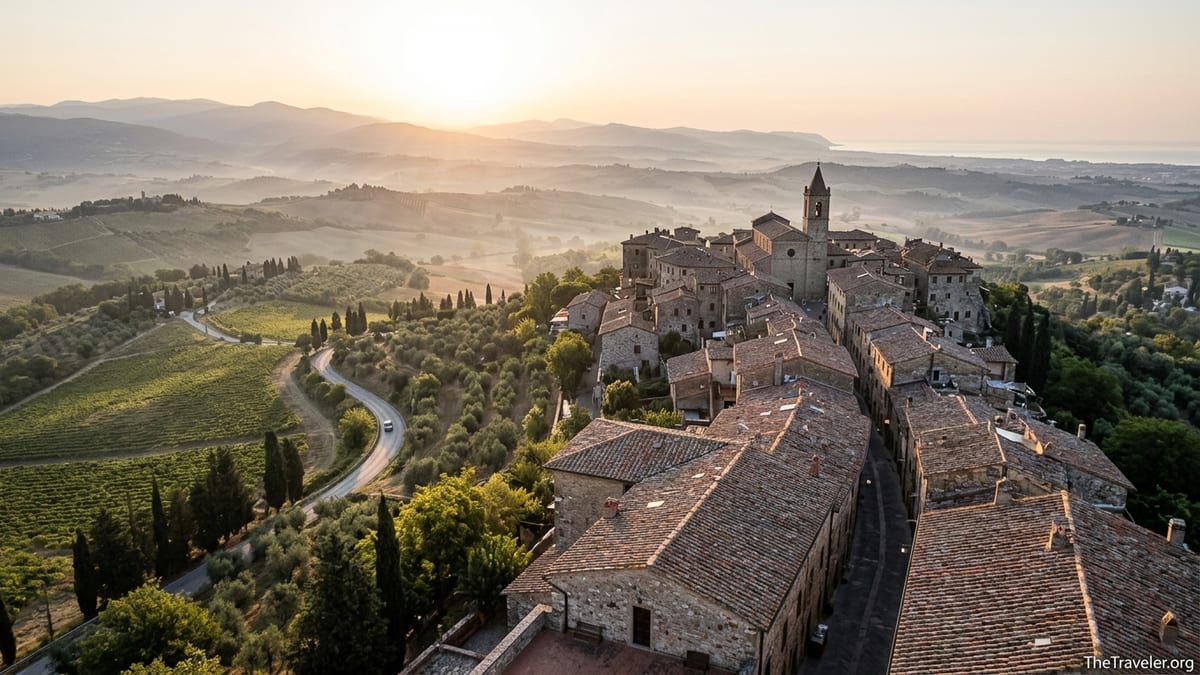
Understanding Central Italy’s Regions and Highlights
For most first-time visitors, Central Italy starts in Rome and fans out in a rough arc: northwest to Tuscany, northeast to Umbria and Marche, and directly east across the mountains to Abruzzo on the Adriatic Sea. Distances look small on the map, but the landscape is folded with hills and the Apennine mountains, so travel times are often longer than expected. As you plan, think in terms of two or three “bases” rather than trying to sleep in a new town every night.
Rome is the obvious gateway, with direct flights from North America and Europe and fast train connections north to Florence and south to Naples. Tuscany draws visitors for Florence, Siena, San Gimignano, Chianti and the Val d’Orcia. Umbria offers a quieter, greener version of that postcard Italy in towns like Assisi, Perugia, Spello and Orvieto. Marche and Abruzzo face the Adriatic, combining medieval hill towns with long strands of beach; places such as Ancona, Senigallia, Numana in Marche and Pescara, Vasto and Alba Adriatica in Abruzzo give you a more local, less international feel than the Amalfi Coast or Cinque Terre.
On a 10 to 14 day first trip, a classic pattern is three nights in Rome, three in Florence or Siena, three in Umbria (for example Assisi or Orvieto), and three on the Adriatic in Marche or Abruzzo. That itinerary fits comfortably into a two-week vacation, uses mostly trains, and still leaves space for a day trip or two from each base instead of constant packing and unpacking.
Rome, Florence and Siena: Urban Anchors for Your Trip
Rome rewards at least three full days on a first visit. Most visitors cluster around the Colosseum, Roman Forum, Vatican Museums, Trevi Fountain and Trastevere. To keep logistics simple, look for accommodation inside the ring of the Aurelian Walls or within a 15 to 20 minute walk of Termini, Trastevere or the historic center. Expect a decent mid-range hotel to cost roughly 150 to 250 euro per night in spring and early autumn for a double room, with budget guesthouses and simple B&Bs in the 90 to 140 euro range if you book months ahead and avoid major holidays.
Public transport in Rome is based on integrated tickets valid on metro, buses and trams. As of mid 2025, a standard single ticket for buses and metro within the city has been a little over 1.50 euro and all-day or multi-day passes are available; families often find the 72-hour pass good value if they combine sightseeing with a hotel located outside the very center. Buying tickets from metro machines or official tobacco shops and validating them when you board avoids on-the-spot fines, which start around 50 euro if inspectors find you without a valid ticket.
From Rome, Florence is just 1.5 hours away on a high-speed train, with advance fares often around 25 to 45 euro per person in second class if you book several weeks ahead and avoid the last peak departures of the day. Florence’s historic center is compact; if you stay near Santa Maria Novella station or within the ring roads, you will be able to walk to the Duomo, Uffizi, Ponte Vecchio and Oltrarno neighborhood. Hotel prices are similar to or slightly higher than Rome in peak months, and many first-timers find it easier to plan timed-entry tickets for the Uffizi or Accademia a week or two in advance rather than standing in day-of queues.
Siena, perched on a Tuscan hilltop, works well as a base or a day trip. Buses from Florence to Siena’s historic center are often more convenient than trains, which stop at a lower station. Travel time is around 1.5 hours by bus, with fares usually under 15 euro each way. Staying overnight in Siena lets you experience the Campo and the city after day-trippers leave; in shoulder season, simple guesthouses within the walls can start just under 120 euro, while historic palazzi and boutique hotels rise well above that.
Hill Towns and Countryside: Tuscany, Umbria and Marche
Central Italy’s hill towns deliver much of what first-time visitors imagine: stone lanes, small piazzas, church bells and views over patchwork hills. The trade-off is that many of these places are awkward by public transport. For a first trip without a car, focus on towns that sit on main rail or bus routes, and then consider a one or two-day car rental for deeper countryside.
In Tuscany, the Val d’Orcia and Chianti wine country are particularly photogenic. Towns such as Pienza, Montepulciano and Montalcino are easiest to reach with a rental car from Siena or Florence. If you prefer to rely on trains and buses, San Gimignano and Volterra can be visited on organized day tours from Florence that typically cost 80 to 120 euro per person including transport, a guided visit and sometimes a simple wine tasting lunch at a countryside estate.
Umbria offers similar scenery at generally lower prices. Assisi and Perugia are both on the regional rail line between Florence and Rome, which makes them practical bases without a car. Assisi’s upper town is about a 10-minute bus or taxi ride from the station, while Perugia has a mini-metro linking the station area and the center. In both places, a cappuccino at a cafe on the main piazza will usually cost around 1.50 to 2 euro if you stand at the bar, rising to 3 or 4 euro if you sit on a prime terrace with table service.
Marche, between the mountains and the Adriatic, remains comparatively low on international tourism. Inland, Ascoli Piceno and Urbino offer serious Renaissance and medieval architecture. On the coast, Numana and Sirolo under Monte Conero and family-friendly resorts like Senigallia mix beach promenades with seafood restaurants and evening passeggiata. Prices for rooms in these towns often sit 10 to 20 percent lower than in comparable Tuscan or Ligurian resorts, especially on weekdays outside August, when Italian families traditionally take their summer holidays.
Beaches and the Adriatic Coast: Marche and Abruzzo
Many first-time visitors do not realize how easy it is to pair an inland itinerary with a beach stay on the Adriatic. From Perugia, trains to Ancona on the coast often take around two hours, with one change, and from Rome it is roughly four hours by direct intercity train to Pescara. Once on the coast, regional trains run north-south linking a chain of small resorts and working ports.
In Marche, the coastline around Monte Conero is known for its combination of cliffs and small coves. Numana and Sirolo sit on the hillside, with shuttle buses down to pebble beaches in season. Farther north, Senigallia offers a long, shallow sandy beach and a lively waterfront; it is a good choice for families who want easy access from the station, shallow water and a choice of lidos renting sunbeds and umbrellas. A typical daily rate for two loungers and an umbrella on an organized beach in high summer can range from about 20 to 35 euro, often including showers and changing cabins.
Further south in Abruzzo, resorts such as Alba Adriatica and Tortoreto are part of the so-called Seven Sisters, a string of family-friendly beach towns with long promenades, mostly flat terrain ideal for cycling, and rows of Blue Flag beaches. Pescara, the region’s largest city on the sea, has a busy seafront lined with stabilimenti balneari, while smaller towns like Vasto sit near more natural stretches of coast such as the Punta Aderci nature reserve. These areas are popular with Italian families and remain relatively under the radar for international tourists compared with the Amalfi Coast or Sardinia.
The Adriatic coast also offers atmospheric details you will not find elsewhere: traditional wooden fishing platforms known as trabocchi dot sections of the Abruzzo shoreline, particularly south of Pescara toward Vasto. Several have been converted into simple seafood restaurants where a set menu of antipasti, a pasta course and a grilled catch of the day might start around 45 to 60 euro per person, including house wine. Reservations are usually essential in July and August and on weekends in late spring and early autumn.
Getting Around: Trains, Buses, Driving and Local Transport
For most first-time visitors, trains form the backbone of a Central Italy itinerary. High-speed services link Rome with Florence in about 1.5 hours and Florence with Bologna in under 40 minutes, while intercity trains connect Rome with Ancona and Pescara on the Adriatic. When booking directly with the main operators, you will see a choice of base fares and discounted “economy” or “super economy” tickets. The cheapest prices often appear 2 to 3 months in advance and can be as low as 20 to 30 euro for popular routes if you travel outside peak commuter hours.
Regional trains, which you will use for shorter hops between hill towns and coastal resorts, are slower and usually cannot be reserved. Fares are typically modest: for example, a one-hour regional journey between Assisi and Perugia or between Ancona and Senigallia will usually cost under 10 euro per person. Always validate paper regional tickets in the small machines on the platform before boarding; inspectors do check, and fines can be substantial compared with the underlying fare.
Buses fill the gaps where rail does not reach. In Tuscany and Umbria, regional bus companies connect smaller hill towns to their nearest rail hubs; you might, for instance, take a train from Florence to Poggibonsi and then a bus to San Gimignano, or from Arezzo to Cortona and then a shuttle up to the old town. On the Adriatic coast, local buses run along the promenade, but walking and cycling are often the most pleasant options for short distances. In Abruzzo’s interior, buses connect mountain villages and national parks with coastal towns, but schedules can be sparse, so it is worth checking timetables a few weeks before you travel.
Driving offers the most flexibility in rural Tuscany, Umbria and inland Marche and Abruzzo. Car rental from Rome or Florence airports generally starts around 40 to 70 euro per day for a small manual car booked in advance, with automatic transmission costing more. Factor in tolls on major highways, fuel, and daily parking charges of 10 to 25 euro in or near historic centers. Many town centers are controlled by ZTL (limited traffic zones) with cameras that automatically issue fines if you drive in without a permit. For a first-timer, a good compromise is to rely on trains between major cities and rent a car for only three or four days based in a smaller town where parking is straightforward.
Accommodation, Food and Typical Daily Costs
Costs vary by season and location, but a realistic per-day budget for a couple in Central Italy, excluding flights, might fall in three broad bands. At the budget end, 140 to 200 euro per day can cover simple guesthouse accommodation, regional trains, cafe breakfasts and a mix of takeaway pizza, casual trattorie and one or two museum entries. A mid-range budget of 220 to 350 euro per day might include a central three-star or four-star hotel, some high-speed train segments, sit-down restaurant dinners and occasional guided tours. At the higher end, 400 euro and above per day allows for boutique hotels, car rentals, more frequent private tours and fine dining.
In Rome and Florence, a straightforward lunch of pasta and a glass of house wine at a neighborhood trattoria often runs 15 to 25 euro per person, depending on location. Ordering the fixed-price “pranzo di lavoro” where available, typically on weekdays, can be good value at around 12 to 18 euro for a couple of simple courses. In smaller Umbrian, Marchigiano or Abruzzese towns, the same meal might cost 20 to 30 percent less, and a generous multi-course Sunday lunch with antipasti, a pasta, a main and dessert can still appear on menus for 30 to 40 euro per person in family-run places.
Breakfast customs can surprise North American visitors. Italian hotels usually include a buffet of pastries, fruit, yogurt and coffee, but in apartments or smaller B&Bs you may find just pre-packaged snacks and a coffee machine. Many locals simply stand at the bar: a cappuccino for around 1.50 to 2 euro and a cornetto for about 1.20 to 2 euro. Aperitivo culture in cities such as Florence, Perugia and Ancona offers another budget-friendly ritual; a spritz or glass of wine for 6 to 10 euro often comes with enough snacks, from olives and crisps to small bruschette, to cover a light dinner.
Accommodation types range from business-style chain hotels near stations to agriturismi (farm stays) in the countryside. In Tuscany and Umbria, agriturismi may offer half-board stays where a double room plus breakfast and dinner costs roughly 80 to 150 euro per night outside peak August, often including access to a pool and views over vineyards or olive groves. On the Adriatic, family-run seaside hotels might include half-board packages in July that start around 70 to 110 euro per person per night, with breakfast and a main meal, making them popular with Italian families who return year after year.
Planning Your First Itinerary and When to Go
The best times for a first trip to Central Italy are generally April to early June and September to mid October. In these shoulder seasons, daytime temperatures are usually comfortable for walking, vineyards and olive groves are either green or harvest-gold, and coastal towns in Marche and Abruzzo still have services open without the dense crowds of August. You may still encounter occasional rain, especially in the mountains, so a lightweight waterproof layer and closed shoes are worth packing even for a mostly urban itinerary.
July and August bring heat, higher prices and more domestic tourists, particularly on the coast. If you must travel in high summer, book air-conditioned accommodation, prioritize early-morning sightseeing in cities, and plan a long lunch break or siesta during the hottest hours. Evening life moves outdoors, with local festivals in hill towns and night markets in seaside resorts. Winter, from November to March, can be atmospheric in cities and some hill towns, with lower hotel prices and fewer crowds; however, some coastal restaurants and agriturismi close or reduce hours, and shorter days make it harder to combine long drives with sightseeing.
For a first itinerary, think in terms of clusters. One classic 12-day plan could be: three nights in Rome, three in Florence, three in Umbria (Assisi or Perugia) and three on the Marche or Abruzzo coast. A different mix for food and wine lovers might swap Florence for Siena and include two or three nights in rural Tuscany or Umbria on an agriturismo. If you want more beach time, consider basing in Senigallia, Numana, Pescara or Vasto for four or five nights at the end of your trip, using one of those as a base for a day trip into the nearby hills.
Booking patterns matter. For travel in May, June, September and early October, aim to reserve accommodation and long-distance trains 2 to 3 months ahead for the best prices and choice, especially in Florence and popular Tuscan countryside areas. Beach hotels in August along the Adriatic can fill even earlier with domestic visitors; if you plan to arrive between the Italian national holidays around mid August, consider reserving six months ahead or choose June or early September instead for easier availability and more moderate temperatures.
FAQ
Q1. How many days do I need for a first trip to Central Italy?
Most first-time visitors find that 10 to 14 days allows for Rome plus two or three additional bases, such as Florence or Siena, an Umbrian town and a few days on the Adriatic coast, without feeling rushed.
Q2. Is it realistic to visit Rome, Tuscany, Umbria and the Adriatic in one trip?
Yes, if you focus. A practical plan is three nights in Rome, three in Florence or Siena, three in an Umbrian base like Assisi or Perugia and three in a coastal town in Marche or Abruzzo, using trains for the long jumps and local buses or occasional car rental for shorter hops.
Q3. Do I need to rent a car in Central Italy?
No, you can see Rome, Florence, Siena, Assisi and several coastal towns entirely by train and bus. A short car rental of two to four days can be helpful if you want to explore smaller Tuscan or Umbrian villages or the interior of Marche and Abruzzo, but it is not essential for a first visit.
Q4. What is a reasonable daily budget for a couple?
A cautious but comfortable mid-range budget for two people is roughly 220 to 350 euro per day, excluding flights. That typically covers a central three-star hotel, trains between regions, museum entries and restaurant meals, with some savings possible in smaller towns and outside peak months.
Q5. When is the best time to visit Central Italy?
April to early June and September to mid October usually offer the best combination of mild temperatures, open services and manageable crowds. July and August are hotter and busier, especially in cities and on the coast, while winter brings lower prices but shorter days and some seasonal closures along the seaside.
Q6. Are Central Italy’s beaches suitable for families?
Yes. Many Adriatic resorts in Marche and Abruzzo have shallow, gently shelving beaches, lifeguards and organized lidos with playgrounds and cafes. Towns such as Senigallia, Alba Adriatica, Tortoreto and Vasto are popular with Italian families and work well for visitors seeking a low-key, local seaside atmosphere.
Q7. How far in advance should I book trains and accommodation?
For high-speed trains between major cities, booking 1 to 3 months ahead usually yields the best fares and seat choices. For hotels or apartments in Rome, Florence, popular Tuscan countryside areas and Adriatic resorts in August, reserving 3 to 6 months ahead is wise, while smaller inland towns often have more last-minute availability outside major holidays.
Q8. What should I pack for a mixed city and countryside itinerary?
Comfortable walking shoes, layers, a light waterproof jacket and modest clothing that covers shoulders and knees for churches are essential. In warmer months, add a hat, sunglasses and swimwear; in cooler seasons, pack a warm layer for evenings, especially in hill towns and mountain areas where temperatures can drop quickly.
Q9. Is Central Italy safe for solo travelers?
Yes, Central Italy is generally safe for solo travelers, including solo women, especially in well-trodden cities and towns. Usual big-city precautions apply in crowded areas and on public transport, such as keeping valuables secure and being aware of pickpockets, but violent crime against tourists is rare.
Q10. Can I visit vineyards and food producers without a car?
In some cases. From cities like Florence, Siena and Perugia, organized small-group tours to vineyards, olive mills or agriturismi are common and typically include transport, tastings and a meal. If you want maximum freedom to drop into small wineries or farm shops on your own schedule, a short car rental based in a rural area remains the most flexible option.