


Planning a trip to central Italy means juggling Rome’s museums, Tuscan vineyards, Umbrian hill towns and Mediterranean beaches, often in a single itinerary. The experience you have in Rome’s Piazza Navona in August is very different from tasting Sangiovese in Chianti during the September vendemmia, or walking Assisi’s quiet lanes on a misty February morning. This guide breaks down what to expect month by month, so you can match your dates to the weather, crowds, prices and wine seasons that matter most to you.
How the Seasons Shape Travel in Central Italy
Central Italy stretches from the Tyrrhenian coast across Rome and Lazio into Tuscany and Umbria, so conditions can vary from the seafront at Viareggio to the hills around Montalcino. Broadly, winters are cool and comparatively quiet, summers are hot and busy, and spring and autumn bring milder temperatures and rich cultural and wine experiences. In Florence and much of inland Tuscany, summer daytime highs now often reach the upper 80s and low 90s Fahrenheit in July and August, while winter lows in January in cities such as Perugia sit around the mid 30s Fahrenheit overnight.
Climate change has made heat waves more frequent in recent years, especially in Rome and the Arno valley. Local tourism boards now caution visitors that afternoons in late July and August can feel oppressive for sightseeing, especially around stone-heavy areas like the Colosseum or Florence’s Piazza del Duomo. As a result, many experienced travelers time city visits for late April to early June or late September to October, using the hottest weeks instead for early-morning walks and evenings on coastal terraces in places like Monte Argentario or the Maremma.
The wine calendar is another major factor. Across Tuscany’s Chianti Classico and Montalcino and much of Umbria’s wine country, the grape harvest typically runs from late August or early September through much of October, depending on altitude and grape variety. Vineyards near coastal Maremma or lower valleys may start picking white varieties in late August, while Sangiovese for Brunello and some Umbrian reds is often harvested mid to late September into early October. Many estates offer harvest-themed tastings or informal events in this period, which can be the highlight of a road trip.
Crowds and prices follow a predictable pattern. Hotel rates in central Florence or Rome near the Spanish Steps rise sharply around Easter, again from late May through June, and peak from mid June to early September. By contrast, countryside agriturismi in southern Tuscany or Umbria often offer noticeably lower rates in March, early April and November. Rental cars, which are essential for exploring smaller hill towns and rural wine roads, tend to sell out in August and during major holidays such as around Easter and Italy’s mid August Ferragosto, so planning ahead is essential if you are traveling in those windows.
Spring (March to May): Blossoms, Mild Days and Rising Crowds
Spring is one of the most attractive times to visit Rome, Tuscany, Umbria and the surrounding wine country. In March, daytime highs in Rome and Florence generally hover in the upper 50s to low 60s Fahrenheit, climbing to the upper 60s and low 70s by May. This is ideal for tackling outdoor highlights: walking the Forum and Palatine Hill, climbing the Duomo in Florence, or spending a full afternoon exploring Siena’s brick lanes and cathedral without searching for shade every few minutes.
March is shoulder season. You might find good value at central three and four star hotels in Rome’s Monti neighborhood or near Florence’s Santa Maria Novella, where mid range rooms can be significantly cheaper than in May or June. Rainfall is still likely, especially in March and early April, so it is wise to build some indoor options into your plans, such as the Vatican Museums or the Uffizi Gallery. In Umbria, hill towns like Orvieto and Spello feel pleasantly quiet, with local cafes dominated by residents rather than tour groups.
By April and May, wildflowers spread across the Tuscan and Umbrian countryside. Driving between Montepulciano, Pienza and San Quirico d’Orcia, you will see green rolling hills and blooming fields that look completely different from the golden summer landscape. Many agriturismi re-open fully after winter, offering seasonal dinners built around fava beans, artichokes and early spring vegetables. Easter week, which falls in March or April depending on the year, is exceptionally busy in Rome and Assisi in particular, and hotel prices rise accordingly.
For wine travelers, spring is less about harvest and more about cellar visits and new releases. In February and March, Tuscany hosts preview events for new vintages in cities such as Florence and Siena, and by April many estates in Chianti Classico, Montepulciano and Montalcino are pouring recently released wines. The roads are easier to navigate than in late summer, parking around smaller wineries is straightforward, and you can often arrange visits on shorter notice, making spring a flexible and rewarding time for a wine focused itinerary.
Summer (June to August): Long Days, Hot Cities and Busy Beaches
Summer brings long daylight and a festive atmosphere, but also heat and crowds, especially in cities. In June, conditions are often still comfortable, with highs around the upper 70s to low 80s Fahrenheit in Rome, Florence and Perugia. This is a sweet spot for many visitors. You can enjoy late dinners in Trastevere, open air opera in Rome’s Baths of Caracalla or Verona if you are ranging further afield, and evening passeggiate in Siena’s Piazza del Campo without a jacket. By late June, however, the first intense heat waves of the year sometimes push temperatures into the upper 80s or low 90s, particularly in inland valleys.
July and August are the most challenging months for intensive sightseeing in Rome, Florence and central inland areas. Pavement and stone absorb heat, and temperatures can stay high into the evening. Many visitors adjust their schedule, tackling the Vatican Museums or Colosseum at opening time, retreating to air conditioned hotels or cafes through the mid afternoon, and returning outside for sunset. In Florence, popular attractions like the Accademia and Uffizi may require timed tickets booked weeks in advance during these months, and accommodation around the historic center regularly sells out.
Beaches along the Tuscan coast, such as those near Viareggio, Forte dei Marmi or the Argentario peninsula, are at their busiest in July and August. Expect higher prices for beach clubs and hotels, and heavy weekend traffic from Italian cities, particularly around the mid August Ferragosto holiday, when many Italians take their annual vacation. For a more relaxed coastal experience in summer, some travelers look to less crowded stretches of Maremma or quieter Umbrian lakeside areas such as Lake Trasimeno, where local families rent umbrellas but international tourism is still moderate compared with the Tuscan Riviera.
Summer can still work well for wine and countryside trips if you structure your days carefully. Many Tuscan estates near Castellina in Chianti, Gaiole or Montepulciano offer morning vineyard walks followed by shaded tastings in cool cellars. In July and August, vineyards are lush and green, and outdoor tasting terraces overlooking the Val d’Orcia or Chianti hills are particularly appealing at sunset. However, the actual grape harvest has not yet begun in most of central Italy, so if witnessing vendemmia is a priority, you will want to plan for late August or September instead of mid summer.
Autumn (September to November): Vendemmia, Golden Hills and Ideal Road Trips
Autumn is the favorite season for many travelers who want to combine culture, food and wine in central Italy. September typically offers warm days and cooler evenings, with daytime highs often in the upper 70s Fahrenheit in Rome, Florence and Perugia. Skies are generally clear at the start of the month, and sea temperatures along the Tuscan coast are still pleasant for swimming. This is an excellent moment for a mixed itinerary: a few days in Rome or Florence followed by countryside time in Chianti, the Val d’Orcia or Umbria’s wine zones.
September and early October are the primary harvest months in much of Tuscany and Umbria. Estates in Chianti Classico and Montalcino frequently begin picking earlier ripening white grapes in late August, continue with Merlot and other reds in early to mid September, and often bring in Sangiovese for Brunello and similar wines toward the later part of September into October. Higher altitude vineyards and cooler corners of Umbria may harvest slightly later. During this period, many wineries open their doors to visitors for special tastings, vineyard walks or simple observations of the harvest from a respectful distance. Some agriturismi near Montepulciano or in the Crete Senesi organize informal harvest themed dinners or allow guests to watch grapes arriving at the crush pad.
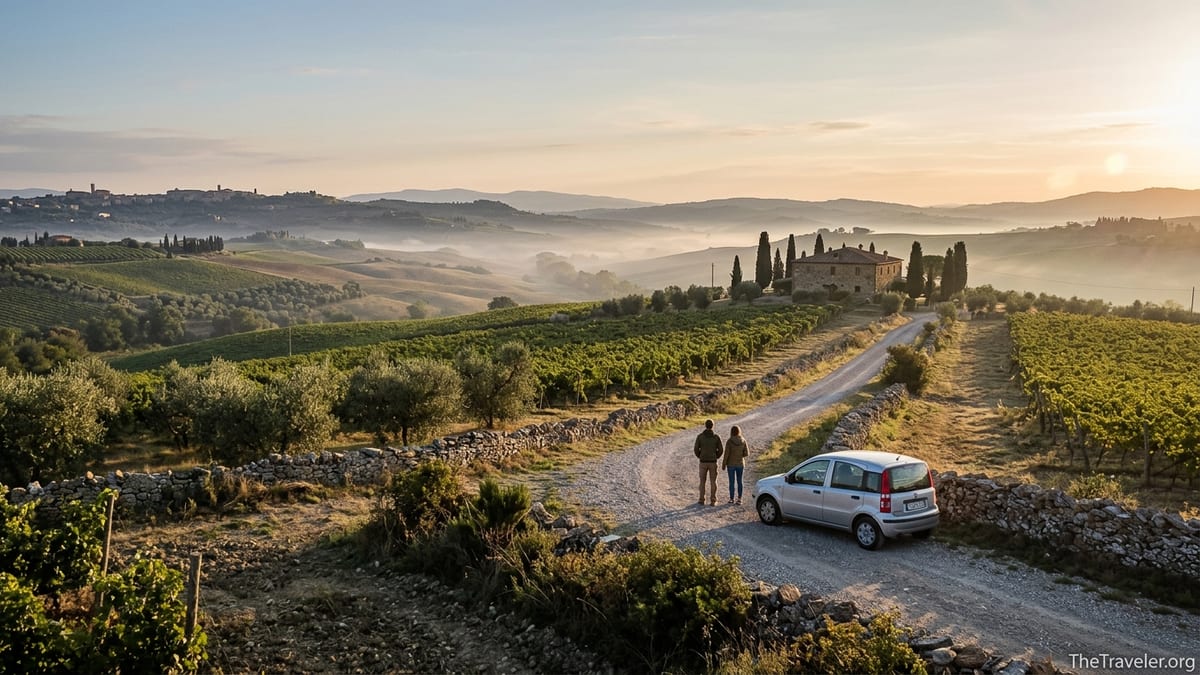
By mid to late October, the landscape shifts dramatically. Vine leaves turn yellow, orange and deep red, olive groves take on a silvery tone, and morning mist often settles in the valleys around Pienza and Montalcino. Temperatures cool into the 60s Fahrenheit during the day and lower at night, which is perfect for hiking between Tuscan hill towns, visiting Assisi and Spoleto in Umbria, or exploring less visited Roman neighborhoods like Testaccio without summer heat. This is also the time of the new olive oil harvest. In late October and November, frantoi, or olive mills, offer tastings of freshly pressed oil, which locals drizzle over grilled bread in a simple bruschetta.
November is quieter and can be rainy, particularly in Tuscany and Umbria. Many vineyards have finished picking by late October, but cellars remain active and tastings continue. Hotel rates in cities and countryside generally drop noticeably after the All Saints holiday at the start of November. Travelers who do not mind cooler, more changeable weather can find excellent value: a well located boutique hotel in Siena or a farmhouse with views of the Val d’Orcia may cost considerably less than in May or September. Cultural events shift indoors, with food and wine festivals celebrating truffles, chestnuts and new wine in towns across Umbria and Tuscany.
Winter (December to February): Quiet Cities, Festive Lights and Deep Discounts
Winter in central Italy is relatively mild compared with northern Europe, but it is still a cool season with shorter days and a different rhythm. In Rome, average daytime highs in January typically sit in the low to mid 50s Fahrenheit, while nights can drop into the upper 30s. Florence and Perugia are slightly cooler, with more frequent foggy mornings in the Arno and Tiber valleys. Snow is rare in the cities but not impossible in the higher countryside, and some hill towns may see dustings that transform their stone streets for a day or two.
December brings Christmas markets, nativity scenes and festive lights. Rome’s Piazza Navona usually hosts seasonal stalls and a carousel, while Florence decorates its historic center and tree lined squares. From mid December through early January, Italian families travel more, and major cities are busy around Christmas and New Year’s Eve. Prices reflect this peak, particularly for centrally located hotels with views of landmarks such as the Colosseum or Florence’s cathedral dome. Outside those holiday weeks, winter is one of the most affordable times to visit central Italy.
January and February are the quietest months for tourism. Many agriturismi in rural Tuscany and Umbria close or run restricted operations, but city hotels and larger countryside resorts stay open, often with attractive winter packages. You might find a four star hotel near Rome’s Pantheon or a stylish property in Florence’s Oltrarno district offering rates well below spring levels, sometimes with breakfast and spa access included. Museum lines are minimal, and it is easier to secure last minute bookings at in demand restaurants in Rome’s Testaccio or Florence’s Sant’Ambrogio areas.
For wine travelers, winter is about barrel rooms and intimate tastings rather than vineyards. The vines are bare, but cellar tours at estates near Montepulciano, Montalcino, Orvieto or Montefalco provide a detailed look at aging processes and blending. Some Tuscan producers frame February as an important month for presenting new vintages at professional and public preview events. Road trips remain possible, although short daylight hours mean planning fewer stops each day and being prepared for occasional fog or rain on rural roads.
Month by Month: Matching Your Trip to Weather, Crowds and Wine
January is cold and quiet, ideal for budget conscious travelers who prioritize museums and food over countryside scenery. You can spend unhurried mornings in the Vatican Museums, the Borghese Gallery or Florence’s Uffizi without the peak season crush. Road trips are more limited by early nightfall, but a short loop from Florence through Fiesole and the Chianti foothills can still be rewarding on clear days.
February remains off season but gains a livelier mood in cities with Carnival celebrations and cultural events. Wine regions in Tuscany host previews for new vintages, which bring professionals and enthusiasts to cities like Florence and Siena. For most visitors, this month offers a balance of low prices with at least some organized wine activities. Pack layers and be ready for cool, sometimes damp weather in Umbria’s hill towns.
March and April mark the start of the main season. March still feels half winter, half spring, with trees budding in Rome’s parks and early blossoms in the Tuscan countryside. By April, orange trees near Rome’s Aventine Hill are fragrant, and drives through southern Tuscany reveal green hills and wildflowers. Easter, whenever it falls, brings crowds and higher hotel prices in Rome, Florence and pilgrimage sites like Assisi, so booking months ahead is wise if your dates overlap the holiday.
May is one of the most popular months, with comfortably warm temperatures, long daylight and the full reopening of coastal and countryside tourism. It is an excellent time for a road trip that strings together Rome, Montepulciano, Pienza, Montalcino, Siena and Florence, with detours into Umbrian towns such as Orvieto or Spoleto. Expect higher prices but not yet the intense heat of high summer.
June bridges spring and summer. The first half of the month often feels like extended May, especially in the countryside, while the second half can bring the first summer heat waves. Beaches and pools open in earnest, and city nightlife moves firmly outdoors. For adaptable travelers, early June is an excellent compromise, allowing both comfortable city touring and warm, not oppressively hot, evenings in wine country.
July and August are peak summer. Choose these months if your priority is sunshine, late evenings and coastal time, and you are comfortable managing heat in cities. Many visitors book a few nights in Rome or Florence at the start or end of their trip, then spend the bulk of their stay based in a countryside villa near Lucca, Chianti or Orvieto, or at a seaside town. Rental cars and family friendly accommodations such as apartments and villas often book out far in advance around these months.
September is a prime choice for combining cities, countryside and wine. You may swim along the Tuscan coast in the first half of the month, then drive inland to watch or at least sense the energy of harvest in Chianti and Montalcino in the second half. Hotel rates remain relatively high in famous destinations but ease somewhat compared with August. Road conditions are good, and driving the winding routes between Siena, San Gimignano and Volterra or across Umbria’s countryside feels relaxed.
October offers cooler but often stable weather, rich colors and food festivals focused on mushrooms, truffles and chestnuts. Vineyards glow yellow and amber, and the vine leaves near Montefalco or Montepulciano create dramatic landscapes for photography. Some days are rainy, but when the sun emerges, the air feels crisp and visibility is excellent. This is one of the best months for longer road trips that connect Rome, the Val d’Orcia, Siena, Chianti and Florence, with detours to Umbrian hill towns.
November transitions into winter, with shorter days and a mix of bright and rainy spells. New olive oil and young wines appear on restaurant tables, and countryside stays are far more affordable than at harvest peak. Rome, Florence and Perugia remain lively with local life but see far fewer international visitors. For travelers who prioritize value and do not mind carrying an umbrella, it can be a rewarding time to experience central Italy in a more everyday rhythm.
Rome vs Tuscany vs Umbria vs Beaches: Choosing Your Season
Rome is attractive almost year round, but its summer heat and crowds make timing important. Spring and autumn are generally the best balance of weather and experience. In March, April, May, late September and October, you can walk between the Colosseum, Trastevere and the Vatican comfortably and linger at outdoor cafes in neighborhoods such as Monti and Prati. Winter is ideal for art and archaeology lovers who prefer quiet galleries and lower prices over outdoor dining.
Tuscany offers distinct seasonal faces. The postcard image of golden fields and rolled hay bales around San Quirico d’Orcia belongs to late June and July, when grain has been cut and the heat intensifies. The vibrant green hills and poppy studded fields many travelers imagine are a May and early June phenomenon. Autumn shifts the focus to vines and olives, with vineyard leaves changing color and the grape harvest from late August through October. For a balanced mix of scenery and comfort, May, June, September and October stand out.
Umbria, sometimes described as a quieter cousin to Tuscany, can be especially attractive outside peak summer. Towns such as Spello, Bevagna and Gubbio see fewer tour groups than San Gimignano or Siena, even in May and September. Spring brings flower carpets to Spello during the Corpus Domini celebrations, while autumn sees truffle fairs in towns like Norcia and food festivals in Perugia and elsewhere. Winter is atmospheric in cities like Assisi, where fog can cloak the basilica and stone lanes, making it a contemplative time to visit.
Beaches and lakefronts in central Italy are strongly seasonal. The Tuscan coast, from Versilia to the Argentario peninsula, is geared to summer, with lidos setting out rows of umbrellas and sunbeds in June and packing them up again in September. July and August are busiest and most expensive, with packed trains from Florence and Pisa to seaside towns at weekends. If you want warm water but fewer crowds, late June and early September are better bets. Lakes in Umbria, such as Lake Trasimeno, support a more low key summer scene, with family run restaurants and small beaches, and remain pleasant destinations for walks and birdwatching well into autumn.
The Takeaway
The best time to visit central Italy depends less on a single perfect month and more on your priorities. If you dream of strolling through Rome at golden hour and wandering Florence’s streets in a light jacket, late April, May, late September and October offer the most consistently pleasant conditions. If you want to be in the vineyards during the energy of harvest, target late August through early October in Tuscany and Umbria, understanding that exact picking dates shift slightly each year with the weather.
Travelers on tighter budgets or those who prefer quiet streets over festivals may find deep value and authentic daily life in January, February and November, especially in cities. Families seeking pool and beach time often aim for late June or early July, combining a few days of sightseeing in Rome or Florence with a longer stay in the countryside or on the coast. Whenever you go, building your plans around the seasonal rhythms of weather, wine and local life will reward you with a richer experience than simply ticking off itinerary boxes.
FAQ
Q1. What is the single best month to visit central Italy for first timers?
Many travelers find May or late September the most balanced months, with comfortable temperatures for Rome and Florence, lively but manageable crowds, and attractive countryside scenery in Tuscany and Umbria.
Q2. When should I go to see the wine harvest in Tuscany and Umbria?
The main grape harvest usually runs from late August or early September through much of October, with many estates picking most actively in September and early October, depending on altitude and grape variety.
Q3. Is August really a bad time to visit Rome and Florence?
August is very hot, and many locals leave the cities around mid month, while tourist numbers remain high. It can still work if you plan sightseeing early and late in the day and spend afternoons resting or at the coast.
Q4. Which months are best for lower hotel prices in Rome, Tuscany and Umbria?
January, February and November usually offer the lowest city hotel rates, with additional value in early March. Outside Christmas and New Year, winter stays in central Italy can be significantly cheaper than spring and autumn.
Q5. When is the best time for a road trip through Tuscan and Umbrian hill towns?
Late April through June and September through October are ideal, when daylight is long enough for multiple stops, roads are in good condition and temperatures are comfortable for walking in hill towns.
Q6. Are the Tuscan beaches open outside July and August?
Most beach clubs and full services along the Tuscan coast operate from June through early September. In May and late September some facilities may be limited, but you can still enjoy walks and quieter seaside towns.
Q7. Is winter a good time to visit central Italy for food and wine?
Yes. While vineyards are bare, winter offers uncrowded cellar visits, hearty seasonal cuisine and good value in city restaurants and hotels. Many rural agriturismi, however, reduce operations in January and February.
Q8. How far in advance should I book for peak periods like May or September?
For popular months such as May, June, September and early October, booking key hotels and rental cars three to six months ahead is sensible, especially for small countryside properties and in demand city neighborhoods.
Q9. What is the rainiest period in central Italy?
Rain is possible year round, but late autumn, particularly November, tends to be wetter in much of Tuscany and Umbria. Spring sees showers too, though they are often shorter and interspersed with bright spells.
Q10. Can I swim in the sea during spring or autumn in Tuscany?
Sea temperatures along the Tuscan coast are usually comfortable for swimming from roughly mid June through late September, with early September often offering warm water and fewer crowds than peak summer.