


The Italian Lakes are not one single destination but five very different trips wrapped around a map. From the grand villas of Como to the quiet shores of Iseo and Orta, each lake suits a particular kind of traveler. This guide focuses less on ticking off attractions and more on helping you choose the base that actually fits the way you like to travel, especially if you are starting or ending in Milan.
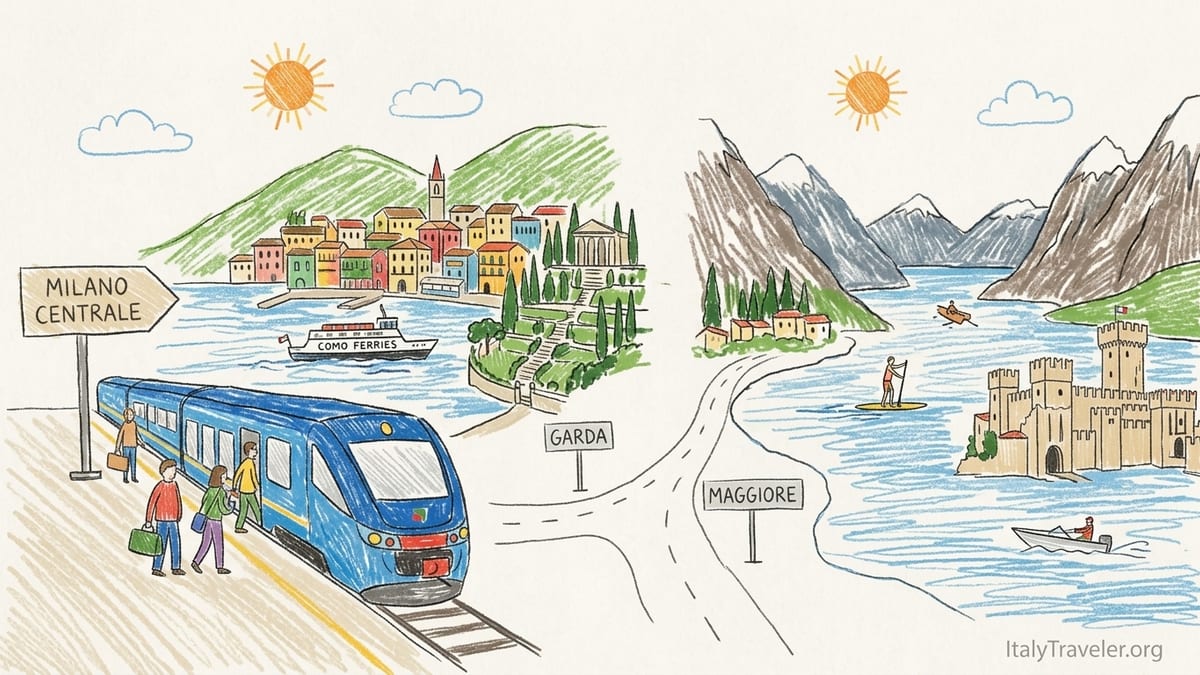
How to Choose Between the Italian Lakes from Milan
If you are flying into Milan and want to add the lakes, distance, transport and your own travel style will matter more than any single “must see” sight. Lake Como, Garda, Maggiore, Iseo and Orta can all work as two or three night extensions, but in practice most visitors only have time for one. That is where being honest about what you want, and how you plan to move around, becomes crucial.
Trains from Milan Centrale reach Como city and Varenna on Lake Como in roughly one to one and a half hours with frequent departures and tickets typically under 15 euros each way in second class if you book standard regional services. Lake Maggiore’s Stresa sits on a mainline rail route north and is usually around one hour by direct train. Garda, Iseo and Orta usually involve at least one change and some bus or taxi time, so they suit travelers who are happy with a slightly more involved journey in exchange for either bigger scenery (Garda) or quieter shores (Iseo, Orta).
Think about what matters most. If you picture yourself wandering formal villa gardens and taking short, scenic boat hops, Lake Como and Lake Maggiore are strong candidates. If you want a classic summer holiday feel with beaches, paddleboards, and mountain backdrops, Garda delivers that mix better than anywhere else. For wine and stillness, Iseo with the nearby Franciacorta vineyards stands out. Orta, by contrast, works best for travelers who are willing to trade choice of restaurants and nightlife for an almost village-like calm and a postcard island view.
Budget is another quiet decider. Iconic places like Bellagio or Sirmione often command higher prices for lakefront hotels. In high summer it is normal to find mid-range double rooms pushing well over 250 euros per night in those towns, while equally charming but less famous bases such as Varenna, Riva del Garda or Orta San Giulio can still offer comfortable small hotels and apartments for noticeably less if you plan ahead. Choosing the right base is often the single biggest way to keep an Italian Lakes trip feeling relaxed rather than crowded and expensive.
Lake Como: Bellagio vs Varenna vs Como City
Lake Como is the name most people know and the one that often pairs most naturally with Milan. Within the lake, however, the choice between Bellagio, Varenna and Como city changes your trip more than you might expect. All three work as a base, but each has its own strengths in terms of transport, atmosphere and what is on your doorstep.
Bellagio sits at the point where the three branches of the lake meet and is famous for its stepped lanes and glamorous waterfront hotels. It gives you excellent ferry links in all directions and easy access to the classic villas on the western shore, which is ideal if seeing places like Villa del Balbianello and Villa Carlotta is a priority. On the flip side, Bellagio has become one of the busiest spots in the central lake. In July and August it is common to see long lines at the ferry ticket offices and day visitors filling the narrow streets by late morning, and many lakefront hotels here price at the higher end of the spectrum.
Varenna, directly opposite Bellagio on the eastern shore, offers a different balance. It has a compact historic center, a lakeside promenade and small swimming spots, but also a railway station only a short walk from the harbor. Direct regional trains from Milan Centrale make Varenna an unusually simple base for travelers who want to avoid renting a car altogether. The town’s Villa Monastero, with its long narrow gardens right at the water’s edge, is one of the easiest villa visits on the lake because you can walk there from most hotels in under 15 minutes and combine it with a relaxed coffee along the promenade.
Como city, at the southern tip of the lake’s western arm, feels more like a small provincial city than a resort. It has regular direct trains to Milan and connections to Switzerland, a broader choice of restaurants open year round, and generally more affordable accommodation than the famous villages in the central lake. Staying in Como can work well if you are arriving late into Milan or leaving early, because you can reach the city in about 40 minutes by frequent trains and then use hydrofoils or slower ferries to reach mid-lake towns for day visits. Travelers who want nightlife, shopping and easy transport often find Como the most practical despite its less dramatic scenery compared with Bellagio and Varenna.
What Lake Como Bases Work Best for Different Travel Styles
If villa gardens and picture-perfect lake views are the point of your trip, basing in Bellagio or Varenna gives you quick access to some of the best examples on the lake. From Bellagio you can be at the ferry for Lenno in around 15 to 25 minutes by fast boat and walk up to Villa del Balbianello’s famous promontory, where scenes from major films were shot. From Varenna, Villa Monastero and the shorter walk to the Fiumelatte viewpoint make it easy to fill an afternoon without ever stepping into a car. Both towns also connect quickly by ferry to Tremezzo and Cadenabbia for Villa Carlotta’s botanical gardens.
For swimming and relaxing by the water, Varenna and the smaller towns along the eastern shore offer simple public beaches and lidos where you can rent a sunbed for a modest daily fee rather than paying resort prices. Bellagio has private beach clubs on the outskirts, but these can be expensive in high season and involve a walk or short taxi ride from the historic center. Como city has a couple of lidos and a lakeside promenade but swimming options near the center are more limited, so it is less ideal if daily swims are a priority.
Romantic trips often gravitate to Varenna, thanks to its intimate scale, car-free lanes and the way most of the town faces west towards the sunset. Couples can book a small balcony room at a family-run inn, stroll the “lover’s walk” along the water in the evening, and take short boat rides to more crowded spots like Bellagio while retreating to a quieter base at night. Bellagio is certainly romantic in its own right, especially if you are staying in a grand villa hotel, but its popularity means you will be sharing those views with large tour groups in peak months.
Families will often find Como city or the relatively flat western shore around Tremezzina more practical than Bellagio’s steps or Varenna’s narrow paths. Como’s wider pavements, supermarkets and playgrounds make everyday logistics simpler, and direct trains mean less juggling of luggage with children. For car-free travelers who want the strongest mix of easy arrivals and classic lake scenery, Varenna usually offers the best compromise. You can step off the Milan train, roll your bag to your guesthouse, then buy a central lake ferry pass that lets you move between Bellagio, Menaggio and Tremezzo for a fixed price during the day.
Lake Garda: Sirmione vs Malcesine vs Riva del Garda
Lake Garda is Italy’s largest lake and feels more like a mini inland sea than a quiet alpine basin. The southern shore near Sirmione has a Mediterranean feel, with low hills, olive trees and long pebble beaches, while the northern towns of Malcesine and Riva del Garda sit in a dramatic, fjord-like stretch with steep cliffs rising straight from the water. Choosing between Sirmione, Malcesine and Riva sets the tone for everything from climate to activities.
Sirmione occupies a narrow peninsula fringed with beaches and dominated by a medieval castle at its entrance. The historic center sits behind a drawbridge where vehicles are restricted, so once you walk inside you move almost entirely on foot. This makes it very appealing for couples and families who want to wander car-free streets to gelato shops and small piazzas, then walk to the thermal baths or the Roman ruins at the tip of the peninsula. In summer you will see rows of sun loungers for hire along the beaches, with daily rates that are generally lower than on Italy’s sea coasts but higher than on quieter lakes.
Malcesine, on the eastern shore of the narrow northern section, combines a photogenic old town with quick access to the mountains. A cable car runs from the edge of town up to Monte Baldo, taking visitors from lakeside promenades to high alpine meadows in a matter of minutes. On a clear July afternoon you can ride up in a light shirt, step out into air that is noticeably cooler, and walk among hikers and paragliders looking down on the lake boats far below. This easy vertical shift makes Malcesine one of the best bases on Garda for travelers who want both water and real mountain scenery without renting a car.
Riva del Garda, at the very northern tip of the lake, has a broader town center and an active, sporty atmosphere. The constant breezes here have turned the water into a magnet for windsurfers and sailors, with rental shops and schools lining the promenade. It is common to see families taking beginner windsurf lessons in the late morning when the winds are calmer, while more experienced riders head out as the afternoon breeze strengthens. Off the water, dedicated cycling paths and lakeside parks give Riva a relaxed, outdoorsy feel that suits longer active stays.
Matching Garda Towns to Trip Types
For villa gardens and historic atmosphere, Sirmione is the best match on Garda. While it does not have as many grand lakeside villas as Como or Maggiore, the combination of Roman remains at the Grotte di Catullo, the medieval castle and landscaped hotel gardens along the peninsula gives it a strong sense of place. Many hotels here have their own lawned lakefronts with private jetties, where you can swim directly from the hotel grounds into the comparatively warm southern Garda waters in late spring and summer.
Swimmers and casual paddlers will generally be happiest on the southern and central stretches of Garda, including Sirmione, because the water is slightly warmer and the beaches tend to be longer and more gently shelving. Malcesine and Riva both have good swimming, but in early season the northern water can feel noticeably cooler, and many beach areas are narrow bands of pebbles between the road and the lake. In return, these northern towns give you carved-in-stone mountain backdrops that feel closer to the Dolomites than to Lombardy.
Families looking for a full holiday base often choose Riva del Garda or nearby smaller towns because they combine kid-friendly swimming spots, playgrounds and activities such as beginner climbing courses or lakefront bike rentals. Organized boat excursions from Riva let you see other villages without driving, and many family hotels include half-board dining, which can help keep costs predictable. Sirmione can also work for families, but the limited space inside the historic center and the high daytripper numbers in peak season mean it rewards travelers who book well in advance and are prepared for crowds.
For car-free travel, Malcesine and Riva are linked by buses and seasonal ferries, and both have coach connections to mainline train stations farther south. Reaching them from Milan takes longer than getting to Como or Maggiore and usually involves changing trains at Verona or Brescia before a bus ride up the lakeshore. As a result, these Garda towns are better suited to trips of at least three nights, where the slightly more complex arrival is balanced by days spent alternating between cable car mountains, beaches and watersports.
Lake Maggiore: Stresa and the Borromean Islands
Lake Maggiore receives fewer international visitors than Como or Garda, but for many travelers it offers an ideal compromise between grand gardens, manageable transport and a calmer atmosphere. The key choice here is whether to base in Stresa on the western shore and use it as a jumping-off point for the Borromean Islands, or to treat those islands as a day trip from another lake entirely.
Stresa sits on a stretch of shore directly facing a small archipelago that includes Isola Bella, Isola Madre and Isola dei Pescatori. Frequent public ferries and small private boats shuttle back and forth from Stresa’s main pier, often running in loops that allow you to hop between islands throughout the day. This makes Stresa an excellent base if your main goal is to experience lakefront palace gardens in depth without spending much time in transit. The town itself offers a mix of belle époque hotels along the promenade and smaller properties a few streets inland, many of which undercut equivalent options on Como in summer.
Each of the Borromean Islands has its own character. Isola Bella is dominated by a baroque palace with terraced Italian gardens, statues and resident white peacocks, and feels tailor-made for travelers who love formal landscapes and interiors. Isola Madre has lush botanical gardens and a more relaxed, natural feel, appealing to plant enthusiasts and anyone who prefers calmer, shaded paths to fine architecture. Isola dei Pescatori is the only one permanently inhabited and has a tiny fishing village packed into a narrow strip of land, with family-run restaurants serving lake fish to visitors who arrive on late afternoon boats.
For villa gardens, Lake Maggiore arguably rivals or even surpasses Como. In a typical midsummer day you might leave a Stresa hotel after breakfast, catch a mid-morning ferry to Isola Bella, spend several hours wandering the palace and its terraces, then eat grilled fish on Isola dei Pescatori before finishing the afternoon among subtropical plantings on Isola Madre. All of this can be done on foot once you are on the islands, with ticket combinations available that bundle palace entries and boat travel into a single pass purchased either on the Stresa promenade or via official kiosks near the piers.
Stresa and the islands are not classic swimming bases, though you will find occasional small beaches and lake access points along the shore. Instead, Maggiore comes into its own for travelers whose priority is garden visiting, gentle boat trips and a slower, old-fashioned resort feel. It also works well as a short Milan extension because direct trains link Milan’s main stations with Stresa in about an hour, which makes it realistic to arrive from an intercontinental flight, check into a hotel and still fit in an afternoon island visit without feeling rushed.
Lake Iseo and Monte Isola: Quiet Shores and Wine Country
Lake Iseo tends to stay off the main tourist circuit even though it lies between Milan and the Alps. Visitors who make the detour often do so for two reasons: a desire for a quieter lake experience and an interest in the surrounding Franciacorta wine region, which has become known for its sparkling wines produced using traditional methods. The atmosphere on Iseo is less polished than on Como or Garda but more authentic and relaxed, with small towns and working lakeside communities.
Monte Isola, the large island rising steeply from the center of the lake, is one of Iseo’s defining features. It is largely car-free, with public buses restricted to residents and visitors moving mainly on foot or by bicycle. Ferries from towns like Sulzano or Iseo reach the island in a matter of minutes, and once there you can walk up narrow lanes past stone houses to viewpoints overlooking the lake. This relative lack of vehicles gives Monte Isola a quiet, slowed-down feel that is difficult to find on the better-known lakes, especially in high summer.
Swimming on Iseo feels more informal than on Como or Garda. Instead of polished lidos with rows of matching umbrellas, you are more likely to find small public beaches and grass banks where locals lay out towels. Cafes along the waterfront serve simple plates of lake fish, cured meats and regional cheeses at prices that are often lower than in the more glamorous resorts to the west. Renting a kayak or small motorboat is usually straightforward in the main towns, and the narrower shape of the lake means paddling distances stay manageable even for casual visitors.
For wine-focused travelers, Iseo is the obvious lake choice. The Franciacorta region stretches to the south and west of the lake, with wineries that range from large estates offering structured tastings to small family-run producers who welcome visitors by appointment. Many travelers base themselves in the town of Iseo or nearby villages, then spend one day exploring Monte Isola and another day visiting two or three wineries reached by car, private driver or organized tour. This combination of low-key lake time and serious wine tasting makes Iseo particularly attractive for couples or groups of friends who have already seen the headline sights on Como and want something more understated.
Lake Orta and Orta San Giulio: Romance and Short Breaks
Lake Orta is often described as the most romantic of the Italian Lakes, and Orta San Giulio, its main town, offers a kind of concentrated charm that suits short stays. The historic center faces directly onto the water, with narrow car-free lanes sloping down to a main square and a small harbor. Just offshore, the island of San Giulio rises with its monastery and old houses, giving almost every lakeside terrace a storybook view.
Compared with Como or Garda, Orta is compact. You can walk across the historic center in minutes, and most hotels, guesthouses and apartments sit within a short stroll of the lakefront. This scale works particularly well for couples on a two or three night break from Milan who want to arrive by train and taxi, check in, and then forget about logistics. Boats shuttle back and forth to the island, where a single quiet lane encircles the monastery, and the surrounding hills offer gentle walking routes, including the Sacro Monte above town with its chapels set among trees.
Swimming at Orta is more limited than on the larger lakes, though summer does bring floating platforms and small designated bathing areas along the shore. The lake is also narrower and more enclosed, which can make it feel warmer and more intimate in the evenings as lights reflect off the surface. Dining here is oriented toward slow, lingering meals, with restaurants and wine bars focusing on local produce and regional wines. Prices are generally slightly lower than in famous hotspots like Bellagio or Sirmione, but there is also a smaller overall choice of venues, so advance reservations can still be wise in peak months.
As a short Milan extension, Orta works particularly well for travelers who want peace rather than a long checklist of sights. You might arrive from Milan in the early afternoon, settle into a lake-view room, take the short boat ride out to the island at sunset, and spend the next day wandering between the sacro monte, small churches and lakeside cafes. For those who have already visited Como or Maggiore on previous trips, Orta can feel like a discovery rather than a repeat.
Villa Gardens, Swimming, Romance, Watersports and Wine: A Cross-Lake Guide
When you compare all five lakes side by side, certain patterns emerge. For formal villa gardens and grand landscaped grounds, Lake Como and Lake Maggiore are the clear leaders. On Como, the cluster of villas between Tremezzina and Lenno, plus Villa Monastero in Varenna, can easily fill two or three days of gentle sightseeing by ferry. On Maggiore, the Borromean Islands concentrate some of the most ornate palace gardens in northern Italy within a short boat hop of Stresa, which makes it very efficient for garden-focused travelers.
For swimming and casual time in the water, Garda and Iseo edge ahead. Garda’s long beaches, especially around Sirmione and the southern shore, lend themselves to days where you rent loungers, wade in and out of the lake, and break things up with gelato runs. The water generally feels warmer earlier in the season than on the higher, deeper lakes. Iseo’s more low-key waterfronts offer a different kind of swimming day, with fewer facilities but more of a local vibe, especially in smaller towns and on Monte Isola, where children jump from small piers while parents chat on the shore.
For romance and quiet, Varenna on Como, Orta San Giulio on Lake Orta and certain corners of Iseo stand out. Varenna’s sunset views, small scale and direct train access make it appealing even for short stays. Orta’s island view and car-free center feel almost theatrical in the evenings when the day visitors have gone. Monte Isola, with paths that wind past olive groves and chapels and almost no traffic noise, offers a different, more rustic kind of romantic escape where simple trattorias and lake views matter more than polished hotel lobbies.
Watersports and mountain scenery are best combined on Garda, particularly around Malcesine and Riva del Garda, where steady winds and steep cliffs attract windsurfers, sailors, climbers and cyclists. Colico and Dervio at the far northern end of Lake Como also have active watersports scenes, with kitesurfing schools and windsurfers taking advantage of the local breezes, but the infrastructure feels more spread out than around Riva. Wine lovers, meanwhile, find the densest cluster of vineyards near Iseo in Franciacorta, with Maggiore and Como offering more scattered winery visits that require longer transfers.
Car-Free Travel and Short Milan Extensions: What Actually Works
For travelers planning to rely entirely on trains and ferries, some bases are simply easier than others. Varenna on Lake Como combines a direct regional rail link from Milan with a short, level walk from station to harbor, plus frequent central-lake ferries. Como city offers even more frequent trains, including services from both Milan Centrale and Cadorna, and fast boats up the lake, though you will spend longer reaching the most scenic mid-lake villages from here. Stresa on Lake Maggiore sits on a mainline rail route toward Switzerland and has a short, straightforward walk from the station to the lakefront and island ferries.
On Garda, car-free travelers can reach Desenzano or Peschiera by train and then use ferries or buses to connect to Sirmione, Malcesine or Riva. The process works, but it involves more steps and time than reaching Como or Maggiore, which is why Garda is best reserved for trips of at least three or four nights when a slower-paced arrival day is not an issue. Orta and Iseo are similar: both are reachable via regional trains plus short taxi or bus rides, but you will want to double-check seasonal schedules and allow for buffer time, especially if you are connecting back to flights from Milan.
For one or two night Milan extensions, Lake Como (Varenna or Como city) and Lake Maggiore (Stresa) are the most realistic in terms of simple logistics. A traveler landing at Milan Malpensa in the morning could, for example, take a train via Milan to Stresa, check into a hotel by early afternoon, and still fit a visit to Isola Bella before dinner. Similarly, an early train from Milan Centrale to Varenna allows you to arrive by late morning, drop bags at a lakeside inn, and be walking through Villa Monastero’s gardens the same day.
If you have more time or have already visited the classic lakes on previous trips, then Garda, Iseo and Orta start to make more sense even with the extra steps. A five-night trip splitting time between a wine-focused stay on Iseo and a quiet romantic finale in Orta San Giulio can feel far richer than rushing through a checklist of famous names. Thinking of the Italian Lakes as a set of different moods and trip types, rather than as a single interchangeable region, is the most reliable way to build an itinerary that feels like it was designed for you.
FAQ
Q1. Which Italian lake is best for a short trip from Milan without a car?
Lake Como and Lake Maggiore are the most practical. Varenna and Como city on Lake Como, and Stresa on Lake Maggiore, all have direct train connections from Milan and easy walks to ferry piers.
Q2. If I want grand villa gardens, should I choose Como or Maggiore?
Both are excellent, but Maggiore concentrates several standout palace gardens on the Borromean Islands just off Stresa, while Como spreads its villas around the central lake between Varenna, Tremezzina and Lenno.
Q3. Where is best for swimming and beach-style days?
Lake Garda, especially around Sirmione and the southern shore, offers the widest choice of beaches and beach clubs. Lake Iseo has smaller, more informal swimming spots with a local feel.
Q4. Which towns are most romantic for couples?
Varenna on Lake Como, Orta San Giulio on Lake Orta and stays on Monte Isola in Lake Iseo are particularly romantic, with car-free lanes, intimate scales and atmospheric evening views.
Q5. Where should families base on the lakes?
Families often do well in Como city for convenience, Riva del Garda for outdoor sports and bike paths, or quieter Iseo towns where swimming spots, playgrounds and simpler prices make days easy to organize.
Q6. Which lake is best for watersports like windsurfing and sailing?
Lake Garda’s northern towns, especially Riva del Garda and Torbole, are top choices for consistent winds and established rental centers. The northern end of Lake Como also offers windsurfing and kitesurfing in places like Colico.
Q7. Is Lake Iseo worth visiting if I have already seen Lake Como?
Yes, particularly if you value quieter atmospheres and wine. Lake Iseo and nearby Franciacorta offer fewer crowds, Monte Isola’s car-free paths and a strong focus on local food and sparkling wines.
Q8. How many nights should I plan for Lake Garda?
Because reaching key towns usually involves a combination of train and bus or ferry, three to five nights is ideal. This gives time for at least one mountain day, one watersports or beach day and one slower village day.
Q9. Can I visit more than one lake in a single week?
It is possible but works best if you pair nearby lakes, such as Como with Maggiore or Iseo with Orta, and limit yourself to two bases so you are not constantly repacking and changing hotels.
Q10. Is it realistic to do a day trip to the lakes from Milan?
Yes. Popular options include a train to Varenna with a ferry to Bellagio on Lake Como, or a train to Stresa for a Borromean Islands circuit on Lake Maggiore, but expect an early start and a full day of travel and walking.