


Open a search window in 2026 and you will see the same question again and again: Lake Como or Lake Garda or Lake Maggiore? More in-the-know travelers now add Iseo and Orta to that list, but the dilemma is the same. You have time for one lake, maybe two, and you want to choose the one that actually fits the way you travel, not just the one most photographed on social media. This guide breaks down all five major northern Italian lakes in practical terms, with the clearest possible verdicts: Como for iconic scenery and romance, Garda for the broadest holiday and families, Maggiore for islands, gardens and a calmer atmosphere, Iseo for wine and slower travel, and Orta for quiet romantic stays.
The Big Picture: How the Five Lakes Really Differ
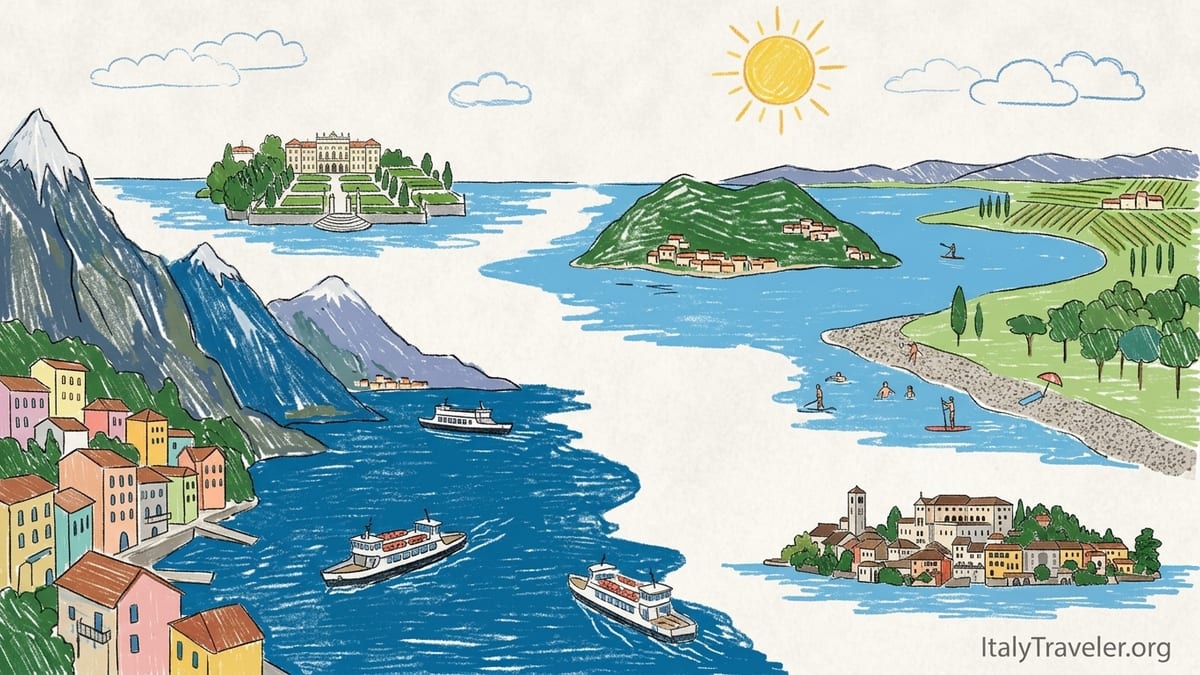
On paper, the Italian lakes can look similar: glacial waters, mountain backdrops, pastel villages, ferries criss-crossing the surface. In reality, Garda, Como, Maggiore, Iseo and Orta are five quite different trips. Garda is the largest and feels almost like a small inland sea, with beaches, theme parks and resort towns that stretch from Veneto to Trentino. Como is narrower and more dramatic, its steep mountains dropping straight into the water and grand villas lining the central “Y” shaped section. Maggiore lies just to the west, a long, elegant lake where islands and landscaped gardens are the main event. Iseo sits between Milan and the Alps, smaller and quieter, with the vineyards of Franciacorta a short bike ride away. Orta is the tiniest of the group, an almost-secret pocket with one main village and a monastery island that keeps noise levels low.
Transport and price points also separate them. Como and Maggiore are straightforward if you arrive via Milan by train and prefer to rely on ferries instead of driving. Garda rewards those who rent a car or stay near the main rail hubs of Desenzano or Peschiera. Iseo and Orta are reachable by regional trains and local buses, but the feel on arrival is different: you step into small-town Italy rather than an international resort. In budget terms, Como’s most famous mid-lake towns now price closer to the Amalfi Coast, Garda offers everything from campsites to five-star spa hotels, Maggiore sits in the middle, while Iseo and Orta often give you more space and local character for the same money.
For decision-making, it helps to be ruthless. If you want the most photogenic, cinematic lake and you are happy to pay for it, Como wins. If you are a family who wants swimming, bike rides and theme parks, Garda has the widest “toolkit” of activities. If islands, calmer promenades and formal gardens appeal, Maggiore is your lake. If you like the idea of tasting sparkling Franciacorta at a countryside winery after a lakeside lunch, think Iseo. And if you dream of wandering cobbled, car-free lanes arm in arm, with little else on the agenda, Orta is hard to beat.
Scenery and Atmosphere: Drama vs Calm
Lake Como is the classic postcard for a reason. The central section around Bellagio, Varenna and Menaggio gives you steep, forested mountains rising straight from deep blue water, with church spires, neoclassical villas and tiny stone harbors clinging to the shore. Arrive at Varenna by train from Milan, walk down to the waterfront and you are immediately in that scene: narrow lanes, wrought-iron balconies, and ferries gliding past at eye level. It feels enclosed, intimate and vertical, with patches of sun and shadow moving quickly over the water as the day goes on.
Garda’s drama comes from its size and variety more than from one single view. In the north, near Riva del Garda and Torbole, cliffs and peaks crowd close to the water, and you will see windsurfers zigzagging across the lake, pulled by afternoon winds. In the wide southern section, by Sirmione or Bardolino, the landscape softens into rolling hills with olive trees, vineyards and long shingle beaches. The horizon feels open, and sunsets spread across a much broader canvas. The atmosphere is more “holiday resort” than “private villa,” with promenades full of gelato shops and families walking at all hours in summer.
Maggiore, by contrast, is anchored by its islands and gardens. Base yourself in Stresa or Baveno and the main view is the Borromean Islands sitting in mid-lake, with palaces, baroque churches and meticulously kept gardens terrace by terrace. Take a regular island boat from Stresa in late afternoon and you glide past formal balustrades, cypress trees and statues almost close enough to touch. The mountains here form a wide amphitheater rather than a steep canyon, so the light feels softer and the water calmer, especially compared with windier Garda.
Iseo and Orta both feel smaller and quieter from the moment you arrive. On Iseo, the focal point is Monte Isola, the large island in the middle of the lake, with tiny villages and footpaths zigzagging up the hill. Views are more gentle: vineyards in the distance, wooded hills and small fishing harbors like Peschiera Maraglio. Orta’s main stage is Orta San Giulio and the island opposite; the lake is narrow enough that you always see the far shore, which makes it more like a contained, intimate basin than an open expanse. Late evening in Orta often means a soft hush over the water, church bells, and a few small boats heading back to moorings rather than any significant boat traffic.
Towns, Hotels and Typical Budgets
On Lake Como, the key triangle is Bellagio, Varenna and Menaggio. In Bellagio, expect polished hotels like period villas converted into four- and five-star properties, lakefront boutique stays, and numerous mid-range guesthouses tucked up the hill. A double room with lake view in peak summer can easily run from approximately 300 to 600 euros per night in Bellagio, while in Varenna you might find simple but charming rooms from around 180 to 250 euros a night if you book early. Como town at the southern end has more business hotels and apartments and slightly lower prices, but you trade away the mid-lake magic in daily scenery.
Garda has a much wider spectrum. In Desenzano or Peschiera del Garda, you can find three-star hotels and family-run pensions from roughly 120 to 200 euros per night in high season, plus a huge number of holiday apartments. Large lakeside campsites near Peschiera and Lazise might rent out mobile homes with pools and kids’ clubs, where a family of four can stay for under 150 euros a night depending on the period. At the other end of the scale, spa hotels around Garda town or luxury retreats near Gardone Riviera offer suites with private lake terraces for several hundred euros per night, still often cheaper than comparable luxury on Como.
Lake Maggiore’s main bases are Stresa, Baveno, Verbania and, on the Swiss side, Locarno and Ascona. Stresa mixes traditional grand hotels with Belle Epoque facades along the promenade and smaller boutique stays tucked behind the main road. A lake-view double in a four-star hotel here often starts in the 200 to 300 euro range in summer. Because Maggiore is slightly less famous than Como and Garda, you can sometimes secure better value in nearby towns like Baveno or on the opposite shore in Verbania, where local restaurants and shops outnumber souvenir stands.
On Iseo, the town of Iseo itself and the village of Sulzano are the primary bases for visitors using ferries to reach Monte Isola. Accommodation skews smaller: family hotels, agriturismi and apartments. In July and August, a comfortable double room might run from around 120 to 200 euros per night, with agriturismi in the Franciacorta countryside offering dinner and wine tastings as well. Around Orta, most people stay in or just above Orta San Giulio. The village is compact, with a handful of atmospheric hotels right on the waterfront and more rooms in renovated townhouses up the slope. A lakeside room with balcony can easily reach 250 to 350 euros per night in peak season, but staying a few minutes’ walk uphill or in nearby Pettenasco often lowers the price significantly.
Swimming, Ferries and Car-Free Travel
If swimming is your priority, Garda is by far the strongest choice. The southern shore in particular is dotted with accessible beaches, from pebbly stretches near Sirmione’s historic center to long family-friendly sections around Bardolino and Garda town. Water sports centers rent stand-up paddleboards, kayaks and small sailing boats, and the northern end around Torbole and Riva is a hub for windsurfing and kitesurfing, thanks to reliable afternoon winds. Gardaland and nearby water parks add more splash time for kids. In high season, you can realistically swim every day from town beaches without needing a hotel pool.
Como, by contrast, has fewer natural beaches, partly because the mountains plunge straight into the lake. You can swim, but usually at lidos and designated areas: for example, the Lido di Bellagio with its pools and lake access, the lido in Menaggio, or small marked swimming zones near Varenna. Several villas and larger hotels maintain their own piers and pools for guest use. For many visitors, the water is something to sail across on ferries or admire from terraces rather than dive into repeatedly. If you want long lazy beach days, Garda or even Maggiore, with its calmer shoreline near places like Cannobio, will serve you better.
For car-free travel, Como and Maggiore take the lead. Trains from Milan reach Como, Lecco and Varenna on Lake Como, and from there frequent ferries cover the mid-lake towns. In summer, the route between Bellagio, Varenna and Menaggio can feel almost like a watery bus line, with crossings as short as 15 to 20 minutes and dozens of departures a day. Maggiore is similarly well served, with trains to Stresa and Baveno and a dense network of ferries and shuttle boats linking towns and islands. You could easily spend four or five days on either lake without touching a steering wheel.
Garda’s ferry network is extensive but the lake’s size means crossings can be long, and some routes only operate a few times a day. Trains connect Milan and Venice to Desenzano and Peschiera, but many of the most scenic northern towns, such as Malcesine or Riva del Garda, are more comfortably reached by car or long bus rides. Iseo and Orta are manageable without a car if you are happy with slower, more local travel rhythms. A regional train from Brescia reaches Iseo, from where ferries shunt back and forth to Monte Isola. Orta San Giulio is connected by local buses and a small station at Orta-Miasino, followed by a walk or short taxi ride. Once there, the centers of both Iseo town and Orta San Giulio are compact and walkable, and Orta’s historic core is largely car-free by design.
Families, Couples, Nightlife and Trip Length
For families, Garda is the most versatile base. Between theme parks like Gardaland and Legoland, bike paths along the southern shore, safe swimming beaches and plenty of apartment-style accommodation, it is easy to build a week that balances active days with simple gelato-and-promenade evenings. A family of four can spend a morning at a water park, take an afternoon ferry to a nearby town, and still be back in time for pizza on a lively waterfront square. Garda also works well logistically for a longer holiday that includes Verona or Venice, thanks to direct trains from Peschiera and Desenzano.
Como, on the other hand, is ideal for couples or small groups who want a shorter, more concentrated stay. Three to four nights based in Varenna or Bellagio gives you ferries, villas such as Villa Carlotta and Villa del Balbianello, and long terrace dinners overlooking the water. The nightlife is low-key: aperitivo bars, hotel lounges and occasional live music, but very few late-night clubs. Children are welcome, but the rhythm is not built around them in the same way as on Garda. Many visitors combine two or three days on Como with time in Milan or the nearby Alps.
Maggiore occupies a gentler middle ground. Stresa and Baveno have family-friendly hotels with pools, lidos for summer swimming and easy boat trips to the Borromean Islands, which appeal to both adults and older children. The mood is calmer than Garda; evenings might mean a stroll along the promenade, gelato in the square and an early night rather than loud bars. It suits couples who want scenery and culture with fewer crowds than Como, and families who value space and boat trips over theme parks and nightlife.
Iseo and Orta skew strongly toward couples and slower travelers. A three- or four-night stay on Iseo could revolve around morning ferry trips to Monte Isola for walks and panoramic views, followed by afternoons visiting Franciacorta wineries, where tastings and vineyard tours are usually by reservation. Children are welcome in most places but there are fewer built-in attractions for them. Orta is perhaps the quietest of all: its car-reduced historic center, small lakeside square and the island monastery opposite keep noise and activity levels low. Many couples choose Orta for a two- or three-night romantic break, often pairing it with a more urban stay in Milan or Turin.
Prices, Crowds and When to Go
In recent years, Como has absorbed a lot of global attention, and prices in headline towns have risen accordingly. June to September in Bellagio or Varenna now means very limited availability unless you book months ahead, and restaurant terraces can feel crowded from late morning through late evening. Shoulder seasons in May and October are increasingly popular, with slightly lower hotel rates and fewer day-trippers, though weekends can still be busy. Garda also sees heavy summer crowds, especially along the southern shore and in famous spots like Sirmione, where queues form for castle visits and the narrow peninsula can feel congested by midday.
Maggiore generally runs a notch quieter. Stresa has its own tour groups and excursion buses, but the overall volume is lower than Como or southern Garda, and nearby towns like Baveno or Cannero feel almost tranquil by comparison. Prices mirror this: you still pay high-season rates in July and August, but lake-view rooms and restaurant meals often cost slightly less than at equivalent properties on Como. Iseo and Orta are smaller and therefore sensitive to even modest surges in visitors, but outside peak holiday weeks they remain pleasantly uncrowded. Midweek stays in late spring or early autumn can feel almost contemplative, with plenty of space on promenades and easy last-minute restaurant reservations.
Weather patterns are similar across the lakes, with warm to hot summers and cooler but often sunny shoulder seasons. If swimming is non-negotiable, late June through early September on Garda or Maggiore is usually reliable. For hiking, ferry hopping and sightseeing without oppressive heat, late April to early June and late September to mid-October are ideal on Como, Maggiore, Iseo and Orta. In the coldest months many seasonal hotels and lakefront lidos close, especially around Como and Garda, but ferries operate year-round on the major routes, and winter visits can swap swimming and gardens for quiet walks and mountain views dusted with snow.
Clear Verdicts: Which Lake Is Best for You?
If your main goal is iconic scenery and romance, choose Lake Como. Think of a three-night stay in Varenna or Bellagio, arriving by train from Milan, dropping your bags in a lake-view room, and spending your days drifting between villa gardens, hillside trails and long lunches on shaded terraces. You can ignore the car rental desks completely, rely on ferries for transport and focus on atmosphere. Como is at its best for couples marking an anniversary, honeymooners, or travelers who want to see what all the cinematic fuss is about and are willing to pay premium prices for that view.
If you want the broadest possible holiday and especially if you are traveling with children, Garda is the strongest option. Base in Desenzano, Peschiera, Bardolino or Garda town for beaches, bike rentals, boat trips and easy train connections. Plan a day at Gardaland or another nearby park, alternate with swimming days and short ferry excursions, and consider a side trip to Verona. Garda excels at giving every member of a group something they enjoy, from teenagers keen on paddleboarding to grandparents who prefer lakeside cafes and evening strolls.
If islands, gardens and a calmer atmosphere appeal, Lake Maggiore is your match. Stay in Stresa or Baveno for quick boat access to the Borromean Islands, where you can wander through formal gardens in the morning, visit historic palaces and still be back on the mainland for a relaxed aperitivo by early evening. Maggiore suits travelers who like boat trips and gentle sightseeing more than busy beaches or nightlife, whether they are couples, solo travelers or families with older children.
If you are drawn to wine and slower travel, pick Lake Iseo. Use the town of Iseo or Sulzano as a base, take morning ferries to Monte Isola to walk quiet paths and enjoy lake views, and dedicate afternoons to Franciacorta wineries that specialize in traditional-method sparkling wines. Distances are short and days stretch out, more about conversations with winemakers and slow lunches than ticking off a list of must-see locations. For the quietest, most romantic stays, choose Lake Orta. Base in Orta San Giulio, wander its cobbled, largely car-free center, take the short boat ride to the island monastery, and maybe walk up to the Sacro Monte viewpoint for sunset. Orta rewards travelers who are content with a pocket-sized destination and value mood over a long list of attractions.
FAQ
Q1. Which Italian lake is best for a first-time visitor to the region?
For a first visit, Lake Como is often the best choice if you have two to four nights, are arriving through Milan, and prefer dramatic scenery and romantic towns over beaches and theme parks. Garda is better if you have a week or more and want a broader mix of activities, including swimming and day trips to Verona or Venice.
Q2. Which lake is most suitable for families with children?
Lake Garda is generally the most family-friendly, thanks to its long beaches, shallow swimming areas, bike paths, and nearby theme parks such as Gardaland and other water-based attractions. Accommodation options range from campsites with pools to spacious apartments, which helps families manage budgets and routines.
Q3. Is it possible to visit the Italian lakes without renting a car?
Yes. Lake Como and Lake Maggiore are especially convenient without a car, as trains from Milan reach key towns like Como, Varenna and Stresa, and frequent ferries then link the main villages. Iseo and Orta are also manageable car-free if you are comfortable with regional trains and local buses, but Garda’s northern towns are easier with a car.
Q4. Which lake is best if I want to swim every day?
Lake Garda is the strongest choice for daily swimming, with numerous public and private beaches along the southern and eastern shores and dedicated water sports centers. Lake Maggiore offers good swimming in calmer areas, and Como has some lidos and hotel beaches, but natural, easily accessible swimming spots are less common there.
Q5. Where should couples go for a quiet, romantic stay?
For romance with iconic views and a lively but not rowdy atmosphere, mid-lake towns like Varenna and Bellagio on Lake Como are ideal. For quieter, more intimate stays, Orta San Giulio on Lake Orta offers cobbled, largely car-free lanes, a small lakeside square and views of the island monastery that create a very tranquil mood.
Q6. Which lake offers the best value for money?
Compared with Como and southern Garda, Lake Maggiore, Lake Iseo and, in some cases, Lake Orta often offer better value, especially outside peak holiday weeks. Stays in towns like Baveno or Verbania on Maggiore, or in agriturismi around Iseo and the Franciacorta countryside, can provide more space and local character for similar or lower prices.
Q7. Can I easily combine more than one lake in a single trip?
It is feasible to combine two lakes in one itinerary, such as Como and Maggiore, which are relatively close to each other and to Milan. You might spend three nights on Como and three on Maggiore, using trains and ferries. Trying to see Garda, Como and Maggiore plus Iseo or Orta in one short trip usually leads to too much transit and not enough time on the water.
Q8. Which lake has the best nightlife?
None of the lakes are major clubbing destinations, but Garda offers the liveliest evenings, with busy promenades, late-opening bars and some clubs in larger towns. Como and Maggiore lean more toward low-key aperitivo spots and hotel bars, while Iseo and especially Orta are very quiet at night, better for slow dinners and evening walks than for dancing.
Q9. When is the best time of year to visit the Italian lakes?
The most popular months are June to September, when the weather is warm and swimming is comfortable, particularly on Garda and Maggiore. For fewer crowds and milder temperatures suited to hiking and sightseeing, late April to early June and late September to mid-October are excellent on Como, Maggiore, Iseo and Orta. Winter is quieter, with some hotels and lidos closed, but ferries still run on the main routes.
Q10. Which lake should I choose if I am interested in wine and food experiences?
Lake Iseo is ideal for combining lake time with wine, as it sits beside the Franciacorta region, known for its traditional-method sparkling wines. You can spend mornings on the lake or visiting Monte Isola and afternoons touring nearby wineries. Garda and Como also have good food scenes, but Iseo’s proximity to vineyards and agriturismi makes it especially appealing to travelers focused on tasting local products.