


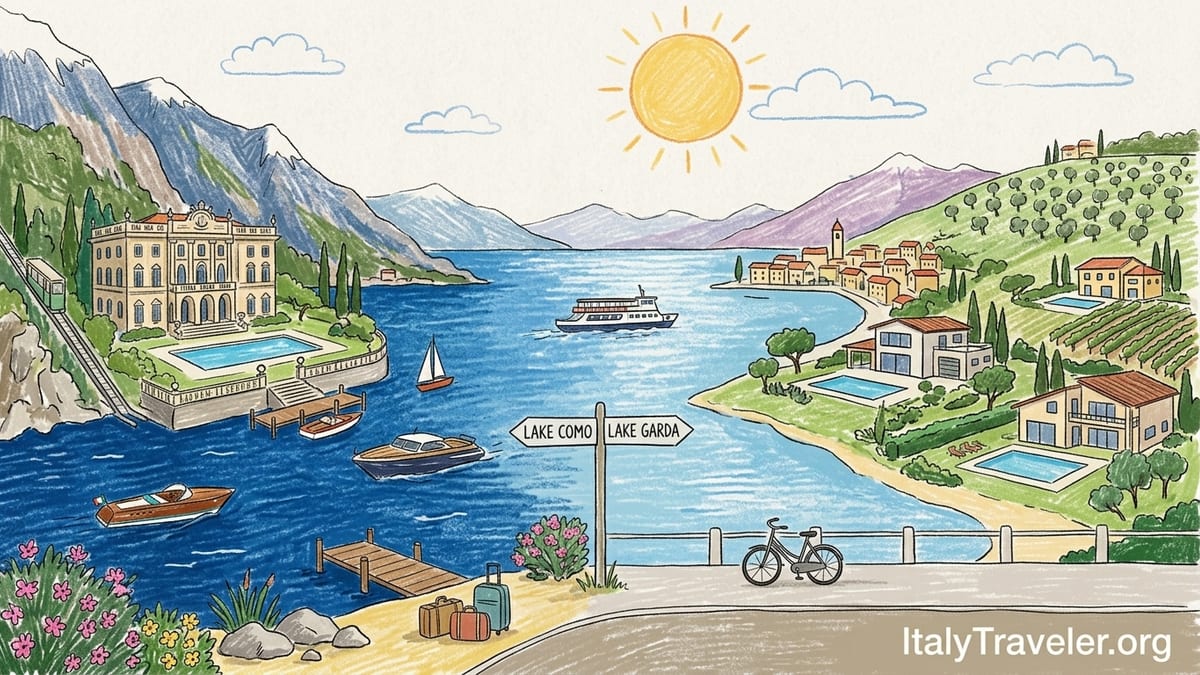
The Italian Lakes have quietly become one of Europe’s most competitive villa markets, with everything from glass‑fronted design homes above Bellagio to relaxed family compounds on Lake Garda and old‑world waterfront estates on Lake Maggiore. With dozens of villas in individual towns like Como, Menaggio, Bellagio and Cernobbio alone, choosing the right stay now matters as much as choosing the right lake. This guide explains how the main lakes differ, when a villa beats multiple hotel rooms on value, and what to look for in pools, lake access, views, amenities and logistics.
How the Italian Lakes Villa Scene Really Works
Across Lakes Como, Garda, Maggiore, Iseo and Orta, villa rentals have moved from a niche product to a mainstream way to experience the region. On Lake Como alone, current booking platforms list hundreds of villas, from compact two‑bedroom houses in Colico or Nesso to grand eight‑bedroom waterfront estates near Como and Cernobbio, many with private pools, boat docks and staff. Towns such as Menaggio and Bellagio show dozens of villas within their limits in peak season, giving travelers far more choice than just traditional hotels.
Lake Garda, by contrast, has a broader spread of mid‑range family and group villas. Around Bardolino, Desenzano, Sirmione and Malcesine, you will find plenty of three to five‑bedroom homes with pools and gardens that share space with vineyards and olive groves rather than sheer mountain cliffs. Inventory feels less ultra‑luxury than Como but more attainable for multi‑generation trips, with many properties built or renovated specifically as holiday homes for German, Austrian and northern Italian families.
Lake Maggiore sits somewhere in between. Stresa, Baveno and the western shore host historic villas and low‑rise homes, many overlooking the Borromean Islands. Some are grand turn‑of‑the‑century residences now rented in whole or in part to private groups, while newer hillside villas above Stresa or Baveno have been designed as quiet retreats with pools and panoramic terraces. Lakes Iseo and Orta are smaller and more intimate, with limited but growing villa inventory that appeals to travelers looking for slower rhythms and fewer crowds.
The result is a tiered market: Como is home to the highest concentration of premium villas, Garda serves as the workhorse for family and activity‑focused trips, Maggiore offers quieter waterfront properties, and Iseo and Orta provide a retreat feel with fewer, often characterful, homes.
Lake Como: Premium Villas, Iconic Views and High Touch Service
Lake Como’s villa market is defined by drama: sheer mountains, deep blue water and architecture that ranges from glass and steel to 19th‑century grandeur. High‑end properties cluster along the central lake triangle of Bellagio, Menaggio and Varenna, and around Cernobbio and the city of Como. Examples include large villas near Como with eight bedrooms, private heated indoor pools, direct lake access by private dock and funiculars down to the water, geared toward groups of 12 to 16 guests and wedding parties, often with concierge and boat services built in.
In Menaggio, villas such as modern four‑bedroom houses with private pools and panoramic terraces show how the market has matured. A contemporary villa for up to eight guests with an infinity pool, air conditioning throughout, private parking for two cars and a fully equipped kitchen is now a standard configuration at the upper mid‑range. A hillside villa above Bellagio might add a heated outdoor pool, full air conditioning and a dedicated cinema room, while still being a 10‑minute drive from the waterfront and ferry piers. These properties cater to affluent families and small groups who want hotel‑level comfort but prefer privacy and space.
Nightly rates on Lake Como are correspondingly high. For a four‑bedroom villa with pool and lake views in July or August, expect typical starting prices in the region of several hundred euros per night, rising to well over one thousand euros per night for prime waterfront with private docks, indoor pools and staff on call. That level still often compares favorably to booking four separate lakefront hotel rooms in the same area, which in upper‑tier properties can easily approach several hundred euros per room, per night in peak season, especially around Bellagio and Cernobbio.
Como’s premium market also draws wedding and event groups. It is common for couples to rent an entire villa estate for three nights, hosting 20 to 30 guests on site and using terraces or lawns for the ceremony and dinner, with additional guests staying in nearby hotels in Como, Cernobbio or Menaggio. Planners value the privacy and flexibility: caterers can work in a full‑size kitchen, musicians can set up near the pool until local quiet hours, and boats can pick guests up directly from the villa dock where permitted.
Lake Garda: Space, Families and Active Groups
Lake Garda offers the broadest inventory of family and group villas in the Italian Lakes. Around Bardolino, Desenzano and Peschiera in the south, many villas are modern or recently renovated, with three or four bedrooms, private pools, fenced gardens and easy walking access to lakeside promenades. A property in Bardolino, for instance, might sit a short stroll from the town center and lakefront yet provide a private pool, landscaped garden and contemporary interiors aimed squarely at summer holidaymakers.
Further up the eastern and western shores, around Malcesine, Torri del Benaco, Salò and Gardone Riviera, villas range from old stone houses with shared piers to grand 18th‑century residences turned into private rentals, often with pools set just above the lakefront promenade. In Malcesine you may find a historic villa right on the water with a walled garden and private pool looking onto the lake, appealing to extended families who want to alternate between the pool, lakeside walks and cable car rides up Monte Baldo.
Garda’s pricing spectrum is wide but generally more approachable than Como for similar bedroom counts, especially outside the most famous peninsulas. A three‑bedroom villa with a pool near Bardolino or Desenzano can sometimes be found at nightly rates comparable to two or three mid‑range hotel rooms, which becomes attractive for families with teenagers who need separate bedrooms. Self‑catering kitchens, garages for rental cars and laundry facilities all tilt the value equation further in favor of villas for stays of a week or more.
Lake Garda also suits active groups. Many villas lie within short drives of theme parks, bike trails and windsurfing centers, particularly around the northern towns. Having a base with equipment storage, a large terrace for group dinners, and a pool for cooling off after hiking or cycling makes Garda especially appealing for multi‑family trips, sports clubs and small wedding parties who want a more casual, outdoor‑focused celebration.
Lake Maggiore, Iseo and Orta: Quieter Villa Bases
Lake Maggiore’s villa market is less publicized than Como’s but holds strong appeal for travelers who prioritize scenery and calm over celebrity cachet. Around Stresa and Baveno on the western shore, several historic villas have been repurposed as private rentals, their gardens opening toward the Borromean Islands. A lakeside villa in Baveno, for example, might combine late‑19th‑century architecture with a private park, swimming pool and boat dock across the small lakeside road, serving up old‑world atmosphere that suits multi‑generation trips and intimate wedding parties.
On the hillsides above Stresa and Baveno, a newer generation of villas offers a different experience: four or five‑bedroom houses with contemporary interiors, floor‑to‑ceiling windows, pools set into terraced gardens and long views across the water to Isola Bella and Isola Madre. Guests typically reach the lakeside by a short drive or a 10 to 15‑minute downhill walk, trading immediate waterfront access for quiet, space and better parking options. These hillside villas appeal to families and groups who want to use Maggiore as a base for exploring neighboring Lake Orta, the Mottarone cable car area and even day trips into Switzerland.
Lakes Iseo and Orta offer far fewer villas overall, but what inventory exists tends to be characterful. On Lake Orta, for instance, you might find an old stone house above Orta San Giulio converted into a three‑bedroom rental with a small plunge pool and terrace facing the island, while Lake Iseo offers several modern waterfront homes with private piers between Sulzano and Sarnico. Prices can be slightly lower than their Como equivalents, though prime waterfront with private pools is still a premium product that books early in summer.
All three of these lakes reward travelers who are comfortable trading some convenience for atmosphere. You may drive slightly longer distances for restaurants or supermarkets, but in return you get quieter promenades, less boat traffic, and the feeling of being among weekend homes of Italian families rather than in a pure resort economy.
Key Features to Compare: Pools, Lake Access, Views and Comfort
When comparing villas, start with pools. On Lake Como, most premium villas above a certain price point offer private pools, often heated and sometimes indoors, as seen in larger estates near Como and Bellagio. Standard family villas on Garda and Maggiore often have outdoor pools that may or may not be heated; on shoulder‑season trips in May or late September, the lack of heating can be the difference between a decorative feature and a daily swim. Travelers should check pool dimensions, depth, and whether there is fencing or shallow steps if young children are in the group.
Lake access varies enormously. Some Como and Maggiore villas sit directly on the water with private docks or small swimming platforms, ideal for boat pick‑ups and morning dips, but they may also be separated from the main house by a narrow lakeside road. Hillside villas, more common above Menaggio, Bellagio, Stresa and Baveno, trade direct lake access for elevated views and quieter settings. On Garda, villas are more often set slightly back from the shore, with access via local beaches or promenade paths rather than private docks, which suits families who want a mix of pool time and public swimming areas.
Views are almost a given on the Italian Lakes but not all views are equal. A villa above Bellagio that looks into all three branches of Lake Como provides a notably different experience from a ground‑level house set behind another building. On Garda and Maggiore, hillside properties usually offer wider panoramas, while waterfront homes provide a more intimate connection with passing ferries and evening lights. In peak season it is worth paying for verified photography and recent guest reviews to confirm that promised lake views are not partially blocked by trees or neighboring buildings.
Comfort features can make or break a stay, particularly in summer. Full or partial air conditioning is becoming more common, but many historic villas still rely on thick stone walls and fans. On Lake Como and Garda in July and August, travelers who run warm may want to prioritize villas that specify air conditioning in all bedrooms. Likewise, secure parking can be crucial in cliff‑hugging towns where street parking is scarce. Modern villas near Bellagio or Bardolino typically include private garages for two or three cars, which makes unpacking and grocery runs far easier for families and groups.
Practicalities: Kitchens, Cleaning, Access Roads and Boat Docks
Self‑catering is a core part of the villa appeal. Most modern villas across the lakes feature fully equipped kitchens with dishwashers, large refrigerators and induction or gas hobs. In practice, equipment levels still vary: a high‑end villa near Como or Bellagio is likely to offer espresso machines, wine fridges and a choice of indoor and outdoor dining spaces, whereas a mid‑range Garda villa may have simpler but functional equipment. Travelers planning chef‑hosted dinners or wedding catering should confirm oven capacity, work surfaces and separate staff access if needed.
Cleaning and additional charges are another area to examine closely. Many villa listings quote a base price but add end‑of‑stay cleaning fees, linen charges or local tourist taxes per person, per night. On Lake Como’s premium properties, mid‑week cleaning is often included, and some estates require a security deposit that can reach a significant sum for event bookings. Garda and Maggiore villas may offer more flexible arrangements but still commonly require a final cleaning fee. For stays of a week or longer, these extras can add up to the equivalent of another night’s stay if not planned for.
Access roads are a real‑world consideration that photos rarely show. In older lakeside villages, especially on Como and parts of Garda, villas might be reached via steep, narrow lanes that challenge large rental cars. Hillside properties above Menaggio, Bellagio, Stresa or Baveno often have tight switchbacks. Guests who are uncomfortable driving in such conditions might prefer villas closer to town centers or properties with private drivers or transfer services included. When in doubt, look for mentions of “steep access,” “narrow road” or “not suitable for large vehicles” in listing descriptions and reviews.
Boat docks and moorings can transform the experience for groups who plan to spend a lot of time on the water. Premium villas on Como and Maggiore sometimes include private piers where small rental boats can tie up, allowing guests to explore independently or meet water taxis at their doorstep. In other cases, villas are a few minutes’ drive from public marinas in towns like Menaggio, Bellagio, Como, Stresa or Baveno, where boat rentals and scheduled ferries operate. On Garda and the smaller lakes, private docks are less common, but nearby marinas often provide easy access to boat tours and water sports.
When a Villa Beats Hotel Rooms on Value
The tipping point at which a villa becomes better value than multiple hotel rooms depends on group size, season and expectations. As a rough guideline, once you reach six to eight adults traveling together or a multi‑generation family needing three or more bedrooms, villas often start to compete strongly on total cost, especially for stays of a week or longer. On Lake Como, for example, four lakefront hotel rooms in July can easily reach a combined nightly rate comparable to a four‑bedroom villa with pool set slightly back from the water, yet the villa includes a kitchen, laundry and private outdoor space.
On Lake Garda, the value equation can be even more favorable. A three‑bedroom villa with pool near a town like Bardolino or Desenzano may cost only a little more per night than two spacious hotel rooms, yet provides a separate bedroom for teenagers, a living room for evening board games, and a terrace for home‑cooked dinners. For groups who would otherwise pay for restaurant meals three times a day, the ability to cook breakfast and some dinners in a full kitchen typically reduces overall trip costs.
Maggiore, Iseo and Orta come into their own for travelers prioritizing space and atmosphere rather than full‑service luxury. A hillside villa above Stresa with four bedrooms and a pool may be priced similarly to three mid‑range hotel rooms in town, but offers panoramic terraces, secure parking, and a quieter residential setting. For long stays of ten days or more, this space and autonomy often outweigh the convenience of hotel housekeeping and on‑site bars.
The non‑financial value of villas also matters. Families with young children can let them nap in upstairs bedrooms while adults relax by the pool, something far harder to manage in separate hotel rooms. Wedding groups benefit from having key family members and friends under one roof, simplifying logistics around rehearsals and photo sessions. Corporate retreats and special‑interest groups appreciate the ability to schedule private yoga sessions on the terrace or cooking classes in the villa kitchen, activities that would require separate venue rentals if everyone stayed in hotels.
Matching Lakes and Villas to Different Traveler Types
Families with children tend to gravitate toward Lake Garda and the quieter stretches of Como and Maggiore. On Garda, the combination of fenced gardens, private pools, walkable promenades and nearby theme parks or bike paths is hard to beat. A typical family booking might involve a four‑bedroom villa near Bardolino with a pool, air‑conditioned bedrooms and parking, used as a base for day trips to Verona, amusement parks and leisurely boat rides. On Como, families often favor slightly off‑center towns like Colico, Lenno or San Siro where villa prices and crowds are less intense than in Bellagio.
Groups of friends, especially those interested in food and nightlife, often choose Lake Como or the busier Garda towns. A group of eight friends might rent a design villa near Bellagio or Menaggio, using the private pool and outdoor kitchen during the day, then heading into town by taxi or car for aperitivo hours and late dinners. Garda offers similar possibilities, with Desenzano and Sirmione providing livelier evening scenes alongside villa neighborhoods just outside the centers.
Weddings and milestone celebrations are where Como’s premium villas, and to a lesser extent Maggiore’s grand estates, come into their own. Couples might book a lakefront property near Como or Cernobbio with eight bedrooms and extensive gardens, hosting the ceremony on a lawn overlooking the water and the reception under a stretch tent by the pool. On Maggiore, a villa near Stresa with views of the Borromean Islands provides a more understated but equally photogenic backdrop. In both cases, planners need to confirm local noise regulations, maximum guest numbers and whether nearby neighbors are comfortable with events.
Luxury travelers who prioritize privacy, concierge services and design often split their time between different lakes or combine a villa stay with a few nights in a five‑star hotel. A common pattern is three or four nights in a luxury hotel in Como or Stresa, followed by a week in a high‑end villa with staff elsewhere on the lake, or on another lake entirely. This mix allows guests to enjoy both full hotel service and the seclusion of a private home, using water taxis or private drivers to move between properties.
The Takeaway
Choosing the right villa in the Italian Lakes starts with choosing the right lake. Lake Como offers the largest concentration of premium villas, dramatic scenery and high‑touch service, suited to luxury travelers, weddings and design‑minded groups. Lake Garda provides a broader mix of mid‑range and upscale villas that work brilliantly for families and activity‑oriented groups who need space and easier logistics. Lake Maggiore, along with the smaller Iseo and Orta, rewards travelers who value quieter waterfronts, old‑world architecture and more local, residential atmospheres.
Across all lakes, pay close attention to the practical details that rarely fit into a single listing headline: pool heating, air conditioning, parking, the steepness of access roads, the reality of lake views, and any extra cleaning or local tax charges. For many families and groups, a villa becomes better value than multiple hotel rooms once you reach three or more bedrooms, especially for week‑long stays that make full use of kitchens and outdoor space. With inventory growing each year in hotspots like Como, Menaggio, Bellagio and Cernobbio, travelers who do their homework can now find a villa that matches both their travel style and their budget, turning the Italian Lakes from a once‑in‑a‑lifetime trip into a place to return to again and again.
FAQ
Q1. When is the best time of year to rent a villa on the Italian Lakes?
The most popular months are June to September, when pools are warm and ferry schedules are frequent. May and early October can offer lower prices and fewer crowds, but outdoor pools may be cool and some seasonal businesses reduce hours. Winter brings quiet towns and lower rates but limited lake activities and occasional villa closures.
Q2. How far in advance should I book a villa for Lake Como or Garda?
For peak summer weeks on Lake Como or in sought‑after Garda towns, booking 9 to 12 months in advance is sensible, especially for larger villas or weddings. Shoulder‑season stays and smaller houses often remain available closer to arrival, but prime waterfront properties and homes with private docks or large pools tend to sell out first.
Q3. Do I need a car for a villa stay on the Italian Lakes?
Having a car is highly useful for most villas, particularly hillside properties above Bellagio, Menaggio, Stresa or Baveno and houses set back from Lake Garda’s main promenades. If you choose a villa within walking distance of a town center and ferry pier, you may manage with trains, buses and boats, but a car still makes grocery runs, airport transfers and day trips much easier.
Q4. How important is air conditioning in summer?
In July and August, air conditioning in bedrooms is highly desirable on all the major lakes, especially in modern villas with large glass areas. Some historic houses rely on thick walls and fans, which can be comfortable for travelers used to warmer nights but may feel hot to others. Always check whether air conditioning covers all bedrooms or just selected rooms before booking.
Q5. Are private pools usually heated?
Pool heating varies by property and lake. Many high‑end villas on Lake Como offer heated indoor or outdoor pools, while mid‑range villas on Garda and Maggiore more often have unheated outdoor pools. In high summer the difference may be minor, but in May, June and late September a heated pool can significantly extend swimming time, especially for children.
Q6. What extra fees should I expect beyond the nightly rate?
Common extras include final cleaning fees, local tourist taxes charged per person per night, and security deposits. Some villas add charges for heating, pool heating or additional mid‑stay cleanings. Event bookings, such as weddings, may require separate event fees and higher deposits. Reading the rental contract carefully and asking for a summary of extras before confirming is essential.
Q7. How do villas compare to hotels for weddings?
Villas offer privacy, flexibility and the ability to host key guests under one roof, making logistics easier for ceremonies, dinners and photos. Hotels provide professional event teams, on‑site catering and backup indoor spaces. Many couples choose a villa for a smaller, multi‑day celebration and use nearby hotels for overflow guest accommodation, combining both advantages.
Q8. Is it easy to arrange boat trips from a villa?
On Lakes Como, Garda and Maggiore, it is generally straightforward to arrange private boat tours, especially from towns such as Como, Bellagio, Menaggio, Desenzano, Sirmione, Stresa and Baveno. Villas with private docks allow boats to collect guests directly, while others rely on short transfers to public marinas or ferry piers. Most local skippers are accustomed to picking up groups for half‑day or full‑day excursions.
Q9. What should families with young children look for in a villa?
Families with small children should prioritize fenced or alarmed pools, shallow pool steps, minimal drops or unfenced terraces, and bedrooms on the same level as parents where possible. Proximity to playgrounds, easy lake access and supermarkets makes day‑to‑day life smoother. Checking whether the villa can provide cots, high chairs and stair gates can also save on equipment rental.
Q10. How can I tell if a villa’s steep access roads will be a problem?
Look closely at listing descriptions, map locations and guest reviews for mentions of narrow lanes, tight turns or steep driveways. Street‑view images and satellite maps can give a sense of the terrain. If you are uncomfortable driving in such conditions, choose villas closer to main roads or town centers and consider arranging private transfers rather than relying on a large rental car.