


The Italian Lakes are not one single destination but five very different moods of northern Italy. Lake Como is the poster-child for honeymoon photos, Lake Garda is where Italian families decamp for weeks, Lake Maggiore offers romantic old-world villas without Como’s price tag, while lakes Iseo and Orta stay relatively under the radar. Choosing where to base yourself is the most important commercial decision of your trip: it will shape your budget, how easily you get around, and whether your evenings are spent strolling busy promenades or listening to church bells in near silence.
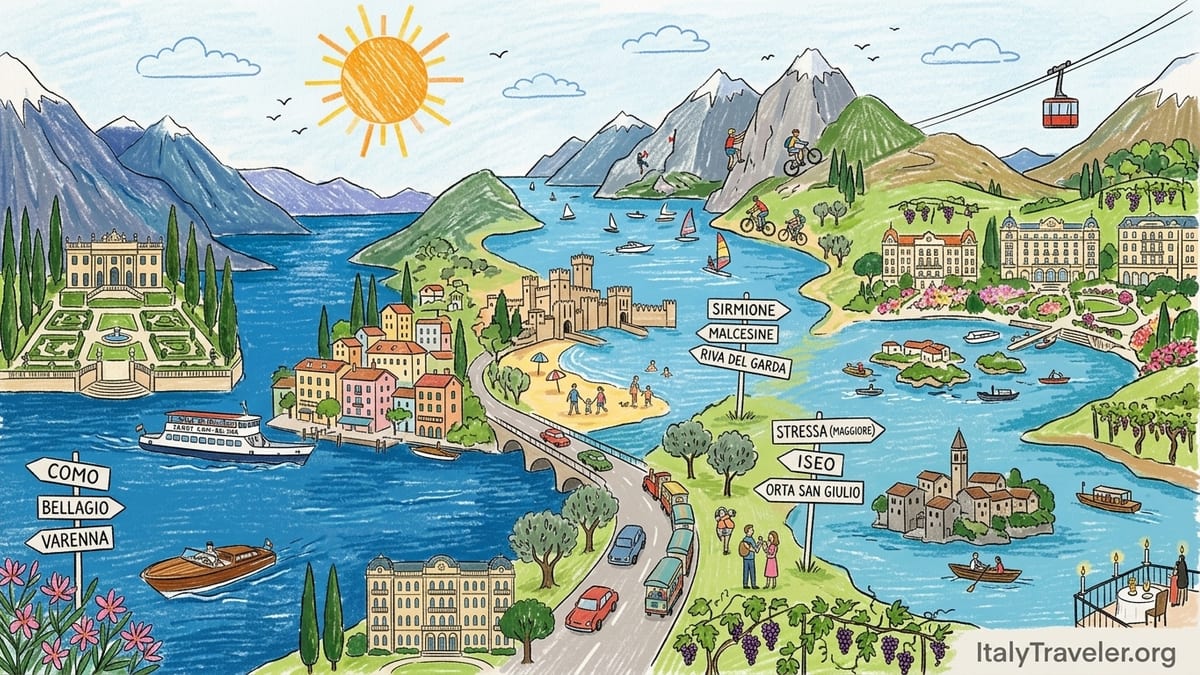
How the Italian Lakes Compare: Como, Garda, Maggiore, Iseo and Orta
Think of the Italian Lakes as a spectrum rather than a single experience. At one end, Lake Como is about iconic scenery, grand hotels and romance. On a summer weekend you might pay well over 400 euros per night for a lake-view room at a five-star property in Bellagio, and 200 to 300 euros for a mid-range waterfront hotel in Varenna or Como town. In return you get dramatic mountains plunging straight into the water, historic villas with formal gardens and a constant procession of ferries linking pretty stone villages.
Lake Garda is Italy’s holiday workhorse. Its southern towns, especially Sirmione and Desenzano, suit families and longer stays, with plenty of self-catering apartments starting from around 130 to 180 euros per night in high season, plus long beaches, promenades and a big choice of casual restaurants and gelato bars. The northern end, around Malcesine and Riva del Garda, is windier, wilder and more active, with sailing schools, climbing and cycling.
Lake Maggiore sits between the two in feel. Its star town, Stresa, has elegant belle époque hotels and lush gardens facing the Borromean Islands, yet prices are often a step below Como. Outside peak August, it is common to find solid three-star hotels in Stresa from roughly 120 to 180 euros per night and four-star lakefront options in the 220 to 300 euro range, especially if you book a few months ahead. The vibe is refined but not showy, appealing to couples and travelers who value gardens and easy day trips.
Lake Iseo and Lake Orta are where you go when you want to downshift. Iseo town and its neighbors attract Italian weekenders looking for good food and quieter water, with room rates that can sit 20 to 30 percent lower than equivalent properties on Como or Garda. On tiny, intensely atmospheric Lake Orta, Orta San Giulio is the main base and feels tailor-made for a two- or three-night romantic break: narrow lanes, candlelit restaurants and views to Isola San Giulio, but very limited nightlife.
Lake Como: Where to Stay in Varenna, Bellagio or Como Town
Lake Como is the obvious choice if you are dreaming of classic lake scenery, historic villas and a slightly glamorous atmosphere. Practically, this lake also works well if you want to avoid renting a car. Frequent Trenord regional trains run from Milano Centrale to Varenna-Esino in about one hour, usually for under 10 euros one way in second class, and from Milan to Como in as little as 40 minutes depending on the station and service. From these hubs, ferries knit the central lake together, so you can stay in one town and still visit the others comfortably.
Varenna is one of the smartest bases for travelers combining romance with convenience. It is the only one of the three main bases with its own train station, so you can step off the train and be walking to your hotel in 10 to 15 minutes. Varenna’s town beach is small but scenic, and there is a paved lakeside promenade with cafes and restaurants that feels lively without being rowdy. Accommodation skews boutique: expect characterful two- or three-star hotels and guesthouses from around 170 to 230 euros in high season for lake-view rooms, and apartments that suit longer stays at similar nightly rates if booked early.
Bellagio sits at the fork where the two southern arms of Lake Como meet and is the most famous resort on the lake. It is all about views and atmosphere: pastel buildings, steep cobbled stairways, craft shops and prime positions to watch sunset over the water. There is no train station, so you reach it by ferry, fast hydrofoil or bus from Varenna or Como. For this reason, once you are in Bellagio you often stay put during the evenings, dining in one of its many restaurants or having aperitivo on a terrace. Prices reflect the name recognition: simple three-star rooms can be over 250 euros in summer, while lakefront luxury properties can easily push above 500 euros per night.
Como town works well for travelers who want a city-like base with shops, more nightlife and the widest transport connections. You can arrive directly by train from both Milano Centrale and Milano Cadorna, walk to your hotel in the flat downtown area, and take fast or slow boats up the lake for day trips to Bellagio and Varenna. Hotel prices are more varied here: business-style hotels a few streets back from the waterfront can come in under 200 euros, while historic grand hotels near the promenade cost more. Como has the best nightlife on the lake, with cocktail bars, late-opening cafes and restaurants that stay busy until around midnight in summer.
Lake Garda: Sirmione, Desenzano, Malcesine and Riva del Garda
Lake Garda is the most versatile of the Italian Lakes, ideal for families, longer holidays and mixed-interest groups. Its scale matters: the lake is long and the car-free ferry rides from the south to the far north can take several hours. The southern shore around Desenzano and Sirmione is the most practical without a car, because it links directly to the Milan–Venice rail line. Desenzano del Garda/Sirmione train station sits a short bus or taxi ride from both towns, with regional trains from Milan usually taking around one hour and often costing under 15 euros.
Sirmione occupies a narrow peninsula that pushes into the lake. It is known for its medieval castle, thermal baths and a compact historic center laced with gelato stands and trattorie. The setting is romantic, but during school holidays the lanes are packed with day trippers. Hotel stock tilts toward mid- to upmarket, with lakefront spa hotels typically starting around 220 to 280 euros in summer. Families often base in apartments just outside the old town gates, trading the postcard view for parking and a bit more space, then walking or taking a little tourist train into the center.
Desenzano has a more everyday Italian feel, with a busy waterfront, longer pebble beaches and a working town behind the tourist strip. It is a smarter choice if you are staying a week and want regular supermarkets, weekly markets and casual pizzerias at non-resort prices. Here you can still find decent three-star hotels or serviced apartments in the 150 to 220 euro range in high season, especially a few minutes’ walk back from the lakefront. Ferries connect Desenzano northwards, and buses fan out to other south-shore and eastern towns.
Further north, Malcesine and Riva del Garda shift the energy toward sport and scenery. Malcesine has a medieval core at the foot of Monte Baldo and a cable car that lifts you high above the lake. Riva at the very top is windy, popular with sailors and windsurfers, and has more of a youthful, outdoorsy energy. Reaching these northern towns from Milan typically involves train to Verona or Brescia, then bus, or a long combination of train plus ferry. That makes them fantastic for longer holidays or road trips, but less ideal as bases if you want effortless train and ferry access for day trips up and down the lake.
Lake Maggiore: Stresa for Gardens and Better-Value Elegance
Lake Maggiore quietly delivers much of the romance of Lake Como at a lower price point, particularly in Stresa on the western shore. Stresa sits about an hour by regional train from Milan’s Centrale station, and around 45 kilometers from Milan Malpensa Airport by road. The town faces the Borromean Islands, home to lavish palaces and botanic gardens that make day trips feel like stepping into a painting, with frequent ferries and small private boats hopping across the short stretch of water.
Stresa’s hotel stock reflects its 19th-century heyday: long lakefront promenades fronted by grand hotels with ornate facades and landscaped gardens. Yet when you search major booking platforms outside the peak weeks in August, you will often find solid three-star hotels from about 120 to 180 euros and four-star lakefront properties from roughly 220 to 280 euros. That pricing, combined with the easy train access, is a key reason Maggiore appeals to travelers who want an elegant setting but are watching their budget more closely than on Como.
Beyond hotels, one of Maggiore’s strengths is its gardens. The islands of Isola Bella and Isola Madre feature formal terraced gardens and historic villas, while nearby Villa Taranto on the other side of the lake is renowned for its botanical collections. Because ferries are relatively short and frequent, you can comfortably base in Stresa without a car and spend several days exploring by boat. Evenings tend to be quieter than Como town or Desenzano, with a handful of wine bars and hotel lounges rather than a dense nightlife strip.
For those combining lakes with a wider northern Italy trip, Maggiore also makes logistical sense. You can arrive at Malpensa Airport in the morning, take a shuttle or train-and-bus combination to Stresa, and be checking into your hotel by lunchtime. The next day you could cruise the islands, then move on by train to Turin or back to Milan. Car rental is useful if you want to explore smaller lakeside villages and viewpoints, but not essential if your priority is gardens, island visits and a relaxed lakefront stay.
Lake Iseo: Quieter Shores and Easy Access Without a Car
Lake Iseo lies between Bergamo and Brescia and often flies under the radar compared with Como and Garda. That relative anonymity keeps prices lower and crowds lighter, especially midweek. The main towns on the southern and eastern shores, including Iseo itself, are linked to Brescia by regional trains and buses, which in turn connect to Milan, typically with overall journey times of about 90 minutes from Milan central stations. Local tourism boards actively promote arriving by public transport, emphasizing the lake’s network of trains, buses and ferries.
Iseo town has a compact historic center with a lakeside promenade, small harbor and a clutch of hotels and restaurants. It feels more like a lived-in Italian town that happens to be on a lake, rather than a resort that exists solely for visitors. Room rates for three-star hotels near the center can sit in the 130 to 190 euro range in high season, with good-value guesthouses and agriturismi a short bus or taxi ride away in the hills. Many travelers choose Iseo when they want to combine lake swimming, vineyard visits in the nearby Franciacorta wine region and low-key evenings.
A major draw of Lake Iseo is Monte Isola, the large island rising sharply from the lake’s center. Regular ferries connect the mainland towns to the island’s car-free villages, making for easy day trips without needing to drive. Walking paths, simple lakefront trattorie and small pebble beaches give days here a very different rhythm from stylish Como or busy Garda. In high summer there are events and festivals, but on most evenings you may find only a few bars and cafes open late, so nightlife seekers are better served on Como, Garda or in a nearby city like Bergamo.
Accessibility also makes Iseo a strong choice for those wary of lake driving. Parking in the smaller lakeside towns can be tight, and winding lake roads require confidence behind the wheel. By contrast, Iseo’s combination of regional trains, scheduled buses and ferries allows you to plan a mostly car-free stay, accepting slightly slower travel times in exchange for lower stress and lower costs.
Lake Orta: Orta San Giulio for Intimate Short Breaks
Lake Orta is northern Italy in miniature: small, quiet and intensely atmospheric. West of Lake Maggiore, it is compact enough that most travelers base in one town, Orta San Giulio, for the duration of their stay. This stone-built village sits on a peninsula, with the island of San Giulio a short ferry ride away. The entire setting feels intimate, which is precisely why many couples choose Orta for two- or three-night escapes rather than a full week.
Reaching Orta by public transport typically involves a train from Milan to Novara, then a regional train on the Novara–Domodossola line to Orta-Miasino station, followed by a 20-minute downhill walk or short taxi ride into town. The lake itself is small enough that a simple ferry network can link Orta with villages like Pella or Omegna, and many visitors hardly leave Orta at all during their stay. Streets are mostly pedestrian, and the lakeside piazza is the evening focus, with a handful of wine bars and restaurants setting outdoor tables right by the water.
Accommodation runs from simple family-run hotels and guesthouses to high-end boutique properties. At the top end, a historic villa-turned-hotel on the hillside may charge several hundred euros per night for a lake-view suite with fine dining, while more modest two- and three-star hotels in the center typically range from around 160 to 230 euros in high season. Because inventory is limited and wedding parties sometimes book out whole properties, it pays to reserve early for spring and autumn weekends.
Orta’s strengths are its quiet evenings, walkability and romantic tone. There are no beach clubs with DJs or late-night bar crawls. Instead, a typical night might involve an aperitivo on the piazza, dinner in a vaulted stone dining room and a stroll along the shore listening to the sounds from the island monastery across the water. For travelers who want to add a deeply peaceful interlude to a larger Italy itinerary, Orta is hard to beat.
Transport, Ferries, Beaches and Nightlife: Choosing the Right Base
When choosing your base, it helps to be honest about how you will actually spend your days. If you want to string together several lake towns without driving, Lake Como and Lake Garda’s south shore are the most practical. From Milan you can be in Varenna or Como in roughly an hour by direct train, then use frequent ferries to reach Bellagio and other mid-lake towns. On Lake Garda, trains to Desenzano or Peschiera put you within easy reach of Sirmione and a network of buses and ferries. Expect to pay around 5 to 15 euros for most point-to-point ferry rides on Como and Garda, depending on distance and whether you choose regular or faster services.
Beaches differ noticeably by lake. Garda has the edge for classic holiday swimming, with long pebble and shingle stretches around Desenzano, Sirmione and the northern shore. You will find public sections as well as paid beach clubs renting sun loungers and umbrellas for a daily fee. Como’s shoreline is steeper and more built up, so swimming is more about small lidos, hotel pools and limited public beaches in certain villages. Maggiore, Iseo and Orta offer a mix of small pebble or grass beaches and lakefront lawns, often less crowded but also less equipped, which suits travelers who prefer quiet dips over full-service beach days.
Nightlife and dining also sway the decision. Como town and Desenzano have the liveliest scenes, with aperitivo bars, late-opening cafes and a good choice of restaurants open year-round. Bellagio and Sirmione are more seasonal: in June to September you can dine late on busy terraces, but outside the main months things quieten quickly. Stresa, Iseo and Orta lean toward slow evenings: a few bars, some hotel lounges, then bed. If you imagine yourself out past midnight most nights, a base in Como, Desenzano or a nearby city might be wiser.
Car dependence is another major factor. Travelers comfortable driving narrow lakeside roads will find a wider choice of rentals, agriturismi and hilltop villages with incredible views on all the lakes. Without a car, however, your life is simpler if you base in towns directly on railway lines and main ferry routes: Varenna or Como on Lake Como; Desenzano or Peschiera on Lake Garda; Stresa on Lake Maggiore; Iseo on Lake Iseo; and Orta San Giulio or Stresa if you want to combine Orta and Maggiore using a mix of trains, taxis and ferries.
The Takeaway
If you are choosing one lake for a shorter trip, match it to your priorities. Pick Lake Como if your dream is quintessential lake-and-mountain scenery, grand villas and a slightly glamorous feel, with Varenna and Bellagio as the best central-lake bases and Como town for more nightlife. Choose Lake Garda if you want beaches, family-friendly amenities and a larger scale, basing in Sirmione or Desenzano for car-free access and Malcesine or Riva del Garda if you are happy to travel further for outdoor activities.
Opt for Lake Maggiore and Stresa if you like the idea of elegant promenades, island gardens and better-value lakeside hotels that are still an easy train ride from Milan and Malpensa Airport. For a quieter, more local-feeling experience with lower prices, Lake Iseo delivers, particularly if you enjoy simple lakeside towns and car-free island walks. Finally, reserve Lake Orta for when you want intimacy above all else: Orta San Giulio is tiny, atmospheric and perfectly suited to a romantic long weekend or a restful pause during a longer Italy journey.
Whichever lake you choose, check train and ferry timetables for your exact travel dates, look carefully at how far your hotel sits from the dock or station and budget realistically for high-season rates. With that groundwork done, the Italian Lakes repay your planning with exactly what you came for, whether that is sunset cocktails in Bellagio, a family swim off a Garda pebble beach or a quiet glass of wine on a terrace in Orta as the bells ring across the water.
FAQ
Q1. Which Italian lake is best for a first-time visitor without a car?
Lake Como or Lake Garda’s south shore work best. Base in Varenna or Como on Lake Como, or Desenzano or Peschiera on Garda, all directly served by trains from Milan and linked to other towns by frequent ferries.
Q2. Is Lake Como really more expensive than the other lakes?
In high season, Lake Como’s famous towns such as Bellagio and central Varenna often charge noticeably more for lake-view rooms than equivalent properties on Maggiore, Iseo or Orta. With flexibility on location, you can still find mid-range options, but Como is generally the priciest of the five.
Q3. Where should families stay on the Italian Lakes?
Lake Garda is usually the best choice for families, thanks to its longer beaches, many apartments and campsites, and easy rail access. Sirmione and Desenzano are particularly good bases, with promenades, playgrounds and plenty of casual dining.
Q4. Which lake is the quietest for a romantic short break?
Lake Orta is the most intimate, with Orta San Giulio offering narrow lanes, limited traffic and soft evening atmosphere. Lake Iseo is another good choice if you prefer a low-key setting without big crowds or nightlife.
Q5. Do I need to rent a car to enjoy the Italian Lakes?
No. If you choose bases on train lines and ferry hubs, such as Varenna, Como, Desenzano, Stresa, Iseo town or Orta San Giulio, you can comfortably explore by public transport. A car becomes more useful if you want to stay in small villages or hilltop agriturismi.
Q6. Which lake has the best beaches for swimming?
Lake Garda has the widest choice of long, accessible pebble and shingle beaches, especially around Desenzano, Sirmione and the northern shore. The other lakes offer smaller beaches, lidos and lakeside lawns rather than continuous strands.
Q7. How far in advance should I book hotels on the Italian Lakes?
For June to September, booking three to six months ahead is sensible, especially in sought-after towns like Bellagio, Sirmione, Stresa, Orta San Giulio and Iseo. Short-notice bargains exist, but choice and lake-view rooms become limited.
Q8. Which base is best for visiting the Italian Lakes on day trips from Milan?
For simple day trips, choose Varenna or Como on Lake Como, and Desenzano or Sirmione on Lake Garda, all reachable from Milan by regional trains in about one hour. Longer journeys to Maggiore, Iseo or Orta are better for overnight stays.
Q9. Is nightlife good on the Italian Lakes?
Nightlife is moderate rather than wild. Como town and Desenzano have the liveliest scenes, with bars and cafes open late in summer. Bellagio and Sirmione are lively in season but quieter off-peak, while Stresa, Iseo and Orta are generally calm in the evenings.
Q10. Which lake offers the best value for money overall?
Lakes Maggiore, Iseo and Orta typically offer better value than Como or the most famous Garda towns, with slightly lower hotel prices and a more local dining scene. Stresa on Maggiore and Iseo town are especially attractive for travelers watching their budget.