


Choosing where to stay in the Italian Lakes is less about star ratings and more about the details: are you directly on the water, or separated by a busy road; can you step onto a ferry in five minutes, or do you need a car for everything; is there parking, shade in the garden, and a pool that actually sees the afternoon sun. The hotel market around Lakes Como, Garda and Maggiore is now mature, with everything from palatial resorts to small family pensions, plus newer openings on quieter Iseo and Orta. This guide walks lake by lake, then style by style, to help you pick the right address for how you travel.
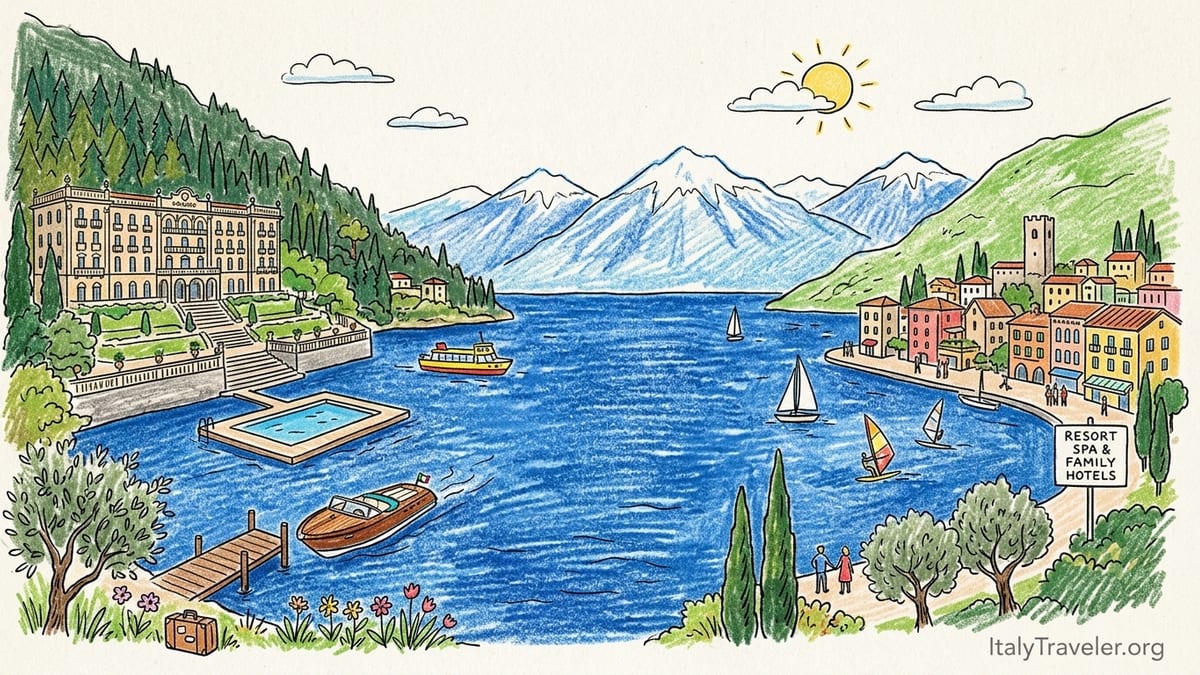
How to Choose the Right Italian Lake and Hotel Style
Each of the major Italian lakes has a distinct personality. Lake Como is the headline act, with a dense concentration of grand hotels and serious boutique design properties in the central basin between Cernobbio and Bellagio. Many of these sit directly on the water with private docks and floating pools, so you can step from breakfast onto a ferry. Prices reflect the fame: in high summer, lake‑view doubles at the top properties often run into four figures per night, while good midrange hotels in towns like Varenna or Menaggio can start around the low hundreds depending on dates and demand.
Lake Garda is broader and more varied, with resort‑style hotels, thermal spa complexes and good family resorts on both the north and south shores. Here you will find larger properties with several pools, kids’ clubs and big car parks, as well as adults‑only spas perched above the water. Garda’s rail and motorway links make it particularly easy to combine with Verona or Venice, and many lakeside towns such as Desenzano and Peschiera have train stations a short walk or taxi ride from the promenade.
Maggiore, Orta and Iseo are quieter but far from undeveloped. Around Stresa and Verbania on Lake Maggiore, historic Belle Époque hotels sit right on the waterfront facing the Borromean Islands, many with mature gardens, pools and easy ferry access. Lake Orta and Lake Iseo have a more intimate, local feel, with smaller boutique and family‑run hotels that still deliver lake views, terraces for aperitivo and, increasingly, modern spa facilities. These can be excellent value compared with Como’s big‑name addresses, especially outside the peak August period.
Across all the lakes, think first about your practical priorities. If you are travelling without a car, staying in a ferry hub such as Como town, Bellagio, Desenzano or Stresa makes everything easier. If you plan day trips into vineyards or the Alps, choose a hotel with guaranteed parking and straightforward road access. Families with small children may prioritise a shallow outdoor pool and grassy garden over a strict adults‑only spa, while couples might do the opposite. Deciding these trade‑offs before you book will narrow the field quickly.
Lake Como: Statement Lakefront Luxury and Smart Boutique Stays
Lake Como has some of the most famous hotels in Europe, many in genuine lakefront positions with no road between garden and water. At the very top end, Villa d’Este in Cernobbio is a classic example: a Renaissance residence turned luxury hotel set in extensive terraced gardens with a floating pool on the lake and its own private docks for boat transfers. Guests typically arrive by private car or arranged transfer from Milan, then get around by boat and ferry rather than driving. It is not cheap, but if you want the full old‑world resort experience without having to plan much, this kind of property delivers it.
On the mid‑lake stretch around Tremezzina, Grand Hotel Tremezzo offers another textbook Lake Como experience, with its much‑photographed floating pool, direct views to Bellagio and a short walk to the local ferry pier. Staying here or in similar hotels in Tremezzo or Cadenabbia puts you on what many visitors consider the “sweet spot” of the lake: within a 15 to 20 minute ferry ride of Bellagio, Varenna and Villa del Balbianello, and still reachable by car from Milan Malpensa in around an hour depending on traffic. These hotels usually have private gardens stepped down to the water, several restaurants on site and valet parking, so you can forget about your car for a few days if you wish.
Newer arrivals are adding a modern, design‑led layer to the Como scene. Properties like the Mandarin Oriental on the eastern shore at Blevio or more recent international launches in Cadenabbia combine contemporary interiors, serious spa facilities and statement pools with private docks for direct lake access. They tend to feel more like self‑contained resorts, slightly removed from village centres, so you trade a bit of walk‑out nightlife for calm gardens and curated experiences like yoga on the deck or boat‑in lunches. For many travellers, especially on shorter stays, that is a welcome trade‑off.
For good‑value and family‑friendly options on Como, look to towns with train access such as Como itself or Lecco, or mid‑lake villages one step back from the most famous addresses. In Como town, several three and four‑star hotels sit just behind the waterfront road with views over the harbour and the main ferry terminal a few minutes’ walk away. These rarely have extensive grounds, but they work very well if you want a car‑free trip with easy train links to Milan and suburban ferries to other points on the lake. Around Menaggio or Argegno, smaller lakefront hotels and guesthouses may share a narrow promenade or road with the water, but still offer balconies, simple pools and free or paid parking, often at significantly lower rates than the marquee properties.
Lake Garda: Resorts, Thermal Spas and Family Hotels
Lake Garda is Italy’s largest lake and feels more like a chain of small seaside resorts than a single destination. On the southern shore around Sirmione, Desenzano and Peschiera, broad promenades are lined with mid‑size and larger hotels, many directly on the water or separated only by a pedestrian walkway. Here you find a concentration of classic resort hotels with large pools, full‑service restaurants and gardens that slope gently down to the lake, which suits families and couples who like to stay mostly on property. Desenzano and Peschiera both have mainline train stations within a short walk or taxi ride of the lakefront, so they work particularly well for travellers relying on rail.
One of the region’s big draws is its thermal and wellness offering. Around Sirmione and on the western shore between Gardone Riviera and Gargnano, several high‑end hotels combine lake views with full spa complexes: indoor and outdoor pools, saunas, treatment rooms and relaxation decks. Some of these sit a few terraces up from the lake rather than directly at water level, trading immediate access for panoramic views and quiet. Many Garda spa hotels are geared to adults or older teens, but a growing number now offer family hours in the pools or separate kids’ splash areas, so you do not have to give up wellness entirely if you are travelling with children.
The northern end of Lake Garda, particularly around Riva del Garda and Torbole, attracts active travellers who come for sailing, windsurfing, climbing and cycling. Hotels here tend to be slightly more functional in style, with practical features like secure bike storage, early breakfast and partnerships with local activity providers. True lakefront positions are rarer due to the narrow shoreline and main road, but many hotels sit within a short walk of the water and the ferry piers. Parking can be tight in peak season, so booking a hotel with guaranteed on‑site or reserved parking is wise if you are driving.
For value, look a street or two back from the waterfront, especially in popular towns like Bardolino, Garda and Lazise on the eastern shore. Family resorts and apartment‑style hotels a 10 to 15 minute walk from the lake often include pools, playgrounds and parking in their rates, and can cost noticeably less than properties directly on the promenade. With frequent lake ferries and local buses, you can still get around easily without having to stay in the absolute front row.
Lake Maggiore: Belle Époque Grandeur and Quiet Gardens
Lake Maggiore offers an elegant alternative to Como and Garda, with a slightly more relaxed feel and particularly good access from Milan Malpensa airport. The main resort towns of Stresa, Verbania and Baveno sit along the western shore, facing the Borromean Islands. Here you will find historic grand hotels in genuine waterfront positions, often separated from the lake only by a quiet road and promenade. Many of these properties date from the Belle Époque and still feature ornate facades, high ceilings, grand staircases and extensive lakeside gardens.
Staying in Stresa or Verbania puts you within easy reach of regular ferries to the islands and across to other lakeside villages. Several of the larger hotels have their own private docks, which are used both for hotel launches and for small taxi boats that can whisk you to Isola Bella for dinner or to Isola Madre’s gardens. If you prefer not to rent a car, Stresa is especially convenient: its mainline train station sits a short walk from the lakefront, with direct connections to Milan and the airport rail network. That makes it possible to fly into Malpensa, ride the train and be checking into a lakefront hotel in well under two hours if connections align.
There is also a growing selection of smaller boutique hotels around Maggiore, including renovated villas with just a handful of rooms, contemporary interiors and intimate lakeside terraces. These often sit in residential streets slightly back from the main promenade, trading a grand facade for more privacy and tranquility. You might have a short stroll to the ferry pier, but you gain quieter gardens and fewer large tour groups. Many of these boutique options have limited private parking, so if you are driving, reserve a space when you book.
For better value, consider the eastern shore around towns such as Cannero Riviera or smaller villages north of Verbania, where hotels sometimes occupy hillside positions with broad views rather than direct lake access. Reaching the water may mean a short, steep walk, but daily rates can be significantly softer, especially outside high summer and Italian holiday weekends. With regular ferries and buses, you can still explore the length of the lake without having to drive every day.
Lakes Iseo and Orta: Intimate, Boutique and Often Better Value
Compared with Como and Garda, Lakes Iseo and Orta feel almost small‑scale, but they have developed a strong niche of stylish boutique hotels and good family‑run properties. On Lake Iseo, the lakeside town of Iseo itself and villages such as Pilzone and Sulzano have hotels in true waterfront positions, some with decks jutting over the water and small plunge pools or jetties for swimming. Many of these are mid‑size boutique hotels that lean into local materials, contemporary Italian design and slower‑paced hospitality rather than big‑resort theatrics.
The eastern shore of Lake Iseo is within reach of Brescia and the Franciacorta wine region, so several hotels here function as both lakeside escapes and vineyard bases. You might spend the morning on the hotel’s small lakefront terrace and the afternoon touring wineries a 20 to 30 minute drive inland. Parking is generally easier to find than on Como or Garda, and room rates, while not cheap, are often noticeably lower than for properties with similar facilities on the larger lakes, especially outside peak weekends.
Lake Orta, centred on the town of Orta San Giulio, is arguably the most romantic of the Italian lakes, with a medieval core of narrow streets and a picture‑perfect island offshore. Accommodation here is more limited in volume but strong in character. Around the old town and along the lakefront road you will find small boutique hotels, many converted from historic buildings. Some have direct water access or tiny private beaches; others occupy hillside positions with broad terraces and views that take in the island and the distant Alps. Ferries and water taxis run across to the island and along the shore, but this is a place where you can happily explore most of what you want on foot.
Both Iseo and Orta work well for travellers seeking a less crowded, more local atmosphere. If you are travelling with children, look for hotels that specifically mention family rooms, gardens and flexible meal options, as not all boutique properties in these areas are geared to younger guests. If you are arriving by train, check how far your chosen hotel is from the nearest station and whether transfers can be arranged, as rail connections are more limited here than on Como or Garda. A taxi from the station to a lakeside hotel may add to the cost, but the payoff is a quieter base once you get there.
Choosing by Style: Lakefront Luxury, Boutique Design, Spa and Family Hotels
When you focus on style rather than just location, patterns emerge across all five lakes. For classic lakefront luxury with big‑hotel services, Como, Garda and Maggiore are the strongest bets. Expect formal restaurants, room service, concierge teams who can arrange private boat charters and vineyard visits, and often multiple pools and bars. These hotels are ideal if you prefer to settle into one place for several nights, make use of the on‑site facilities and dip into sightseeing or boat trips as and when you feel like it rather than chasing a packed daily schedule.
Boutique hotels are increasingly present around every lake, from intimate design‑led properties on Como’s eastern shore to small villas on Maggiore and Orta. These often have fewer than 40 rooms, individually styled interiors and a more relaxed service style. Instead of a formal lobby, you might check in at a small desk next to a bar; instead of multiple restaurants, there may be a single, carefully curated dining room. For many travellers, this brings a stronger sense of place and a more personal connection with staff, at the cost of some big‑hotel amenities like 24‑hour room service or large gyms.
If wellness is a priority, Lake Garda has the greatest concentration of spa‑driven resorts, thanks to its thermal springs and long spa tradition. That said, serious spa offerings are now common at top hotels on Como and Maggiore as well, ranging from simple treatment rooms and saunas to full wellness centres with indoor pools and dedicated relaxation floors. When comparing options, read the fine print: some spas are only open to adult guests or have restricted hours for children, while others treat the spa as an extension of the main pool area and welcome families for most of the day.
Families and value‑seekers will find good options on every lake, though not always in the most famous towns. Larger resort hotels around the southern shore of Garda, mid‑lake suburbs on Como and quieter stretches of Maggiore and Iseo often combine outdoor pools, play spaces, simple lake access and parking at more moderate prices. Apartment‑style hotels and residences, which include kitchenettes and separate sleeping areas, can be especially cost‑effective for longer stays. These may sit a short walk or drive from the lake, so you trade instant water access for more space and lower nightly rates, but ferries and local buses usually keep sightseeing straightforward even without a car.
Practicalities: Ferries, Trains, Parking and Car‑Free Sightseeing
Whichever lake and hotel style you choose, it pays to map out how you will get around before you book. For car‑free travel, towns with both rail and ferry connections are the easiest bases. On Lake Como, that means Como town at the southern end or Varenna in the mid‑lake, both connected by train to Milan and by ferry to other lakeside villages. On Garda, Desenzano and Peschiera combine mainline train stations with frequent ferries up and down the lake. Stresa on Maggiore is another strong option, with a mainline rail station close to the pier and regular boats to the Borromean Islands.
Once you know your arrival point, check how far your shortlisted hotels are from the ferry pier or station. A property described as “steps from the lake” may still be a 15 to 20 minute uphill walk from the train, which is fine for some travellers but not ideal if you are arriving with heavy luggage or small children. Some hotels run shuttle services or can arrange a local taxi, which is worth asking about in advance. If you plan to rely mainly on ferries and walking, aim for hotels within a 5 to 10 minute flat walk of the pier, especially in hotter months.
If you are driving, parking is the key detail that separates an easy stay from a stressful one. Narrow waterfront roads and limited public parking are common on all the lakes, particularly around Como’s central basin and Garda’s more constricted northern shoreline. When comparing hotels, note whether parking is on site or in a partner garage, whether it is included or charged per night, and whether spaces must be reserved. At the top end, valet parking is standard, but even mid‑range properties often now offer at least a small private car park for guests, which can be worth paying a supplement for in peak season.
Finally, consider how much time you realistically want to spend on the move. It is tempting to pack in several lakes and hotel changes, but travelling between them can easily consume half a day once you factor in check‑out, transfers and check‑in elsewhere. For a week‑long trip, many visitors now choose to base themselves at one lakefront hotel with strong ferry connections and do day trips by boat, rather than moving every two nights. If you are keen to sample different lakes, pairing a few days on busy Como or Garda with a quieter finish on Orta or Iseo makes for a satisfying contrast without too much logistical strain.
The Takeaway
The Italian Lakes now offer a remarkably mature hotel scene, from century‑old grand hotels to crisp new design boutiques and family‑run lakeside inns. Instead of chasing the most famous name, start with the basics: which lake suits your pace, do you need to be right on the water or are views from a terrace enough, and will you rely on ferries and trains or have a car. Once those pieces are in place, it becomes much easier to choose between a statement resort with every facility on site, a characterful boutique hideaway or a practical, good‑value base a short stroll from the promenade.
On Como, Garda and Maggiore you will find dense clusters of lakefront properties with their own docks, pools and gardens, many directly tied into the ferry network and set up for guests who prefer to park their car and forget about it. On Iseo and Orta, smaller hotels and villas deliver the essentials of lake living at a more intimate scale and often gentler price point. Whichever combination you pick, staying by the Italian lakes is still as much about early‑morning light on the water and lingering evenings on the terrace as it is about star ratings. Choose the hotel that makes those everyday moments easy, and the rest of the trip tends to fall into place.
FAQ
Q1. Which Italian lake is best if I will not have a car? Lake Como, Lake Garda and Lake Maggiore are the most practical without a car because key towns such as Como, Varenna, Desenzano, Peschiera and Stresa combine mainline train stations with frequent ferries, so you can arrive by rail and then move around largely on foot and by boat.
Q2. How important is a true lakefront position compared with a hillside view hotel?True lakefront hotels give you immediate access to the water, promenades and ferry piers, which is very convenient, but hillside properties often compensate with wider views, quieter surroundings and lower prices; the choice comes down to whether you value step‑out access or a more secluded atmosphere.
Q3. Are the famous grand hotels on Lake Como worth the premium price?They can be, if you will use the facilities: staying in a major Como grand hotel usually means extensive gardens, multiple pools and restaurants, serious spas and private docks that make boat trips effortless, but if you plan to be out exploring all day, a smaller, well‑located hotel may deliver better overall value.
Q4. Where should families with young children stay on the Italian lakes?Families often do well on the southern shore of Lake Garda, around Desenzano, Sirmione or Peschiera, and in mid‑lake areas of Como and Maggiore where hotels offer outdoor pools, gardens and easy flat walks to the lakefront; look specifically for properties that mention family rooms, play areas and flexible meal times.
Q5. Which lakes offer the best spa and wellness hotels?Lake Garda has the highest concentration of full‑service spa resorts, especially around Sirmione and the western shore, but top hotels on Lake Como and Lake Maggiore also feature substantial wellness areas with indoor pools and treatment suites, so you can combine classic lake views with dedicated spa time on any of the major lakes.
Q6. Is it realistic to visit more than one lake on a short trip?It is possible to combine lakes, but travel times and check‑in logistics add up, so for a four or five night stay many travellers now prefer to choose a single lake, base themselves in a hotel with good ferry access, and explore from there rather than changing hotels every couple of days.
Q7. How far in advance should I book hotels on the Italian lakes?For peak summer months and for Easter or major Italian holidays, it is sensible to book popular lakefront hotels three to six months ahead, especially if you want specific room types like family suites or guaranteed lake‑view balconies; shoulder seasons such as late April, May, late September and October are usually more flexible.
Q8. Are there good budget options, or are the lakes only for luxury stays?While the marquee hotels are expensive, each lake has simple family‑run hotels, guesthouses and apartment‑style properties, often one or two streets back from the water or in less famous villages, where you can still enjoy lake views, ferry access and local restaurants at more moderate prices.
Q9. Do I need to worry about parking if I bring a car?Yes, parking is a key factor: waterfront roads are narrow and public spaces limited in high season, so choosing a hotel with on‑site or reserved guest parking, even if it comes with a nightly fee, can save time and stress, particularly on Lake Como and the narrow stretches of Lake Garda.
Q10. When is the best time of year to stay on the Italian lakes?Late spring and early autumn are often ideal, with generally mild weather, active ferry schedules and slightly lower hotel rates and crowds than in July and August; in high summer you gain longer days and lively resort atmospheres but should expect higher prices and heavier traffic around all the lakes.