


The Tyrrhenian coast unfurls along Italy’s western shoreline from Tuscany to Calabria, taking in some of the country’s most desirable beach towns and coastal landscapes. For travelers, the challenge is rarely finding a beautiful place to stay but deciding which stretch of coast best matches their budget, travel style and logistics. This guide compares seven of the most compelling areas, from polished Tuscan resorts to laid-back southern coves, with a clear focus on where to stay, what it costs, how you get there and how easy it is to explore without a car.
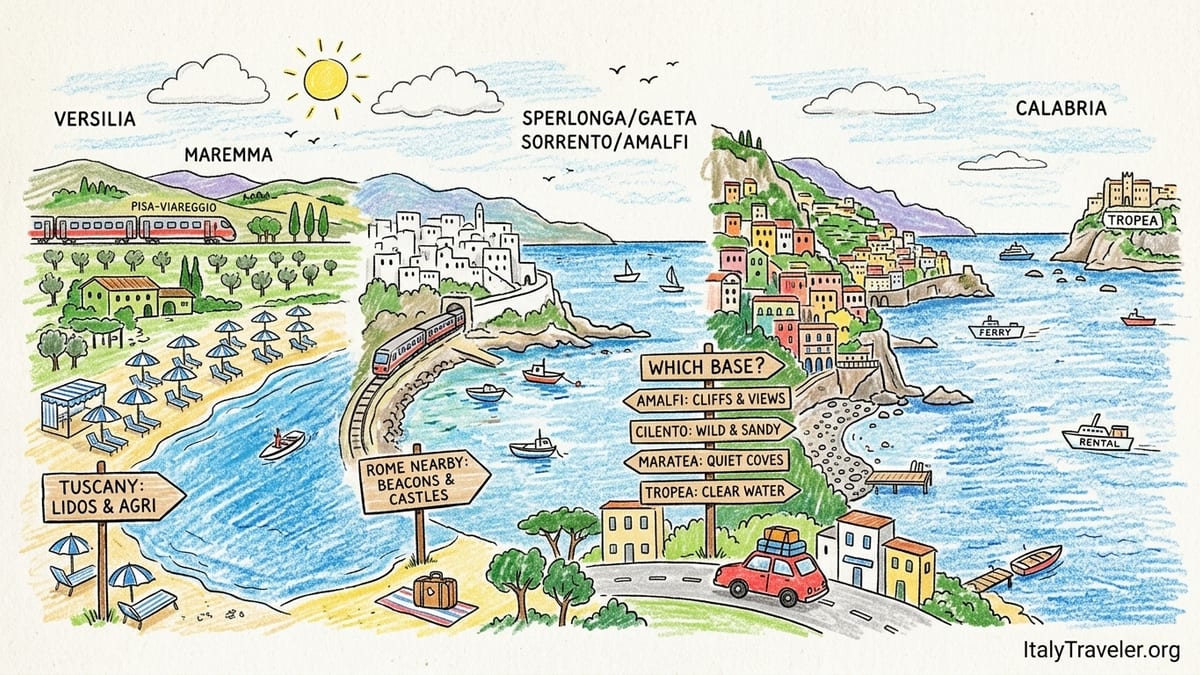
How to Choose Your Tyrrhenian Coast Base
Picking the right Tyrrhenian base is really about balancing scenery, budget and convenience. Versilia in northern Tuscany shines for classic Italian seaside glamour with orderly beaches and elegant hotels, while nearby Maremma offers a softer mix of countryside and sea with agriturismi, vineyards and quieter sandy strands. Closer to Rome, Sperlonga and Gaeta serve up bright sand and clear water within about two hours of the capital, popular for weekend escapes and short breaks. Further south, Sorrento and the Amalfi Coast are the iconic cliffside choice, with steep prices and unforgettable views. Beyond Amalfi, the Cilento coast, Maratea in Basilicata and Tropea with Capo Vaticano in Calabria trade worldwide fame for better value, wilder headlands and some of the clearest water on the mainland.
Hotel prices, train access and car dependence vary sharply from one area to another. In Versilia it is realistic to take the train from Pisa or Florence and never use a car, hopping between beach towns by local rail. In Maremma or Cilento, in contrast, you will almost always want a car to reach agriturismi, hill villages and more secluded bays. Even in the south, however, rail lines hug large sections of coast, making it possible to base yourself in a town such as Tropea and use regional trains for day trips to beaches and nearby villages. With airports at Pisa, Rome, Naples and Lamezia Terme spread along the Tyrrhenian side, you can also tailor your itinerary to match flight choices and seasonal fares.
This guide focuses on concrete differences: typical room rates in high season, how beaches are organized, what kind of restaurants you will actually find, how simple it is to arrive without a car and what kind of day trips are realistic from each area. The aim is not to crown a single “best” coast but to help you choose the right one for this particular trip, whether you are planning a polished long weekend in Tuscany or a slow two-week stay on a quieter southern shore.
Versilia: Polished Tuscan Beach Holidays
Versilia runs along northern Tuscany’s coast, centered on Forte dei Marmi, Viareggio and Marina di Pietrasanta. This is classic Italian lido territory, with long, flat sandy beaches lined by private beach clubs offering rows of loungers, changing cabins and seafront restaurants. The feel is smart and organized rather than wild. A typical four-star hotel in Forte dei Marmi or Marina di Pietrasanta in July or August often starts in the mid to high hundreds of dollars per night for a double room, and many high-end hotels and boutique properties in Forte dei Marmi climb into the mid-range luxury tier. In Marina di Pietrasanta, a seafront four-star might average around the mid-400s dollars per night in peak summer, with three-stars inland a few blocks back coming closer to the low or mid-200s.
Versilia works very well without a car. Trains run along the coast linking Viareggio, Pietrasanta and Forte dei Marmi with Pisa and La Spezia, and there are frequent buses and taxis to shuttle you from station to beach-side hotels. Pisa Airport is the main gateway, often under 40 minutes by direct train to Viareggio, and Florence Airport is also workable with a change in Pisa or Florence. This rail access makes Versilia attractive for travelers who want a straightforward beach add-on to a Tuscan itinerary built around Florence, Lucca or the Cinque Terre. You can spend mornings on the beach, then take an afternoon train to Lucca for a walk on the city walls and dinner in town, returning late evening.
On the sand, budget has a clear impact on your experience. A day at a mid-range beach club in Versilia typically involves renting a package that might include two loungers and an umbrella, sometimes with access to a cabana, showers and bar service. Prices vary widely but it is realistic to expect a decent lido to cost more than in less-famous regions, especially in Forte dei Marmi. The upside is comfort: changing cabins, attentive lifeguards, restaurants that plate up seafood spaghetti, fritto misto and chilled local Vermentino, and often kids’ play areas and small pools. Free public beach sections (spiagge libere) do exist but they are more limited and noticeably more crowded in August.
Day-trip potential is one of Versilia’s big strengths. From Viareggio or Forte dei Marmi you can reach the marble town of Carrara, the hill town of Pietrasanta, the Apuan Alps for short hikes, or even the Cinque Terre in Liguria for a long day by changing in La Spezia. For a first-time visitor who wants an easy combination of Tuscan culture and a polished beach experience, and who is comfortable paying upper mid-range to high nightly rates, Versilia is often the most straightforward choice along the Tyrrhenian coast.
Maremma: Countryside Plus Sea in Southern Tuscany
South of the busier Tuscan resorts, the Maremma region blends rolling hills, vineyards and olive groves with a still largely natural coastline. Instead of long strips of seafront hotels, you are more likely to stay in agriturismi or small country hotels within a short drive of the sea. A typical farmhouse property near Magliano in Toscana or Scansano might quote nightly rates per room or per self-catering apartment that are often lower than equivalent seaside hotels, especially outside August. Many places advertise being 10 to 20 minutes by car from beaches around Marina di Grosseto or Talamone, which is accurate in practice, but you should expect to drive on country roads and park behind dunes or in pine woods before walking to the sand.
The coast itself ranges from sandy family beaches backed by pine forest near Marina di Grosseto to more dramatic, wild stretches inside Maremma Regional Park. In the park, walking paths lead through Mediterranean scrub to coves such as Cala di Forno, with no bars or facilities other than what you bring. This contrast is a big part of the appeal: you might spend one day at a serviced lido near Castiglione della Pescaia with beach chairs and a seafood restaurant for lunch, and the next exploring a remote stretch where you will need to carry water and snacks. Compared to Versilia, beach services are often less formal and prices for umbrellas and loungers tend to be lower, though in high season the more famous lidos still charge a premium.
A car is practically essential in Maremma unless you stay directly in a coastal town such as Marina di Grosseto or Orbetello. The main coastal railway connects Grosseto and Orbetello with Pisa, Rome and other cities, but many of the most attractive agriturismi sit inland several kilometers from stations. Florence and Pisa airports work for northern Maremma, while Rome works best for the southern portion near the Argentario peninsula. For example, a traveler might fly into Rome, rent a car at the airport, and reach Orbetello or Talamone in under two hours if traffic is reasonable.
Restaurants tend to be set either in seaside towns or attached to agriturismi, where fixed menus built around local beef, game, garden vegetables and house wine are common. It is possible to find refined modern Tuscan cooking in and around Castiglione della Pescaia or inland at stylish wine estate restaurants, but much of Maremma’s charm lies in straightforward, seasonal dishes: grilled fish, wild boar ragù and grilled vegetables paired with Morellino di Scansano. For travelers who value peaceful nights, countryside views and a balance of beach days with hill-town visits to places like Pitigliano or Massa Marittima, Maremma offers strong value compared with Tuscany’s more famous coastal enclaves.
Sperlonga and Gaeta: Beaches Within Easy Reach of Rome
Sperlonga and Gaeta sit roughly halfway between Rome and Naples, making them among the most popular Tyrrhenian options for travelers who want clear water without flying onwards after landing in Rome. From Roma Termini station, you travel by regional train to Fondi-Sperlonga or Formia-Gaeta, then continue by local bus or taxi to town. In total, journey times usually come in at under two hours to the train station plus an additional 15 to 30 minutes to the beach, depending on traffic. This makes day trips feasible and also keeps airport transfers manageable for short coastal stays tacked onto a city break in Rome.
Sperlonga’s whitewashed old town perches on a rocky promontory, with long sandy beaches stretching to either side. The sand here is pale and fine, and in settled summer weather the water is typically clear and shallow for quite a way out, drawing families and city travelers who want an almost Mediterranean island feel without boarding a ferry. Gaeta, a short bus or taxi ride away, has its own sandy arc at Serapo plus smaller coves tucked into the cliffs. Compared to the Amalfi Coast, both towns feel more like lived-in communities than showpieces, with a mix of local shops, casual pizzerias, beach bars and a handful of more upscale seafood restaurants.
Hotel pricing sits in the mid-range for Italy’s summer coast. In Sperlonga, three-star hotels in high season often start somewhere around the low hundreds of dollars per night, with better-positioned four-star properties on or near the beach trending into the mid-100s and above. Rates climb notably on August weekends and around holidays, and beach services at lidos are priced accordingly, but outside peak weeks you can still find double rooms that cost less than in most Amalfi or Tuscan resort towns. In Gaeta, some travelers choose simple guesthouses or apartment rentals near the historic center, then walk or take a bus to the main beaches, trimming accommodation costs while still enjoying the sea.
Without a car, Sperlonga and Gaeta are straightforward but not completely frictionless. You will rely on local buses timed to regional trains and, in the evenings, taxis or walking. Once in town, however, you can do most things on foot. Day trips include the archaeological museum at Sperlonga, which preserves the remains of Emperor Tiberius’s seaside villa, and visits to small hill towns inland. Rome itself remains within practical reach, especially if you are willing to catch an early train and return late, which can be appealing for travelers who want to split time between ancient sites and the sea with a single hotel base.
Sorrento and the Amalfi Coast: Iconic Cliffs and Premium Prices
Sorrento and the Amalfi Coast between Positano and Salerno are perhaps the most recognizable faces of the Tyrrhenian shore. Rather than wide sandy beaches, you get steep cliffs, tiny coves, terraces of pastel houses and dramatically placed hotels clinging to the rock. Views across the Bay of Naples, Capri and the rugged coastline are extraordinary, but both hotel rates and logistics reflect the region’s fame. In high season, mid-range hotels in Positano or Amalfi often command rates that would buy a sea-view suite in quieter regions, and many properties impose multi-night minimums in July and August. Sorrento, perched on a bluff with lift access down to bathing platforms, offers a somewhat broader range of prices, but even here waterfront addresses and boutique hotels charge a premium.
Beach life on this stretch is very different from Tuscany or southern Calabria. True sandy beaches are limited to a few pockets such as Marina di Vietri or sections of the Amalfi and Maiori waterfronts; most people sunbathe on wooden platforms or small pebbly inlets, usually attached to private beach clubs reachable by boat shuttles, elevators or long staircases. Day passes that include a lounger and umbrella often cost more than on the Cilento or Tropea coasts, although they usually also include access to changing areas, showers and sometimes restaurant decks over the water. For many travelers, the focus here is as much on stylish seaside lounging, long lunches and coastal boat trips as on traditional beach days.
Transport can be both a strength and a stressor. Naples Airport is the main gateway, with direct buses from the terminal to Sorrento in season and frequent trains from Naples to Sorrento on the Circumvesuviana line. From Sorrento, you can reach Capri by ferry, visit Pompeii and Herculaneum by train and connect to the Amalfi Coast by bus or seasonal ferries. That said, roads are narrow and traffic-heavy, especially in summer, and driving is not generally recommended unless you are very comfortable with tight coastal roads and limited parking. Many travelers choose to base in Sorrento for easier transport connections and then visit Positano, Amalfi and Ravello on day trips by boat and bus.
Food and drink options run from casual pizzerias to destination restaurants with extensive wine lists and tasting menus. Prices mirror the region’s overall costs, especially in cliffside bars and restaurants with direct sunset views. For travelers with limited time who want the postcard version of the Tyrrhenian coast and are prepared for premium pricing, Sorrento and Amalfi remain unbeatable. For those seeking more sand, lower costs or a slower pace, however, nearby Cilento or further south in Calabria and Basilicata may be a better fit.
Cilento Coast: A Slower Southern Alternative
South of Salerno, the Cilento coast feels like an exhale after the intensity of Amalfi. The coastline around towns such as Agropoli, Santa Maria di Castellabate, Acciaroli, Palinuro and Marina di Camerota offers long sandy beaches, pine-backed dunes and rocky headlands, but development is more low-rise and spread out. Many Italians choose Cilento for family holidays in August, which can make seaside promenades busy, but outside peak weeks the mood is generally relaxed and prices softer than just to the north. Hotels range from simple seaside pensions with breakfast included to comfortable four-star properties with pools and direct beach access, generally at rates below those of Amalfi or Capri for comparable comfort.
Hotel costs vary by town and proximity to the sea, but it is common to find mid-range beachfront or near-beach hotels in Cilento quoting high-season double rates that are closer to what a traveler might pay in Sperlonga or Tropea rather than in Positano. Many visitors also opt for self-catering apartments or small holiday villages with pools and shared entertainment, which are popular with Italian families. Beach clubs rent umbrellas and loungers at prices that, while not cheap, are often more forgiving than in better-known resorts, and it remains realistic to spend full days on the sand without constantly worrying about every purchase.
Reaching Cilento without a car requires a bit more planning than Sorrento but is still viable. Fast trains run from Naples and Salerno to Agropoli, Vallo della Lucania and other inland-adjacent stations along the line toward Calabria. From there, you connect by local bus or taxi to coastal towns. Renting a car at Naples or Salerno, however, significantly increases your freedom to explore smaller coves, hill villages and archaeological sites such as Paestum, with its remarkably preserved Greek temples, which lies just inland from the sea. Roads are generally easier than the Amalfi drive, though they can still be winding in the more rugged southern sections.
Cilento’s restaurants tend to focus on local seafood, vegetables, cheeses and the extra-virgin olive oil that underpins much of the region’s traditional cooking. You will find plenty of trattorias and pizzerias in seaside towns, along with beach bars serving panini, salads and simple fried seafood at lunchtime. For travelers who want substantial sandy beaches, a more local feel and the possibility of combining archaeological sightseeing with time in the water, Cilento offers a persuasive alternative, particularly in June, early July or September when the sea is warm but crowds are thinner.
Maratea: Boutique Scenery Between Campania and Calabria
Maratea in Basilicata sits on one of the most dramatically folded stretches of the Tyrrhenian coast, a short but rugged section between the Campania border and northern Calabria. The coastline here is all coves, cliffs, small pebbly beaches and wooded headlands, with a hilltop old town crowned by a large statue of Christ overlooking the sea. The atmosphere is quieter and more intimate than the Amalfi Coast, with a handful of four-star hotels, boutique guesthouses and villas scattered between the old town, the lower marina area and nearby bays. Prices vary, but mid-range and higher-end properties often undercut Amalfi equivalents while still offering sea views, pools and refined restaurants.
Beach life in Maratea revolves around small coves such as Fiumicello and Macarro, some with lidos and others left more natural. Expect pebbles rather than sand, clear water and an emphasis on swimming, snorkeling and boating rather than long walks on the shore. Several hotels and beach clubs run boat excursions along the coast, visiting sea caves and remote inlets that are difficult to reach by land. Because most beaches are small, visiting outside the busiest August weeks can make a significant difference to comfort, especially if you like space around your sunbed.
Maratea’s railway station lies inland from the marina, connected by local buses and taxis. Trains along the main Tyrrhenian line connect Maratea with Salerno, Naples and Lamezia Terme, meaning it is technically possible to visit without a car, but steep terrain and dispersed beaches make a car very useful. Drivers arriving from the north often combine a stay in Maratea with nights in Cilento or around Paestum; those traveling south may continue to Tropea and Capo Vaticano. The nearest major airports are Naples and Lamezia Terme, both a few hours away by combined train and road.
Dining skews toward small, family-run restaurants in the hilltop town and sea-view spots near the marina, many focusing on regional pasta dishes, fresh fish and local wines from Basilicata and neighboring regions. For travelers who like the idea of Amalfi-style cliffs and coves but want quieter villages, fewer tour buses and a slightly lower price level, Maratea is a strong candidate. Accommodation choice is narrower than in larger regions, so booking ahead for July and August is advisable, particularly if you want a room with a pool and direct sea view.
Tropea and Capo Vaticano: Clear Water and Strong Value
Far down in Calabria, Tropea and nearby Capo Vaticano offer some of the clearest, bluest water on the Italian mainland along with a mix of lively town atmosphere and quieter headlands. Tropea’s historic center stands on a clifftop above the sea, with narrow lanes, small piazzas and an evening passeggiata scene, while beaches lie directly below the cliffs and along the coast on either side. Capo Vaticano, about 10 kilometers away, is a more dispersed area of small coves, viewpoints and holiday villages, known for its white sand, rocky promontories and sunset views over the Aeolian Islands on clear evenings.
One of the key draws here is value. In and around Tropea, you can find three-star hotels, simple beach-front pensions and apartment-style residences at prices that are often noticeably lower than in Amalfi or Tuscany, even in high season. Capo Vaticano has a high concentration of mid-range hotels and resorts, some with pools and private paths or shuttle services to the beach, with starting prices for basic rooms that can be surprisingly accessible compared with northern regions. While there are certainly luxury-level options, the overall spectrum caters well to travelers seeking sea views and direct access to the water without premium price tags.
Getting to Tropea is simpler than its far-south location might suggest. Lamezia Terme Airport, served by a mix of domestic and seasonal international flights, connects to Tropea via regional trains in roughly one hour, with a change if needed at Lamezia Terme Centrale. The station in Tropea sits uphill from the historic center, and many hotels either offer transfers or are reachable on foot with luggage if you are comfortable with slopes and steps. From Tropea, local trains and buses run along the coast, making it possible to visit beaches in Parghelia, Zambrone or down toward Capo Vaticano even without a car, though schedules can be sparse outside peak summer.
In Tropea town you will find a dense concentration of restaurants, gelato shops and bars catering to both locals and visitors, many with terraces overlooking the sea. Menus highlight local specialties such as red onion from Tropea, swordfish, spicy nduja sausage and fresh ricotta. Capo Vaticano, by contrast, tends to be quieter in the evenings, with many guests dining at their hotels or nearby agriturismi and then watching the sunset from terraces. This split makes Tropea better suited to travelers who want nightlife and variety within walking distance, while Capo Vaticano suits those who prioritize daytime beaches and peaceful nights. Both, however, deliver the kind of water clarity and beach scenery that many people associate more with islands than with the mainland, making this corner of Calabria a strong contender when you weigh cost against natural beauty.
The Takeaway
The Tyrrhenian coast is not a single destination but a chain of distinct micro-regions, each with its own rhythm and character. Versilia offers polished Tuscan seaside life with efficient rail links and smart beach clubs but at a premium price. Maremma softens the experience into a blend of countryside and sea, rewarding those willing to rent a car and stay in agriturismi rather than seafront hotels. Sperlonga and Gaeta provide Rome-based travelers with an appealing compromise of access, clear water and mid-range costs. Sorrento and the Amalfi Coast deliver Italy’s most famous coastal views with matching price tags and complex logistics, while Cilento and Maratea offer progressively quieter, more local-feeling alternatives.
Further south, Tropea and Capo Vaticano combine dramatically clear water, a mix of lively town and quiet coves, and some of the best value on the Tyrrhenian side, especially for longer summer stays. Airport choice, rail access and your comfort level with driving on coastal roads should play as much of a role in your decision as photos of beaches or hotel pools. Ask yourself how often you want to move hotels, whether you prefer evenings in a busy town or quiet countryside, and how important long sandy beaches are compared with cliffside views. With those preferences clarified, it becomes much easier to match yourself to the right stretch of coast and build a trip where logistics support, rather than overshadow, the pleasure of being by the Tyrrhenian Sea.
FAQ
Q1. Which Tyrrhenian coast area is best for travelers without a car?
For a mostly car-free trip, Versilia and Sorrento work well thanks to direct train or bus links from major airports and good local public transport. Tropea is also practical without a car because regional trains run along the Calabrian coast and the town is compact enough to explore on foot.
Q2. Where can I find the best value for money on the Tyrrhenian coast?
For many travelers, Tropea and Capo Vaticano in Calabria offer the strongest balance of clear water, appealing scenery and relatively moderate hotel prices. Parts of the Cilento coast and inland agriturismi in Maremma also provide good value, especially outside the peak mid-August holiday period.
Q3. Which area is most suitable for a quick beach break from Rome?
Sperlonga and Gaeta are generally the easiest choices for a short break from Rome. You can reach them by regional train to Fondi-Sperlonga or Formia-Gaeta in under two hours, then continue by local bus or taxi to your hotel, making even two-night stays practical.
Q4. Are there sandy beaches on the Amalfi Coast?
There are some sandy or coarse-sand sections at places like Marina di Vietri, Maiori and parts of Amalfi town, but much of the Amalfi Coast is rocky with small coves and bathing platforms. Travelers who prioritize long sandy beaches often prefer Cilento, Versilia or parts of Calabria.
Q5. Which airport should I choose for each region?
Pisa is the most convenient airport for Versilia and northern Maremma, while Rome works better for southern Maremma and Sperlonga or Gaeta. Naples is best for Sorrento, the Amalfi Coast and northern Cilento, and Lamezia Terme is the logical gateway for Tropea, Capo Vaticano and much of the Calabrian Tyrrhenian coast.
Q6. How far in advance should I book hotels on the Tyrrhenian coast?
For July and August, it is wise to book several months ahead in high-demand areas such as Versilia, Amalfi and Tropea, especially for seafront hotels or family rooms. In June, September or shoulder seasons you often have more flexibility, particularly in less-famous regions like Maremma and parts of Cilento.
Q7. Is it realistic to combine multiple coastal regions in one trip?
Combining two nearby regions works well if you allow enough time. Examples include a week split between Sorrento or Amalfi and Cilento, or a trip that starts in Versilia and ends in Maremma. Longer itineraries can continue south through Maratea to Tropea, but each move between bases costs a travel day, so plan accordingly.
Q8. Are these coastal areas suitable for families with children?
Yes, though some regions are more straightforward than others. Versilia, Maremma’s family-friendly beaches, Cilento’s sandy bays and the wider beaches around Tropea are particularly suitable. The Amalfi Coast, with its steps and smaller beaches, can be more challenging with strollers or very young children.
Q9. What is the best time of year to visit the Tyrrhenian coast?
Late May through early July and September are often ideal, with warm sea temperatures, generally pleasant weather and fewer crowds than in August. July and especially mid-August bring the hottest weather and the highest prices, while spring and autumn offer quieter stays but cooler water.
Q10. Can I rely on English being spoken in these coastal areas?
In well-known destinations such as Versilia, Sorrento, Amalfi and Tropea, many hotels, restaurants and tour operators have staff who speak at least some English. In smaller towns, agriturismi and more local parts of Maremma or Cilento, English may be less common, so a few basic Italian phrases and translation apps are helpful.