

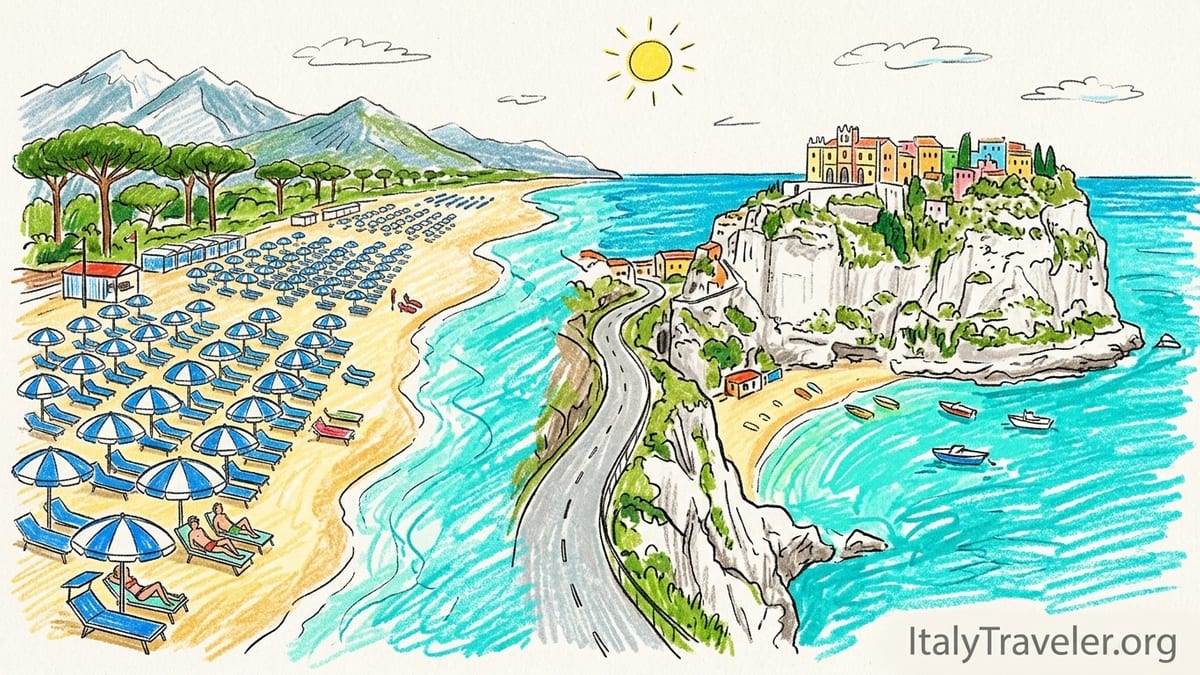
The Tyrrhenian coast on Italy’s west side is not one long, uniform strip of sand. From the elegant stabilimenti of Versilia in northern Tuscany to the turquoise coves of Calabria’s Costa degli Dei, the shoreline continually shifts under your feet. Fine sand turns to pebbles, low dunes give way to cliffs, and easy-access family beaches alternate with wild coves that require a hike or even a boat. Understanding those differences is the key to choosing the right stretch of coast for your style of holiday, budget and travel rhythm.
How the Tyrrhenian Coast Changes as You Head South
Traveling down the Tyrrhenian side of Italy is like flicking through a catalogue of different beach styles. North of Tuscany’s Apuan Alps you find long, flat shores backed by resorts and pine woods; around Rome and south into Lazio, low headlands start to break up the sand into bays; in Campania and Basilicata, rocky promontories carve the sea into coves; and by the time you reach Calabria, cliffs and headlands frame turquoise shallows that feel almost tropical.
For practical trip planning, it helps to think in bands. Versilia and much of southern Maremma are about wide, sandy beaches and classic Italian stabilimenti, where a day bed and umbrella rental might run 25 to 40 euros for two in high season, depending on location and services. Around Sperlonga, Gaeta and the Cilento coast, soft sand still dominates but you increasingly find small coves and rocky outcrops that are ideal for snorkeling. Maratea shifts the balance further, with pebbly coves squeezed between cliffs and only a few broader sandy arcs. Finally, Tropea, Capo Vaticano and the wider Costa degli Dei blend small sandy bays and rocky platforms set below dramatic white cliffs, with clear water that makes boat excursions and mask-and-snorkel days a highlight.
Along the way, the ratio of free beach to paid resort, the ease of parking, and the type of nearby accommodation all change. In some areas, such as Versilia or Tropea, you can step straight from a seafront hotel onto a serviced beach. In others, like the wild stretches of the Maremma Regional Park or some hidden coves in Maratea and Cilento, you may need to walk or take a shuttle, and pack water and snacks because there are no bars in sight.
Versilia: Classic Tuscan Sands and Full-Service Stabilimenti
Versilia, on Tuscany’s northern coast, is the archetype of the Italian resort beach. The shore from Viareggio up through Lido di Camaiore, Marina di Pietrasanta and Forte dei Marmi is one almost unbroken ribbon of fine, flat sand. Here you find a dense line of stabilimenti balneari offering regimented rows of umbrellas, sun loungers and the iconic "tende" or cabanas that families rent by the season. A typical day rate for two loungers and an umbrella in July or August might range from around 25 euros at a simpler bagno in Viareggio to over 60 euros at a luxury club in Forte dei Marmi, which could include a pool, showers, kids’ animation and a good restaurant.
There are free stretches too, but they are limited. In Viareggio and Marina di Pietrasanta, small tracts of spiaggia libera are often squeezed between beach clubs and fill up quickly. Expect to walk a little further from town and bring your own umbrella; many locals stop at a supermarket or beach shop on Viale Carducci or Viale Roma to pick up inexpensive chairs and a cool box. The seabed slopes very gradually, so you can wade far out before the water is chest-deep, which makes these beaches especially popular with families with small children.
Parking in Versilia can be a deciding factor. In high season, street spots along the promenades often require paid blue-line tickets and fill by mid-morning. Many stabilimenti include parking behind the beach in their daily rate or charge a modest extra fee. Accommodation is equally structured and convenient: you can opt for historic seafront hotels in Viareggio, boutique properties in Pietrasanta’s Marina, or upscale villas and five-star hotels in Forte dei Marmi where guests often book their preferred beach club months in advance.
Snorkeling opportunities in Versilia are limited compared to rockier coasts; the flat sandy seabed means less marine life close to shore. However, active travelers can combine mornings on the beach with afternoons in the Apuan Alps above, where trails and marble quarries offer a complete contrast to the orderly umbrellas below.
Maremma: Wild Dunes, Pine Forests and a Mix of Free and Serviced Beaches
Further south in Tuscany, the Maremma coast feels wilder without losing the appeal of easy, sandy beaches. Here long dunes and umbrella pines separate the sea from low-rise resorts and campgrounds. Well-known stretches like Marina di Alberese and Collelungo inside the Parco Regionale della Maremma are largely undeveloped; access is controlled through a park entrance, with visitors either taking a shuttle bus or cycling in from parking areas inland. Expect to walk through pinewoods and scrub for ten to twenty minutes before your feet touch the sand, and to find only basic facilities or none at all on the beach itself.
Family-friendly options with more infrastructure include Marina di Grosseto, Principina a Mare, Castiglione della Pescaia and the popular Rocchette area. Here, stabilimenti alternate with generous spiagge libere, and a family can choose between paying for loungers or simply setting up a towel just beyond the beach club’s last umbrella. Day rates at a mid-range bagno might be 20 to 30 euros for two beds and an umbrella. In nearby inland villages such as Castiglione della Pescaia or Scarlino, small family-run hotels and agriturismi combine beach days with evenings in stone-walled hill towns.
On the Argentario promontory south of Orbetello, the character of the coast shifts more dramatically. Feniglia and Giannella are long, sandy tombolos with plenty of free beach sections as well as stabilimenti, backed by pine forests and popular with cyclists and joggers. Around Porto Santo Stefano and Porto Ercole, steep coves like Cala del Gesso or Cala Mar Morto demand a hike down and, more importantly, back up. The payoff is clear water and good snorkeling, with rocky shelves that shelter small fish. Parking here typically means leaving your car in small lay-bys along the panoramic road and following unmarked paths, so arrive early and pack water, hats and sturdy sandals.
In terms of accommodation, the Maremma offers everything from basic campgrounds among the pines near Albinia or Marina di Grosseto to stylish design hotels on Monte Argentario. Prices reflect the relative wildness: beach campsites with pools and simple mobile homes appeal to families seeking good value, while sea-view boutique hotels near Porto Ercole often attract couples who want quieter coves and are happy to drive to trailheads rather than step straight onto a resort beach.
Sperlonga, Gaeta and the Lazio Coast: Soft Sand and Scenic Headlands
South of Rome, the Lazio coast around Sperlonga and Gaeta blends long sandy bays with small headlands that give the sea more definition. Sperlonga itself is famous for its whitewashed old town perched atop a rocky spur, with two main beaches stretching north and south: soft golden sand, shallow water and a mix of stabilimenti and free areas. Many Romans come for weekend breaks, driving down the A1 and parking in paid lots at the edge of town, then walking ten to fifteen minutes through narrow lanes to reach the sea.
The ratio of serviced to free beach here is fairly balanced. In July and August, expect to pay somewhere around 30 to 40 euros per day for an umbrella and two loungers in a front-row position at a mid-range lido, a little less for rows further back. Families appreciate the gentle slope of the seabed and the fact that most clubs include showers, changing cabins and a bar-restaurant where a plate of pasta alle vongole or a fried seafood platter becomes a long, lazy lunch. Free beach sections tend to be at the ends of the bay or between clubs, so arriving early is important for securing a good patch of sand.
Gaeta, a short drive further south, is stretched along several distinct beaches. The best known is Serapo, a long sandy curve backed by apartments and hotels. More adventurous visitors seek out the smaller coves near the Monte Orlando promontory, such as Fontania or the tiny ledges below cliffs accessed by stairways. These have rockier seabeds suitable for snorkeling, with schools of fish sheltering around submerged boulders. Parking can be more challenging in Gaeta’s older quarters, and some visitors park outside town and walk or use local buses during peak weeks in August.
Accommodation options in this part of Lazio range from modern seafront hotels in Gaeta and apartment rentals in Sperlonga’s lower town to B&Bs tucked into historic buildings at the top of the hill. Many travelers combine a few nights here with time in Rome or Naples, using regional trains to nearby Fondi-Sperlonga station and then a short bus or taxi ride to the coast, which can be a practical strategy for those who do not want to drive along busy summer roads.
Cilento and Hidden Coves: Sand, Pebbles and Boat-Access Beaches
Continuing south into Campania, beyond the famous Amalfi Coast, the Cilento National Park protects a long stretch of more low-key shoreline. Towns like Palinuro, Marina di Camerota and Acciaroli sit behind generous sandy beaches, but the real appeal for many visitors lies in the smaller coves etched into the coastline. Here, cliff-backed inlets such as Cala Bianca or Baia degli Infreschi are often best reached by boat, with local operators running half-day trips that include multiple swim stops, simple lunches and time to explore sea caves.
On the main town beaches, soft sand predominates and there is a familiar pattern of stabilimenti with rows of umbrellas interspersed with spiaggia libera. Day prices for sunbeds and umbrellas are usually slightly lower than on the Amalfi Coast or in northern Tuscany, reflecting a more relaxed, family-focused scene. Many Italians book an apartment or small hotel set a five to ten minute walk from the sea and stay for a full week or more, shopping at local markets in towns like Marina di Camerota and cooking some meals at home.
In the smaller coves, the shore can be a mix of sand, pebbles and rocks. Strong swimmers and snorkelers often prefer these spots, where the clearer water and rocky seabed provide better visibility and more marine life. However, the lack of lifeguards and limited facilities mean they are less ideal for families with very young children or anyone with mobility issues. Boat tours provide an accessible compromise, dropping passengers where the approach from land would involve a steep path or no path at all.
Parking in Cilento varies widely. In larger resort towns you will find paid parking lots near the waterfront and free roadside spots further inland, while for smaller coves and natural beaches, simple unattended dirt lots and roadside pull-offs are common. Arriving early, especially in August or on weekends, is important; latecomers may find themselves parking further up the hill and tackling a longer walk under the sun.
Maratea: Rocky Drama, Pebbly Coves and Clear Water
Crossing into Basilicata, Maratea marks one of the most scenic segments of the Tyrrhenian coast. Here, mountains drop steeply into the sea, squeezing the shoreline into short beaches and coves separated by rocky points. Many of these are pebbly or a mix of coarse sand and stones, which contributes to the remarkable water clarity that draws snorkelers and divers. Beaches such as Fiumicello and Macarro offer family-friendly arcs of shore with bars, parking and a mix of stabilimenti and free sections. Others, like Cala Jannita, also known as the "Black Beach" for its darker sand, sit below cliffs and are reached via paths through dense Mediterranean scrub.
The presence of cliffs means that true free-standing stabilimenti are less numerous and smaller than in Versilia or Maremma, but most accessible beaches still offer some services: a bar, rental of loungers and umbrellas, and sometimes kayak or pedal boat hire. Expect to pay moderate daily prices, reflecting the more compact size of the beaches and the effort required to set up operations in such rugged terrain. Pebble beaches can be less comfortable for long sunbathing sessions without a mat or padded lounger, so packing water shoes or sandals and perhaps a foldable beach mat can transform the experience.
Some of Maratea’s most beautiful coves are accessible only by sea or via steep, sometimes unmarked paths. Local fishermen and small tour operators in the port organize short boat trips along the coast, stopping at hidden inlets where passengers can swim from the boat. These excursions are particularly rewarding for travelers focused on snorkeling, as the rocky seabed and seagrass meadows host a variety of fish and other marine life. In high summer, booking a tour a day or two in advance is sensible, especially on weekends.
Accommodation choices in Maratea are unusually varied given the limited coastal plain. You can stay in the medieval hilltop town, where stone houses and small hotels enjoy wide views over the sea, or opt for coastal hotels and holiday villages near Fiumicello or Acquafredda that provide easier access to the water. Many properties run shuttle services to nearby beaches, which can spare guests the hunt for parking spots along the winding coastal road.
Tropea, Capo Vaticano and the Costa Viola: Turquoise Waters and Cliff-Backed Bays
In Calabria, the stretch of shoreline marketed as the Costa degli Dei around Tropea and Capo Vaticano, and the darker-hued Costa Viola closer to the Strait of Messina, delivers some of the most photogenic beaches on the Tyrrhenian. Tropea’s town beach lies directly below cliffs topped by historic palaces and the famous Santa Maria dell’Isola sanctuary, with fine pale sand and water that glows turquoise and cobalt on sunny days. The beach itself is a mix of stabilimenti and free areas, and many hotels and guesthouses are located in the old town just a short walk and stair descent away.
Capo Vaticano, a headland a short drive from Tropea, is known for a series of small bays like Grotticelle framed by white cliffs and rocks. Here, sandy patches alternate with rocky shelves that are excellent for snorkeling, and the water quickly deepens a few meters from shore. Many beach areas are only partially developed, with a few rows of umbrellas and a bar, leaving sections of free beach at the edges. Boat excursions from Tropea and nearby marinas often combine multiple stops along the Costa degli Dei, offering opportunities to swim in bays that are more difficult to approach on foot.
Further south, the Costa Viola takes its name from the violet tinge the sea can take at sunset. The coastline between towns such as Scilla, Bagnara Calabra and Palmi is more overtly rocky, with narrow pebbly or coarse-sand beaches at the foot of steep slopes. In Scilla, for example, the Chianalea and Marina Grande districts combine colorful fishermen’s houses, small hotels and B&Bs with beach clubs laid out along a relatively narrow strip of shore. Because the beaches are smaller, umbrellas can be packed more tightly in high season, and free sections are limited, so early arrivals have a clear advantage.
Parking and access vary widely along these Calabrian coasts. In Tropea and Scilla, expect to pay for parking in multi-level garages or designated seafront lots, then walk down stairways or ramps. Around Capo Vaticano and some less developed stretches of the Costa Viola, informal dirt lots and roadside spaces are still common but can fill quickly on peak days. Many accommodations, especially seaside holiday villages and campsites, include shuttle services to the beach or even maintain their own small lidos, bundling sunbed and umbrella use into room rates.
Choosing the Right Beach Style: Sand vs Pebbles, Free vs Stabilimento
One of the most practical decisions when planning a Tyrrhenian beach trip is whether you prioritize soft sand underfoot and full-service stabilimenti or are happy with pebbles and simpler infrastructure in exchange for clearer water and wilder scenery. Versilia and much of the Maremma offer the softest, most consistent sand, expansive shorelines and the highest concentration of established beach clubs. These are ideal for travelers who value comfort, predictable services and easy access, especially families with young children or multi-generational groups where shade, showers and on-site food simplify logistics.
Sperlonga, Gaeta and the Cilento coast balance sandy shores with headlands and smaller coves. They suit travelers who want some visual drama and good snorkeling without sacrificing too much practicality. Here, you can spend one day at a classic serviced beach and another on a boat tour exploring caves and less accessible coves, all while staying in a mid-sized town with supermarkets, restaurants and an evening passeggiata. Prices for umbrellas and loungers are generally mid-range, and there is still a healthy amount of free beach space if you arrive early.
Maratea, Tropea, Capo Vaticano and the Costa Viola skew toward pebbles, rocks and steep approaches, though Tropea’s main town beach and several bays around Capo Vaticano do have fine or coarse sand. These locations best suit travelers who prioritize scenery and sea color over convenience, including couples, photographers and strong swimmers interested in snorkeling or diving. Free beach stretches exist but can be narrower, and stabilimenti may focus more on efficient use of limited space than on the sprawling facilities seen in Versilia. Packing reef shoes, a mask and snorkel, and being prepared for stair climbs or hillside paths makes these areas much more enjoyable.
Accommodation also follows these patterns. Where the shore is flat and wide, such as in Versilia, Marina di Grosseto or Serapo in Gaeta, you can easily book seafront hotels where crossing a road is all that separates you from the water. In more rugged areas like Maratea or the Costa Viola, hotels and guesthouses are more often perched above the sea, with views traded for a short drive or shuttle to the nearest beach. Budget travelers may find better value slightly inland in hilltop villages, especially in July and August, driving down early each day to secure parking and a good spot on the sand or pebbles.
FAQ
Q1. Which part of the Tyrrhenian coast is best for families with small children?
Versilia and much of the Maremma are particularly good for families thanks to their wide sandy beaches, shallow water and dense network of stabilimenti with lifeguards, playgrounds and on-site restaurants. Sperlonga and the main town beaches in Cilento also work very well if you prefer a slightly more scenic setting while still having easy access and services.
Q2. Where can I find the clearest water and best snorkeling along this coast?
For snorkeling, focus on rockier stretches such as parts of the Argentario promontory in Maremma, the coves around Gaeta, many of Maratea’s smaller beaches and the bays of Capo Vaticano and the Costa Viola. In these areas, pebbles and rocky seabeds help keep the water clearer than on flat sandy shelves.
Q3. Are there many truly free beaches, or will I always need to pay for a stabilimento?
You can find free beaches in all the regions mentioned, but their extent varies. Maremma’s park beaches like Marina di Alberese and Collelungo are largely free, as are significant stretches at Feniglia and Giannella. Even in resort-heavy areas like Versilia or Tropea, smaller sections of spiaggia libera usually sit between beach clubs, though they can be crowded in August, so early arrival is crucial.
Q4. Do I need a car to explore these Tyrrhenian beaches?
A car offers the most flexibility, especially for reaching wild coves in Maremma, Cilento, Maratea and along the Costa Viola. However, several towns such as Viareggio, Tropea, Sperlonga, Gaeta and some Cilento resorts can be reached by a combination of train and bus or taxi, and you can then rely on local buses, shuttles, walking and organized boat trips to get around.
Q5. How expensive are sunbed and umbrella rentals on these coasts?
Prices vary by location and the level of service, but in peak summer expect a basic setup for two people to cost roughly 20 to 30 euros per day in many parts of Maremma, Cilento and Calabria, rising to 30 to 40 euros in popular Lazio resorts and potentially 50 euros or more at higher-end clubs in places like Forte dei Marmi in Versilia.
Q6. Are there boat-only coves worth planning a trip around?
Yes. In Cilento, coves such as Cala Bianca and Baia degli Infreschi are classic boat-excursion stops, while in Maratea and along the Costa degli Dei near Capo Vaticano many small inlets and sea caves are easiest to reach by organized boat trip or private rental. These excursions typically include several swim stops and are a highlight for confident swimmers and snorkelers.
Q7. What kind of footwear should I bring for these beaches?
On sandy shores like Versilia, Maremma’s main resorts and the broad beaches of Sperlonga or Gaeta, simple flip-flops are fine. For pebbly and rocky areas, particularly in Maratea, parts of Cilento, Capo Vaticano and the Costa Viola, water shoes or sturdy sandals make walking and entering the water more comfortable and safer.
Q8. When is the best time to visit to avoid crowds but still enjoy warm sea temperatures?
Late June and September are often ideal compromises along the Tyrrhenian coast. The sea is usually warm enough for comfortable swimming, stabilimenti are open, and services are running, but crowds and prices are generally lower than in late July and August, particularly around peak Italian holiday week in mid-August.
Q9. Can I find accommodation directly on or very close to the beach?
In flatter areas like Versilia, Marina di Grosseto, Serapo in Gaeta, Tropea’s lower town and parts of Cilento, many hotels, campgrounds and apartment complexes are directly seafront or within a short walk. In rockier regions such as Argentario’s coves, Maratea and parts of the Costa Viola, more accommodations sit above the sea on hillsides, often offering shuttle services down to the nearest accessible beach.
Q10. Are these beaches suitable for travelers who do not swim well?
Non-swimmers are generally more comfortable on wide, gently shelving sandy beaches with lifeguards, such as those in Versilia, Maremma’s main resorts, Sperlonga and Gaeta’s larger bays. Rocky coves and boat-only stops in Cilento, Maratea or Capo Vaticano can be stunning but may have quicker drop-offs, currents and less supervision, so they are better suited to confident swimmers or for visits where you stay close to the shore.