

Italy’s Adriatic coast runs for hundreds of kilometres, but most travellers only have a week or two to spare. Before you book a hotel, it pays to decide which stretch of shoreline really matches your style: family paddling and deckchairs, nightlife and beach clubs, dramatic cliffs and coves, or whitewashed towns and turquoise water. This guide compares the main sections many international visitors consider first: the classic northern resorts around Venice, the Romagna Riviera for nightlife, the scenic Conero headland, quieter Abruzzo, the Gargano promontory, and finally Puglia’s postcard towns. The focus is on real-world choices: how the beaches actually feel, how easy it is to get around without a car, where families fit best, and what you can expect to pay.
Northern Classics: Bibione, Caorle and Jesolo
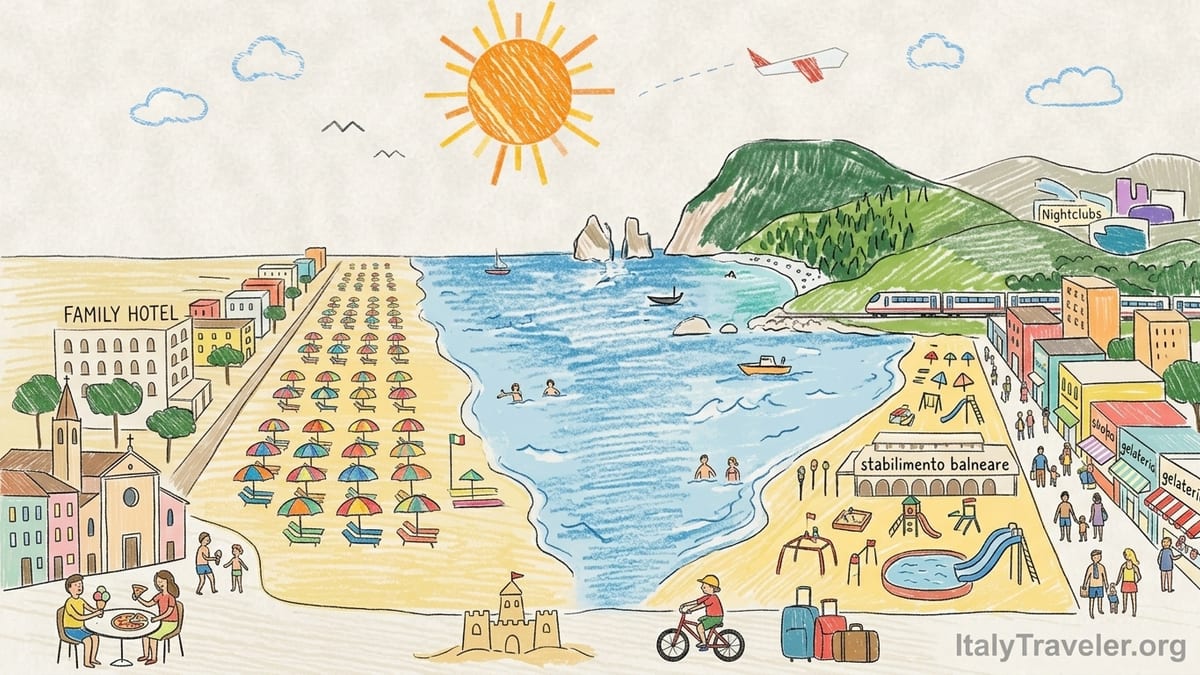
The northern Adriatic between Venice and Trieste is where many Italian and German families have been heading for generations. Bibione, Caorle and Jesolo share some fundamentals: long, flat sandy beaches, a dense strip of hotels and apartments, plenty of ice cream and pizza, and a relaxed, almost nostalgic seaside feel. The sand is soft and golden, the seabed generally shallow and safe for children, and most beaches are lined with regimented rows of umbrellas and sun loungers that you reserve by the day or week. In peak summer you are not coming here for solitude, but for a sociable, easy-going beach holiday where everything is on your doorstep.
Bibione is very family focused, with a strong network of “family hotels” that provide extras such as cots, baby baths, kids’ menus, bike seats and on-site or beachside mini clubs. Many hotels sell packages that include a reserved umbrella and loungers at a partner beach club, so you can simply walk down each morning and find your spot ready. Caorle offers a more intimate feel, built around a compact historic centre with pastel façades and a small duomo near the sea; here you can alternate beach time with evening strolls along the waterfront and aperitivo in the old lanes. Jesolo is the liveliest of the three, especially Lido di Jesolo, with its extremely long pedestrian street full of bars, shops and gelaterie that stays busy late into the night, appealing to both families with older kids and younger groups.
All three resorts have abundant mid-range three and four star hotels, along with simple pensioni and self-catering apartments. It is common to find half-board rates that include breakfast and a multi-course dinner, which can be good value for families compared with eating out every night. Prices rise sharply in late July and August; in shoulder months like June or early September, you might find a double room in a decent hotel in Bibione or Caorle for roughly what a city B&B in Florence would cost out of season, while high-summer beachfront suites can reach big-city levels. Dining is straightforward and family friendly, centred on pizza, seafood and gelato, with plenty of casual trattorie and beach kiosks.
Reaching these resorts without a car is manageable, although you will rely on buses for the final leg. You typically arrive by train to Venice Mestre, San Donà di Piave or Portogruaro and continue by regional bus to the resort. Journey times from Venice airport to Jesolo or Caorle are often around an hour to ninety minutes, depending on traffic. Once in town, you can walk or cycle almost everywhere; bike lanes are common and many hotels lend bicycles. Car dependence is low if you plan to stay put, but if you want to explore the Veneto countryside or day-trip to lesser-known beaches you will be more comfortable with your own wheels.
Rimini and Riccione: Nightlife, Events and Big-Resort Energy
Further south in Emilia-Romagna, Rimini and Riccione form the heart of the “Riviera Romagnola,” a broad strip of sand backed by hotels, apartments and nightlife that runs almost unbroken for kilometres. The beaches are flat and sandy, heavily organised with stabilimenti balneari that provide umbrellas, loungers, changing cabins and kids’ play areas. Rimini’s main seafront has a somewhat urban character, but the sand is wide and the water shallow. Riccione feels a little more upmarket and compact, with a seafront promenade, bike paths and many well-kept beach clubs that cater to both families by day and aperitivo crowds in the early evening.
One of the big draws here is infrastructure. Rimini is a major rail hub on the Bologna–Ancona line, with frequent fast trains from cities such as Milan, Bologna and Rome. Riccione has its own station on the same line, so you can arrive directly in the resort without needing a car. Between the two, the Metromare rapid bus service operates along a dedicated corridor, giving you a straightforward way to move up and down the coast for dinners, club nights or shopping without worrying about parking. For many visitors, this combination of easy rail access and efficient local public transport makes the Romagna Riviera one of the most car-free beach options in Italy.
Rimini and Riccione are also among Italy’s nightlife capitals. In high season, beach bars and lungomare kiosks host DJ sets, while larger clubs located inland in the hills or near the outskirts attract international acts. Riccione in particular has long been known for its club scene and youth tourism, with iconic venues drawing crowds from across Europe. Families tend to gravitate toward quieter stretches of beach and hotels set a little back from the most animated strips, where they can still enjoy playgrounds on the sand, shallow water and easy access to water parks and theme parks inland.
Prices here cover a wide spectrum. Budget travellers can find simple two star hotels or no-frills apartments a few blocks from the sea, while higher-end resorts with pools, wellness areas and stylish beach clubs cater to couples and groups looking to combine relaxation with nights out. Eating out is usually good value compared with major cities, with many fixed-price seafood menus and generous portions. For travellers wanting a classic, bustling resort with lively evenings, easy train access and no need for a car, Rimini or Riccione are strong candidates.
Conero’s Sirolo and Numana: Scenery and Small-Town Charm
South of Ancona, the coastline changes character dramatically where Monte Conero rises steeply from the sea. Here, Sirolo and Numana sit on or below limestone cliffs, with green woodland dropping down toward coves of white pebbles and clear water. Compared with the northern plains, this stretch feels more Mediterranean, with views over rocky headlands and sailing boats rather than endless sand. The beaches themselves vary from wide, more accessible strands near Numana’s marina to smaller coves reached on foot, by shuttle bus or by boat from the ports.
Sirolo’s hilltop centre has a pretty main square with sea views, lined with cafés and small restaurants, and a handful of boutique hotels and guesthouses rather than large resort complexes. From town, steep paths and stairways lead down to beaches like San Michele and Sassi Neri, while the celebrated Due Sorelle beach, backed by cliffs and twin sea stacks, is accessible in season only by boat or organised excursions from nearby harbours. Numana, just to the south, has both a historic upper town and a lower seafront district with a marina and longer beach, making it a little more practical for families who want easier access to the water.
Accommodation in this area tends toward smaller hotels, agriturismi in the nearby countryside and self-catering apartments. There are a few beach clubs with loungers and bars, but also stretches of more natural shoreline. Families with young children may prefer Numana Bassa, where the beach is wider and access is simpler, while older kids and adults often enjoy renting kayaks or paddleboards to explore the coves under the cliffs. Dining is generally focused on seafood, with restaurants in Sirolo’s centro storico and along Numana’s waterfront offering grilled fish, mussels and local Marche wines.
Reaching Sirolo and Numana usually involves taking a train to Ancona and continuing by regional bus or taxi. There is no rail line along this short section of coast, so without a car you will be tied to bus timetables, which can be limited in the evening or outside summer. Within the Conero area, many beaches are accessed via steep paths or shuttle buses from hillside car parks, so a certain level of mobility is important. For travellers willing to accept a little more logistical effort in exchange for scenery, hiking trails and a more intimate atmosphere, Sirolo and Numana are excellent choices.
Vasto and the Abruzzo Coast: A Quieter Middle Ground
Continuing down the Adriatic, Abruzzo’s coastline lies roughly between the busier Romagna resorts and the more far-flung Gargano and Puglia. Vasto, near the southern end of the region, offers a good snapshot of what this coast can provide: a combination of a scenic old town perched on a bluff and a lower seaside district, Vasto Marina, with a long sandy beach. The water here is generally shallow and calm, and the beachfront has a more relaxed, less intensely built-up feel compared with Rimini or Jesolo, though you will still find plenty of umbrellas, beach bars and gelaterie.
One particular charm of Abruzzo is the mix of sea and countryside. From Vasto, you can quickly reach the rolling hills and national parks inland, so many visitors split their time between beach days and excursions to hilltop villages or hiking areas. Accommodation ranges from simple seafront hotels and apartments in Vasto Marina to B&Bs in the upper town, where evening strolls along the belvedere give wide views down the coast. Prices are often a little lower than in the most famous northern or Puglian resorts, especially outside the August peak when Italian holidaymakers arrive in force.
Train access to Vasto San Salvo station on the coastal line makes it relatively easy to reach without a car, though you will typically need a short local bus or taxi ride between the station and your accommodation. Once there, you can walk the length of the seafront and use local buses or shuttles to go up to the historic centre. Car dependence is moderate: not essential for a straightforward beach week, but very useful if you want to explore smaller coves along the so-called Trabocchi Coast or visit hill villages inland.
For travellers looking for a compromise between infrastructure and tranquillity, Abruzzo and Vasto in particular are worth considering. You get a genuine Italian seaside feel, good family beaches and reasonable prices, but with fewer high-rise hotels and big nightclubs than further north, and less of the iconic cliff-and-cove drama that characterises Conero or Gargano.
Vieste and the Gargano Promontory: Wild Headlands and Long Beaches
Jutting into the Adriatic like a spur, the Gargano promontory in northern Puglia feels distinct from the flat coasts to the north and south. Vieste is the main resort town, combining a whitewashed old centre on a rocky outcrop with long sandy beaches stretching away on either side. The town has become one of the region’s most popular seaside destinations, in part for its scenery, with landmarks such as the towering Pizzomunno sea stack, and in part for the mix of natural and serviced beaches nearby. Many strands carry environmental awards for clean water, and the coastline alternates between broad family-friendly bays and smaller coves backed by limestone cliffs and forest.
Accommodation in and around Vieste covers everything from large holiday villages and campsites with pools and organised entertainment to boutique hotels and simple guesthouses in the old town. Many families choose resorts along Lungomare Enrico Mattei or Lungomare Europa, where they can walk directly from bungalow or hotel to the sand. On the other hand, couples and independent travellers may prefer staying in the centro storico, trading immediate beach access for narrow lanes, sea views, and evenings in small trattorie. Prices vary widely: basic mobile homes or apartments outside peak weeks can be comparatively affordable, while sea-view hotels in August can approach prices you would associate with major Mediterranean islands.
Reaching Vieste without a car is more involved than getting to Rimini or Jesolo. The nearest major rail hub is Foggia, on the main north–south line. From there, a combination of regional buses and seasonal train-plus-bus connections run across the promontory toward Vieste and other Gargano resorts. Several local bus companies link Vieste with Foggia and nearby towns, and in summer some services connect with Apulian airports via organised shuttles, but travel times can be long and frequencies limited outside the main holiday months. Having a car opens up smaller beaches, forest drives in the Gargano National Park and side trips to places like Monte Sant’Angelo, but it also means coping with narrow, winding roads.
For travellers prioritising dramatic scenery, a sense of being a little off the main tourist highway, and the combination of forested headlands and sandy bays, Gargano and Vieste are compelling. Nightlife exists in the form of beach bars and seasonal clubs, but it is generally more low-key than in Rimini or Riccione, and evenings revolve around the passeggiata, gelato, and long dinners rather than big-scale clubbing.
Puglia’s Polignano, Monopoli and Otranto: Atmosphere and Clear Water
Further south along Puglia’s Adriatic, the coastline straightens and you encounter some of the most photographed seaside towns in Italy. Polignano a Mare sits dramatically on cliffs above a small cove of white pebbles and turquoise water, enclosed by high rock walls and overlooked by houses and terraces. Monopoli, just down the coast, has a more spread-out seafront, with low rocky coves, small sandy inlets and a historic harbour quarter of white and honey-coloured stone. Otranto, much further south in Salento, pairs a fortified old town and cathedral with a long sandy bay and exceptionally clear water.
For pure beach comfort, Monopoli and Otranto have an edge over Polignano. Polignano’s main cove is striking but small and heavily photographed; in high summer it becomes more of a scenic backdrop than a place to spend long, relaxed days. Many visitors staying there actually travel by train or car to nearby beaches with more space. Monopoli offers a chain of small city beaches within walking distance of the centre, plus longer sandy stretches a short drive or bus ride away. Otranto’s main town beach is wide and shallow, ideal for families, and you can reach some of Puglia’s most beautiful coves, such as those near the Alimini lakes, within a short drive.
These towns offer a more atmospheric, historic setting than most resorts further north. Accommodation skews toward boutique hotels in restored palazzi, stylish B&Bs in the old centres and modern resorts or campgrounds outside town. Prices reflect their popularity: in August, rates for a well-located small hotel in Polignano or Monopoli can rival those of major European capitals, while in June or late September you may find much better value. Dining is a highlight, with excellent seafood, Puglian specialties and a vibrant evening scene of aperitivo bars and gelaterie. Nightlife focuses on busy piazzas, seafront bars and occasional beach clubs rather than large-scale nightclubs.
Train access is a strong point along much of this coast. Polignano and Monopoli both sit on the main Bari–Lecce line, so you can arrive directly from Bari or Brindisi airports with a train ride of under an hour or so to many hotels. Otranto requires a change to a regional line or a transfer by bus or car from Lecce, but is still reachable without driving. Once in town, you can largely get around on foot, especially in the compact historic centres. A car is useful if you want to sample a different beach every day or visit small inland villages, but not strictly necessary for a relaxed week focused on one base.
How to Choose Your Stretch of Coast
When you zoom out, the Italian Adriatic breaks down into a series of distinct personalities. Bibione, Caorle and Jesolo are classic “everything in one place” family resorts, with big, organised beaches, plenty of mid-range hotels and extensive family services. Rimini and Riccione add big-city transport connections and a serious nightlife calendar, making them well suited to younger travellers, event-goers and families who enjoy a busy atmosphere. Sirolo and Numana trade some convenience for scenery, offering cliffs, coves and hiking in return for steeper walks and more reliance on buses or cars.
Further south, Vasto and the Abruzzo coast strike a quieter, more local tone, with good-value prices and a mix of seaside and countryside. Gargano and Vieste increase the sense of adventure: stunning headlands and forests, but longer transfer times and, for most travellers, a stronger case for renting a car. Finally, Polignano, Monopoli and Otranto provide some of the most photogenic towns on the Adriatic, with clear water, historic centres and relatively easy airport and train access, at prices that can be high in peak season but more approachable in shoulder months.
To narrow it down, think first about practicalities. If you insist on being able to arrive and get around entirely by train and local transport, without hiring a car, the Romagna Riviera and the Puglian towns on the main Bari–Lecce line are the easiest. If you are travelling with very young children and want shallow sand, playgrounds and family hotels, the northern resorts and Otranto are strong options. If your priority is scenery and photography, Conero, Gargano and the dramatic cliff towns of Puglia are likely to feel worth any extra travel effort.
Budget plays a role too. At the same time of year, especially in August, you may find that a family apartment in a lesser-known Abruzzo town or on Gargano costs less than a comparable place in Polignano or Monopoli, while the big northern resorts offer a wide price range, from simple pensions to large four star beachfront properties. Shoulder seasons such as late May, June and September often offer more reasonable rates across the board, along with less crowded beaches and more comfortable temperatures.
FAQ
Q1. Which part of the Italian Adriatic is best for a first-time family beach holiday?
For an easy first trip with children, the northern resorts like Bibione, Caorle, Jesolo, or the Romagna Riviera around Rimini and Riccione work very well. They offer long, shallow sandy beaches, plenty of family hotels with kids’ services, playgrounds on the sand and lots of casual, child-friendly dining.
Q2. If I am travelling without a car, where is the easiest stretch of coast to use as a base?
Rimini and Riccione are among the easiest, with direct fast trains from major cities and good local transport along the seafront. In Puglia, Polignano and Monopoli sit directly on the main rail line between Bari and Lecce, so you can step off the train and walk or take a short taxi ride to many accommodations.
Q3. Which areas have the most vibrant nightlife?
Rimini and Riccione remain the main nightlife hubs, with beach bars, seafront venues and inland clubs popular with Italian and international visitors. Jesolo also has a lively evening scene along its long pedestrian street, while towns in Puglia tend to focus more on busy piazzas, aperitivo bars and occasional beach clubs than on large nightclubs.
Q4. Where can I find the most scenic beaches and coastal views?
For dramatic scenery, look at Sirolo and Numana on the Conero headland, where cliffs drop to coves of clear water, and at the Gargano promontory around Vieste, with its mix of headlands, sea stacks and long bays. Polignano a Mare’s cliffside setting and Otranto’s combination of old town and clear water also rank highly for views and photography.
Q5. Is Gargano or Puglia much more expensive than the northern resorts?
Prices vary within each area, but in peak August popular Puglian towns such as Polignano and Monopoli can be as expensive or more than many northern resorts for centrally located boutique hotels. Gargano around Vieste often offers a wider range of mid-range and family-oriented options, including holiday villages and campsites, which can be good value outside the very busiest weeks.
Q6. Which locations are best if I want to mix beach time with day trips?
Rimini and Riccione make it easy to combine beach days with train trips to cities like Ravenna, Bologna or even San Marino by bus. In Puglia, staying in Polignano or Monopoli lets you day-trip by train or car to inland towns and other coastal spots. Vasto in Abruzzo is a good base for visiting both the sea and the region’s hills and national parks.
Q7. Are there parts of the Adriatic coast that feel less crowded in summer?
Everywhere is busier in late July and August, but Abruzzo’s coast around Vasto and some stretches of Gargano tend to feel less intensely developed than the biggest northern or Puglian resorts, especially if you choose smaller towns or travel in June or September. On the Conero, some coves remain relatively quiet outside peak weekends, though access can involve hikes or boat trips.
Q8. Which areas are most suitable for travellers with limited mobility?
The flat northern resorts and the Romagna Riviera are usually the most accessible, with level promenades, ramps to many beach clubs and plenty of accommodation on or near the seafront. Cliffside areas like Sirolo, parts of Conero, and towns built on slopes such as some in Gargano can involve steep walks, steps and paths to reach the beaches.
Q9. How important is it to book sun loungers and umbrellas in advance?
In organised resorts such as Bibione, Jesolo, Rimini or Riccione, many hotels include a reserved umbrella and loungers in their rate, especially in peak season. In popular Puglian towns, beach clubs can book out on busy August days, so reserving a spot a day or two ahead, either through your accommodation or directly with a lido, is often wise.
Q10. When is the best time to visit the Italian Adriatic for good weather but fewer crowds?
Late May, June and September usually offer warm to hot weather and sea temperatures comfortable for swimming, with fewer crowds and more moderate prices than the peak period from late July to around the third week of August, when Italian school holidays concentrate demand and beaches are at their busiest.