


The Italian Adriatic coast is one of Europe’s classic family playgrounds: miles of shallow, sandy shoreline, tightly packed beach clubs with sunbeds and lifeguards, hotel pools made for inflatables, and resort towns where pushing a stroller at midnight still feels normal. Yet choosing between Bibione, Jesolo, Lignano, Caorle or the packed Riviera Romagnola, and then comparing them with quieter Marche and Abruzzo can be overwhelming, especially when you are planning around school holidays and a real-world budget. This guide focuses squarely on families, comparing the main Adriatic resorts and highlighting concrete hotel and holiday village examples so you can match your children’s ages, your preferred pace, and your board basis to the right stretch of coast.
How the Italian Adriatic Works for Families
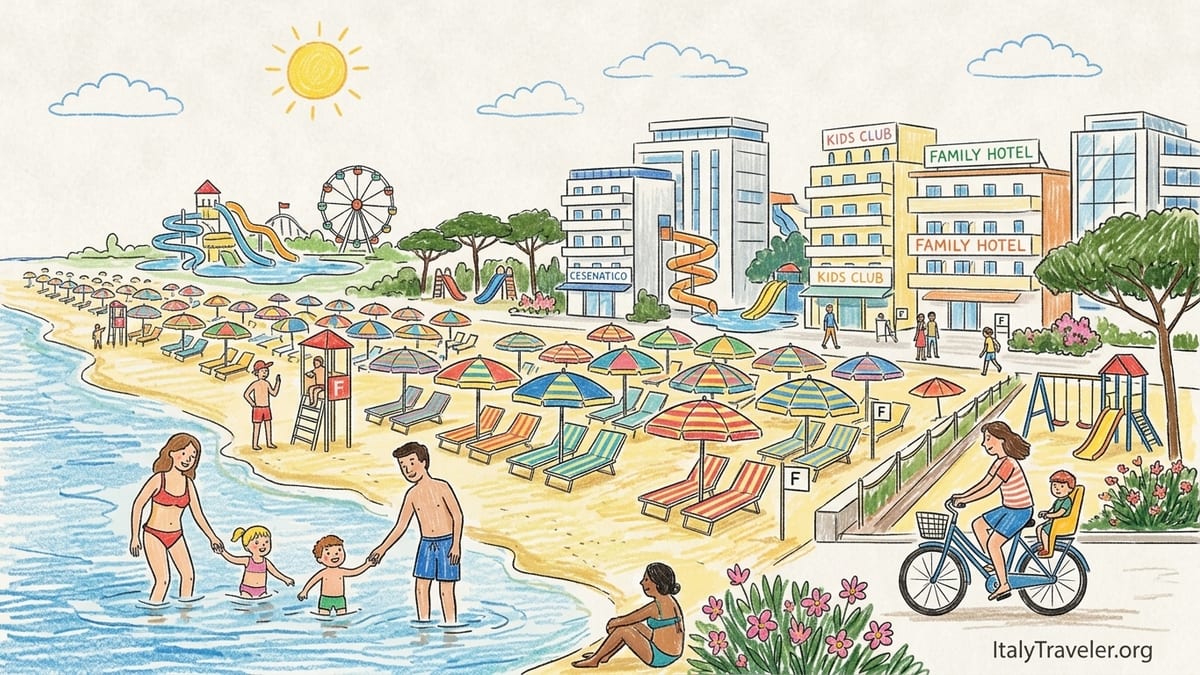
From Bibione in the north to Abruzzo further south, the Adriatic coast is built around family tourism. Beaches are generally wide and sandy, with gently shelving water that allows small children to paddle close to the shore while adults stand nearby. In places like Jesolo, Bibione, Rimini or Riccione, lifeguarded lidos line up almost continuously, each renting out umbrellas and sunbeds by the day or week. Many also bundle family deals that include a fixed umbrella and two loungers with a hotel stay, which is particularly common in resorts such as Bibione, Cesenatico or Giulianova.
Most towns discussed here are modern seaside resorts rather than historic ports. That means long promenades, cycling paths for family bike rides with rental bikes and child seats, playgrounds near the sand, and dense clusters of gelato bars and pizzerias. Specialist Italian family-hotel consortia list dozens of purpose-built properties along the Riviera Romagnola between Cesenatico and Cattolica, many operating in summer on a full-board or all-inclusive basis with kids’ clubs and beach service included, while large booking platforms show hundreds of apartments, aparthotels and hotels labelled as family-friendly around Jesolo, Bibione, Lignano and Caorle.
Across the coast, you will find recurring themes: mini clubs from roughly age 3, shallow children’s pools, small water slides, family rooms sleeping four or more, and flexible mealtimes. Pricing varies widely. A mid-range family hotel in Riccione in late June often starts around the low hundreds of euros per night for a family of four on full board, while smaller, family-run hotels in Abruzzo or Marche can come in lower for similar board, especially outside peak August.
Beyond the beach, the Adriatic is rich in fun parks and aquaparks, particularly in the Veneto and Romagna sections. Families staying in Jesolo often combine beach days with a visit to a sizeable water park nearby, while those based in Rimini, Riccione or Cattolica have easy access to long-established amusement and theme parks that specifically court multi-generational groups. Many hotels sell discounted tickets or include park entries in special family packages.
Veneto & Friuli: Bibione, Caorle, Jesolo and Lignano Sabbiadoro
The northern Adriatic around Venice is one of the most established family regions in Italy. Bibione, Jesolo and Caorle in Veneto, together with Lignano Sabbiadoro in Friuli Venezia Giulia, offer long, golden beaches, shallow water and a high concentration of hotels and holiday villages tailored to parents with children. All four resorts regularly highlight family services and have won repeated environmental and beach-quality awards for clean water and well-equipped shorelines.
Bibione in particular has developed a certified “Bibione Family Hotel” label. Member hotels typically provide cots and safety rails, bottle warmers, high chairs, children’s menus, baby food preparation on request, bikes with child seats, small children’s libraries, play areas and family cards with discounts on local attractions. Many Bibione hotels bundle “beach plus hotel” offers, so a week in June might include half-board, reserved umbrella and sunbeds and access to a mini-club on the sand. Families often combine beach time with Bibione’s funfair, which occupies a large area with classic rides and stalls that stay open well into the evening.
Jesolo is livelier and more urban, with a long, straight beach backed by a busy evening pedestrian zone. Here you find a mix of simple two-star pensions with family rooms and high-end beachfront properties such as five-star spa hotels that market directly to families with kids’ pools, supervised activities and private beach clubs with shallow water in front. Jesolo’s advantage is variety: self-catering apartments for larger groups, mid-range hotels a block back from the sand, and luxury options with on-site spa and indoor pools for shoulder seasons. It suits families who like to walk out to an evening passeggiata, mini golf and arcades.
Caorle offers a slightly more traditional feel, with a compact historic center and beaches that are still very family-oriented. You will find medium-sized hotels such as family-managed three and four-star properties with pools close to the sand and package-friendly full-board options. Lignano Sabbiadoro, further east, has long been a family holiday mainstay, pairing long beaches and pinewoods with large holiday villages and campsites. Here, many families choose holiday parks with multiple pools, water slides, kids’ clubs and direct or near-direct beach access, which can work well if you prefer a self-contained environment and the ability to cook some meals in your apartment or mobile home.
Riviera Romagnola North: Cesenatico and Bellaria Igea Marina
Moving south into Emilia-Romagna, Cesenatico and Bellaria Igea Marina sit at the quieter, more family-centred end of the famous Riviera Romagnola. Both offer flat, sandy beaches that slope gently into the sea and long promenades lined with bars, playgrounds and gelato stands. They tend to attract Italian families with younger children and grandparents in tow, especially outside the peak party weeks you might associate with Rimini.
Cesenatico mixes a historic canal harbour with a resort strip packed with family hotels. Tour operators and Italian family-hotel chains list several three and four-star beachside properties here with dedicated kids’ facilities. It is common to see full-board or soft all-inclusive packages that include buffet meals, drinks at meals, use of a swimming pool and an assigned umbrella and sunbeds at a partner lido. Some hotels organise daily activities such as treasure hunts and beach games, mini clubs in shaded areas, and evening baby dance events in the hotel garden. A typical example is a three-star “family hotel” in Valverde di Cesenatico offering a pool, entertainment and full-board plus drinks, pitched squarely at parents who do not want to think about daily budgeting once they arrive.
Bellaria Igea Marina, just north of Rimini, has built a strong reputation as a family-first destination. Numerous hotels market themselves explicitly as family hotels, often with small water slides, separate baby pools, indoor playrooms and children’s menus with flexible serving times. Some offer “kids free” deals outside August, where up to two children under a certain age stay at discounted rates when sharing with parents. For example, a three-star family hotel in Bellaria might advertise a fenced outdoor play area, heated pool, pushchairs to borrow and organised entertainment for different age groups, alongside full-board or soft all-inclusive formulas.
Both Cesenatico and Bellaria are attractive if you want Romagna’s famous hospitality but prefer a calmer base. You still have easy access to major theme parks by car or shuttle, yet at night the promenades feel relaxed and oriented around families strolling, playing arcade games and enjoying late-night gelato rather than nightclubs.
Riviera Romagnola South: Rimini, Riccione, Misano and Cattolica
The stretch of coast from Rimini to Cattolica is the most densely developed section of the Adriatic and one of Europe’s most concentrated family-holiday zones. Here, specialist family-hotel operators list dozens of purpose-designed properties, many grouped under a shared brand and all-inclusive formula. You will find hotels in Cervia, Cesenatico, Pinarella, Rimini and Riccione operating a branded “all inclusive open bar” concept that folds meals, drinks, snacks, beach service and kids’ clubs into one daily rate, with the possibility to dine at sister hotels in neighbouring towns for day trips.
Rimini itself stretches across multiple neighbourhoods, from lively Marina Centro to more residential Viserbella and Miramare. The beach is wide and shallow, with a long line of stabilimenti offering playgrounds, sports courts and baby areas on the sand. Family hotels here typically offer at least one outdoor pool, mini club, strollers on request and bikes with child seats. Some four-star hotels near the seafront also add small wellness areas for parents. Rimini suits families who value a choice of restaurants and easy transport links, including a railway station and an airport with seasonal connections.
Riccione is often described as the chic younger sister, pairing fashion-conscious shopping streets with a strong family appeal. Several well-known family-hotel brands operate here, offering large playrooms, kids’ buffets at child-friendly height, baby kitchens where parents can prepare food, and structured mini and junior clubs. Many Riccione hotels sell full-board packages with beach service and all-day soft drinks included. Proximity to major theme parks is a big plus: families often combine stays with day trips to aquaparks and amusement parks in and around Riccione and nearby towns, taking advantage of hotel shuttle buses or discounted tickets.
Just south, Misano Adriatico and Cattolica round off the Romagna coast before the Marche border. Misano is compact and family focused, while Cattolica offers both a long sandy beach and a well-known public aquarium that many hotels promote in their family packages. In both towns, three and four-star hotels with pools and family rooms dominate, often on full-board. For example, a mid-range Cattolica hotel might include a fenced baby pool, mini-club on the beach, use of bikes with baby seats and fixed-price weekly beach packages. The coastline here is ideal for children who like to alternate between sandcastles, hotel pool inflatables and the occasional amusement-park day.
Bibione, Jesolo, Lignano & Caorle vs Romagna: How to Choose
For many international families, the hardest decision is whether to base themselves in the northern Veneto and Friuli resorts or to drive further south into Romagna. The coast and sea are broadly similar: wide, sandy beaches and shallow water in both areas. The real differences lie in atmosphere, volume of dedicated family hotels and how “packaged” you want your holiday to be.
Bibione, Jesolo, Lignano and Caorle offer a powerful mix of beach holiday and side trips to Venice, Trieste or the lagoon islands. They are particularly strong if you like the idea of combining a day on the sand with a cultural excursion or if you are driving from central Europe and prefer a slightly shorter journey. Many hotels run on half-board or breakfast-only formulas, leaving you free to explore the restaurant scene at night. Larger holiday villages near Lignano and Bibione add a more resort-like experience, with multiple pools and kids’ clubs inside a gated complex.
By contrast, Romagna between Cesenatico and Cattolica is arguably the epicentre of all-inclusive family hotels in Italy. Here, it is easy to find properties where your rate includes buffet meals, drinks, entertainment, mini and junior clubs, bike hire and beach service. Brands specialising in family holidays advertise up to a dozen hotels across this short stretch of coast, all running the same “family all inclusive open bar” concept. If you prefer to pay once and then stop thinking about money on site, Romagna is particularly appealing, although peak August weeks can be very busy, and prices reflect demand.
In practical terms, think about your children’s ages and your travel style. With toddlers and pre-schoolers, the intense family infrastructure of Romagna can be priceless: pushchairs, bottle warmers, baby buffets and on-beach entertainers are everywhere. With older children and teens, the wider excursion options around Jesolo, Bibione, Lignano and Caorle, plus the availability of apartments and aparthotels, may make the northern coast a better fit, especially if you want to weave in day trips to Venice or inland amusement and water parks.
Marche: Quieter Family Resorts with Sandy Beaches
Crossing into the Marche region, the coast becomes a little less densely built-up and hotel-heavy than Romagna, which can appeal to families seeking a more relaxed environment. Towns such as Senigallia, Numana, Porto Recanati and San Benedetto del Tronto offer long stretches of sand or fine shingle, many with Blue Flag recognition for water quality and services, but the overall pace is calmer than around Rimini.
Senigallia is a good example of a family-friendly Marche resort. It combines a historic centre with a long, gently curving beach known for its fine “velvet” sand. Along the seafront, three and four-star hotels offer family rooms, pools and full-board or half-board options, while beach clubs provide umbrellas, loungers, playgrounds and pedal-boat hire. Compared with Romagna, there are fewer mega family hotels with large entertainment teams, but plenty of properties offer basic mini-club services and small play areas.
Further south, the stretch around Numana and nearby towns under the Conero headland offers a mix of sandy and pebbly coves, with some family-focused resorts in flatter areas where access is easier with strollers. Many families, however, look further down to San Benedetto del Tronto, a popular seaside town with a particularly long and well-developed promenade. Its palm-lined lungomare is ideal for evening walks and cycling with children, and accommodation ranges from serviced apartments to hotels with pools close to the beach. Several properties in San Benedetto market specifically to families, advertising kids’ clubs in summer, shallow children’s pools and included beach service.
Marche suits families willing to accept slightly fewer high-intensity kids’ clubs in exchange for more space and a sense that the town serves both locals and tourists. Prices for full-board packages can be more moderate than in the hottest Riviera Romagnola weeks, and you still have access to amusement parks within driving distance, plus inland hill towns and countryside for day trips if the children can handle some car time.
Abruzzo: Value-Friendly Family Seaside in the “Seven Sisters”
South of Marche, Abruzzo’s Adriatic coast stretches for over a hundred kilometres, dotted with mid-sized seaside towns that Italians know well but many international visitors overlook. In the northern part of the region, the so-called “Seven Sisters” of Alba Adriatica, Tortoreto, Giulianova, Roseto degli Abruzzi, Pineto, Silvi Marina and Martinsicuro offer long, often tree-lined seafronts, sandy beaches and a strong family orientation.
Alba Adriatica is particularly popular with families thanks to its wide sandy beach, gently sloping seabed and a seafront shaded by a belt of pine trees. Several hotels market themselves around family holidays, combining private beach areas with animation and mini clubs. A typical three-star property might offer a pool, an activity team for children, a dedicated kids’ buffet at lunch and dinner and included beach service with one umbrella, one deckchair and one sunbed per room. Neighbouring Giulianova has a similar set-up, with notable family hotels located within large pine gardens that house two separate pools, one shallow for children and one deeper for adults, plus playgrounds, ball pits and structured mini and junior clubs.
Pineto and Silvi Marina offer an even greener feel, with long beaches backed by pinewoods that provide natural shade, ideal for families with babies who should avoid direct midday sun. Here, holiday villages and camping resorts are common, some with large pool complexes, water slides and kids’ entertainment. One beachfront holiday village in Pineto, for instance, highlights a “Kids World” with soft flooring playgrounds, trampolines, organised mini-club activities and carefully fenced areas, combined with bungalow or mobile-home accommodation just a short walk from the sea.
Across Abruzzo’s coast, prices for accommodation and beach services are often lower than in the Veneto or Romagna hotspots at the same time of year. This can make Abruzzo attractive for longer stays or larger families needing two rooms or an apartment. The trade-off is that English may be less commonly spoken in smaller family-run hotels, so some basic Italian phrases or translation apps can be useful. In exchange, you gain quieter beaches, a slower pace and the chance to combine seaside days with trips into Abruzzo’s national parks in the interior.
What to Look For: Rooms, Meals, Beaches and Kids’ Clubs
When comparing individual hotels, resorts or holiday villages along the Adriatic, focus on a few key factors beyond star rating. For rooms, check whether “family room” means one large open-plan space with a double bed and bunk beds, or two separate rooms with a connecting door, which many parents prefer once children reach school age. In popular resorts such as Jesolo, Bibione, Rimini or Riccione, genuine two-room family suites with balconies and sea views command a premium, especially in high season. In Abruzzo and Marche, you may find more modestly priced apartment-style hotels and residences where a one-bedroom unit with a sofa bed in the living area can comfortably host a family of four.
Board basis also matters. Full-board and all-inclusive formulas are common on the Riviera Romagnola, where many family hotels include buffet breakfast, lunch and dinner, drinks at meals and sometimes ice cream or snacks throughout the day. This works well for families with small children who benefit from predictable routines and reduces the need to hunt for restaurants every evening. In Veneto and Friuli, half-board or breakfast-only is more typical, which suits those who want flexibility to explore local trattorie or take day trips. Holiday villages in Abruzzo often sit somewhere in between, with full-board in low-rise hotels plus the option of self-catering apartments within the same complex.
On the beach side, prioritise stabilimenti or private beaches that clearly advertise family facilities: fenced playgrounds on the sand, baby changing cabins, shade structures for prams and a good number of lifeguards. Many Bibione, Jesolo and Romagna hotels include a reserved beach spot in their rates, but in some Marche and Abruzzo resorts you may need to budget separately for daily or weekly rentals. If your children are very young, look for gentle entry into the water and avoid sections where underwater sandbanks can cause sudden depth changes. When reviewing hotel descriptions and photos, note the distance from the property to the sea: “front row” genuinely facing the beach can make a big difference when you are carrying inflatables and nappy bags in the midday heat.
Finally, consider kids’ clubs and entertainment. Italian-style animation typically includes mini-club sessions in the late morning and afternoon, with games, crafts and sports, followed by evening baby dance and small shows. Age ranges vary, so check whether there are separate activities for toddlers, primary-school children and teens. Some family resort brands along the Riviera Romagnola also offer dedicated teen programs with beach volleyball, group outings and game rooms, which can make a big difference if you are travelling with older kids who might otherwise get bored on a purely beach-and-pool routine.
The Takeaway
For families, the Italian Adriatic offers an unusually dense concentration of resorts purpose-built around shallow water, sandy beaches and child-friendly hospitality. Bibione, Jesolo, Lignano and Caorle in the north excel at combining beach holidays with city and lagoon excursions, and their hotel stock ranges from simple pensions to high-end beach clubs, with plenty of family rooms and kids’ services. The Riviera Romagnola, from Cesenatico and Bellaria to Rimini, Riccione, Misano and Cattolica, is arguably Italy’s all-inclusive heartland for families, with dozens of hotels running full-board or all-inclusive formulas, structured animation and bundled beach services.
Further south, Marche and Abruzzo provide softer alternatives, where family-focused hotels and villages sit in slightly less crowded towns, prices are often more forgiving, and the atmosphere feels more mixed between locals and visitors. Resorts like Senigallia, San Benedetto del Tronto, Alba Adriatica, Giulianova, Pineto and Silvi Marina may lack some of the giant kids’ clubs and water parks of Romagna, but they compensate with space, greenery and a slower rhythm that many parents find easier with young children.
When choosing your base, think first about your children’s ages, your tolerance for crowds and your preferred level of structure. If you want everything on-site and prepaid, look closely at Romagna’s family hotel chains and their all-inclusive packages. If you prefer independence and culture alongside the sea, the Veneto and Friuli resorts make a strong case. If value, greenery and a laid-back feel are priorities, Marche and Abruzzo are well worth a look. In all cases, focus on concrete features that matter day to day: room layout, distance to the beach, kids’ club ages, meal times and what, exactly, is included in your rate.
FAQ
Q1. Which Adriatic resort is best for families with toddlers?
Families with toddlers often do well in Bibione, Cesenatico, Bellaria Igea Marina or Alba Adriatica, where beaches are wide and shallow, many hotels offer baby buffets and high chairs, and promenades are flat and stroller-friendly.
Q2. Are the beaches in Rimini and Riccione suitable for small children?
Yes. The beaches in Rimini and Riccione are sandy with gently shelving water, and most beach clubs provide lifeguards, playgrounds, shaded areas and baby facilities that work well for children under 6.
Q3. Is it worth paying for all-inclusive at a family hotel on the Riviera Romagnola?
For many families, all-inclusive or full-board in Romagna is good value because it includes meals, drinks at meals, beach service and kids’ clubs, reducing on-site spending and daily decision-making.
Q4. How do Bibione and Jesolo compare for a first Adriatic family holiday?
Bibione feels slightly more compact and strongly family-branded, with many hotels offering bundled beach services, while Jesolo is livelier and more urban, with a wider range of accommodation and a busy evening pedestrian zone.
Q5. Are there good family-friendly options in Marche and Abruzzo?
Yes. Towns such as Senigallia and San Benedetto del Tronto in Marche, and Alba Adriatica, Giulianova, Pineto and Silvi Marina in Abruzzo, have long, family-oriented beaches and hotels with pools, kids’ clubs and included beach service.
Q6. Do I need a car for a family holiday on the Italian Adriatic coast?
A car is helpful but not essential. Larger resorts like Jesolo, Bibione, Rimini and Riccione have good public transport and organised excursions, while a car makes it easier to explore smaller Marche and Abruzzo towns and inland attractions.
Q7. When is the best time to visit with children to avoid extreme heat and crowds?
Late May to early July and early September often provide warm sea temperatures and functioning kids’ clubs without peak August crowds or the highest prices, making them ideal for families who are not tied to mid-summer dates.
Q8. Are there amusement and water parks near the main Adriatic resorts?
Yes. The Veneto coast around Jesolo and Lignano and the Riviera Romagnola near Rimini and Riccione host several water parks and amusement parks, and many family hotels sell discounted tickets or organise shuttles in summer.
Q9. How family-friendly are Italian restaurants in these seaside towns?
Restaurants in Adriatic resorts are generally very welcoming to children, offering simple pasta or pizza options, high chairs in many places and flexible attitudes to early dinners when requested, especially in peak season.
Q10. What should I check before booking a “family room” or “family hotel”?
Confirm the room layout, whether cots and safety rails are provided, the distance to the beach, the ages accepted at kids’ clubs, meal times and what beach services or drinks are actually included in the quoted rate.