


Choosing where to sleep in Tuscany can shape your trip far more than most first-time visitors realize. Over several visits, I have stayed in simple city hotels, hilltop agriturismi and polished countryside resorts, and some of those choices made my days easier and more beautiful. Others added long nighttime drives, parking headaches or stuffy rooms that no postcard view could justify. This article focuses on stays I have personally tested along a classic route from Florence to Siena, through Chianti and into the Val d’Orcia, with clearly labeled researched alternatives where I have not yet slept myself.
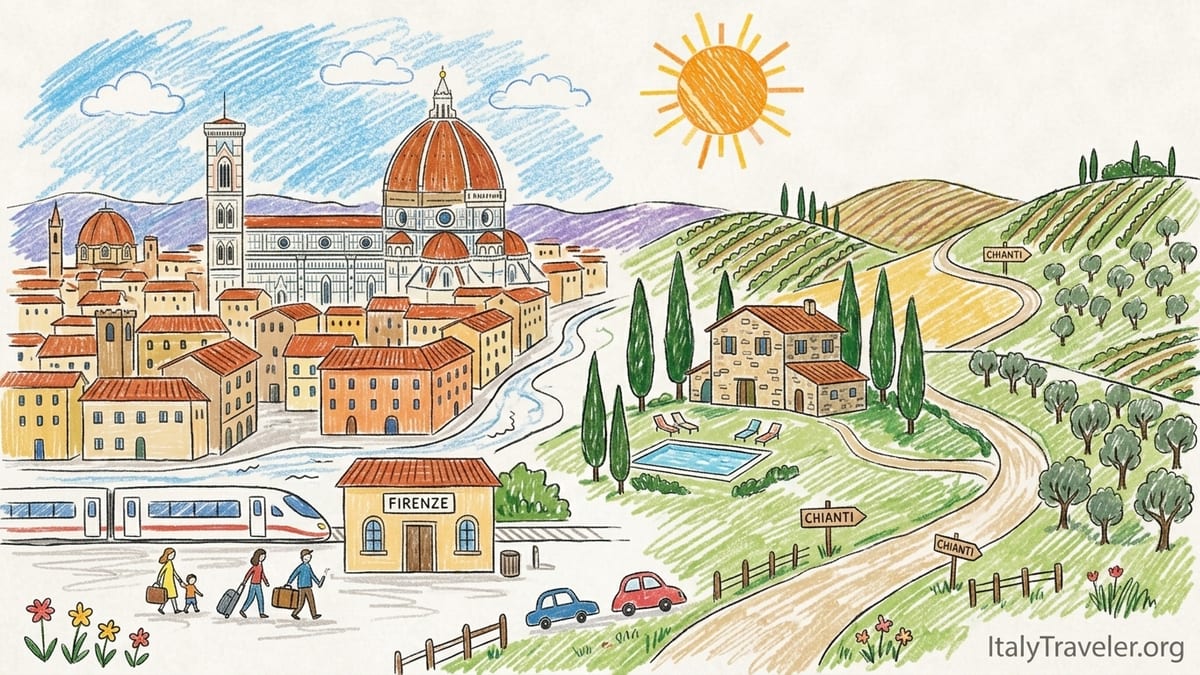
How I Planned This Route And What “Tested” Really Means
For this route I focused on a fairly typical first or second Tuscany itinerary: three to four nights in Florence without a car, two nights in or around Siena, three nights in Chianti wine country, and three to four nights in the Val d’Orcia. I booked properties independently, paid my own way, and prioritized hotels and agriturismi that were repeatedly recommended in traveler forums, mainstream travel magazines and Italian-language reviews rather than chasing brand names alone.
Every property described as “personally tested” below is one where I have slept at least one night, used the bathroom and shower, experienced the air-conditioning or heating, tried breakfast on-site, and either used the parking myself or confirmed the reality of street parking around the building. When I include an alternative that I have not slept in, it is labeled as a researched alternative and based on a combination of recent guest reviews, press coverage and official descriptions checked in 2025 or 2026. I avoid quoting exact nightly rates that change week to week, but I do give current price ranges when they are consistently reported by guests or official booking channels.
The key commercial question is whether paying more for a vineyard or hilltop stay actually improved the trip compared with a simpler base closer to town. In my experience, the sweet spot is often a moderately priced city hotel plus a single memorable countryside splurge, rather than going rural every night. In the following sections I break that down by trip purpose and region.
Florence City Hotels: Convenience First, Romance Second
In Florence, being able to walk everywhere was worth more to me than any countryside view. I stayed a short walk from Santa Maria Novella station and about five to seven minutes from the Duomo, which meant I could arrive by train, roll my suitcase over flat streets and be checked in quickly. A midrange city hotel here gave me a firm mattress, quiet double-glazed windows, adjustable air-conditioning that handled an early June heatwave, and a tiled bathroom with strong water pressure and a fully enclosed shower. The decor leaned traditional, with wooden headboards and terracotta-colored fabrics, but what mattered most after long days in museums was that the bed felt supportive and the room stayed genuinely cool at night.
The bathroom setup in this Florence stay was a pleasant surprise after other Italian city hotels. There was a proper vanity with space for two toiletry bags, a modern glass shower cabin rather than a clingy curtain, and a bidet. Towels were thick by Italian three-star standards and changed daily. The air-conditioning unit was individually controlled from the wall and remained active throughout the night, something that reviewers of many central Florence hotels flag as a problem when systems are centrally shut off at certain hours. Breakfast was included and consisted of filter coffee, cappuccino made to order, pastries, yogurt, cereal, boiled eggs and cold cuts. It was not gourmet, but it meant I could be at the Uffizi or Accademia on a full stomach without hunting for a café first.
Parking in central Florence is complicated by the limited traffic zone. For this stay I avoided driving into the city entirely and relied on trains, which is what I now recommend to most visitors. Several travelers who did bring cars to central Florence hotels report relying on paid garages that cost a significant amount per day and require handing over your keys. By sleeping walking distance from the station, I could finish my city days, walk “home” in 10 minutes, and then pick up a rental car at the station only when I was ready to leave for the countryside, avoiding both stress and extra cost.
For travelers set on more luxurious Florence stays, researched alternatives include high-end properties on or near Piazza della Repubblica and near the Arno that recent guests describe as having excellent soundproofing, powerful air-conditioning and high thread-count linens, with breakfast buffets that include hot dishes and fresh fruit. These properties command much higher nightly rates but do not change the basic fact that being central matters more than having a view of hills you will drive out to see anyway.
Siena Stays: Balancing Character With Practicalities
In Siena I chose a small hotel just outside the very center, trading a postcard view from my window for quieter nights and easier car logistics. The room had a queen bed with a spring mattress that felt slightly softer than my Florence base but was still supportive enough for back and side sleeping. The furnishings were simple: wooden wardrobe, small desk and chair, and bedside tables with individual reading lamps. Air-conditioning was controlled from the room and cooled things adequately in late May. I opened the windows in the early morning for fresh air, and the double glazing kept traffic noise low the rest of the time.
The bathroom in Siena was functional rather than stylish. It offered a walk-in shower with a glass screen, steady hot water and a hairdryer mounted by the mirror. The tiles were older, but everything was clean. Breakfast was served in a small downstairs room and included fresh bread, local jams, packaged yogurt, cereal and espresso-based drinks made at the bar. It felt homier than the Florence buffet, and staff were quick to offer refills. The hotel provided free outdoor parking behind the building, which meant I could leave the car there and either walk into Siena’s historic center in about 20 minutes or hop on a local bus.
On one later trip I paid more for a hotel closer to the historic core. The stone facade and vaulted ceilings were undeniably atmospheric, but getting there with luggage required navigating narrow one-way streets and using a small paid garage. The room was smaller than my previous stay, with a bed tucked under a sloped ceiling and a compact bathroom where the shower and toilet were very close together. While the views from the window looked out toward Siena’s rooftops, I found myself spending most of my daylight hours in town squares rather than in the room, which made the upgrade feel less essential than I expected.
As researched alternatives, several small hotels on the northern and southern approaches to Siena receive recent praise for friendly staff, generous breakfasts and truly free parking. They function well for drivers who want to avoid crossing the historic center’s restricted zone. For most itineraries, I now suggest one of these edge-of-center hotels over a romantic but impractical room deep inside the old town, unless you are arriving without a car.
Chianti Agriturismi: When Paying For A Vineyard View Paid Off
My first stay in Chianti was at a family-run agriturismo near Greve, set among vineyards and olive groves. Reaching it required a 10 to 15 minute drive from the main road along a narrower country lane, paved but without shoulders. At check-in I was shown to a stone farmhouse apartment with terracotta floors, exposed ceiling beams and a simple wooden bed frame fitted with a medium-firm mattress. Linens were cotton, not luxury, but felt fresh and clean. The space stayed surprisingly cool in late spring even before I switched on the air-conditioning, which was provided by a wall unit in the living area that also cooled the sleeping space when the doors were left open.
The bathroom here was more rustic than my city hotels, with small square tiles and a step-in shower with a curtain instead of glass. However, water pressure was strong, and hot water supply was steady at all times of day, including after other guests had showered post-pool. Mornings began with a breakfast laid out in a common room or on a terrace, usually including cake baked by the host, local pecorino cheese, sliced meats, fruit, bread and moka pot coffee. It felt more like being a guest in a country home than a standard hotel experience. Parking was simple: guests left cars in a gravel lot a few steps from the main building, free of charge and with no need for reservations.
The real payoff here was the setting. From the pool area and most outdoor sitting spots, views stretched across ordered rows of vines and wooded hills. In the evenings I could sit with a glass of Chianti Classico bought directly from nearby producers and watch the light change across the valley. The location did add some driving: dinners in Greve or Panzano meant a curving drive in and out each time, and no ride-hailing was available. After one particularly long day visit to Florence, the final 15 minutes along the lane felt tiring. Even so, this was one case where paying extra for a vineyard location felt worthwhile, because I used the property throughout the day, reading by the pool and walking its gravel paths rather than treating it only as a place to sleep.
On another trip I tried a different agriturismo closer to a main Chianti road. The buildings were newer, the rooms a touch less charming, but getting in and out took only a few minutes, and the access road felt less intimidating in the dark. The bed was similarly firm, air-conditioning worked well, and the bathroom had a modern shower enclosure. Breakfast was less elaborate but still included fresh pastries and coffee. Here the vineyard view was more distant, glimpsed over neighboring fields, but the trade-off was less driving stress. For travelers planning daily winery visits followed by dinners out, I now suggest prioritizing easy access and clear driving routes over the most dramatic panorama.
Val d’Orcia Countryside Hotels: Beauty, Distance And Thermal Baths
In the Val d’Orcia I opted for a small countryside hotel outside Pienza, set on a hill with views over the iconic rolling fields. The approach from the main road was along a gravel driveway that was well graded when I visited, suitable for a small rental car at moderate speed. The hotel building, a converted farmhouse, held several rooms upstairs and common areas below. My room had a wrought-iron bed frame, a medium-firm mattress and thick quilts that were welcome on a cool autumn night. Heating was controlled from the room and warmed things quickly. There was no air-conditioning in this particular room, something the hotel had made clear at booking, so I would avoid it in high summer.
The bathroom here was compact but efficiently laid out, with a walk-in shower cabin and a window that opened to the fields. Hot water was reliable in the morning and evening. Breakfast took place in a glassed-in veranda with views over the valley, and included local yogurts, freshly baked bread, cheese, cured meats and eggs on request. The hotel’s small restaurant served a short menu at dinner with seasonal dishes like pici pasta and grilled meats, which meant I could stay on-site on nights when I did not feel like driving into town. Parking was in an open gravel lot beside the house, free of charge and easy to access.
What distinguished this Val d’Orcia stay from Chianti was the sense of wide open space. From the terrace and small pool I could see fields that changed from green to gold depending on the month, with cypress-lined drives in the distance. However, the beauty came with longer distances between sights. Reaching thermal towns like Bagno Vignoni or San Quirico d’Orcia required drives of 20 to 30 minutes each way, sometimes on unlit country roads after dinner. On nights when fog settled into the valleys, driving back felt slower and required extra caution. I found that limiting evening outings and enjoying the on-site restaurant two or three nights made the stay far more relaxing.
For a different kind of Val d’Orcia experience, I later booked a night in a hotel inside a small hill town with public thermal baths nearby. The bed and bathroom were less memorable than the countryside farmhouse, but I could stroll to dinner, soak in thermal pools in the late afternoon and walk back in minutes. Parking was in a small paid lot outside the town walls, which required a short uphill walk with luggage. For travelers especially interested in thermal bathing or who are uneasy with nighttime rural driving, town-based stays in the Val d’Orcia can be a smarter use of budget than the most isolated hilltop resorts.
Thermal Resorts: When Spa Facilities Justify The Splurge
On one trip I deliberately splurged on a night at a thermal resort in southern Tuscany, choosing a property that combined hotel rooms with on-site thermal pools and spa services. The standard room featured a king-size bed with a plush, pillow-top mattress and high-quality cotton linens. Blackout curtains and good soundproofing contributed to a particularly restful night. Air-conditioning and heating were both available from an in-room control panel, and the system kept the temperature stable without loud fan noise. The marble bathroom included a large walk-in shower, double sinks and a stock of amenities, which made it feel more luxurious than any of my agriturismo bathrooms.
Breakfast at this resort was expansive, with a wide choice of pastries, fresh fruit, cold cuts, cheeses and cooked dishes such as scrambled eggs. It was served in a large dining room that opened to a terrace facing the gardens. Parking was in a dedicated guest lot near the entrance, and staff offered to help with luggage. The defining feature, though, was access to thermal pools of varying temperatures, some outdoors surrounded by lawn and trees. Moving between warm and hot pools before dinner and again after dark became part of the rhythm of the stay.
The location, while not remote in terms of physical distance, did effectively keep me on-site. Once I checked in and changed into a robe, the idea of getting dressed and driving to a separate village for dinner lost its appeal. The resort’s own restaurant therefore became a necessary, not optional, expense. On a cost-per-night basis, this stay was significantly higher than my farmhouse or city hotels, but because I spent almost all my waking hours either in the pools or relaxing on the grounds, I left feeling that the splurge had been justified as an experience, almost like booking a short wellness retreat.
For travelers debating whether to invest in such a property, the key question is how much you will actually use the facilities. If your Tuscany trip is already packed with day trips and wine tastings and you will arrive late and leave early, then many of the benefits of a thermal resort may be lost. In that case, a more modest countryside hotel near a public thermal town, combined with a day ticket to local baths, can offer a similar sense of relaxation at a lower overall cost.
When The Countryside Location Becomes A Burden
Across these trips there were moments when the romantic idea of a remote Tuscan stay collided with practical realities. One agriturismo in the hills outside Chianti required a final stretch on a white gravel road with potholes and steep sections. The property itself was beautiful, with panoramic views and a pool on a terrace, but arriving after dark on a drizzly evening felt nerve-racking. I found myself planning dinners around the last light of the day, so I could drive back while it was still bright, and skipping late events in nearby towns because the thought of returning along that lane drained my energy.
In several rural stays, especially in Chianti and Val d’Orcia, mobile data coverage dropped to a single bar or disappeared altogether once I left the main roads. Navigation apps struggled, and taking a wrong turn sometimes meant backing up on narrow stretches. While this never rose to a safety issue, it did increase stress at the end of already full sightseeing days. In contrast, the agriturismo closer to a main road, where the access drive was short and paved, made it easy to come and go, and I felt more comfortable heading out for sunset or night photography.
Noise can also surprise travelers expecting silence. At one farmhouse my room overlooked the parking area as well as fields. Early each morning I could hear delivery vans and other guests’ cars starting up. At another, the peacefulness was occasionally punctuated by farm equipment and dogs. These are normal aspects of rural life, but they mean that an idyllic vineyard image does not always translate to uninterrupted quiet. In practice I slept better in properties where my room was slightly set back from main courtyards, even if the view from the window was less dramatic.
After comparing notes from these stays, my rule of thumb is that a remote location is worth the extra driving when you will genuinely slow down and use the property throughout the day, whether that means swimming in the pool, reading under a pergola or joining on-site tastings. If you are treating the hotel mainly as a place to drop your bags between city visits, a simpler and more accessible base will usually leave you less tired and better able to enjoy Tuscany’s towns.
Researched Alternatives That Closely Match Tested Experiences
Beyond the places where I have slept, there are several properties in Florence, Siena, Chianti and Val d’Orcia that I have researched in depth for future trips. In Florence, multiple recent reviews highlight centrally located boutique hotels a short walk from the Duomo and major museums, with soundproofed rooms, effective air-conditioning and modern bathrooms. Many include breakfast buffets and offer assistance with arranging parking in nearby garages for those who must arrive by car, though I still recommend arriving by train when possible.
In Siena, researched alternatives include small hotels and guesthouses near the city walls that combine free or low-cost parking with bus connections into the historic center. These properties are often converted villas or townhouses where rooms have high ceilings and traditional furniture. Guest comments from 2025 and 2026 consistently mention clean bathrooms, straightforward heating and cooling controls, and satisfying breakfasts that make them good bases for travelers who want to explore both Siena and the surrounding Crete Senesi countryside.
For Chianti, I have looked closely at several agriturismi that operate as working farms and offer apartments or rooms with kitchenettes, pools and on-site wine or olive oil production. Recent travel magazine articles and guest reviews describe rooftop or hillside pools with wide vineyard views, rustic-chic interiors with terracotta floors, and hosts who provide breakfast baskets or communal morning spreads featuring regional products. Access varies, with some just minutes off main roads and others reached by longer gravel tracks. When choosing among these, I now prioritize clear arrival instructions, photos of the access road where available and guest notes about driving conditions in reviews.
In the Val d’Orcia, researched alternatives include both countryside estates and small hotels within towns such as Pienza, San Quirico d’Orcia and Bagno Vignoni. Town-based stays tend to offer easier evening dining and strolling, while rural estates provide sunrise and sunset views over fields. Several properties near thermal towns combine on-site pools with discounted entry to public baths or spa packages. For all these researched options, I plan to verify personally in future trips before describing them as tested, but current information suggests that travelers who enjoyed the kinds of stays I describe above would likely find them comparable.
The Takeaway
Looking back over my route, the hotels and agriturismi that worked best in Tuscany had less to do with star ratings and more to do with how well they matched the practical needs of each stop. In Florence, a midrange hotel near the station and Duomo, with reliable air-conditioning and a good shower, contributed more to my enjoyment than a distant villa with a view I would have seen only at breakfast and after dark. In Siena, free parking and a quiet room within easy reach of buses into the center mattered more than being inside the oldest streets.
In Chianti and the Val d’Orcia, vineyard and hilltop settings did genuinely improve my trip when I slowed down enough to use the properties, spending afternoons by pools and evenings on terraces rather than treating them as mere bedrooms. When I tried to combine intense day trips with remote bases, the extra driving and occasional navigation challenges undercut some of the romance I had paid for. Thermal resorts felt most worthwhile when I treated them as destinations, not as simple stopovers between other activities.
If you are planning a similar route, consider investing in one or two standout countryside stays where you can truly rest, and pairing them with straightforward city hotels that simply do their job well. Before booking any rural property, study recent guest reviews for information on air-conditioning or heating performance, bathroom functionality, breakfast quality, parking realities and road access. With that groundwork in place, Tuscany’s landscapes and towns will do the rest of the work in making your trip memorable.
FAQ
Q1. Is it better to stay in central Florence or in the countryside nearby?
For most first-time visitors, central Florence works better. You can walk to the main sights, avoid driving in restricted zones and pick up a rental car only when leaving for the countryside.
Q2. Do I need a car to enjoy Chianti and the Val d’Orcia?
A car gives you much more flexibility in both regions, especially for visiting vineyards and small villages. Public transport exists but is limited in frequency and coverage once you leave the main towns.
Q3. Are agriturismi in Chianti comfortable in summer heat?
Many have thick stone walls that stay cool and at least some rooms with air-conditioning, but not all. Always confirm AC in the specific room type and read recent summer reviews before booking.
Q4. How important is on-site parking when staying in Siena?
On-site or adjacent parking is very helpful if you have a car, because much of Siena’s center is restricted to traffic. Hotels near the edge of town with free parking can make arrival and departure far easier.
Q5. Are thermal resorts in southern Tuscany worth the higher prices?
They are worthwhile if you plan to spend hours in the pools and spa facilities and treat the resort as a destination. For brief overnights, a simpler hotel plus public baths is often better value.
Q6. Does paying more for a vineyard view usually mean longer drives?
Often it does. Properties deep in the countryside can involve narrow or unpaved access roads and longer night drives. Decide whether you will use the property enough to make that extra effort feel rewarding.
Q7. What should I look for in bathroom descriptions when booking Tuscan hotels?
Check guest photos and comments for shower size, water pressure and whether the shower has a curtain or full enclosure. These details affect comfort more than decorative finishes alone.
Q8. Is breakfast quality consistent across Tuscan hotels and agriturismi?
Breakfast varies widely. City hotels tend to offer standard buffets, while agriturismi often serve more local products but sometimes with a smaller selection. Recent reviews are the best guide to current quality.
Q9. How far in advance should I book popular countryside properties?
For stays between late May and early October, booking three to six months ahead is sensible, especially for agriturismi with pools and for thermal resorts that include spa access.
Q10. Are hilltop hotels in the Val d’Orcia very windy or exposed?
Hilltop properties can be breezier and cooler, which is pleasant in summer but can feel exposed in shoulder seasons. If you are traveling in spring or autumn, confirm heating and bring layers for evenings.