


The Italian Riviera is often reduced to a few postcard names like Portofino and Cinque Terre, but beach-focused travelers know that the real story runs longer and flatter along the shoreline. West of Genoa, the Riviera di Ponente hides some of northern Italy’s best sandy resorts, with long promenades, classic stabilimenti, family hotels and direct railway access that make it far easier to enjoy the sea than in many cliffside villages. This guide compares the key Ponente resorts of Sanremo, Diano Marina, Alassio, Finale Ligure, Loano and Varazze with eastern alternatives such as Sestri Levante, Rapallo and Monterosso, focusing on the details that matter when you are actually on the beach.
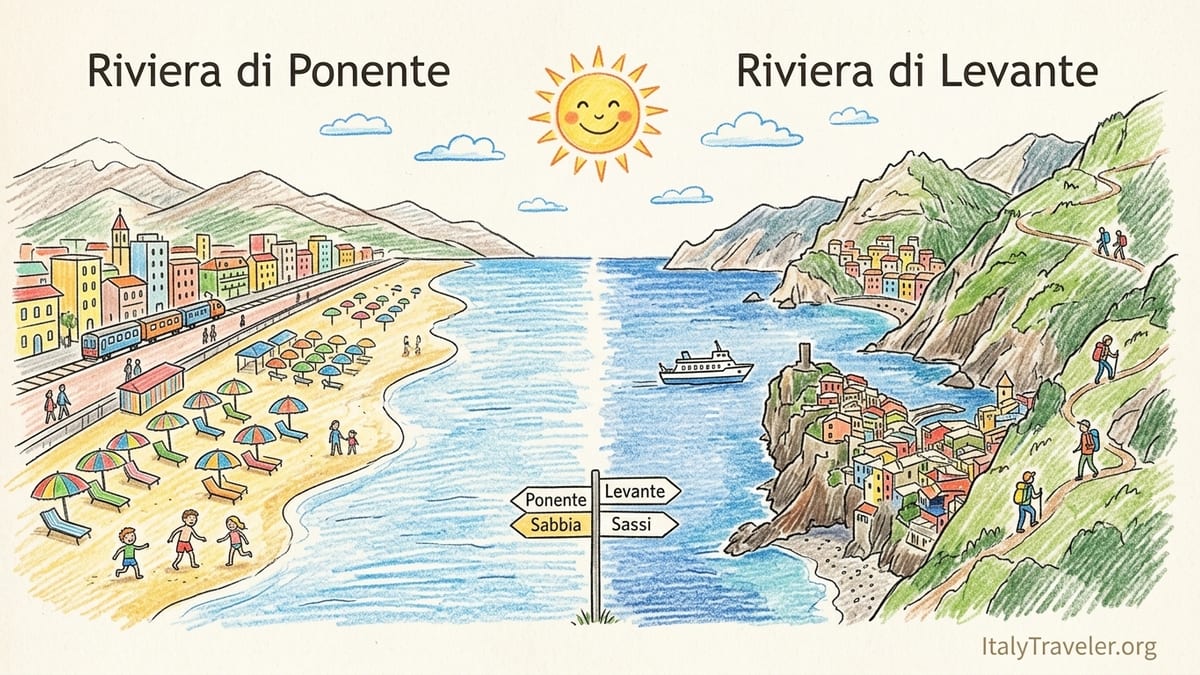
Understanding the Riviera: Ponente vs Levante
For beach holidays the Italian Riviera splits into two very different experiences. The Riviera di Ponente, stretching west from Genoa toward the French border, offers broader valleys, longer stretches of sand and low-rise resort towns where the promenade and railway often run just behind the beach. The Riviera di Levante, east of Genoa, is more dramatic and mountainous, dotted with small bays like Sestri Levante’s Baia del Silenzio or the coves of Cinque Terre. Views are spectacular, but usable beach space is tighter and often pebbly.
International round-ups frequently focus on Levante icons, yet regular Italian holidaymakers flock to Ponente towns such as Finale Ligure and Alassio precisely because they combine fine sand, shallow water and family-friendly stabilimenti with practical logistics. In peak summer it is the Ponente resorts that feel like open-air seaside lounges for Milan and Turin, while Levante skews toward couples and hikers who might add a beach afternoon to a broader itinerary.
When you compare resorts, it helps to be clear about your priorities. If you want children playing safely in shallow water, a private lido with a kids’ club and a flat stroll from hotel to gelato stand, Ponente is usually the better choice. If you prefer scenic village views, short stays and day trips by train with a quick swim before dinner, Levante and Cinque Terre can still work well, especially in shoulder seasons such as May, June and late September.
Sand vs Pebbles: Where You Will Actually Swim
On much of the Italian Riviera, especially around Liguria’s rocky headlands, beaches tend to be shingle or coarse pebble. That is why destinations with genuine, deep sandy strands are prized. Alassio and Finale Ligure are standout examples on the Ponente side, each with a long, soft, golden beach that feels more like the Adriatic than the typical Ligurian cove. In Alassio, the sand is particularly fine and the seabed stays shallow far from shore, which makes it ideal for families who want young children to be able to paddle while adults lounge under umbrellas.
Finale Ligure offers another broad sandy arc backed by a traffic-calmed promenade, and this combination of soft sand and easy access has helped it develop into a year-round resort town. Nearby Loano and Diano Marina offer a mix of sand and small pebbles, but both have sufficient sandy sections maintained by stabilimenti to satisfy visitors accustomed to softer shorelines. Varazze, closer to Genoa, has more varied textures along its compact waterfront, with stretches of coarse sand and shingle that appeal to surfers and younger visitors who care less about sand between their toes.
By contrast, many Levante resorts are defined by narrow, pebbly strips or grit sand squeezed beneath cliffs and railway arches. Rapallo’s central beach area is mostly artificial and shingled, structured around concrete piers and bathing platforms rather than a wide natural shore. Monterosso al Mare, the largest of the Cinque Terre villages, is the main Levante exception: it has a genuine sandy beach divided between public sections and private lidos. Even so, the sandy area is relatively compact compared with Alassio or Finale Ligure, and it fills quickly on summer weekends.
Stabilimenti, Pools and Family Facilities
Liguria’s stabilimenti balneari, or beach clubs, are a defining feature of a Riviera holiday. In Ponente resorts such as Alassio, Finale Ligure and Diano Marina, long rows of stabilimenti line the sand with neat grids of loungers and umbrellas. At a typical midrange lido in July or August, two sunbeds and one umbrella might cost around 30 to 40 euros per day for the first row by the sea, with lower prices a few rows back and discounts for multi-day packages. Many clubs offer changing cabins, freshwater showers, beach volleyball and simple lunch menus heavy on focaccia, fritto misto and fruit salads.
For families, dedicated services make a difference. In Finale Ligure, several stabilimenti advertise mini-clubs, slides and shaded play areas behind the first rows of umbrellas, so parents can relax while children attend organized games for part of the day. Hotels such as apartment-style resorts on the seafront often include access to a private stretch of sand and can arrange babysitting or kids’ activities. Diano Marina also leans strongly family-friendly, with compact hotels that include half-board dining and agreements with nearby lidos so guests have reserved front-row spots on the sand.
Pools are less common than you might expect in historic Ligurian hotels, where space is tight, but they are increasingly found in renovated beachfront properties. In Alassio, some seafront hotels offer rooftop pools overlooking the bay, allowing guests to alternate between a swim in the sea and a quieter dip away from mid-afternoon crowds. In Levante, Rapallo and Sestri Levante feature a handful of hotels with pools built into terraces above the water or set in small gardens behind the promenade, but beach clubs themselves often rely on platforms and ladders into deeper water rather than shallow paddling areas.
Promenade Atmosphere, Restaurants and Nightlife
The character of the evening passeggiata is one of the clearest differences between Ponente and Levante resorts. In Alassio, evenings mean a broad, lively seafront with gelaterie, cocktail bars and the narrow Budello shopping street running just inland. Couples and families stroll in flip-flops, children clamor for crepes and tourists pause on the pier for photos of the lit-up promenade. Beachfront hotels may host piano bar sets or low-key DJ nights, but the scene rarely turns rowdy; it is more about socializing over aperitivo than clubbing.
Finale Ligure has a similar family-oriented atmosphere, with playgrounds by the sea and a largely pedestrianized lungomare lined with pizzerias and ice-cream stands. The historic borgo behind the seafront has vaulted lanes and wine bars that appeal to a slightly older, outdoorsy crowd, many of whom also come for cycling and climbing in the inland hills. Diano Marina and Loano skew quieter again, with promenades that feel village-like in the evenings, though both still offer a handful of late-opening bars during high season.
On the Levante side, Rapallo’s waterfront combines a more urban feel with a traditional seaside promenade. You will find classic grand hotels facing the bay, elegant bars serving Ligurian white wines and occasional live music on summer evenings. Nearby Santa Margherita Ligure, easily reached by bus or boat, has a somewhat glitzier scene with yacht-filled marinas and late-opening cocktail spots. Sestri Levante is more balanced: the short promenade between the main town beach and the Bay of Silence fills with both families and couples, while Monterosso’s small waterfront becomes busy early with hikers celebrating after walking Cinque Terre’s trails, then gradually winds down as last trains depart.
Railway Access and Car-Free Convenience
One of the greatest advantages of the Italian Riviera is how well it works without a car. Almost every major resort in this guide sits on the main coastal railway line between Ventimiglia and La Spezia, which means you can step off the train and be at the seafront within minutes. Ponente resorts excel here. In Alassio, the railway station is about a five to ten minute flat walk from the beach, with many hotels located directly on the seafront road. Finale Ligure’s station sits just behind the promenade, making it realistic to arrive with a suitcase, check into a hotel and be under an umbrella within half an hour of the train doors opening.
Sanremo’s modern station lies slightly inland but still within an easy stroll of the waterfront promenade, which is one of the longest continuous seaside walks in Europe. Cyclists and joggers share a landscaped path that follows the old railway line, while side streets descend gently toward beach clubs and hotels. Diano Marina, Loano and Varazze all have compact stations near the center, with short walks to the sea and relatively level streets, which is important for travelers with strollers or wheeled suitcases.
In Levante, the railway often runs very close to the sea but access can involve stairs and underpasses because villages squeeze between cliffs and shoreline. In Rapallo, the station is set a few blocks inland along a straight, mostly flat route to the harbour and seafront, but getting to some nearby coves requires either buses or boats. Sestri Levante benefits from a uniquely flat peninsula layout, so you can walk from the station to either of its two bays in around ten minutes, while Monterosso’s station emerges almost directly onto the new town beach. However, overcrowding in high season can make arrival and departure feel hectic compared with the more spacious Ponente promenades.
Resort-by-Resort: Choosing Your Base
Sanremo remains one of the classic Riviera names, with a blend of casinos, Belle Epoque villas and long stretches of managed beach east and west of the harbor. The waterfront is lined with stabilimenti that range from simple family-run outfits to more upscale beach clubs with cabanas and restaurant service. It is a good choice if you want a larger town with supermarkets, bus connections along the coast and the option of day trips into the inland valleys, while still having a choice of hotels with gardens and some properties that include modest pools.
Diano Marina is smaller and feels almost purpose-built for families. Accommodation here leans toward mid-range hotels offering half-board, many of them set just behind the seafront. The beach is mostly sandy, with rows of umbrellas stretching along a gently curving bay. You are unlikely to find high-concept cocktail bars or Michelin-starred dining, but you will find boardwalk pizzerias, playgrounds near the sand and a quiet atmosphere that works well for younger children and grandparents.
Alassio is the Ponente resort that often wins over travelers who value both a proper beach and a lively town. Its long, fine sandy shore, shallow water and dense strip of stabilimenti make it one of Liguria’s most practical seaside bases. Behind the beach, the Budello offers continuous shopping and dining, from simple farinata stalls to seafood trattorias. Nightlife centers on aperitivo, wine bars and late-opening gelato shops rather than clubs. If you are willing to pay higher summer rates for seafront rooms and beach umbrellas, it is hard to beat as a classic Italian seaside experience.
Finale Ligure, Loano and Varazze form a chain of mid-sized Ponente resorts with slightly different personalities. Finale stands out for its broad sandy beach, pedestrian promenade and active-sports culture, with bike shops and outdoor outfitters scattered through the old town. Loano has a modern marina and family hotels grouped close to the waterfront, with a quieter pace that suits multi-generational groups. Varazze is the closest of the three to Genoa and has a compact waterfront popular with younger visitors, surfers and day-trippers, with beach clubs that adopt a more lounge-like vibe in the evenings.
On the Levante side, Rapallo acts as a hub, combining a substantial resident population with a resort-facing seafront. The main town beach is modest and mostly organized into lidos, so many visitors take boats to nearby coves or to more photogenic neighbors such as Portofino and Santa Margherita Ligure. Sestri Levante offers a different feel, with the town sitting on a narrow peninsula between its main town beach and the sheltered Bay of Silence. The latter is a small, photogenic sandy cove that can become very crowded in July and August but is magical at sunrise or in late September. Monterosso is best viewed as a scenic base for hikers who also want daily swimming rather than as a full-service resort, though its beachside lidos and small promenade deliver a classic Cinque Terre atmosphere.
Practical Expectations: Prices, Seasons and Crowds
Prices along the Italian Riviera vary significantly by season and resort. In Ponente towns such as Diano Marina or Loano, a mid-range family-run hotel one block back from the sea might charge in the region of 120 to 180 euros per night for a double room in June, with breakfast and often dinner included. In Alassio and Finale Ligure, seafront four-star hotels with private beach access can rise to 300 euros or more per night for prime dates in late July and early August, particularly when a room rate includes umbrella and sunbed rental in the first rows.
Beach-club pricing also reflects resort popularity. In quieter stretches of Varazze or Loano, you may find daily umbrella packages around 20 to 25 euros in shoulder season, while in Alassio or Monterosso’s most in-demand lidos the first and second rows can cost noticeably more, particularly on August weekends. Families who plan to spend a week in one resort can often negotiate discounts with a single stabilimento, especially if visiting in June or September when many Italian schools are still in session or have just resumed.
Crowds peak from mid-July to around the third week of August, when much of Italy goes on holiday. During this period Ponente and Levante alike can feel packed, but Ponente’s broader beaches handle the numbers better, so you are more likely to find usable public sections of sand in Finale Ligure or Diano Marina than in narrow Levante coves. For a balance of warm seas and more manageable crowds, consider early June or the second half of September, when many stabilimenti are still open but evening temperatures are more comfortable and hotel rates begin to soften.
The Takeaway
If your vision of an Italian Riviera holiday centers on long days by the sea, shallow water and the ability to stroll from hotel to beach without navigating steep stairs, the Riviera di Ponente deserves far more attention than generic international guides typically give it. Towns such as Alassio, Finale Ligure, Diano Marina, Loano, Varazze and Sanremo deliver precisely what many travelers need: real sand, extensive stabilimenti, family facilities and reliable railway access that makes a car optional rather than essential.
The Riviera di Levante remains a wonderful choice if you prioritize dramatic scenery, charming old towns and easy access to iconic places like Cinque Terre or Portofino. Resorts such as Sestri Levante, Rapallo and Monterosso offer enough beach infrastructure for a refreshing daily swim and a few hours on a sun lounger, especially outside the busiest weeks of summer. However, beaches are usually smaller and more fragmented, and prices for prime spots can rise quickly.
For most beach-focused travelers, especially families with young children or anyone planning a week or more by the sea, choosing a Ponente base and then adding a day trip or two to Levante’s showpiece villages can create the best of both worlds. You enjoy generous sandy beaches and relaxed promenades for the majority of your stay while still collecting the postcard views of Cinque Terre or Portofino on a carefully timed excursion.
FAQ
Q1. Which Ponente resort is best for families with small children?
Alassio and Finale Ligure are particularly strong for families thanks to their long sandy beaches, shallow water and abundance of stabilimenti with play areas and kids’ activities. Diano Marina is also an excellent choice if you prefer a quieter town with many family-run hotels that include meals and reserved beach access.
Q2. How do beach prices compare between Ponente and Levante?
In general, Ponente resorts like Loano, Varazze and Diano Marina offer slightly lower daily rates for umbrellas and sunbeds than high-demand Levante hotspots such as Monterosso or the most central lidos in Rapallo. Seafront hotels in Alassio and Finale Ligure can be as expensive as Levante equivalents in peak season, but shoulder months often bring better value on the western side.
Q3. Are there truly sandy beaches in Cinque Terre?
Monterosso al Mare is the only Cinque Terre village with a substantial sandy beach, organized into public sections and private lidos. The other villages mostly have small pebbly coves or rocky platforms, so if soft sand is a priority for your trip you will usually be happier basing yourself in Ponente and visiting Cinque Terre as a day trip.
Q4. Do I need a car to stay in these resorts?
No. Almost all of the resorts mentioned, including Sanremo, Diano Marina, Alassio, Finale Ligure, Loano, Varazze, Rapallo, Sestri Levante and Monterosso, sit on the main coastal railway. Trains connect them with Genoa and major cities such as Milan and Turin, and local buses or ferries cover shorter hops, so a car is optional rather than essential.
Q5. When is the best time of year to visit for a beach holiday?
For warm seas and manageable crowds, early to mid-June and the second half of September are ideal. July and especially August bring the hottest weather and liveliest atmosphere but also the highest prices and densest crowds, while May and early October can offer pleasant weather with cooler water and more limited beach-club services.
Q6. Which resort works best as a base for day trips to Cinque Terre?
If you prefer a Ponente base, Finale Ligure and Alassio connect by direct train to Genoa, where you can change for trains onward to Levante and Cinque Terre. On the Levante side, Sestri Levante and Rapallo are convenient bases because they have frequent train services and enough local beach and dining options to fill non-excursion days.
Q7. Are the promenades suitable for strollers and wheelchairs?
In many Ponente resorts such as Alassio, Finale Ligure, Diano Marina and Loano, the promenades are flat and often pedestrianized or low-traffic, which makes them suitable for strollers and easier for wheelchair users. In Levante, Rapallo and Sestri Levante offer relatively level waterfronts, while some smaller coves and Cinque Terre villages involve steeper slopes and steps.
Q8. How does nightlife differ between Ponente and Levante?
Nightlife in Ponente resorts tends to center on evening strolls, seafront bars and late-opening gelato stands rather than full-scale clubs, with Alassio and Varazze offering the liveliest scenes. Levante towns like Rapallo and nearby Santa Margherita Ligure skew a bit more toward elegant cocktail bars and yacht-focused nightlife, while Sestri Levante and Monterosso remain relatively low-key after dark.
Q9. Is it easy to find public, free beach sections?
Yes, but you need to look carefully. In both Ponente and Levante, much of the shoreline is occupied by stabilimenti, yet each resort maintains some stretches of free beach. Finale Ligure, Diano Marina and Varazze usually offer broader public sections than narrow Levante coves, where free areas can be small and fill quickly on summer days.
Q10. Which resort should I choose for a short, car-free long weekend?
If you arrive by train and want maximum beach time with minimal transfers, Finale Ligure and Alassio are excellent Ponente choices because their stations sit close to the sand and promenades. On the Levante side, Sestri Levante works very well for a weekend, as you can walk from the station to two different bays and still make easy day trips to other towns if you wish.