


The Italian Adriatic coast is one of Europe’s most densely developed beach playgrounds, with mile after mile of soft sand, orderly stabilimenti balneari, buzzing seaside towns and resort hotels competing for your sunbed. Yet each stretch of coast has its own personality, price level and sweet spot, from the family friendly sands of Lignano Sabbiadoro and Bibione to the nightlife heavyweights of Rimini, Riccione and Milano Marittima. This guide compares the main resorts of the northern Adriatic and then looks farther south, so you can match the right town to your style, budget and travel plans.
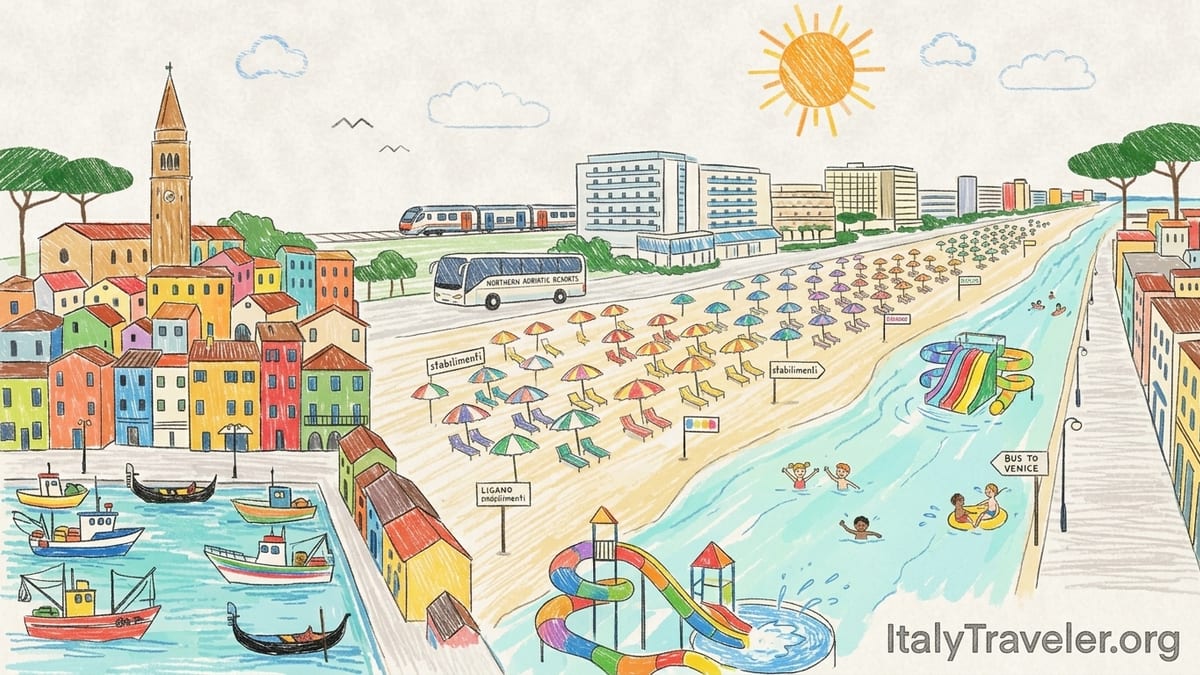
Northern Adriatic Overview: Wide Beaches and Deep Resort Choice
The northern Adriatic, especially the coast between Venice and Trieste, concentrates an enormous amount of resort infrastructure and accommodation. Destinations such as Lignano Sabbiadoro, Bibione, Caorle and Lido di Jesolo alone account for hundreds of hotels, aparthotels and holiday apartments on major booking platforms, which means year round competition and frequent deals outside peak August. For travelers, this density translates into choice: you can find everything from simple family pensions a few streets back from the sea to large four star resorts with multiple pools and private beach clubs.
Geographically, these Veneto and Friuli resorts share similar natural advantages: long, gently shelving sandy beaches and shallow water that warms quickly in summer. Lignano’s coastline, for example, stretches for around eight kilometers of golden sand, with wide fronts that comfortably accommodate rows of umbrellas, sports courts and kids’ play areas without feeling cramped in the shoulder months. The same is broadly true of Bibione and Jesolo, although sections right in front of town centers can feel more compressed in July and August.
The beach experience here is strongly shaped by stabilimenti, or organized beach concessions, which rent loungers and umbrellas, provide lifeguards, showers, changing cabins and often bars and restaurants. You will still find free, unmanaged stretches, especially near the fringes of each resort, but most visitors opt for day or weekly rentals from a stabilimento, particularly families who value the services and safety. Expect prices to rise closer to the town centers and premium “first rows” by the waterline.
Public transport access is another major plus of the northern Adriatic. Lignano, Bibione, Caorle and Jesolo are all reachable by a combination of regional trains and dedicated summer buses from Venice, Treviso, Udine or Trieste. Seasonal shuttle buses run from nearby airports, and local networks link town centers to outlying campgrounds and residential zones, making it realistic to spend a week car free if you choose accommodation near a bus line.
Lignano Sabbiadoro, Bibione and Caorle: Family Resorts with Waterparks
Lignano Sabbiadoro has built its reputation as a family oriented resort, with a long, spacious beach divided into numbered beach offices that each manage their own stretch of sand, loungers and amenities. Many sections include fenced play areas, animation programs for children and sports zones for teens, so parents can rent a couple of beds for the day and then dip in and out of activities. Behind the beach, the town is compact and easy to walk, with plenty of gelaterie, casual seafood restaurants and a summer calendar of outdoor concerts and markets.
One of Lignano’s signature draws is its waterpark, Aquasplash, widely recognized as the first large scale waterpark built in Italy. It remains a major magnet for families in high season, pairing intertwining slides with pools and sunbathing decks. Nearby amusement rides and a traditional luna park add a theme park dimension to a beach holiday, which can be a decisive factor if you are traveling with children or teenagers who need regular stimulation beyond the sea and sand.
Bibione, a short drive east, offers a similar formula but feels slightly quieter and more spread out, with pinewoods framing parts of the seafront. The beach here is notably wide in several sections, which allows for unusually deep rows of umbrellas and generous space for volleyball courts, mini playgrounds and fitness areas. The town’s thermal spa complex just behind the dunes adds a wellness angle, and many midrange hotels include access to heated pools or simple spa facilities as part of their packages. Prices for three star half board hotels are often a touch lower than Jesolo or central Lignano in high season, especially for bookings in June or early July.
Caorle, between Bibione and Jesolo, stands out for its historic center and more intimate seafront. The old town wraps around a colorful fishing harbor and a low promontory, so evening strolls quickly alternate between narrow alleys, seafront promenades and small squares with wine bars and restaurants. Beach clubs line the main Levante and Ponente beaches, with stabilimenti offering standard rows of parasols, simple pools and bars. Compared with Lignano and Bibione, Caorle’s hotel stock includes more small, family run properties with limited on site facilities, but that is part of the appeal if you prefer atmosphere to large scale resorts.
Lido di Jesolo: Longest Strip, Livelier Nights
Lido di Jesolo offers one of the longest continuous beach fronts in Italy, with a straight line of sand, stabilimenti and hotels stretching for over ten kilometers. This scale gives travelers enormous flexibility: central sections near Piazza Brescia and Piazza Mazzini are dense with hotels, pools and nightlife, while stretches farther east or west feel more residential and quiet. The sand is soft and the water shallow, with classic rows of umbrellas that are often allocated by hotels at no extra charge for guests.
Accommodation choice in Jesolo is particularly deep. Along the seafront you will find numerous midrange three and four star hotels with compact outdoor pools, small children’s areas and on site restaurants that serve half board buffets. A block or two inland, self catering apartments and aparthotels dominate, which can be ideal for families looking to control food costs. Pricing fluctuates with location and facilities, but it is common to find family rooms in June and September that are significantly cheaper than equivalent options on the Riviera Romagnola at the height of summer.
Jesolo’s nightlife is among the liveliest in the northern Adriatic, though still more contained than Rimini or Riccione. Along the pedestrianized main street running parallel to the sea, bars, gelato shops and late opening cafés create a steady buzz after dinner. Beach clubs occasionally host DJ sets and live music, particularly on weekends, but the atmosphere remains more about social strolling and cocktails than full scale clubbing. For many visitors this balance is ideal, especially if you are traveling with older teens who enjoy staying out later but you still want a town that feels family friendly.
Transport connections are another strength. Regular buses link Jesolo to Venice’s mainland terminals, making day trips into the lagoon easy, and seasonal services run to nearby waterparks and attractions. For travelers arriving by air, shuttle buses from Venice and Treviso airports directly to Jesolo’s bus station remove the need for a rental car, and local town buses or hotel bikes can cover the last mile to most accommodations.
Cesenatico and Milano Marittima: Style, Sports and Pine Forests
Moving south into Emilia Romagna, Cesenatico introduces the classic Riviera Romagnola feel at a gentler pace than Rimini. The town’s historic canal, redesigned centuries ago and lined with old fishing boats, gives the center more character than a simple strip of seafront hotels. The beaches are fully equipped with stabilimenti offering loungers, umbrellas, playgrounds and casual seafood restaurants. Many family run hotels stand one or two blocks back from the sea, pairing simple rooms with half board and access agreements with particular beach clubs rather than building large pools themselves.
Milano Marittima, just down the coast, targets a different crowd. Born as a garden city and wrapped in pine forest, it has evolved into one of the Adriatic’s most fashionable resorts, with designer boutiques, stylish hotel lobbies and upscale beach clubs. The sand remains gently shelving and suitable for children, and the resort carries a “green flag” recognition for family friendly services, but the ambiance leans toward aperitivo culture and nightlife. Several beach clubs transform into open air lounges after sunset with DJ sets, cabanas and bottle service, while well known nightspots inland cater to a young, well heeled clientele.
Sports and wellness play a big role here too. The area around Milano Marittima and neighboring Cervia hosts an established golf club, tennis centers, a nautical club and equestrian facilities, along with a notable theme park and spa options inland. Many four star hotels market themselves as spa or wellness resorts, with indoor pools, small thalasso circuits and treatment menus that appeal to couples and adults. Prices in high summer reflect this positioning, so if you are watching your budget, consider visiting in June or early September when rates and minimum stay requirements often relax.
In both Cesenatico and Milano Marittima, public transport is straightforward: frequent regional trains run to nearby Cervia or Cesenatico stations, from which local buses or short taxi rides reach seafront hotels. Bike lanes link the main coastal towns along this stretch, so renting a bicycle is a practical way to move between beaches, pinewoods and town centers without driving.
Rimini, Riccione and Cattolica: Riviera of Fun
The heart of the Riviera Romagnola is the trio of Rimini, Riccione and Cattolica, whose continuous ribbon of beach, hotels and entertainment has earned the region its “Riviera of Fun” nickname. The beaches are long, sandy and highly organized, with stabilimenti running in sequence and often branded with numbers or names, each offering its own bars, sports courts, kids’ clubs and themed décor. The sand here is typically narrower than parts of Lignano or Bibione but still sufficient to host multiple rows of umbrellas and play areas before reaching the shoreline.
Rimini is the largest and most varied of the three, combining a historic city center inland with a modern seafront lined by hotels of every category. Budget friendly two star pensions, classic three star family hotels with pools, business style four stars and a growing number of design conscious boutique properties all coexist. Many offer full or half board packages, sometimes with inclusive beach services and discounts for nearby waterparks and theme parks. Nightlife ranges from relaxed beach bars to large clubs, and an annual summer festival sees concerts, events and late openings across the seafront.
Riccione is smaller but similarly famous for its nightlife and youth oriented vibe. The beach is wide and well maintained, and the town is known for trendy bars and clubs both along the seafront and in the streets around its central shopping avenues. Families are drawn by the presence of major waterparks just inland, along with aquariums and other attractions, so it is common to see parents spending days on the sand and then planning excursions to slides, dolphin shows or mini theme parks on alternate days. Many hotels here specialize in family services, with connecting rooms, kids’ menus and flexible meal times.
Cattolica, towards the southern end of this coastal strip, feels more compact and manageable while still offering a full resort experience. Its curved bay shelters a sandy beach fronted by stabilimenti and a marina, and the town is home to one of Italy’s larger aquariums, which becomes a natural rainy day fallback for families. Hotels tend to be midscale, with a mix of simple pools, rooftop terraces and family rooms. Prices often come in lower than central Rimini or Riccione while still keeping you plugged into the region’s broader network of attractions and nightlife within a short train or bus ride.
Beaches, Stabilimenti and Pools: What to Expect
Throughout these Adriatic resorts, the core beach experience is shaped by the stabilimento model. You typically pay a daily or weekly fee for a package that includes two sunbeds and one umbrella, access to changing cabins, toilets and freshwater showers, and the oversight of lifeguards. The exact price varies by resort, time of season and how close your umbrella is to the waterline, but budget conscious travelers can often save by choosing second or third row spots or by renting via their hotel, which may have negotiated rates.
Beach width is an important differentiator. Resorts like Lignano Sabbiadoro, Bibione and sections of Jesolo often have very deep beaches, so even with a high density of umbrellas there remains space for sports courts, kids’ play areas and open zones near the shoreline. On the Riviera Romagnola, from Cesenatico through Rimini to Riccione and Cattolica, the strip of sand is sometimes narrower, which means stabilimenti can feel busier in August, although the gentle slope into the sea still makes swimming safe and easy for children. If you value a sense of openness, consider visiting in June or September or booking accommodation near the less central stretches of beach.
Pools are common but not universal. Many three and four star hotels in Jesolo, Bibione, Lignano, Rimini and Riccione offer at least a modest outdoor pool, often with a shallow children’s section and a small sunbathing deck. In some family oriented resorts, slides and splash features are added to appeal to younger guests. However, smaller pensions and traditional guesthouses, especially in older neighborhoods or historic centers such as Caorle and Cesenatico, may not have the space for a pool and instead focus on access agreements with particular beach clubs. For travelers who consider a large pool non negotiable, it pays to filter carefully and look for dedicated resort style properties.
Waterparks enhance the aquatic options considerably. In the north, Lignano’s Aquasplash and other slide complexes near Bibione and Jesolo provide full day outings with wave pools, lazy rivers and high speed chutes. Farther south, the hills behind Riccione house major waterparks that draw both families and groups of young adults, often with evening events in peak season. Many hotels sell discounted tickets or include them in package deals, so if these parks are a priority, ask when comparing rates rather than buying independently at the gate.
Restaurants, Nightlife and Family Services
Food is an integral part of any Italian beach holiday, and these resorts offer a consistent mix of beachfront seafood restaurants, casual piadinerie and inland trattorie. In Lignano, Bibione and Jesolo you will find numerous family oriented places with kids’ menus, high chairs and early opening times, serving grilled fish, fried seafood cones and simple pasta dishes. In Emilia Romagna’s resorts such as Cesenatico, Rimini and Riccione, look out for traditional piadina flatbread stuffed with cured meats or cheeses, which locals enjoy as a quick beachside snack or informal dinner.
Nightlife intensity is one of the clearest distinctions between resorts. Rimini, Riccione and Milano Marittima lead for late nights, with beach clubs morphing into open air lounges, cocktail bars staying busy well after midnight and larger discos just inland drawing a regional crowd. These towns host regular events, DJ nights and themed parties, especially from late June through August. Jesolo offers a toned down version of this ambiance, with a lively evening promenade and plenty of bars but fewer large clubs, while resorts like Bibione, Lignano and Caorle remain quieter, oriented more to families and couples than all night dancing.
Family services are widely developed across the northern Adriatic. Many hotels market themselves explicitly as family properties, advertising interconnecting rooms, crib and stroller rental, baby menus, flexible meal times and kids’ clubs with organized activities on the beach. Stabilimenti often add fenced playgrounds, mini slides and animation teams running group games. On the Riviera Romagnola, several towns promote themselves as family friendly with dedicated branding and infrastructure, including safe crossings along the seafront and sections of beach where water depth remains low for a significant distance offshore.
From a cost perspective, eating out can be managed efficiently if you combine sit down dinners with takeaway options such as pizza slices, piadina or rosticceria style roast chicken and vegetables. Many Italian families opt for half board hotel stays, taking breakfast and dinner at the hotel and then snacking at beach bars during the day, which can control costs compared with a la carte lunches on the seafront each day of the week.
Prices, Transport and When to Go
Accommodation prices vary substantially by resort, category and season. In general, the northern Veneto and Friuli resorts such as Lignano, Bibione, Caorle and Jesolo tend to offer slightly lower entry level prices than the most fashionable stretches of the Riviera Romagnola in late July and August, particularly for simple hotels or apartments a few streets back from the sea. Milano Marittima, Riccione and central Rimini can command higher rates for stylish, well located four star hotels during peak demand, especially when major events or festivals are running.
Budget travelers can often secure better value by targeting June or September, when the weather is typically warm enough for swimming but Italian school holidays have not yet fully started or have just finished. Midweek stays can also be more affordable than weekends, especially in resorts known for nightlife. Self catering apartments are plentiful in Jesolo, Bibione, Lignano and Rimini, offering kitchens that allow you to shop in local supermarkets and cook simple meals, reducing restaurant spending.
Public transport to these resorts is generally strong. Most are accessed via regional train lines connecting to Venice, Trieste, Bologna or Rimini, followed by short bus transfers to the beach. Once in resort, local town buses run along the seafront and out to campsite zones, and many hotels offer complimentary bicycle use. If you plan to explore multiple towns, the Adriatic rail line that links the Riviera Romagnola makes it easy to day trip from Cesenatico to Rimini, Riccione or Cattolica without driving. For the northern resorts, summertime bus services connect Jesolo, Caorle, Bibione and Lignano with Venetian departure points for lagoon excursions.
Climate wise, July and August bring the highest temperatures, the fullest program of events and the most crowded beaches. Families tied to school schedules often have little choice, but couples and flexible travelers might find June or early September a better compromise, with warm seas, plenty of open services and more space between umbrellas. Spring and autumn shoulder seasons are pleasant for walks, cycling and spa visits, though some waterparks and seasonal attractions may operate with limited hours or close entirely outside the core summer months.
Farther South: Resort Style Alternatives Beyond the Big Names
While the focus of many international travelers remains on the well known resorts between Venice and Cattolica, the Adriatic coast continues south with a series of towns that offer resort style facilities with slightly different atmospheres. In the Marche region, destinations such as Senigallia and the stretch around the Conero Riviera combine long sandy or pebbly beaches with more traditional Italian town centers, attracting a balanced mix of local families and foreign visitors. Beach concessions still dominate the seafront, but tourist numbers are thinner than in Rimini or Jesolo, and prices for accommodation and dining can be more approachable in high season.
Further down, along Abruzzo and Molise, a sequence of medium sized seaside towns lines the coast, many with well equipped lidos, family run hotels and affordable apartment rentals. These areas are less dominated by large clubbing scenes and more by evening passeggiate, where families stroll the promenades, stop for gelato and let children play on small rides or playgrounds. Waters here remain generally calm in summer, and several destinations market themselves around nature and outdoor activities, including cycling routes along former railway lines and excursions into nearby national parks.
In southern Puglia, on the Salento peninsula, resort style complexes cluster around both the Adriatic and Ionian shores, often with private beach clubs, pools and half board packages more reminiscent of Mediterranean island resorts. While this is geographically far from the northern Adriatic, it can be a logical extension if you are planning a longer Italian journey and want to experience another coastal culture. Beaches range from rocky coves to broad sandy arcs, and nightlife is intense in specific hubs during July and August, particularly around larger towns and festival weeks.
These southern alternatives typically see fewer package tour groups from central and northern Europe than the classic Adriatic resorts, so the atmosphere can feel more local and less uniform. If you prefer a setting where Italian families dominate, menus focus heavily on regional cuisine and English is less universally spoken, combining a week in the north with time in the Marche, Abruzzo or Puglia can provide an interesting contrast.
The Takeaway
Choosing the best beach resort on the Italian Adriatic coast depends on how you prioritize beach width, nightlife, family attractions, budget and ease of arrival. Lignano Sabbiadoro, Bibione, Caorle and Jesolo deliver very wide, gently shelving beaches, deep accommodation inventories and strong public transport links to Venice and the northeast, with an emphasis on family amenities and waterparks. On the Riviera Romagnola, Cesenatico and Milano Marittima add characterful centers and stylish pine shaded neighborhoods, while Rimini, Riccione and Cattolica provide the fullest spectrum of nightlife, theme parks and large scale hotels.
Across all these destinations, stabilimenti structure the beach experience and prices, while pools, kids’ clubs and half board packages dominate the resort landscape. By thinking carefully about whether you want serene early morning swims, long evenings in clubs, intensive waterpark days with children or a mix of all three, you can match your choice of town and even specific neighborhood to your travel style. With careful timing outside the absolute peak weeks and a willingness to explore a block or two beyond the seafront, it is entirely possible to enjoy the Adriatic’s famous sands without overspending.
If you have more time and curiosity, extending your journey farther south into the Marche, Abruzzo or Puglia adds variety, from quieter family towns to resort complexes overlooking rocky coves. Whatever combination you choose, the Italian Adriatic offers a remarkably consistent promise: warm, shallow seas, reliably serviced beaches, and the simple pleasures of gelato, grilled fish and evening walks along the lungomare as the sun goes down.
FAQ
Q1. Which Adriatic resort is best for families with young children? Lignano Sabbiadoro, Bibione and Jesolo are particularly strong for young families thanks to wide, gently shelving beaches, extensive playgrounds on the sand, organized kids’ clubs and easy access to waterparks. Many hotels in these resorts provide family rooms, baby equipment and flexible meal times tailored to children.
Q2. Where should I stay for the best nightlife on the Adriatic coast? Rimini, Riccione and Milano Marittima are the top choices for nightlife, with beach clubs that transform into lounges after dark, numerous cocktail bars and larger discos inland. Jesolo offers a lively but more contained scene, while places like Bibione, Lignano and Caorle remain quieter and more family focused in the evenings.
Q3. Are beaches on the Italian Adriatic mostly private? Most popular resorts are lined with stabilimenti, where you pay to rent umbrellas and loungers and gain access to services, but you will usually find smaller sections of free beach at the edges of town or between concessions. Free areas tend to have fewer facilities, so bring your own shade and plan for more basic conditions.
Q4. Do I need a car to enjoy these resorts? A car can be convenient, but it is not essential in many Adriatic resorts. Towns such as Jesolo, Bibione, Lignano, Rimini, Riccione and Cattolica are all accessible by train and bus from major cities, and local transport, bike rentals and pedestrian promenades make it easy to get around once you arrive.
Q5. How expensive are hotels in Rimini and Riccione compared with the northern resorts? In peak summer, stylish four star hotels in Rimini, Riccione and Milano Marittima can be pricier than comparable properties in Lignano, Bibione or Jesolo, reflecting higher demand and lively nightlife. However, simple pensions and apartments in all these destinations still offer competitive rates, especially in June and September.
Q6. What is the best time of year to visit the Italian Adriatic? July and August offer the warmest sea temperatures and the fullest program of events but also the highest prices and busiest beaches. June and early September are excellent compromises, with generally warm weather, operating waterparks and more space on the sand.
Q7. Are there good options for wellness and spa breaks on the Adriatic? Yes, several resorts integrate spa and wellness facilities. Bibione has a well known thermal complex near the beach, and Milano Marittima and neighboring Cervia feature spa hotels and wellness oriented resorts offering pools, treatments and fitness programs, which appeal particularly to couples and adult groups.
Q8. Which resorts are best if I want day trips to cultural cities? Jesolo, Bibione and Caorle are well positioned for excursions to Venice and nearby lagoon towns, while Rimini, Riccione and Cattolica allow easy day trips inland to historic cities and hilltop villages in Emilia Romagna and the Marche. Rail and bus connections make these outings relatively straightforward without a car.
Q9. How suitable are these resorts for travelers who do not speak Italian? In the main Adriatic resorts, many hotel staff, restaurant servers and beach attendants speak at least some English or German, reflecting decades of international tourism. Menus are often available in multiple languages, especially in Jesolo, Bibione, Lignano, Rimini and Riccione, though smaller family run places may be more Italian focused.
Q10. Are there quieter alternatives to the major resorts on the Adriatic? Travelers seeking a quieter atmosphere can look to smaller towns on the Marche or Abruzzo coasts, or stay in residential neighborhoods on the edges of larger resorts rather than directly in nightlife hubs. These areas still offer equipped beaches and family run hotels but with softer nightlife and a more local, relaxed feel.