


The Italian Alps have a loyal following of skiers who love big mountain scenery, relaxed hospitality and prices that can undercut comparable resorts in France and Switzerland. As more tour operators add dedicated Italian inventories and all inclusive bundles that roll accommodation, lift passes, lessons and even equipment into one price, it has never been easier to put together a winter trip. The real question is whether you are better off booking a package, or assembling flights, hotels, transfers, ski passes and tuition yourself. This guide looks at the main Italian ski hubs, what different types of holiday products actually look like in practice, and how to get the best balance of value and snow reliability.
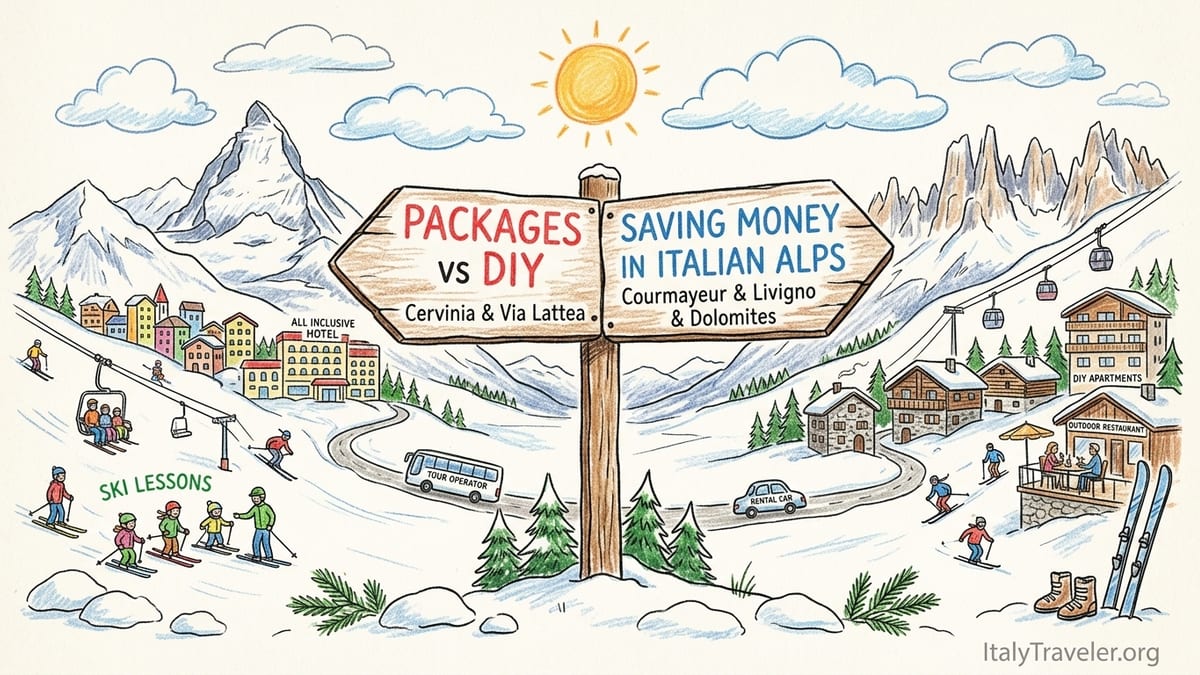
Packages vs DIY: What Really Saves Money in the Italian Alps
For many English speaking travellers, the simplest way into the Italian Alps is still a tour operator package. UK and European operators now sell Italy specific weeks that include flights, airport transfers, a week in a hotel or chalet, and optional bolt ons for rental, lift passes and group lessons. In a typical shoulder season week in January, it is not unusual to see a seven night half board package to Sestriere or Cervinia from a regional airport priced around what you might pay just for lodging if you booked a similar standard hotel directly. Operators work with contracted bed banks in key Italian resorts and can sometimes access blocks of rooms that never appear on public booking engines.
DIY bookings can still work out cheaper in certain weeks, particularly if you are flexible on dates or flying from outside Europe. For example, a couple flying from New York or Toronto to Milan on a sale fare might find that buying flights independently, then adding a locally run three star hotel in Courmayeur and pre booking a regional lift pass costs less than a transatlantic package. Where travellers often underestimate cost is in the extras. A six day lift pass in popular Italian resorts now often runs to the equivalent of several hundred euros per adult once dynamic pricing and peak dates are factored in. Equipment rental and lessons for a family of four can comfortably add another substantial amount on top. Package operators increasingly negotiate discounted ski bundles, and in some cases those bundled rates can be lower than what you would find booking every element on official resort sites.
All inclusive concepts have also arrived in the Italian Alps. Club style villages in the Via Lattea region near Sestriere, for instance, typically price a Saturday to Saturday stay that includes accommodation, all meals, drinks at the bar, a six day lift pass and group lessons for adults and children. When you add up the cost of buying each component at public rates, these bundled resorts can represent very good value, especially for first timers and families who would otherwise book ski school anyway. The trade off is less flexibility. With a DIY trip you can choose self catering apartments, mix mountain meals with pizza in town, pick and choose the days you ski and combine different ski areas in one stay.
A useful rule of thumb is that packages usually win on peak weeks and for beginners who need lessons and rental, while DIY can work better on fringe dates or for experienced skiers who already own gear and are happy to self cater. Before you decide, price out every line item for your preferred week in at least two Italian resorts, then compare it against at least two package quotes that include similar inclusions. This extra hour of research can easily save several hundred euros on a typical family holiday.
Cervinia and Courmayeur: Aosta Valley Highlights
Cervinia, officially Breuil Cervinia in the Aosta Valley, is one of Italy’s most snow sure destinations. Its high altitude slopes link with Zermatt and allow skiing well into late spring and even summer on the glacier. For a typical winter week, you will see both simple packages staying in modest three star hotels in the village and higher end deals in four star properties with wellness areas. Many hotel based holidays here are half board, which means breakfast and dinner included but you pay separately for drinks and lunch on the mountain. An example might be a package that flies into Turin, includes a shared transfer up the valley, seven nights half board in a mid range hotel within walking distance of the Cretaz lifts, and the option to pre book either a local Cervinia only pass or an international pass that includes the Swiss side. When you price those passes separately, the uplift from a domestic to an international ticket is often quite noticeable, but those who value long mileage skiing and the views across to the Matterhorn frequently judge it worth the extra.
Courmayeur on the other side of the Aosta Valley has a different feel. It is smaller, with a stylish, almost boutique atmosphere and a compact ski area that appeals to intermediates and weekenders. Here, you are more likely to mix skiing with long lunches and spa time. Packages tend to focus on central hotels just a short walk or shuttle ride from the main cable car, often on a half board basis. DIY travellers might base themselves in self catering apartments either in the main village or in nearby hamlets, then pick up a Mont Blanc region lift pass that allows day trips to other small areas. If you are flying into Geneva or Milan and renting a car, Courmayeur can be a practical base for a multi resort road trip, though parking in high season needs to be factored in.
In both Cervinia and Courmayeur, early season and late season weeks are where you can see the biggest spread between package rates and booking each piece yourself. It is not uncommon for tour operators to discount unsold inventory on departures before Christmas and in mid January. At the same time, some Aosta Valley hotels join regional promotions that discount lift passes if you stay a certain number of nights. The value choice will depend on whether your operator passes those local savings on, or whether the hotel offers a better direct deal. Check both before you confirm.
Sestriere and the Via Lattea: Big Mileage on a Budget
Sestriere sits at the heart of the Via Lattea, or Milky Way, ski area that links several Italian and French villages across a wide domain. It has long been considered one of Italy’s better value high mileage destinations, a reputation reinforced by annual ski cost surveys that often rank Sestriere and neighbouring Sauze d’Oulx among the cheaper big name European resorts when you add up lift pass, rental, lessons and on mountain lunches. Tour operators have deep inventories here, including simple catered chalets, family friendly hotels and all inclusive clubs that wrap food, passes and instruction into the upfront cost.
On a practical level, this means a family of four can often find a seven night package during the main season that includes flights, transfers, full board, a six day lift pass and daily group lessons for the children at a price that compares well against self assembling the same components. These all inclusive style properties are usually ski in ski out or very close to the slopes, which saves money on local ski buses and cuts the time needed to shepherd children to ski school every morning. For adults who want to roam the wider Via Lattea, having the full area pass included from day one also encourages exploration beyond the home slopes.
If you plan to go DIY in Sestriere, the equation changes a little. Self catering apartments in the surrounding villages can be inexpensive if booked early, especially in low season weeks. A couple driving from elsewhere in Europe can load their own equipment in the car, minimise rental costs and shop for groceries in the valley, which reduces overall spend. Factor in fuel, motorway tolls and parking at your apartment block, however, and the savings versus a charter flight plus transfer are not automatic. It is sensible to get a realistic quote for each scenario using the same week and property type.
Snow reliability here is generally good from late December through March, with some seasons enabling skiing on higher runs into April. If you want the best combination of value and likely snow cover, the second half of January and the first half of March are often the sweet spots. Christmas, New Year and the main European school holiday weeks in February see prices jump across both packages and DIY elements, and lifts can be busy. For beginners and nervous intermediates, booking a quieter week and opting for accommodation that is genuinely ski in ski out or right by a main lift is often worth paying slightly more per night.
Livigno and Madonna di Campiglio: Duty Free Deals and Dolomite Style
Livigno, close to the Swiss border, has built a reputation as a value focused yet snow sure resort, helped by its duty free status and frequent official promotions. In recent seasons, the local tourist board has again run schemes where guests staying a set number of nights in participating hotels and apartments during early and late season periods receive a free local lift pass. For example, some winters a stay of at least four or five nights between late November and the week before Christmas, or late April into May, has qualified for a complimentary skipass through official booking channels. Package operators sometimes buy into these promotions and advertise “skipass included” weeks, while DIY travellers who book directly with listed properties can access the same deal. The exact dates and conditions change each year, so it is essential to check the latest winter offers when planning.
Beyond promotions, Livigno remains relatively budget friendly compared with some more famous Alpine names. Rental shops compete strongly on ski and snowboard hire, and the town’s long, linear layout means many lodgings are a short walk from lifts or served by free ski buses. You will find everything from no frills self catering apartments above shops to boutique hotels with large wellness centres and half board dining. Packaged holidays often cluster around mid range hotels that throw breakfast and a hearty evening meal into the deal. This arrangement keeps lunchtime flexible so you can grab a quick mountain panini or stop for a more elaborate meal on the slopes without feeling you are missing out on prepaid food.
Madonna di Campiglio, in the Brenta Dolomites, has a more polished, almost chic feel. It is surrounded by dramatic limestone peaks and links into the wider Skirama area, with modern lifts and extensive intermediate terrain. Prices here reflect the resort’s status as a fashionable Italian destination. Four star and five star hotels with spas and gourmet restaurants line the pedestrian friendly centre, though there are also more modest pensions and apartments in satellite hamlets. Tour operators tend to offer packages at a range of price points, from smart hotels right by a lift station with half board and wellness access included, to simpler three star options slightly away from the core.
For Madonna di Campiglio, DIY works best if you are willing to stay just outside the prime central area and rely on hotel shuttles or the ski bus. Couples and small groups who enjoy apres ski and dining out in town may prefer to book bed and breakfast so they can try different restaurants every evening. Families and mixed ability groups, on the other hand, often gravitate to half board hotels or chalet style properties where breakfast and dinner are sorted and children can head straight to bed after dessert. High season weeks here sell out early. If you want a particular hotel with a pool or kids club, booking through an operator that has a contracted allocation of rooms can secure places long before those dates appear on public booking sites.
Dolomites Majors: Linked Domains and Smart Lift Pass Choices
The Dolomites host some of Italy’s most famous ski circuits, including Dolomiti Superski, a vast linked area that encompasses resorts like Val Gardena, Alta Badia, Arabba Marmolada, Kronplatz and Cortina d’Ampezzo. These regions are connected by a single lift pass option that covers dozens of individual ski areas. For holidaymakers, this introduces another layer of decision making. You can often choose between a valley specific pass, which is slightly cheaper and tied to a smaller portion of the network, and the full Dolomiti Superski pass, which costs more but opens up iconic routes such as the Sella Ronda. Package holidays frequently include the local pass by default, with an option to pay a supplement for the full area ticket.
In practical terms, a week based in a village like Selva di Val Gardena staying in a chalet hotel with half board will feel quite different from a week in an apartment in Corvara arranged independently. In the former, you are likely to have airport transfers, six days of guided or at least hosted skiing arranged through the operator, scheduled mealtimes and perhaps afternoon tea laid out when you return from the slopes. Your ski pass might be ready at check in and any group lessons for children pre booked with local schools. In the latter, you are responsible for booking your own shuttle or hire car, purchasing passes from the lift office or online, and reserving lesson slots directly with the ski school. That autonomy can be appealing to experienced skiers and those who like to tweak their plans day by day.
Dolomite lift pass pricing has moved towards dynamic models in recent seasons, particularly on online pre purchases. That means the same six day Dolomiti Superski ticket can be noticeably cheaper in mid January than during Carnival week or around New Year. Packages sometimes smooth these variations by averaging costs across the winter and offering relatively stable brochure prices, which can be helpful when budgeting many months in advance. However, if you are able to travel on off peak weeks and are comfortable navigating the various online pass options, booking everything yourself and locking in early bird rates can work out better.
For snow reliability, the Dolomites benefit from extensive snowmaking and well groomed pistes, but they are not as high as some Aosta Valley or Livigno slopes. Low season trips before mid December or very late in April should be planned carefully. In these fringe periods, it often makes sense to favour higher altitude resorts like Cervinia or Livigno for natural snow, unless you are specifically interested in the Dolomites’ scenery and prepared for limited open terrain. For prime skiing on the full Dolomite circuits with excellent piste conditions, late January, February and early March are the safest bets, but they are also the weeks when both packages and DIY elements carry a price premium.
Chalets vs Hotels, Half Board and Ski in Ski Out Explained
One of the biggest structural choices for an Italian ski holiday is the type of accommodation. Ski chalets, in the classic sense of a staff run property for one or several groups with inclusive meals, are more common in French and Austrian resorts but still exist in pockets of the Italian Alps, especially in Sestriere, Sauze d’Oulx and parts of the Dolomites that see heavy British operator traffic. A catered chalet typically includes breakfast, afternoon tea and an evening meal on most nights, sometimes with wine included. Packages that use these chalets often price very competitively compared with equivalent hotels, particularly when you factor in the savings on restaurant dinners.
Hotels remain the dominant option in most Italian resorts. Family run three stars with simple but hearty food can offer some of the best value in the Alps, while four and five star properties with spas, pools and refined dining often become a destination in their own right. The key decision is whether to opt for half board or bed and breakfast. Half board simplifies budgeting because you know most of your food costs upfront, though drinks are nearly always extra. It suits families and groups who are happy to eat in the same place most nights. Bed and breakfast provides more freedom to explore local trattorias and mountain huts for dinner, which can be attractive in culinary destinations like Courmayeur or Alta Badia.
Ski in ski out is another concept that affects price and convenience. In Italian marketing, the term is sometimes used loosely. At one end of the spectrum are genuine slope side hotels like many in Sestriere or certain Dolomite villages, where you can clip into your skis directly outside the boot room and glide down to a main lift. At the other are properties described as ski in ski out that require a short walk across a road or a few minutes on a private shuttle. For families with young children or anyone taking lessons at a specific meeting point, paying extra for truly on piste accommodation can save time and stress, especially in busy weeks. If you are comfortable walking five or ten minutes in ski boots or using a ski bus, you may find better value slightly away from the lift.
All inclusive ski hotels and clubs take the half board idea further. In a typical Italian Alps example, your package price might include a breakfast buffet, lunch options either at the property or on mountain partner restaurants, a large buffet or set menu dinner, open bar options and non ski activities like guided snowshoe walks. On top of that, the deal can fold in a six day lift pass and group lessons. Because the operator controls most cost lines, these products offer clear budget certainty. The main compromise is that you are less likely to seek out independent mountain restaurants or bars when so much is already prepaid.
When to Go: Balancing Value and Snow Reliability
Choosing the right week is often more important than shaving a few euros off a lift pass. In the Italian Alps, December brings atmospheric Christmas markets and festive lights, but early season snow can be variable outside high altitude resorts. If you are targeting a pre Christmas or New Year trip, places like Cervinia and Livigno, with extensive high slopes and in some cases glacial terrain, are safer bets for natural snow cover. Many tour operators run attractive offers in the first two or three weeks of December before demand peaks, and local tourist boards often tie in free or discounted skipass promotions in this period to encourage bookings.
January is traditionally one of the best value months. After the New Year public holiday week, prices dip, slopes are quieter and cold temperatures help preserve piste conditions. This is an excellent time for improvers and experienced skiers who prioritise uncrowded slopes over nightlife. Packages during the second and third weeks of January can be significantly cheaper than the weeks on either side of the main school holidays, while DIY travellers may find especially good deals on flights and hotels booked three to six months in advance.
February is dominated by school half term dates across different countries, which push up costs and occupancy across most Italian resorts, particularly family focused ones like Sestriere and Livigno. If you must travel in this window, locking in a package early often delivers the best value because operators commit to lift pass and accommodation blocks ahead of time. DIY travellers leaving it late may face high prices for both beds and passes. By contrast, early March can offer a sweet spot with longer, sunnier days but still reliable snow, especially in the Aosta Valley, the Dolomite heartlands and higher Brenta Dolomite areas like Madonna di Campiglio.
Late March and April have a more spring like feel. In some seasons, lower slopes in sun exposed Dolomite valleys can soften significantly in the afternoons, while higher north facing runs in Cervinia or the upper Via Lattea stay in better shape. Families who like to combine skiing with long lunches on terraces, and who are not bothered by slush on the home runs, often enjoy these weeks. They can also be more affordable than February, particularly for packages that include childcare or kids clubs. Shoulder season promotions, such as free child lift passes with paying adults or discounted equipment rental, are more common then and can tip the balance between two competing resorts.
The Takeaway
Planning a winter holiday in the Italian Alps in the mid 2020s means choosing between an expanding range of packages, all inclusive clubs and do it yourself combinations of flights, accommodation, lift passes and lessons. Cervinia and Livigno are strong choices for those seeking snow reliability and good value. Courmayeur and Madonna di Campiglio suit skiers who place as much emphasis on dining and atmosphere as on ski mileage. Sestriere and the Via Lattea deliver extensive terrain at prices that still undercut some of Europe’s biggest names, while the Dolomites marry dramatic scenery with a web of linked valleys and lift options.
For most travellers, the smartest strategy is to shortlist two or three resorts that fit their ability level and preferred style, then price both package and DIY versions of the same week. Remember to include every line item: transfers, lift passes, lessons, equipment and likely spending on food. Consider how important ski in ski out convenience, half board dinners and extras like spas or kids clubs are to your group. Finally, be realistic about snow conditions and crowds at different points in the season. By weighing these factors carefully, you can secure an Italian Alps ski holiday that feels indulgent on the mountain yet measured in the final bill.
FAQ
Q1. Is a package ski holiday to the Italian Alps usually cheaper than booking everything separately?
In many peak season weeks packages work out cheaper because tour operators secure bulk rates on beds, lift passes and sometimes lessons, but for flexible dates and experienced skiers who already own equipment, a carefully planned DIY trip can be similar in price or slightly lower.
Q2. Which Italian ski resorts are best for snow reliability early in the season?
High altitude resorts such as Cervinia and Livigno usually offer the most reliable early season snow thanks to their elevation and extensive snowmaking, while mid altitude Dolomite resorts are often better from January onward.
Q3. What is the difference between a chalet and a hotel in Italian ski resorts?
A catered chalet typically offers a homely environment with set meal times for a small number of guests and is often sold only through tour operators, whereas a hotel ranges from simple family run properties to large spa hotels that can be booked either in packages or independently, with more flexibility on services and room types.
Q4. Is half board a good idea for families?
Half board, which includes breakfast and dinner, is usually a good value choice for families because it fixes most daily food costs, reduces the need to find a new restaurant every evening and lets tired children head straight to bed after the hotel meal.
Q5. How important is ski in ski out accommodation?
Ski in ski out lodging is particularly valuable for beginners and families with children, as it removes long walks in ski boots and simplifies getting to lessons, while confident skiers who do not mind a short walk or ski bus ride can often save money by staying slightly away from the lifts.
Q6. When are the best weeks for good value in the Italian Alps?
The weeks after New Year in January and the first half of March often provide the best balance of value and snow conditions, with lower prices and fewer crowds than the Christmas and February school holiday peaks.
Q7. Do Italian resorts offer free lift pass promotions?
Some resorts, notably Livigno and occasionally others, run early or late season promotions where guests staying a certain number of nights in participating accommodation receive discounted or free local lift passes, though the exact dates and conditions change each winter.
Q8. Should I buy a local or full area lift pass in the Dolomites?
If you are a confident intermediate or advanced skier who plans to explore multiple valleys and circuits like the Sella Ronda, the full area pass is usually worth the extra cost, while beginners and cautious intermediates staying mainly on local slopes can often save money with a valley specific ticket.
Q9. Are group ski lessons included in Italian ski packages?
Many family oriented packages either include group lessons for children in the base price or offer them at a reduced rate when booked together with accommodation and lift passes, but adults may need to add lessons as an optional extra.
Q10. Is renting a car necessary for an Italian Alps ski holiday?
A car is not strictly necessary for most mainstream resorts because packages include transfers and many villages have efficient bus networks, but hiring a car can be useful if you want to visit multiple ski areas in one trip or stay in smaller hamlets away from main lift hubs.