

Italy is one of the most dreamed-about destinations on earth, a country where Roman ruins sit beside espresso bars and medieval hill towns overlook turquoise seas. But if you are planning a first trip to Europe, you may be wondering whether Italy is really worth the crowds, prices and logistics, especially when Greece, Spain, France and Croatia are also on the table. This guide looks at Italy in practical, real-world terms so you can decide whether it should be your next stamp in the passport.
Is Italy Worth Visiting Right Now?
By most measures Italy remains one of the world’s tourism powerhouses. National statistics for 2023 show tourism spending in the country in the hundreds of billions of euros, with visitor numbers exceeding pre-pandemic levels in many regions. Rome, Florence, Venice, the Amalfi Coast and the Cinque Terre continue to rank among Europe’s most visited places. That popularity does mean crowds, but it also supports excellent infrastructure, a dense rail network, frequent flights and a wide range of accommodation from simple agriturismi on farms to five-star city hotels.
For a first-time visitor, what matters most is how Italy feels on the ground. In practical terms you can land in Rome in the morning, check into a mid-range hotel near Termini station for around 120 to 200 euros per night in high season, walk past the Colosseum that afternoon and be sitting at a family-run trattoria eating cacio e pepe for 15 euros by evening. The country offers a high ratio of “wow moments” per day, from stepping into St Peter’s Basilica to watching the sunset over Florence from Piazzale Michelangelo or floating past pastel houses in Venice on a late-evening vaporetto.
There are trade-offs. At peak times such as May, June, September and around major holidays, key sights like the Vatican Museums and the Uffizi can feel extremely busy, with timed-entry tickets selling out weeks in advance. Some iconic destinations such as the Amalfi Coast or the Cinque Terre have seen pressure on local infrastructure, which has led to higher prices and more regulations on visitor numbers in certain periods. Travelers who value quiet hikes and empty beaches will need to choose their regions and seasons carefully.
Overall, if you value a mix of historic cities, countryside, coastline and food culture in a relatively compact area, Italy is still a strong contender for a first European trip. The key is realistic expectations about costs and crowds, and a willingness to include a few lesser-known areas in your itinerary to balance the blockbuster sights.
Food and Wine: Everyday Eating in Italy
Italy’s cuisine is one of the strongest arguments in favor of visiting. Unlike some destinations where world-class food is confined to top-end restaurants, in much of Italy you can eat very well in simple places that locals also frequent. In Rome, a sit-down lunch of pasta alla gricia, a side of seasonal vegetables and a glass of house wine at a neighborhood trattoria might cost 18 to 25 euros before dessert and coffee. In smaller towns of Umbria or Le Marche, a set lunch menu can run 12 to 15 euros for two or three courses.
Pizzas from wood-fired ovens in Naples often start around 6 to 8 euros for a classic margherita, while in Venice a cicchetti bar serving small plates of seafood and vegetables might charge 2 to 4 euros per bite. Espresso at the bar typically costs around 1 to 1.50 euros in many parts of the country if you drink standing up, while a cappuccino in a sit-down café is usually under 3 euros outside of the most touristy squares. Gelato varies widely in quality and price; in central Florence or Rome you might pay 3 to 4.50 euros for a small cup of artisan gelato made on-site.
Wine is another area where Italy delivers strong value. House wines served in carafes, particularly in rural areas and smaller cities, can be perfectly drinkable and far cheaper than branded bottles, often around 6 to 10 euros for half a liter. In wine regions such as Tuscany, Piedmont and Sicily, it is relatively easy to arrange tastings at estates, sometimes for a modest fee that might include a small plate of local cheese and salumi. For first-time visitors, joining a small-group food tour in a city like Bologna, Palermo or Naples can be an efficient way to understand local specialties and eating customs in a single evening.
The main downsides are that service can feel brisk in touristy restaurants, and popular cities have seen an increase in venues that target short-term visitors with high prices and mediocre quality. Basic precautions help: avoid menus with many languages and laminated photos, look for places where Italian is the main language heard at neighboring tables and check whether there is a coperto or service charge printed clearly on the menu before sitting down.
History, Cities and the Italian Countryside
Italy’s historical depth is one of its most distinctive advantages compared with many other sun-and-sea destinations. In Rome you can walk from the ancient stones of the Forum to the Renaissance frescoes of the Vatican in under an hour. Florence compresses masterpieces by Michelangelo, Botticelli and Donatello into a compact, walkable center. Venice, with its canals, palaces and lagoon islands, offers an urban landscape unlike anywhere else in Europe. These cities are not open-air museums only; they are lived-in places with universities, markets and neighborhoods away from the main monuments.
For a first trip, most travelers combine two or three major cities with at least one smaller town or rural base. Classic “first timer” routes include Rome, Florence and Venice by high-speed train, possibly adding a few days in the Tuscan or Umbrian countryside. Hill towns such as Siena, Orvieto, Montepulciano and Assisi provide striking stone architecture, slower rhythms and easier access to vineyards and olive groves. Agriturismi, or farm stays, often offer half-board packages where you might pay 90 to 150 euros per night for a double room including home-cooked breakfast and dinner made with local products.
Beyond the central corridor, regions like Puglia in the far south, Trentino-Alto Adige in the Dolomites, and Emilia-Romagna with its food-focused cities of Bologna, Parma and Modena offer a different feel. Puglia’s whitewashed towns such as Ostuni and the trulli houses of Alberobello, Trentino’s alpine villages like Ortisei and Emilia-Romagna’s porticoed streets give first-time visitors a sense of how varied Italy can be inside a relatively small geographic area.
If your priority is landscape over museums, the countryside can easily form the backbone of an Italian itinerary. Road-tripping through the Val d’Orcia in southern Tuscany, staying in a stone farmhouse surrounded by vineyards, or basing yourself near Lake Como or Lake Garda for hiking and ferry rides between lakeside towns are all realistic options for a first visit, especially if you are comfortable renting a car for at least part of the trip.
Beaches, Islands and When to Visit the Coast
Italy is not always the first country that comes to mind when you think of European beach vacations, especially when compared to Greece or Spain, but its coastline stretches for thousands of kilometers and includes a wide range of experiences. The Amalfi Coast offers dramatic cliffs, pastel villages like Positano and Amalfi itself, and pebble beaches that are beautiful but often crowded and expensive in peak months. A sunbed and umbrella set in August can easily cost 25 to 40 euros per person for the day in prime spots.
Further south, the beaches of Puglia such as Punta Prosciutto, Torre Lapillo and the Salento peninsula are known for shallow, turquoise water and fine sand that some travelers compare favorably with islands in Greece. Sardinia and Sicily each provide dozens of coastal options, from popular resort towns to small coves reached on foot or by boat. On Sicily’s eastern side, Taormina’s pebble beach at Isola Bella sits under a historic hilltop town, while on the western side you find long sandy stretches near San Vito Lo Capo and the nature reserve of Zingaro.
North of Rome, the Ligurian Riviera, including the Cinque Terre, Portofino and Santa Margherita Ligure, combines colorful villages with cliffside hiking and small pebble or rock beaches. The Cinque Terre’s popularity means that in high season the narrow lanes of Vernazza and Manarola can feel jammed by midday and regional trains that run between the villages can be packed. However, staying overnight in one of the villages or in slightly less-known towns like Levanto or Bonassola gives you quiet mornings and evenings and more reasonable accommodation prices.
In terms of timing, if beaches are a priority but you want to avoid peak crowds and costs, late May, early June and late September are often good compromises. Sea temperatures in much of central and southern Italy are warm enough for swimming in these shoulder seasons, and services such as beach clubs, ferries and coastal hiking routes are operating but slightly less busy than in July and August.
Getting Around, Crowds and Trip Length
Italy’s transportation network is one of the strongest points in its favor for first-time visitors. High-speed trains run by Trenitalia and Italo connect major cities such as Rome, Florence, Venice, Milan and Naples in a matter of hours. A high-speed journey from Rome to Florence often takes around 1.5 hours, and from Florence to Venice roughly 2 hours. Advance-purchase tickets on less popular departure times can sometimes be found under 25 to 35 euros per person in second class, while last-minute fares on peak departures can be substantially higher.
Regional trains offer cheaper, slower connections to mid-sized towns and smaller cities. Trenitalia sells passes targeted at foreign visitors that allow a set number of journeys over a defined period, which can make sense if you plan to cover several long distances mainly by train. For rural areas, coastal villages without train stations and mountain regions, renting a car is often the most practical solution. Daily rental prices vary widely by season and pickup location but for budgeting purposes many first-time travelers assume around 40 to 70 euros per day for a compact car in shoulder season, plus fuel and tolls.
Crowds are the main challenge. Venice can feel overwhelmed when multiple cruise ships are in port, and Rome’s historic center rarely feels empty. To manage this, experienced visitors often book timed entries for major sights several weeks ahead, start sightseeing very early in the morning, and build in time in less busy neighborhoods such as Rome’s Testaccio or Florence’s Oltrarno. Choosing at least one night in a smaller city like Lucca, Padua, Lecce or Verona can create breathing space in the middle of a busy trip.
As for trip length, a realistic first-time itinerary often runs 9 to 14 days. In about 10 days you can comfortably visit three bases, for example Rome, Florence or a Tuscan town, and Venice, with a day trip or two from each. Two weeks gives more flexibility to add the Amalfi Coast, Puglia, the Dolomites or one of the major islands. Shorter trips of 5 to 7 days can still work if you keep expectations narrow, such as focusing on just Rome and Florence, or a city plus a countryside base within a short train or car ride.
What It Really Costs: Italy Versus Greece, Spain, France and Croatia
In terms of average daily travel costs, Italy tends to sit in the upper-middle range in Europe. Comparative surveys of tourist expenses place it as somewhat more expensive on average than Spain and Croatia but often slightly cheaper overall than France for a typical week-long trip, excluding flights. As an example, one analysis that considered accommodation, local food and transport suggested an approximate weekly travel budget in Italy that is modestly higher than Spain and noticeably higher than Croatia, while Switzerland and some Nordic countries are significantly more expensive.
On the ground, most travelers will notice that central Paris or the French Riviera often feel pricier than comparable areas of Rome or Florence, especially for mid-range hotels and restaurant meals. Spain can be easier on the wallet, particularly in cities like Valencia or Seville where tapas and local wine remain relatively affordable, and where central hotels may be cheaper than in Florence or Venice during similar seasons. Greece and Croatia vary widely: a basic guesthouse on a lesser-known Greek island or in a Croatian coastal town like Zadar or Sibenik can undercut Italian prices for accommodation, but extremely popular islands such as Santorini or Mykonos and Croatian hotspots like Dubrovnik can match or exceed Italian resort prices in high summer.
Italy’s strengths compared with these neighbors are density and variety. In a 10-day period you can combine Roman antiquities, Renaissance art in Florence, a vineyard stay in Chianti and lagoon sunsets in Venice without ever taking a domestic flight. In Greece, significant island-hopping usually requires more time or internal flights; in Spain, distances between Barcelona, Andalusia and the Basque Country are greater and not always as seamless by high-speed rail; in Croatia, the coastal and island experience is outstanding but there are fewer large art cities to balance beach time.
If strict budget is your top priority and you mainly want beaches and relaxed evenings by the sea, Greece and Croatia can sometimes offer more value, especially outside the biggest names and in shoulder seasons. If your budget is flexible and you want to mix world-class museums, food, countryside and some coastal time without complex domestic flights, Italy offers a compelling overall package at a cost level that is high but not at the extreme top of the European scale.
Planning Your First Trip: Itineraries and Practical Tips
For a first visit, many travelers find it helpful to start with a classic backbone and then add elements that match their interests. A common 10-day route might look like three nights in Rome, three nights in Florence or a nearby Tuscan town and three nights in Venice, with one extra night to allocate where you are most excited. From Rome you can day trip to the ruins of Ostia Antica or to Tivoli’s villa gardens; from Florence you can visit Siena, San Gimignano or Pisa by bus or train; from Venice you can explore the islands of Murano and Burano or nearby Padua.
If you are drawn more to countryside and food than to museums, you could reduce big-city time. For example, two nights in Rome, four nights in an agriturismo in Tuscany or Umbria, and three nights in coastal Liguria or Puglia give you cities, rolling hills and sea in a single trip. Where beaches are the main focus, combining a short stay in a major city with time in Puglia, Sardinia, Sicily or the Amalfi Coast works well, though in peak months booking seaside hotels and ferries several months ahead is wise.
In day-to-day planning, it helps to cluster sights geographically to avoid crisscrossing cities in the heat. In Rome you might spend one day focusing on the ancient sites around the Colosseum and Forum, another on the Vatican area, and a third in neighborhoods like Trastevere, the Jewish Ghetto and Campo de’ Fiori. In Florence you could group the Duomo, Uffizi and Ponte Vecchio on one day and the Oltrarno artisans’ quarter and Piazzale Michelangelo on another.
Small habits make travel smoother. Carry some cash for small purchases even though cards are widely accepted; validate physical train tickets in the machines on the platform before boarding regional trains; and build in an afternoon rest or long lunch during the hottest hours in summer. Many shops and some restaurants still close for a few hours in the early afternoon, especially in smaller towns, so running errands is often easier in the morning or early evening.
The Takeaway
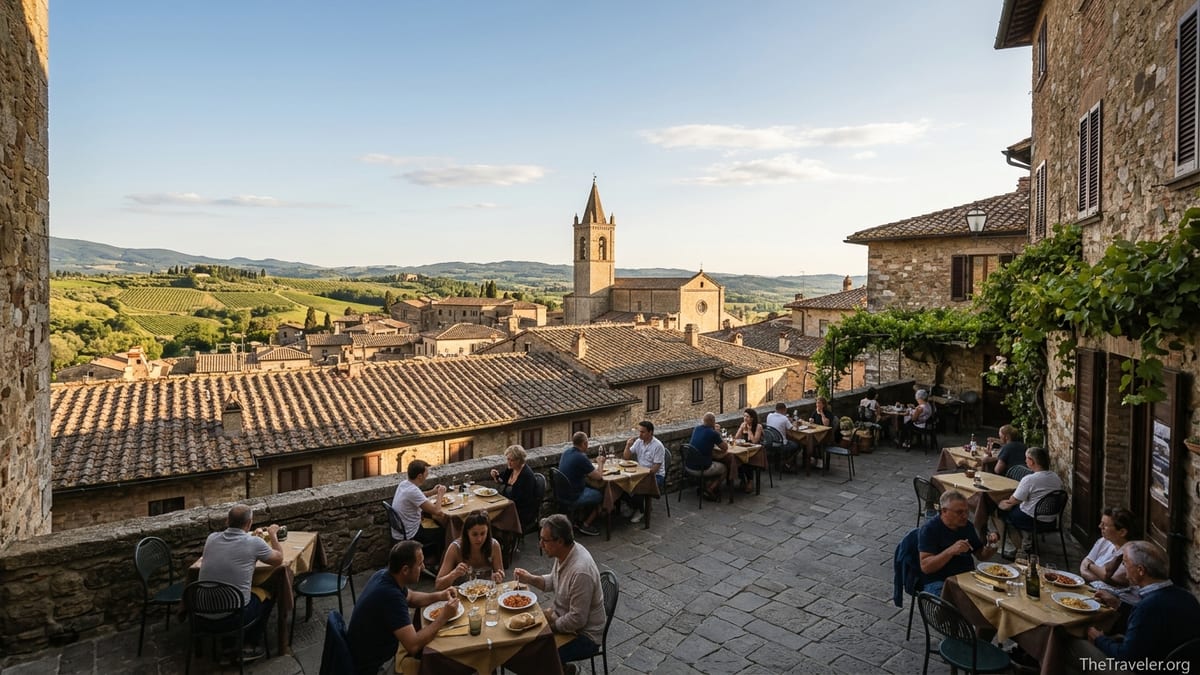
Italy is not the cheapest or quietest destination in Europe, and its most famous places can feel crowded and commercial in high season. Yet for a first trip that combines food, history, cities, countryside and coastline with relatively straightforward logistics, it remains one of the most rewarding choices. The same country that offers the Colosseum and the canals of Venice also provides quiet sunrise walks in Umbrian hill towns and long lunches under vine-covered pergolas in Puglia.
When comparing Italy with Greece, Spain, France and Croatia, the decision often comes down to priorities. Greece and Croatia shine for island-hopping and beach-centric itineraries that can be less expensive if you avoid the most iconic spots. Spain provides dynamic cities and nightlife at generally lower costs, while France excels in art, wine and sophisticated urban culture at a price point that can be higher than Italy’s in top areas. Italy’s unique selling point is how many different experiences you can string together in a single, manageable trip.
If you are willing to plan around crowds, budget realistically for mid-range prices and mix big names with quieter regions, Italy is more than worth visiting; it is a place that many travelers return to repeatedly. For a first European journey filled with memorable meals, layered history and varied landscapes, Italy deserves a serious spot on your short list.
FAQ
Q1. How many days do I need for a first trip to Italy?
For most first-time visitors, 9 to 14 days works well. About 10 days lets you see two or three major bases, such as Rome, Florence and Venice, without feeling constantly rushed.
Q2. Is Italy very expensive compared with other European countries?
Italy is usually more expensive than Spain or many parts of Croatia, and often similar to or slightly cheaper than France’s main tourist areas. Costs vary widely by region and season.
Q3. When is the best time of year to visit Italy?
Late April to early June and late September to October are popular for milder weather and somewhat fewer crowds. July and August are hotter and busier, especially in coastal areas.
Q4. Do I need to rent a car in Italy?
You do not need a car for a classic city-focused itinerary like Rome, Florence and Venice because trains work well. A car becomes useful for exploring countryside regions such as Tuscany, Umbria, Puglia or the Dolomites.
Q5. Is Italy safe for solo travelers?
Italy is generally safe for solo travelers, including solo women, especially in well-traveled areas. Petty theft such as pickpocketing on crowded buses and around major sights is the main concern, so normal city precautions are important.
Q6. How much should I budget per day in Italy?
A moderate budget traveler might plan roughly 120 to 200 euros per person per day, including accommodation, food, local transport and basic sightseeing, excluding flights. Very frugal or more luxurious styles can fall below or above this range.
Q7. Are the beaches in Italy as good as those in Greece or Croatia?
Italy has excellent beaches, especially in regions like Sardinia, Puglia and parts of Sicily, but they are often more developed and can be busier in summer than many Greek or Croatian spots. If you want quieter coves, Greece and Croatia may offer more options.
Q8. Do I need to prebook trains and museum tickets?
For high-speed trains on popular routes and major sights like the Colosseum, Vatican Museums and Uffizi Gallery, prebooking several weeks ahead is wise, especially from May to October. Regional trains and smaller museums usually do not require much advance planning.
Q9. Is English widely spoken in Italy?
In major tourist areas, hotels and many restaurants have staff who speak at least basic English. In smaller towns and rural regions, English may be less common, so learning a few Italian phrases is helpful.
Q10. Should I choose Italy over Greece, Spain, France or Croatia for my first Europe trip?
Choose Italy if you want a dense mix of historic cities, food culture, countryside and some coastline in a single trip. If you care more about beaches and lower prices, Greece or Croatia may suit you better, while France and Spain are strong alternatives for art cities and regional diversity.