

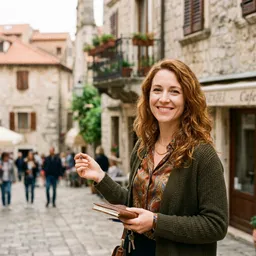
I boarded my Gulf of Orosei “minicrociera” expecting a lazy day of turquoise swims and long hours on postcard beaches. By the time I stepped back onto the quay in Cala Gonone, I had a very different question in my notebook: on a full-day boat tour that costs upwards of 80 euros per adult, how much usable time do you actually spend in the water or on the sand, once you subtract queuing, loading, unloading and optional extras?
Leaving Cala Gonone: The Promise of a Perfect Day
My test case was a classic full-day cruise on the Baunei and Dorgali coastline, the vertical limestone stretch that has made the Gulf of Orosei famous. I booked a 2026 minicrociera with Cala Gonone Crociere, one of the established operators that share the busy little port on Sardinia’s east coast. Their own tariff table lists the full-day mini cruise in high season around 80 euros per adult, with children’s discounts and separate pricing for shorter routes. The itinerary is sold as three beach stops, two photo stops, and optional cave visits, framed as a relaxed day at sea.
We left Cala Gonone just after 9:00 a.m., a good half-hour behind the printed schedule because of the time it took to scan tickets and sort people onto the right boats. The motor vessel, a traditional wooden cruiser, felt immediately crowded: every seat on the shaded upper deck was taken, the bar counter was three-deep with people ordering coffees for departure, and latecomers were already spreading towels on the floor to claim a patch of shade. As we eased out of the tiny harbor under the gaze of the Supramonte cliffs, the loudspeaker promised “three long beach stops” and “a full day to enjoy the coves of Baunei.”
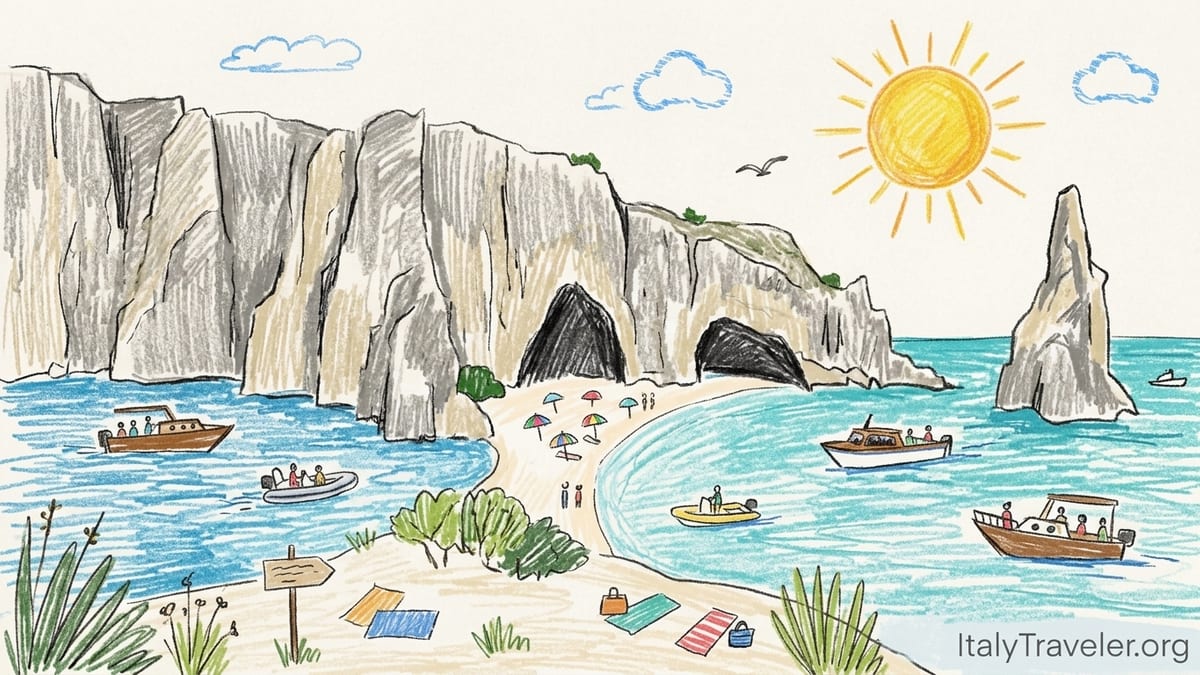
The first stretch of navigation was undeniably beautiful. Steep white and grey walls plunged straight into a cobalt sea, broken only by dark cave mouths and the occasional crack where a codula, the dry riverbeds of this karst landscape, met the water. Yet already I noticed the gap between brochure fantasy and physical reality. The speakers cycled through Italian, English, French and German. The bow was off-limits for safety. Photo angles were limited to the side railings, which were lined two-deep. It was scenic, but hardly serene.
Beaches Versus Photo Stops: What You Actually Touch With Your Feet
It did not take long for the marketing language to collide with geography and regulation. The Baunei coastline is now tightly managed to limit erosion and overtourism, and boat traffic is heavily controlled. One of the most famous spots, Cala Goloritzé at the southern end of the gulf, is a protected monument where motor boats must remain outside a buoy line and are not allowed to land passengers. Access is on foot via a regulated hiking trail from the Golgo plateau, or by swimming from the boat kept offshore. Normal day cruises cannot lawfully drop you on that sand.
This has two consequences for passengers. First, when “Cala Goloritzé” appears in a brochure for a standard cruise, it almost always means a pass-by or a brief swim stop in open water outside the buoys, not a beach landing. Second, it quietly reduces the number of true feet-on-sand stops available to big boats. On my cruise, the captain announced early that ours would be “three beach landings and two panoramic stops” including Cala Goloritzé and the so-called Piscine di Venere. In practice, that translated into real time ashore on Cala Luna, Cala Sisine and Cala Mariolu, and slow close passes in front of Goloritzé and the Pools of Venus without anyone leaving the boat.
This distinction matters if you are paying for beach time. From the deck, the famous stone arch of Cala Goloritzé and its turquoise shallows were mesmerizing. People crowded to the railings, telephoto lenses bumped shoulders, and the captain inched as close as the buoys allowed. But we never left the boat. Ten minutes later we were already heading north again, with “visit to Cala Goloritzé” duly checked off the program and zero minutes added to our swimming tally.
Cala Luna and Cala Sisine: First Landings, First Delays
Our first landing was Cala Luna, the long crescent of pale sand just south of Cala Gonone, famous for its shadowy caves at the back of the beach. By the time we arrived around 10:30 a.m., the shoreline was already crowded with people who had come by smaller boats, hikers from Cala Fuili, and the first wave of other cruisers. A newer requirement for 2026 complicates things further: since July 2026, access to Cala Luna involves an environmental contribution of 2.50 euros per person paid at the pontoon, charged separately from any boat ticket. That means every passenger disembarking has to queue briefly at a card terminal before stepping onto the sand.
On my cruise, this translated into twenty-five minutes of practical delay. Because the motonave could not fit everyone in a single tender run, a smaller shuttle boat was used to ferry us to the floating pier. Each shuttle cycle took 7 to 10 minutes, including helping less-mobile passengers on and off. Between the time we dropped anchor and the moment I actually set foot on the beach, half an hour had passed. Our nominal “one hour twenty” stop, announced by the crew, shrank to under 50 minutes of usable time on land if you did not want to be among the last and risk delaying departure.
Cala Sisine, a narrower cove backed by a steep codula, worked in a similar way. The advertised 90-minute stop was shortened by the realities of crowd management. With multiple large boats arriving within the same hour, there was congestion at the shore. Our captain cut the announced stop to “one hour net” and still warned us by loudspeaker to be back at the pier ten minutes early to avoid “ritardi che rovinano il programma.” I timed my own beach window there at 47 minutes between leaving and re-boarding the shuttle. In both cases, toilets were limited to a small bar at the back of the beach with a queue, and there was little chance to explore beyond a quick swim and a walk along the sand.
Cala Mariolu and Cala dei Gabbiani: Beautiful, Crowded, Short
If there is a crown jewel of these cruises, it is the paired beaches of Cala Mariolu and Cala dei Gabbiani, two coves of rounded white stones that glow almost electric under clear water. Most operators, including Cala Gonone Crociere and others based in Santa Maria Navarrese and Arbatax, schedule their longest stop of the day here, often around two hours in theory. It is the place where brochure photos are taken and where many passengers store their highest expectations.
We arrived here just after 1:30 p.m. after the Goloritzé photo stop. Unfortunately, so did everyone else. From the sea, both coves were speckled with umbrellas, rented deckchairs and inflatable toys. A forest of small dinghies and semi-rigid inflatables lay just offshore. Our motor vessel could not approach the narrow corner that serves as a shared landing zone, so again, we relied on shuttles. It took another 20 or so minutes for all passengers to disembark. During that time, those still on board streamed toward the bar, crowding the limited shade, while those already on the beach scrambled to stake out a few square meters of pebbles.
Here, the gap between scheduled and effective stop time was even more glaring. The crew announced a two-hour break, yet passengers were called back to the pier after 1 hour and 35 minutes to allow everyone to re-board in time to reach the Grotta del Fico area for those who had paid for that optional visit. If you subtract shuttle logistics at both ends, the realistic time to swim, snorkel, queue for toilets and maybe buy a drink hovered around 75 to 80 minutes. Snorkeling gear was not included in the ticket price; some passengers had brought their own masks, others rented from stalls on the beach for around 10 to 15 euros per set.
It was still a magic place to float, hearing stones clink softly under the waves and watching shoals of fish drift in the clear water. But every few minutes, the spell broke as a new load of passengers arrived or another operator’s crew blew a whistle for departure. There was no sense of being alone in a wild cove. Instead, it felt like several hundred people trying to experience wilderness on a very tight schedule.
Grotta del Fico and the Quiet Rise of Extras
Optional cave visits are where the economic reality of these tours starts to bite. On our route, the main add-on was the Grotta del Fico, a show cave along the Baunei coast that once sheltered Mediterranean monk seals and now offers guided tours through chambers suspended just above sea level. Tickets for Grotta del Fico are sold separately at the cave entrance or via the operators. Current published prices put adult entry at around 12 euros, with small reductions for children and guided tours bundled in.
On board, the stop was pitched as a cultural highlight and a chance to “rest from the sun.” What it also did was carve another 45 minutes out of the timetable. Those who had booked the cave filed into small groups and disappeared through the pier into the hillside, while the rest were asked to remain on the boat or swim off the stern, in deep, roped-off water. Because the motonave had to remain in position for the cave tenders to operate, it was not possible to use that window for a beach landing elsewhere. Effectively, a significant chunk of the afternoon was spent either queuing for guided tours in the half-dark or sitting idly in a crowded boat.
This is where value perception becomes very subjective. Some travelers will happily pay the extra 12 euros and be grateful for the geology lesson. Others, especially families on a budget, will feel that precious swimming time is being traded away for an up-sell. Either way, it is important to understand that the advertised full-day price almost never includes these cave tickets. The same is true for the famous Grotta del Bue Marino near Cala Gonone, which is serviced by separate boats and priced locally; it is sometimes offered as a pre- or post- extension to a gulf cruise, not as part of the core product.
Price Versus Beach Time: Comparing Real Products
To understand whether crowded cruises and short stops are poor value, it helps to compare them with other real offerings on the same coastline. In Cala Gonone, the going rate in 2026 for a classic full-day mini cruise on a large boat, with three beach stops and two panoramic passes, hovers around 80 euros per adult in peak season. Children often pay a reduced rate, and infants may travel free. Environmental contributions such as the Cala Luna access fee and cave tickets are on top of that. Drinks and lunch are almost always extra, purchased at the bar on board or at beach kiosks.
From Santa Maria Navarrese or Arbatax further south, companies like Mare Ogliastra run their own full-day lines. Their “Red Line” excursion along the Baunei coast, typically priced around the mid-60s to 70 euros per adult in high season, offers a comparable package: several coves, at least one long stop at Cala Mariolu or Cala dei Gabbiani, another at Cala Biriola or Cala Sisine, and panoramic views of Cala Goloritzé without landing. The difference lies in the departure point and boat style. These operators use a mix of large motorboats and smaller rubber-inflatable craft, with the latter marketed as more flexible and capable of entering small caves and tighter corners.
When you compare euros spent to effective beach time, the math is sobering. On my 80 euro motor-cruise from Cala Gonone, I clocked roughly 50 minutes ashore at Cala Luna, 47 minutes at Cala Sisine and about 75 minutes at Cala Mariolu, for a total of just over 2 hours and 50 minutes of beach time across a nominal eight-hour day. Even if you top that up with 20 or 30 minutes of open-water swimming from the boat, more than half the day is spent navigating, queuing or sitting on decks. A typical 65 to 70 euro Red Line-style inflatable tour from Santa Maria Navarrese may manage to cut some of that dead time by landing closer to the beaches and running with fewer passengers, yet the need to adhere to timed slots and avoid overloading sensitive coves still limits how long you stay.
The conclusion is not that these tours are “bad” by definition. They move hundreds of people through a fragile area that would otherwise be reachable only by strenuous hikes or private boats. But if your personal definition of value is hours spent actually swimming or exploring a single cove, you might come away from a full-day multi-stop cruise feeling short-changed, especially once you add in extras.
Baunei’s Access Rules and Why You Will Not Land at Cala Goloritzé
Any honest investigation into Gulf of Orosei boat tours has to reckon with the Baunei coastline access rules, because they explain several of the frustrations passengers feel on board. The cliffs between Cala Luna and Cala Goloritzé fall within a patchwork of municipal and regional protections that aim to keep numbers from spiraling out of control. That is why there is only one small marina in Santa Maria Navarrese and why much of the coast has no road access at all. Boats are limited in number, size and sometimes in the hours when they can anchor near specific beaches.
Cala Goloritzé is a special case. It is recognized as a natural monument and sits behind a ticketed hiking trail with daily visitor caps, managed from the plateau above. Since the mid-2000s, motorized boats have been banned from approaching too close to the shore. There is no authorization for big day-cruise vessels to set up a landing pontoon there, and even smaller boats must respect the buoy line. As a result, the only legal ways to stand on the sand are to hike down and back up, or to swim quite a distance from a boat moored outside the protected radius, which is not realistic for most tour passengers.
This means that any full-day cruise that promises both “Cala Goloritzé” and multiple beach stops is operating within unavoidable constraints. It can show you the famous spire and aquamarine shallows, but it cannot give everyone aboard an hour stretched out on that particular shore. That is not a failure of the companies but a function of conservation policy. Where companies do sometimes over-promise is in the language of their brochures and booking platforms, which often list “Cala Goloritzé” alongside landable coves like Cala Luna and Cala Mariolu without clearly flagging that it will be a non-landing stop.
Large Cruises, Small Inflatables, Private Charters and Hiking
So what are the alternatives, and do they deliver better value in terms of usable beach time? Large cruises, like the one I took, are the most affordable plug-and-play option. For roughly 70 to 80 euros per adult from Cala Gonone, or 65 to 70 from Santa Maria Navarrese with operators such as Mare Ogliastra on routes like their Red Line, you get structured transport, commentary and a known schedule. The trade-offs are crowding, slower embarkation and disembarkation, and fixed stops that cannot easily be extended even if everyone is having a great time.
Smaller skippered inflatables, whether from the same operators or specialist outfits in both ports, sit in the middle. They usually take 10 to 12 passengers, ride lower on the water and can nose right up to coves and caves that large boats must admire from afar. Because there are fewer people to shuttle, it is faster to land and re-board at beaches. On days with moderate seas, they can also anchor closer to shore and let people swim the last few meters. Prices in high season often run from around 90 to 110 euros per person for a full day with captain, which sounds steep until you consider that you may gain half an hour more at key stops simply by cutting queue time.
Private charters and self-drive dinghies offer even more flexibility at a much higher headline cost. A small, license-free rubber boat hired for the day out of Cala Gonone can cost several hundred euros plus fuel, though that price can be shared among a small group. With a skipper on a larger, more comfortable boat, you may easily exceed 600 or 700 euros for a family or group of friends, depending on season and vessel. The value lies not in saving money but in controlling the clock: you can choose to spend three hours at Cala Mariolu and skip other stops entirely, or reverse the order to dodge the biggest crowds when conditions allow. You remain subject to the same environmental rules, including the impossibility of landing at Cala Goloritzé, but you are no longer bound to the one-size-fits-all rhythm of the cruise fleet.
Then there is hiking. From the Golgo plateau above Baunei, signposted trails drop down to Cala Goloritzé and Cala Sisine. They require decent fitness, proper footwear and a tolerance for heat, and daily visitor numbers are capped, sometimes via advance booking systems with a modest per-person fee. Yet for those willing to put in the effort, the reward is exclusive: hours spent on a single cove, watching boats come and go offshore while you shelter in the shade of cliffs or swim whenever you please. Economically, a day of hiking often costs less than a family’s tickets on a boat tour once you factor in fuel, trail access fees and maybe a simple meal in Baunei or Dorgali.
Counting the Cost for Couples and Families
To see how this plays out in a real travel budget, consider a couple staying in Cala Gonone in August and eyeing a classic minicrociera. Two adult tickets at 80 euros each come to 160 euros. Add the 2.50 euro per person environmental contribution at Cala Luna, and you are at 165 euros before buying a single drink. If both choose to visit Grotta del Fico at roughly 12 euros per adult, that is another 24 euros, lifting the total to around 189 euros. Lunch on board or at beach kiosks can easily reach 15 to 20 euros per person for a sandwich, drink and coffee, which adds perhaps 30 to 40 euros across the day. A realistic door-to-door figure for the couple hovers just under or just over 220 euros.
For a family of four with two school-age children paying a reduced fare, the sums increase quickly. Suppose high-season children’s tickets are around 50 to 55 euros each. Two adults and two children might therefore spend in the region of 270 euros on base fares alone. Add four small contributions at Cala Luna, cave tickets for those who want them, and simple lunches, and you are nudging or exceeding 350 euros for one day out. That may be entirely acceptable if it becomes the signature experience of the trip. It may feel poor value, however, if the family returns to shore realizing they have spent less than three hours in total on actual beaches.
By contrast, the same couple taking a Mare Ogliastra-style Red Line excursion from Santa Maria Navarrese at, say, 68 euros per adult would start at 136 euros in base fares. There may be similar add-ons such as cave visits and food, but the smaller boat and shorter sailing distances could translate into slightly more net time in the water. A family that splits between one full-day inflatable tour for the adults and a cheaper half-day beach or pool day for the children may also find that their enjoyment per euro spent increases, even if the headline cost of the inflatable is higher per seat.
The Takeaway
After a full day timing stops, queuing at gangplanks and watching the coast slide by from behind other people’s shoulders, my verdict is nuanced. A classic Gulf of Orosei minicrociera delivers extraordinary scenery, logistical simplicity and a sense of having “seen everything” on a wild coast that is otherwise difficult to access. It is not, however, a product optimized for long, lazy hours on a single beach. Crowded decks, repeated embarkations and disembarkations, and optional cave visits all chip away at the unstructured swimming time you probably imagine when you picture turquoise coves.
If your highest priority is to maximize time actually in the water at one or two coves, a simpler plan usually offers better value. That might mean paying more per person for a small skippered inflatable that concentrates on Cala Mariolu and Cala dei Gabbiani, with perhaps a shorter swim somewhere else and no caves. It might mean hiking to Cala Goloritzé and investing your energy there rather than chasing it with a boat that can never land you. Or it might mean choosing a half-day tour that focuses on a single beach plus a scenic return, leaving the rest of the day for an unhurried lunch back in port.
Large cruises such as Cala Gonone Crociere’s 2026 minicrociera at around 80 euros per adult and mid-range options like Mare Ogliastra’s Red Line at around 65 to 70 euros each have their place. They suit travelers who want to sit back and sample the coastline buffet-style, accepting that each dish is a tasting portion, not a main course. But if you are traveling as a couple or family conscious of both budget and time, it pays to read the fine print very carefully. Count planned minutes ashore, ask how landings are managed, and calculate what you will really spend once environmental fees and caves are factored in.
In my own notebook, next to sketches of cliffs and coves, I have written a blunt question in capital letters: “HOW MANY HOURS ON THE BEACH FOR HOW MANY EUROS?” It is the calculation that turns a dreamy brochure into a clear-eyed decision. For the Gulf of Orosei, the answer is often less generous than you might hope on the big boats, and more rewarding, though frequently more expensive or demanding, on smaller inflatables and hiking trails. Knowing that before you hand over your credit card is the first step toward getting the experience you actually want.
FAQ
Q1. Do standard Gulf of Orosei boat tours actually land at Cala Goloritzé?
Most regular day cruises do not land at Cala Goloritzé. The beach lies within a protected area where motor boats must stay outside a buoy line and cannot set people down on the sand. You will usually see the cove from the water, sometimes with a short swim stop offshore, but access on foot via the hiking trail from the Golgo plateau is the main way to spend real time there.
Q2. How much real beach time can I expect on a full-day mini cruise?
On a typical eight-hour multi-stop cruise, you can expect around two and a half to three hours of actual time on beaches, split between coves such as Cala Luna, Cala Sisine and Cala Mariolu. The rest of the day is taken up by navigation, photo stops, shuttling passengers ashore and back, and optional cave visits.
Q3. Why do beach stops feel shorter than the schedule suggests?
Announced stop times rarely account for the logistics of moving large numbers of people between a big boat and a narrow beach landing zone. When the crew says you have 90 minutes, the first and last 15 or 20 minutes can vanish in shuttling and queuing, leaving less net time to swim or explore before you have to return to the pier.
Q4. Are smaller inflatable boat tours worth the higher price?
Smaller skippered inflatables usually cost more per person than large motor vessels, but they often provide better value in terms of usable time. With fewer passengers, landings are faster, the boat can anchor closer to shore, and itineraries can be adjusted more easily on the day, which can add precious minutes at key coves.
Q5. How do extras like Grotta del Fico affect the day?
Optional cave visits such as Grotta del Fico, which costs around 12 euros per adult, add an interesting cultural element but also eat into the timetable. While some passengers tour the cave, others must wait on board or swim near the boat, and that time cannot usually be reallocated to longer beach stops.
Q6. What hidden or additional costs should couples and families budget for?
Beyond the base ticket price, you should budget for environmental contributions at places like Cala Luna, optional cave tickets, food and drinks on board or at beach bars, and any snorkel gear rental you might need. For a couple, this can add several dozen euros to the day; for a family of four, it can push the total well above 300 euros in high season.
Q7. Is it better to choose a tour that visits many coves or just one or two?
If your goal is to tick off as many famous names as possible, a multi-cove cruise works well, but each stop will be relatively short. If you care more about relaxed swimming and exploring, a simpler excursion that focuses on one or two beaches, or a private charter where you control the schedule, usually offers better value and a calmer experience.
Q8. Can hiking really replace a boat tour on the Baunei coast?
Hiking does not replace the broad coastal views of a boat tour, but for certain coves like Cala Goloritzé it is the only way to enjoy long, unhurried hours on the beach. Trails are steep and hot in summer, and access may require a small ticket fee and advance booking, yet for fit travelers they can provide more beach time at a lower overall cost than a family’s seats on a large cruise.
Q9. Are Gulf of Orosei boat tours suitable for young children?
Large boats are physically suitable for children, with shaded decks and toilets, but the long day, crowding and repeated queuing can be tiring. Shorter half-day options or focusing on one main stop often work better for families, especially if younger children are not strong swimmers or become restless with long periods sitting on deck.
Q10. How should I choose between departing from Cala Gonone, Santa Maria Navarrese or Arbatax?
Cala Gonone is closest to Cala Luna and popular for classic mini cruises, while Santa Maria Navarrese and Arbatax sit nearer to the Baunei heartland of Cala Mariolu, Cala dei Gabbiani and Cala Biriola. Departure port influences both sailing time and price. If you want to minimize time on the boat and maximize time at the southern coves, starting from Santa Maria Navarrese with an operator like Mare Ogliastra can make practical sense.