

Across a decade of trips to Veneto, I have sweated through August afternoons in Venice, shivered at a September opera in Verona, floated in Lake Garda in late spring and picked my way through early summer snow on Dolomite trails. What follows is exactly what I have experienced in the region’s main corners, combined with clearly marked, carefully researched advice for months I have not personally visited. Veneto rewards timing more than almost any other region in Italy, and small shifts in season can completely change crowds, prices and even how the air feels on your skin.
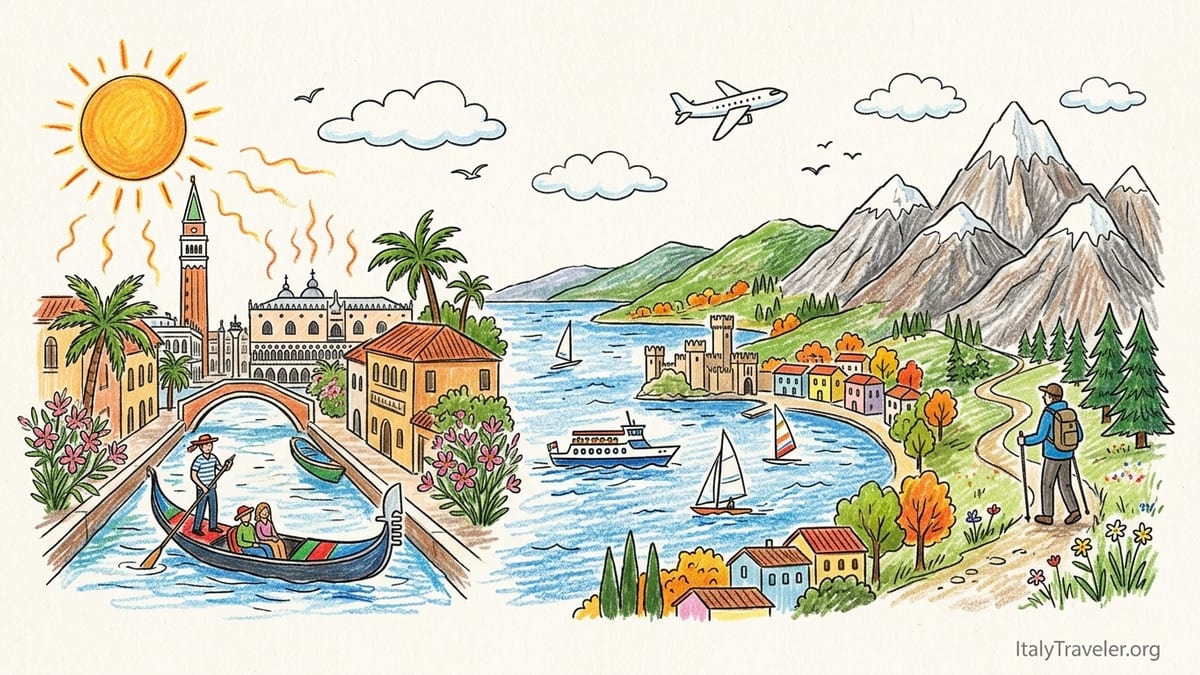
How Veneto’s Seasons Actually Feel On the Ground
My first August arrival in Venice hit like a wall. Stepping out of Santa Lucia station at midday, the heat felt close to 33 degrees Celsius and the humidity sat heavy in the narrow calli. The marble of the bridges radiated warmth, and by the time I crossed to Cannaregio my shirt was sticking to my back. Venice’s humid subtropical climate means that summer heat is amplified by reflected sun from the paving stones and the still air of the canals, which can make even short walks feel draining in the middle of the day.
By contrast, a late September evening in Verona felt almost cool. I remember walking from Piazza Bra to the Arena in a light jacket, with daytime temperatures around 22 degrees but slipping under 15 once the opera started. The air felt much drier than Venice, and there was a faint scent of grapes from the Valpolicella harvest on the breeze. Unlike the lagoon, Verona sits inland and you feel more of a classic continental swing between warm days and crisp nights in shoulder season.
A different kind of softness defines Lake Garda in late May and late September, which are the periods I have personally visited. Around Bardolino and Garda town, I found daytime highs sitting in the low to mid 20s Celsius, warm enough to eat gelato on the promenade in a T-shirt but with evenings that called for a sweater. The lake moderates extremes, so even when Verona baked in late spring, the waterfront felt more forgiving with a gentle breeze over the water.
Up in the Dolomites the story changes again. My June and early September hiking trips were governed less by temperature on the thermometer and more by sun exposure, altitude and wind. At 2,000 meters on a sunny June afternoon above Cortina d’Ampezzo I hiked comfortably in a T-shirt at around 18 degrees, but the moment a cloud slid over the sun, the temperature seemed to drop instantly and I pulled on a fleece. In early September above 2,300 meters in the Pale di San Martino, mornings started close to freezing, with frost on the ground, and only reached the mid teens by mid-afternoon.
Venice: Heat, Humidity and the End of the 2026 Access Fee
Venice is where season choice has impacted my trips the most, both in terms of personal comfort and rules at the city gates. During my August stay, afternoons between roughly 12:00 and 16:00 felt almost punishing. The combination of around 30 degree heat, high humidity and reflected light on the stone meant I planned museums and long lunch breaks for those hours. Crowds in San Marco and along the Riva degli Schiavoni were dense, and even basic trattorie in central sestiere were charging 15 to 18 euros for a simple plate of spaghetti alle vongole, with tables turned quickly.
In late October on a separate trip, the same city felt transformed. Daytime temperatures sat closer to 16 to 18 degrees, and I could cross from the Accademia to San Polo without breaking a sweat. Humidity was still present, especially first thing in the morning when fog sometimes sat low over the canals, but it felt romantic rather than oppressive. I remember walking across a nearly empty Piazza San Marco at 21:00, wearing a coat and nursing a takeaway espresso, with most day-trippers gone and only overnight visitors in the streets.
The 2026 access fee experiment added another dimension. On a research visit in June 2026 I stayed overnight in Santa Croce, which meant I was exempt from the Venice access fee that applied to day visitors entering the historic center between 8:30 and 16:00 on selected dates from 3 April to 26 July 2026. The city limited the trial to 60 specific days, mostly weekends and some extended holiday periods. On those days, I noticed a modest thinning of day-trip crowds in the late morning at Piazzale Roma and the station, although places like Rialto were still very busy at midday.
Since 27 July 2026, the fee no longer applies and it is again possible to visit Venice without paying or registering in advance for access. Future years may bring new rules, but any fresh scheme will need to be checked close to departure rather than copying old advice. The practical lesson from my trips is that even without an access fee, Venice feels substantially more livable in late October, November (avoiding high acqua alta alerts) and March, when humidity is lower, crowds are manageable and accommodation prices soften by 20 to 30 percent compared with August at comparable hotels around Santa Croce and Dorsoduro.
Verona: Opera-Season Evenings and Shoulder-Season Calm
Verona feels like a different city between opera season and the quieter months. I have visited several times around the summer Arena di Verona festival, which typically runs from mid June to early September, and once in early March. On my opera-season visits in July, daytime highs hovered around 30 degrees in mid-afternoon, but evenings in Piazza Bra settled to a comfortable 22 to 24 degrees with a light breeze. I wore a light dress shirt and brought a thin scarf to the open-air performances, more for the occasional draft than for real cold.
Heat management in Verona was less about humidity and more about time of day. In July I avoided climbing up to Castel San Pietro before late afternoon, since the stone staircase from Ponte Pietra sits in direct sun. But the city center streets are wide compared with Venice’s alleys, and I never felt the same stagnant air. The main adjustment I made was planning an early aperitivo around 18:30 on Via Mazzini or in Piazza delle Erbe before the crowds thickened for the opera. Restaurants near the Arena packed out from 19:30 onwards on performance nights, and places that were half-empty in the afternoon like certain pizzerias in Via Roma operated with two sittings and recommended reservations on show days.
My March visit painted a quieter scene. Skies were pale blue, with daytime temperatures around 13 degrees. I wore a sweater and light jacket all day and wrapped my hands around warm cappuccinos in less touristy bars off Corso Porta Borsari. The Arena stood mostly empty, used only for small events, and hotel rates near Piazza Bra were significantly lower than in July. A mid-range boutique hotel where I had once paid around 180 euros per night during opera season cost closer to 110 euros in March, booked a couple of months in advance.
Spring and early autumn also brought the vineyards into focus. In late April and early May, which I have experienced on day trips from Verona into Valpolicella, the vines were bright green and the air smelled fresh, with temperatures around 18 to 20 degrees. Small wineries were able to host tastings without advance booking, something that becomes much harder around harvest in September. Autumn weekends in Valpolicella also fill quickly with visitors from Verona, even when the city center does not feel overwhelmed.
Lake Garda: Swimming Weather, Crowds and Microclimates
Lake Garda is where I have been most surprised by how different one shore can feel from another. On a late May visit staying in Bardolino on the eastern Venetian shore, the air temperature reached around 23 to 24 degrees on sunny days. The water itself was still cool, but I watched local teenagers diving in around midday and managed brief swims myself. The initial shock faded after a minute, and once moving it felt invigorating rather than cold. On the same trip, I took a morning ferry to Sirmione on the southern shore and noticed warmer, gentler water in the shallow areas near Jamaica Beach, where the sun heats the stones.
In early September, staying in Malcesine further up the eastern shore, I found water temperatures noticeably warmer. I swam comfortably in the late afternoon, when the surface had had all day to warm, and the air sat at around 26 degrees. Evenings on the lakeside promenade needed only a light sweater. Crowds were still present, especially in postcard towns like Malcesine and Lazise, but they felt predominantly like longer-stay visitors rather than the heavy day-trip crowds I associate with Venice in August.
Accommodation pressure on the lake is highly seasonal. During a mid August day trip I made from Verona to Garda town, I checked walk-in prices at simple three star hotels near the promenade and was quoted well over 200 euros for a standard double. By comparison, on my late May stay I had prebooked a family-run hotel with lake view a few streets back from the water for under 150 euros per night, breakfast included. Restaurants followed a similar pattern, with lakeside trattorie operating at capacity in August and offering two sittings each evening, while in May we were able to linger over grilled lake fish and a carafe of Lugana wine without pressure.
Wind patterns also matter here, especially if you plan to sail or windsurf. I am not a windsurfer, but even from the shore in Malcesine in September you can feel the strong afternoon Ora wind funnelling up the lake from the south. The mornings were calm, suitable for quieter swims and SUP rental, and by 13:00 sails dotted the water, creating a much more energetic scene. Down at the broader southern end around Peschiera, the wind was gentler and walking the waterfront in the afternoon felt less intense.
Dolomites: Snow Patches, Hut Logistics and September Clarity
My Dolomites experience comes from two June trips and one early September journey, all focused on day hikes and short hut stays in the Veneto sections around Cortina d’Ampezzo and the Pale di San Martino. In mid June above Cortina, I found the valley green and wildflowers in full bloom along lower trails, but several higher passes still held snow patches. On a day hike near 2,300 meters, compact snow lingered in shaded gullies and required careful footwork, especially early in the morning when it was icy. Many lifts and high huts were just opening for the season, roughly from mid to late June onwards, which meant some classic routes were only partially accessible.
By my early September trip, snow in those same areas had mostly retreated to the highest north-facing slopes. Days began cold, with frost on the meadows near San Martino di Castrozza, but by midday I was hiking in a T-shirt and light trousers at around 15 to 18 degrees. The light felt crisp, with long views to the Tre Cime di Lavaredo and other limestone peaks, and there was far less haze than in July photographs I have seen from friends. Trails were still busy on popular circuits around Tre Cime and around Cinque Torri, but crowds felt thinner than peak high summer.
In all my mountain trips, afternoon thunderstorms were a practical concern. Even in June under blue morning skies, by around 15:00 clouds often built over the ridges. On one June afternoon near Passo Giau we cut a hike short when rumbling started in the distance and dark clouds rolled in, sending a chill through the air in minutes. Temperatures can drop rapidly when storms roll through, so I carried a waterproof jacket and extra layer even on days that began warm in the valley.
If you are planning hut-to-hut treks, my experience lines up with local advice that the most reliable window for open rifugi and snow-free passes runs from late June through early to mid September. September offered my favorite balance: open infrastructure, cooler hiking temperatures and fewer large guided groups. Prices in rifugi stayed fairly constant in the season, but September bookings were slightly easier to secure on short notice than late July. In June, I found that some smaller huts still had snow around their terraces and operated with reduced menus while supply deliveries caught up with opening.
Months I Have Not Visited: What Research Adds
There are months in Veneto I have not experienced directly, especially the depth of winter in the Dolomites and the peak of December tourism in Venice. For these periods, I rely on cautious research rather than personal memory. In Venice, January is described by local tourism sources as one of the quietest times, with daytime highs often under 10 degrees and a damp cold that seeps into your bones, especially when fog covers the lagoon. Hotel prices in areas like Cannaregio and Castello are typically lower than at any other time of year, apart from specific spikes around Carnival in February, but shorter daylight and a higher chance of acqua alta can disrupt plans.
For Verona and the lowlands, winter brings cool, humid conditions with occasional fog and temperatures that can hover around freezing at night. The Christmas markets in Piazza dei Signori and the surrounding streets draw weekend visitors in late November and December, which increases both accommodation rates and restaurant pressure on Fridays and Saturdays, although weekdays remain calmer. Autumn months I have not personally spent extensive time in, such as late October in the vineyards, are widely praised for harvest colors and food festivals around chestnuts and new wine.
In the Dolomites, research and local trail information suggest that the main hiking season generally runs from late June through late September or early October, when rifugi and lifts operate and most snow has melted from mid-altitude trails. May and early June, which I have only brushed against at lower elevations, can be tricky, with some lower paths free of snow but higher routes still blocked, and hut services not yet fully open. Late October and November can bring early snow and closed lifts, leaving only valley walks feasible for most visitors.
On Lake Garda, my unvisited months are primary winter and the cold edge of early spring. Climatic data and regional tourism boards indicate that while the lake rarely freezes and the climate is milder than inland, water temperatures are far too cold for comfortable swimming from roughly November to March. Some lakeside hotels and campgrounds close outside the core April to October season, especially family resorts aimed at summer guests, so anyone aiming for off-season trips should double-check opening dates and expect a quieter, more local atmosphere.
Where Traveling Outside Summer Helped Most
Across my trips, the part of Veneto that benefited most from off-summer timing was Venice, followed closely by the Dolomites. In Venice, visiting in late October rather than August changed almost everything: walking comfort, crowd density, room rates and even the behavior of locals. In August, shopkeepers in San Marco looked exhausted by midday, and some restaurants leaned heavily on set tourist menus. In October, cafés in Cannaregio felt more relaxed, owners had time for conversations in Italian or English, and I was able to secure a canal-view table at a neighborhood bacaro without reserving days ahead.
The Dolomites also shone brighter in early September than in June for me. While June brought wonderful wildflowers and long daylight, the uncertainty around snow on higher passes and partial hut operations made planning more complex. Early September, by contrast, delivered fully open infrastructure, clearer skies and slightly lower trail traffic. The only trade-off was a real chill in the mornings, which I managed with layered clothing. Prices in mountain towns like Cortina did not drop dramatically compared with August, but availability improved, and last-minute rooms in mid-range guesthouses were easier to find.
Lake Garda and Verona offered more of a sliding scale than a strict "avoid summer" rule. High summer at Garda felt busy and expensive during my brief August visit, but never quite as overwhelming as Venice on a similar date, thanks to the ability to escape along the lakefront or into the hills. Choosing late May or early September here meant more pleasant swimming conditions than in early spring, with noticeably gentler crowds and better value at lakeside hotels that included breakfast and bike rental. In Verona, opera season is inherently busy in July and August, yet that is precisely when the Arena is at its most magical, so the decision becomes less about avoiding crowds and more about whether you value performances over cheaper prices.
If you want a single window that works acceptably across all four areas I have experienced, the second half of September is the closest I have found. Venice is cooler and somewhat quieter, Lake Garda water remains swimmable, Dolomite trails are usually still open and Verona combines pleasant daytime warmth with crisp evenings. The trade-offs are shorter days than peak summer and the possibility of early storms in the mountains, but it is the period when my notebook holds the greatest concentration of satisfied remarks.
The Takeaway
Choosing when to visit Veneto is less about a single "best month" and more about matching each part of the region to your tolerance for heat, crowds and logistical complexity. My own trips have been reshaped by understanding the feel of late October fog on Venice’s canals, the cool thrill of early September water in Lake Garda, the bite of alpine mornings in the Dolomites and the energy of opera nights in Verona. Small shifts of a few weeks have regularly halved my accommodation costs and dramatically changed the quality of my days.
What my experience makes clear is that Venice rewards shoulder seasons more than anywhere else in the region, both now that the 2026 access fee trial has ended and in years when no entry rules apply. The Dolomites, meanwhile, demand respect for weather and infrastructure, and they repay careful timing in September with some of the clearest hiking days you are likely to find in Europe. Lake Garda and Verona offer more flexibility, but still benefit from avoiding the heart of the Italian school holiday period if budgets and schedules allow.
Future regulations, from any renewed access fees in Venice to changing hut opening dates in the mountains, will need to be verified afresh before each trip. Climate patterns are also shifting, with hotter heatwaves and occasional out-of-season snowfalls complicating what used to be predictable rules of thumb. The patterns I have described here are rooted in very specific summers, springs and autumns, not abstract averages.
Use them as a first-hand framework, then layer on current forecasts, local notices and your own tolerance for heat, cold and crowds. If you do, you are more likely to find the Veneto that locals love in the quieter weeks, whether that is a foggy November morning in Cannaregio, a golden hour swim in Lake Garda in September, or a trail in the Dolomites where the only sounds are cowbells and your own footsteps on the rock.
FAQ
Q1. Is Venice still charging an access fee in late 2026 and 2027?
As of 27 July 2026 the experimental Venice access fee stopped, and you can enter the historic center without paying. For any future years, you will need to check the official city channels shortly before your trip because new rules, dates or exemptions may be introduced.
Q2. When is it warm enough to swim in Lake Garda based on your trips?
On my visits, late May brought refreshing but manageable swims for a few minutes at a time, while early September allowed longer comfortable swims in the afternoon when the surface water had warmed through the day.
Q3. How hot did Venice actually feel in summer compared with Verona?
In my experience, similar temperatures around 30 degrees felt harsher in Venice due to higher humidity, narrow streets and reflected heat from stone, while Verona’s wider streets and slightly drier air made the same reading on the thermometer noticeably more tolerable.
Q4. What was it like attending an opera in Verona’s Arena in summer?
On July visits, I found evenings around 22 to 24 degrees, warm enough to sit outdoors for several hours in light clothing. The stone seating retains some daytime heat, so I brought a small cushion and light scarf for comfort rather than warmth.
Q5. Which month gave you the best overall balance across Venice, Garda and the Dolomites?
Early to mid September has been the best compromise in my experience, with cooler crowds and temperatures in Venice, swimmable water in Lake Garda and mostly snow-free Dolomite trails with open huts and lifts.
Q6. Did you ever struggle to find accommodation because of crowds?
Yes. In August around Venice and Lake Garda I found many central options fully booked or significantly more expensive, whereas in late October in Venice and early September in the Dolomites I could still secure good mid-range rooms a few weeks out.
Q7. How did shoulder-season visits affect restaurant experiences?
Outside summer I noticed staff had more time to talk, menus leaned more toward seasonal dishes and I rarely felt rushed. In peak August, especially in Venice’s busiest zones, turnover was faster and some places focused on tourist set menus.
Q8. Are June hikes in the Dolomites worth it despite remaining snow?
In my June trips the lower and mid-altitude trails were beautiful with wildflowers, but some higher passes still had snow patches and not all huts or lifts were fully open, so I treated route planning more cautiously than in September.
Q9. How did late October in Venice compare cost-wise with August?
On similar standards of accommodation in central areas I personally saw drops of roughly 20 to 30 percent in nightly rates in late October compared with mid August, though exact differences vary by hotel and booking lead time.
Q10. If I only care about city breaks, should I avoid summer in Veneto entirely?
If you are focused on Venice, I would avoid the core of summer whenever possible, but for Verona a summer visit aligned with the opera season can still be worthwhile if you plan for heat and book accommodation near the center well in advance.