

Choosing where to stay in Sicily has a bigger impact on your trip than almost anything else. Distances are longer than they look on the map, parking and traffic can be challenging, and prices swing sharply between inland cities and famous seaside towns in summer. This guide compares Sicily’s main bases and coastal resorts to help you decide where to stay, how many nights to book, and what kind of budget to expect in different seasons.
How to Choose Your Sicilian Base
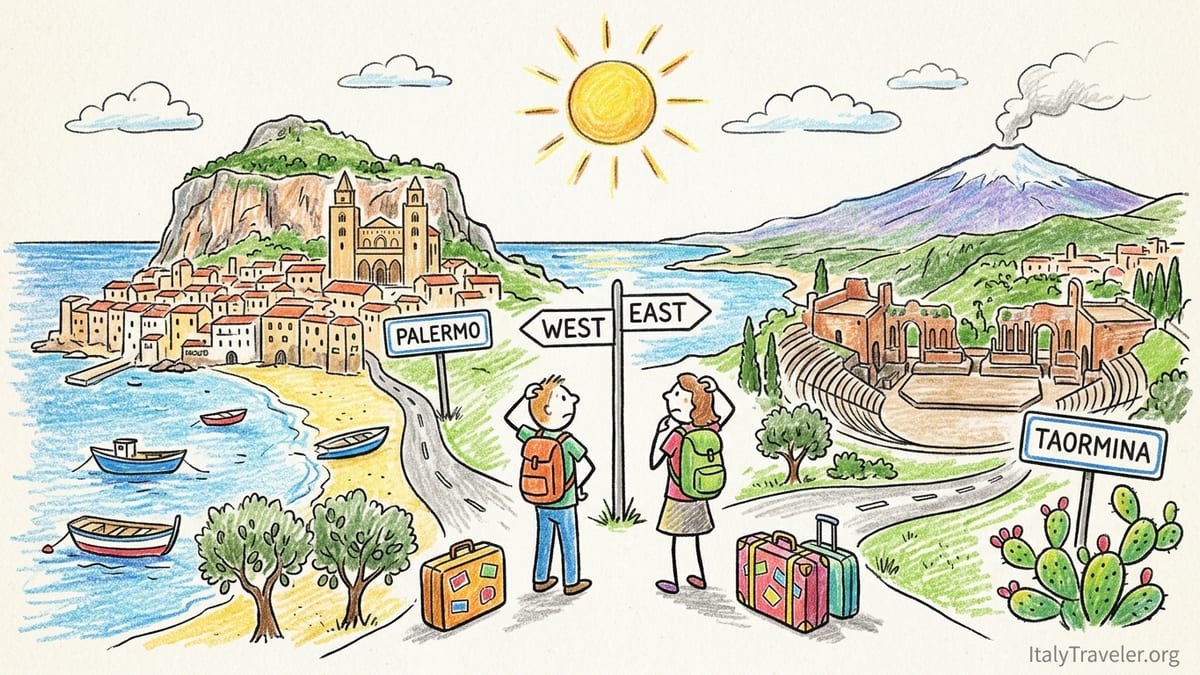
The first decision is whether you want one base for the whole trip or to split your time between western and eastern Sicily. For a short visit of three to four nights, a single base such as Palermo, Catania or Taormina usually makes sense so you spend more time exploring and less time packing and driving. For a week or longer, dividing your stay, for example three nights around Palermo and four nights around Catania or Taormina, gives you a better balance of culture, coastline and countryside.
Driving conditions matter. Historical centers like Palermo, Catania, Taormina and Ortigia have restricted traffic zones and narrow streets where parking is limited or paid. If you plan to rent a car, staying just outside old towns or in areas with hotel garages can save time and stress. For travelers relying on trains and buses, bases on the main rail line such as Palermo, Cefalù, Catania, Taormina-Giardini and Syracuse work particularly well.
Budget is the other major factor. High-end icons like Grand Hotel Timeo, San Domenico Palace, Villa Igiea and Verdura Resort can run well over 1,000 dollars per night in peak summer, while independent guesthouses in inland towns and city neighborhoods often fall in the 80 to 180 dollar range for a double room with breakfast. City taxes, often a few euros per person per night, are usually paid separately in cash at check-out and are not included in quoted room rates.
Seasonality is crucial. July and August, Easter week and major events drive steep price increases in Taormina, beach towns such as Mondello, Cefalù and San Vito Lo Capo, and luxury resorts across the island. In contrast, November to March, other than Easter, often offers better availability and significantly lower prices, though some beach-focused businesses may close or operate on shorter hours.
Palermo, Mondello, Cefalù and the West Coast
Palermo is the island’s largest city and a rich cultural base, full of Baroque churches, Arab-Norman palaces and noisy markets. Staying in the historic center or around the Politeama and Via Roma area puts you within walking distance of the cathedral, Palazzo dei Normanni, the Capo market and restaurants ranging from simple arancini bars to contemporary bistros. The atmosphere is lively, gritty and authentic rather than polished resort style. Noise can be an issue around nightlife streets, but you gain easy access to public transport, including trains to Cefalù and buses toward Trapani.
As an example of the high-end city option, Villa Igiea, a Rocco Forte hotel on Palermo’s waterfront, typically lists classic rooms in the 500 to 700 US dollar range for summer dates when booked with breakfast and flexible cancellation. Recent data show breakfast included and free cancellation often up to a few days before arrival, with parking available but valet services sometimes charged separately around several tens of euros per day. Although Villa Igiea sits a short drive from the city center, it offers a quiet park-like setting, pool and sea views that appeal to honeymooners and travelers who want Palermo’s culture without staying amid the traffic and nightlife.
For beach time near the city, Mondello is Palermo’s sandy seaside suburb, with Liberty-style villas, a long shallow bay and a very local summer scene. The atmosphere is relaxed during shoulder seasons and extremely busy in July and August when locals flock to the water and beach clubs operate at full capacity. Many hotels and guesthouses sit on residential streets a few minutes’ walk from the promenade. Public buses link Mondello with central Palermo, but they can be slow in heavy traffic, so taxis or rental cars are often preferred. Street parking is competitive in high season, and many visitors choose accommodation that guarantees a space in a small private lot.
About an hour east by train from Palermo, Cefalù combines a pretty sandy beach with a medieval center under the dramatic La Rocca headland. The Norman cathedral, narrow lanes and seafront promenade make it one of Sicily’s most photogenic bases. Trains run frequently between Palermo and Cefalù, making it feasible for travelers without a car. In summer, sea views and proximity to the beach come at a premium, and parking in the old town is limited to residents or paying garages. Budget-conscious travelers often stay in simple guesthouses or apartments set a few streets inland, trading views for quieter nights and easier parking.
Continuing along the northwestern coast you reach towns such as Trapani, Castellammare del Golfo and San Vito Lo Capo. Trapani works well as a ferry and excursion hub, especially for trips to the Egadi Islands and the hill town of Erice. Its flat seafront promenade and long historic center create a pleasant, lived-in atmosphere, with seafood trattorias and wine bars rather than intense nightlife. Castellammare del Golfo is smaller and more scenic, centered on a port lined with bars and restaurants, while San Vito Lo Capo is primarily a beach resort renowned for a long white-sand bay. In July and August, San Vito’s room rates surge and parking can become difficult, with cars lining approach roads; visiting out of high season gives a quieter, more relaxed experience.
Agrigento, Verdura Resort and the Southern Coast
The southern coast offers a different feel, with wide horizons, agricultural landscapes and fewer large towns. Agrigento itself is not as charming as some other Sicilian centers, but it is the gateway to the UNESCO-listed Valley of the Temples. Many travelers choose to stay either in the modern city, where mid-range hotels and guesthouses often include breakfast and easier on-street parking, or in countryside agriturismi that provide parking, dinners made with local produce and views toward the archaeological site.
Southwest of Agrigento, Verdura Resort near Sciacca represents one of Sicily’s most comprehensive luxury escapes. Set on a large coastal estate with golf courses and private beaches, it caters to travelers who prefer to stay on-property for much of their visit. Recent pricing examples show standard rooms often starting in the mid hundreds of US dollars per night in shoulder seasons and climbing well into four figures during peak summer, particularly for suites or signature villas. Published information and recent guest reports indicate city or tourist tax charged per person per night, usually paid at check-out, and a bed and breakfast model where buffet breakfast is included in main rates while extras such as spa treatments and golf rounds are charged separately.
The atmosphere at Verdura is tranquil and resort-focused, with several restaurants, a large spa and multiple pools. This makes it an appealing base for families and couples who want a self-contained experience with extensive facilities rather than daily driving around the island. However, it is less convenient for sightseeing in multiple regions because of its relatively isolated location and the time required to reach destinations such as Palermo, Catania or Taormina.
Elsewhere along the southern coast, smaller seaside towns such as Marina di Ragusa offer apartments and mid-range hotels that cost less than Taormina or San Vito Lo Capo in high season, while still providing sandy beaches and family-friendly promenades. Parking is generally easier than along the more mountainous east coast, and many properties include free outdoor parking and simple buffet breakfasts. These bases work well for travelers more interested in relaxed days by the sea, nearby Baroque towns and local food than in iconic but more crowded destinations.
Catania, Etna Villages and Airport Hotels
Catania is Sicily’s second city and the main gateway to the island’s east, with a busy airport and good transport links. The city-center atmosphere is energetic and slightly rough around the edges, with black lava stone facades, a lively fish market and broad boulevards leading to squares like Piazza del Duomo. Staying in central Catania suits travelers who enjoy urban energy, restaurants and street life. The city’s public transport and excursion companies make it a convenient base for organized trips to Mount Etna, wine estates and nearby hill towns, which helps if you prefer not to drive the mountain roads yourself.
For those primarily visiting Etna, there is a choice between staying in Catania’s center, in one of the villages on the slopes such as Nicolosi, Linguaglossa or Zafferana Etnea, or at an airport hotel near Catania Fontanarossa. City-center hotels and guesthouses usually offer character and dining options, but parking in the old streets can be challenging. Some mid-range properties include a small private garage or arrange nearby paid parking for a daily fee, while budget guesthouses may rely on street parking where availability varies by time of day. By contrast, airport hotels often provide on-site parking and easy access to hire car offices and highways, which can save time on early flights or same-day Etna excursions, although you lose the evening atmosphere of the historic center.
Price-wise, Catania has a broad range of accommodation. Simple central guesthouses and B&Bs can often be found for under 120 US dollars per night for a double with breakfast in shoulder seasons, while smarter boutique hotels and apartments may sit in the 150 to 250 dollar range. City tax is applied per person per night, often a few euros, and may differ slightly between star categories. In villages around Mount Etna, agriturismi and wine resorts can run from mid-range to high-end, with some properties combining rooms, breakfast, half-board dinners and tastings, which can be good value when comparing overall food costs.
When planning self-drive Etna excursions, it is important to factor in driving times and parking near the Rifugio Sapienza or cable car stations. Many visitors choose to join guided tours that include hotel pickup from Catania or Taormina, which allow them to leave cars parked safely and avoid mountain driving in unfamiliar conditions. If you stay in an Etna village, check in advance whether your hotel provides secure parking within the property or on a gated lot, as rural roads can be dark and narrow at night.
Taormina, Mazzarò and Giardini Naxos
Taormina is Sicily’s poster child, a hilltop town with sweeping views of the Ionian Sea and Mount Etna, narrow lanes lined with boutiques, and the famous ancient Greek Theatre. Staying in Taormina’s historic center means atmospheric evenings on Corso Umberto, easy access to the theatre and the cable car to the sea, and a romantic, village-like feel. The trade-off is cost and parking. Many hotels in the center have limited parking, and guests often use the municipal parking garages outside the old town walls, paying daily fees and walking or taking shuttles uphill.
Two of the island’s most renowned hotels sit in Taormina’s center. Grand Hotel Timeo, a Belmond property overlooking the theatre, is known for its terrace views and classic style. Recent booking examples show rates for a double room in high season comfortably above 2,000 US dollars per night including taxes and fees, with full breakfast and flexible cancellation conditions often available when booked on standard rates. San Domenico Palace, now managed by Four Seasons, occupies a historic monastery with cloisters and sea-facing terraces and has become even more sought-after since featuring in a major television series. Guest reports and booking engines indicate off-season nightly prices starting in the mid four figures in US dollars, climbing significantly in July, August and holiday periods, with breakfast usually included and strict cancellation policies for some promotional rates.
Below Taormina, Mazzarò is the small seaside area at the bottom of the cable car, with pebble beaches and waterfront hotels. The atmosphere here is more resort-like and relaxed, focused on sunbathing and swimming rather than evening strolls and shopping. Properties in Mazzarò often include private or semi-private beach clubs, but room prices in peak summer still reflect Taormina’s overall popularity. Parking can be easier than in the hilltop town, as several hotels have their own small garages, though spaces remain limited.
Giardini Naxos, a short distance along the bay, is another popular sea-level base. It has a longer seafront lined with a mix of hotels, apartments, pizzerias and gelaterie, and generally offers more budget-friendly options than Taormina itself. Families appreciate the flatter terrain, accessible beaches and selection of reasonably priced eateries. Trains stop at Taormina-Giardini station, from where buses or taxis run up to the hilltop town. Parking in Giardini Naxos is usually more manageable than in Taormina, especially at hotels set slightly back from the waterfront that offer courtyard or street-side spaces.
High demand during July, August and around events such as film or music festivals pushes room rates sharply upward in Taormina and the surrounding coast. A mid-range sea-view room that might cost under 200 US dollars per night in late October can sell for several times that amount in late July. Flexible cancellation policies are often stricter or more expensive in peak periods, with many properties offering non-refundable or partially refundable rates at a discount and fully flexible bookings at a premium.
Syracuse, Ortigia and the Baroque Southeast
Syracuse and its island neighborhood of Ortigia together form one of Sicily’s most rewarding bases, especially for travelers interested in history and food. Ortigia is a compact, atmospheric island of Baroque palaces, sea walls and lively piazzas, connected to mainland Syracuse by short bridges. Staying on Ortigia means you can wander to the morning food market, dine in waterfront restaurants and explore narrow lanes by foot. The ambiance is romantic and historic, but driving and parking are complicated by limited access zones and tight streets.
Many travelers face a choice between staying on Ortigia itself or on the mainland side of Syracuse. Properties on Ortigia, including boutique hotels such as Algilà Ortigia Charme Hotel, offer charm and character but often charge more per night than similar-quality options just across the bridges. Algilà, for example, is typically priced in the low to mid hundreds of US dollars per night for a double room in shoulder seasons, with breakfast included and flexible cancellation conditions available on some rates. Because much of Ortigia is pedestrian or restricted, hotels may arrange off-site parking in partner garages, sometimes for a daily fee, and guests drop luggage close to the property before moving the car. This adds a layer of logistics that some drivers find stressful, especially when arriving after dark.
Mainland Syracuse hotels and apartments, by contrast, tend to have easier access and better parking, often with on-site garages or street spaces nearby. They can also be more affordable, particularly for families needing larger rooms. The downside is that evenings lack some of Ortigia’s magic, and you may end up walking or taking short taxi rides into Ortigia for dinner. For travelers without a car, Ortigia is highly convenient, as everything is within walking distance and local buses link the island with the archaeological park, train station and newer parts of the city.
South of Syracuse, the late-Baroque towns of Noto, Modica and Ragusa form a loose cluster of beautiful hill towns recognized by UNESCO. Noto has a dignified main street of honey-colored stone, small hotels and guesthouses set in restored buildings, and a quieter atmosphere once day-trippers leave. Ragusa, with the lower town of Ragusa Ibla, offers dramatic views and intricate streets, while Modica is known for its chocolate and churches. Accommodation in this southeast corner is often good value compared with the more famous coastal resorts, with well-reviewed guesthouses and agriturismi typically charging less than similarly styled properties in Taormina or Cefalù.
Parking in Baroque hill towns can still be tight close to the historic cores, but many properties provide directions to public car parks at the town edges. Because these towns are spread out and public transport between them is limited, having a car is useful here. A seven-night stay split between Syracuse or Ortigia and a Baroque hill town works well for history-focused travelers, keeping daily driving times moderate while covering Greek, Roman and Baroque heritage.
One Base vs Split Stays and What It Costs
For a short three-night trip, most visitors are better off choosing a single base that matches their priorities. A couple arriving into Palermo who want food and culture could spend all three nights in central Palermo, perhaps at a mid-range hotel charging around 160 to 220 US dollars per night including breakfast, with city tax of a few euros per person per night added at check-out. That puts accommodation for a couple at roughly 600 to 750 dollars for three nights plus taxes. A family of four staying in a family room or adjoining doubles might expect their lodging costs to roughly double, depending on whether breakfast is included for children and how many beds are required.
On the east coast, a three-night romantic stay in Taormina can look very different. At the top end, three nights at Grand Hotel Timeo or San Domenico Palace in July for two people can easily exceed 6,000 to 7,000 US dollars inclusive of taxes, based on current high-season rates above 2,000 dollars per night. A more modest but still comfortable option might be a boutique guesthouse in Taormina or Giardini Naxos at around 250 to 350 dollars per night in July including breakfast and partially flexible cancellation. That would put a three-night stay for a couple in the 750 to 1,050 dollar range plus city tax.
For a seven-night holiday, splitting between the west and east can both enrich the experience and smooth costs. One example for a couple might be three nights in Palermo followed by four nights in Syracuse or Noto during May or October. If they choose mid-range hotels around 180 dollars per night in Palermo and 170 dollars per night in Syracuse with breakfast included, the base accommodation cost for seven nights would be just under 1,250 dollars, plus city taxes. For a family of four choosing apartment-style accommodation at 220 to 260 dollars per night in each location, seven nights might total around 1,600 to 1,800 dollars before taxes.
In contrast, a seven-night peak-summer stay entirely in Taormina or along the most popular beaches will usually cost more. Even mid-range rooms that might be 150 dollars per night in shoulder seasons can reach 300 to 400 dollars in late July, while top-tier hotels see the largest surges. Some travelers choose to spend only two or three nights in very expensive locations such as Taormina or Verdura Resort and place the rest of their nights in more economical bases like Catania, Syracuse, Noto or inland towns to balance the overall budget.
Seasonality, Events and Price Spikes
July and August bring the highest prices and fullest occupancy across most of Sicily, particularly in Taormina, Mondello, Cefalù, San Vito Lo Capo and family-friendly southern resorts. Beaches are at their busiest, daytime heat is intense, and traffic into and out of seaside towns can be heavy. Many hotels require minimum stays of several nights, and the most desirable rooms can sell out months in advance. Flexible rates during this period often cost significantly more than non-refundable options, so travelers who want the ability to cancel close to arrival should budget accordingly.
Easter is another peak period, especially in cities and towns known for processions and religious events. Prices lift across Palermo, Catania, Syracuse, Ragusa and smaller Baroque towns, with many local visitors traveling for the holiday. Availability can be tight for both hotels and car rentals. Booking well ahead gives better choice of parking-included properties and clear information on any special restrictions, such as road closures during processions that might affect arrival or departure.
Taormina experiences additional fluctuations linked to festivals, concerts and conferences. High-profile cultural events and international meetings can cause short, sharp spikes in room rates and sell-outs even outside the classic July to August window. In practice, this means that a random week in June or September can sometimes be as expensive as mid-summer if it coincides with a major gathering. Travelers with flexible dates can often save money by shifting their stay by a few days once they identify busy periods.
On the other hand, travel between late October and early spring, excluding Christmas and Easter, often brings markedly lower accommodation costs, especially in beach resorts. Some coastal properties close or operate with reduced services, and sea swimming is less appealing, but city and cultural bases such as Palermo, Catania, Syracuse and the Baroque towns remain active. During these quieter months, it is easier to find central hotels with breakfast included, late check-out and nicer room categories at prices that in summer would only buy a basic room.
The Takeaway
Choosing where to stay in Sicily starts with an honest assessment of your priorities. If you want layers of history, big markets and easy public transport, Palermo, Catania and Syracuse make strong bases. If your focus is scenic views and classic holiday atmosphere, Taormina, Cefalù and the west coast beach towns deliver, at a price. For space, relaxation and an all-in-one resort feel, properties such as Verdura Resort and country estates around Mount Etna or the Baroque southeast can be compelling, especially for families.
First-time visitors often do well with a split itinerary that includes one cultural city and one coastal or hilltop town. For example, three nights in Palermo paired with four nights in Taormina or Syracuse offers a broad sample of the island without excessive driving. Honeymooners might combine a landmark stay at Grand Hotel Timeo, San Domenico Palace, Villa Igiea or Verdura Resort with several quieter nights in Ortigia, Noto or an Etna wine estate, accepting higher nightly rates in exchange for memorable settings.
Families benefit from bases where parking is simpler, pavements are flatter and beaches are accessible, such as Giardini Naxos, Cefalù, Marina di Ragusa and the outskirts of major cities. Apartment-style accommodation or family rooms with breakfast included help control costs, and staying slightly back from the most famous postcard views usually yields better value. Solo travelers and history enthusiasts might prioritize Syracuse, Ortigia, Palermo or Ragusa, where walking, public transport and guided tours make it easy to explore without a car.
Budget travelers can keep costs reasonable by traveling outside July, August and Easter, using trains and buses between major towns, staying in inland or less famous coastal areas, and choosing independent guesthouses with breakfast and clear information on parking and city taxes. With some planning around bases and dates, Sicily can be adapted to many styles and budgets while still delivering the island’s distinctive mix of culture, landscape and food.
FAQ
Q1. Is it better to stay in Palermo or Catania for a first visit to Sicily?
For a first visit, Palermo suits travelers who want dense history, markets and a more traditional feel, while Catania works well for exploring Mount Etna and the east coast; many visitors fly into one and out of the other to see both.
Q2. Should I stay in Taormina itself or down by the sea in Mazzarò or Giardini Naxos?
Taormina’s hilltop center offers views and evening atmosphere but higher prices and trickier parking, while Mazzarò and Giardini Naxos put you by the water with easier beach access and generally better value, especially for families.
Q3. Is Ortigia a practical place to stay if I have a rental car?
Ortigia is very atmospheric but comes with limited access zones and constrained parking; many drivers prefer to stay on mainland Syracuse, where hotels often provide simpler garage or street parking and visit Ortigia on foot or by taxi.
Q4. How expensive are top luxury hotels like Grand Hotel Timeo and San Domenico Palace?
In peak months, nightly rates for two at these Taormina icons typically run well into four figures in US dollars, with breakfast included and city tax extra, and can exceed 2,000 dollars per night in some cases.
Q5. When are hotel prices in Sicily lowest?
Outside July, August, Easter and major events, particularly from late October through early spring, room rates in cities and many towns drop significantly, though some beach-focused properties may close or reduce services.
Q6. Do I need a car if I base myself in Taormina or Syracuse?
Both Taormina and Syracuse can be enjoyed without a car thanks to trains, buses and organized excursions, but a car is useful for reaching smaller villages, countryside wineries and more remote beaches beyond the main routes.
Q7. Which Sicilian areas are best for families with young children?
Giardini Naxos, Cefalù, Marina di Ragusa and some southern resorts offer accessible beaches, promenades with casual dining and accommodation with easier parking, making them practical choices for families.
Q8. How should I plan a one-week Sicily trip with two bases?
A common approach is three nights in Palermo for culture and markets, then four nights on the east coast in Taormina, Giardini Naxos, Syracuse or Ortigia, allowing you to see both sides of the island without rushing.
Q9. Are airport hotels in Catania a good idea for Etna excursions?
Airport hotels provide convenient parking and quick highway access, useful for early flights and self-drive Etna trips, but you sacrifice the dining and nightlife options of Catania’s center, which many travelers prefer for multi-night stays.
Q10. How do city taxes work at Sicilian hotels and guesthouses?
Most municipalities charge a per-person, per-night tax based on accommodation type and star rating, usually a few euros, which is added at check-out and often payable directly in cash or by card.