


Sardinia’s beaches are famous for water that looks almost unreal, but what really matters when you are planning a trip is how easy they are to reach, how safe they are for swimming, what they cost for a full day out, and whether you need to book in advance. This guide focuses on the practical side of 25 of Sardinia’s best-known beaches, grouped by region, with up to date information on access rules for 2026, parking, facilities and sea conditions so you can match the right beach to your style of travel.
How Sardinia’s Beaches Work in 2026
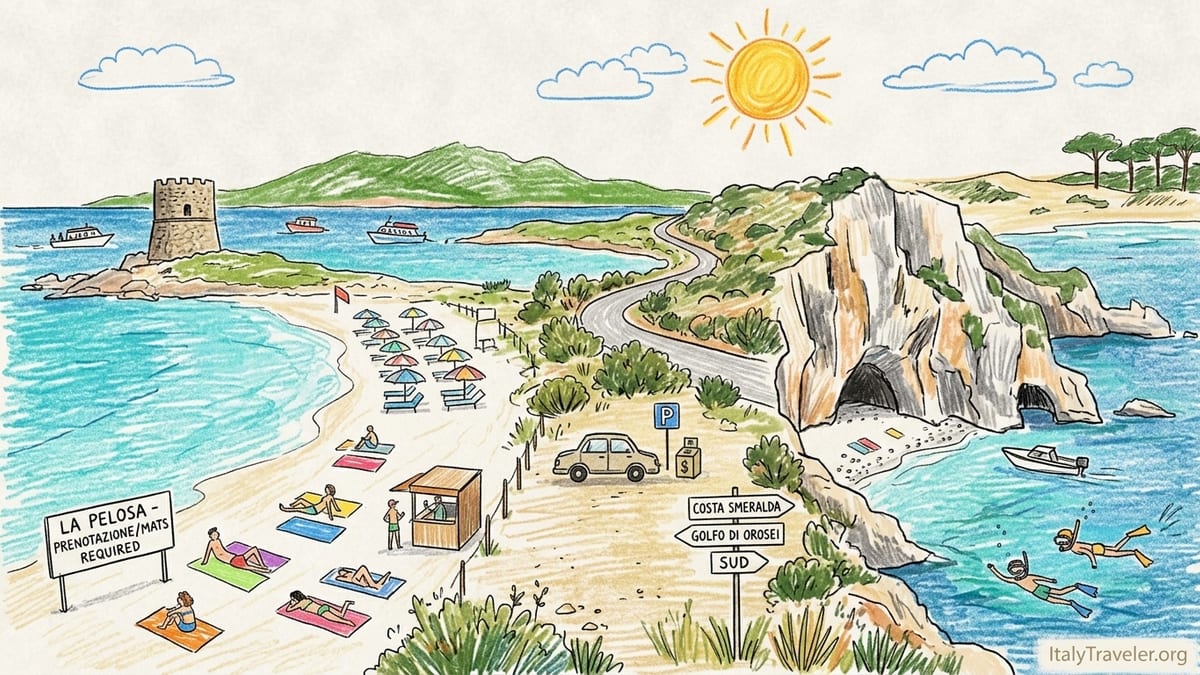
Unlike some tropical destinations where resorts control entire bays, Sardinia’s beaches are mostly public, with a mix of free areas and private concessions renting umbrellas and sunbeds. You pay to park, and you pay if you choose to rent a lounger, but you rarely pay simply to walk onto the sand. The main exceptions in 2026 are a handful of highly protected beaches with entry fees or mandatory reservations, including La Pelosa near Stintino, Cala Brandinchi and Lu Impostu near San Teodoro, and Cala Goloritzé in the Baunei area. Each uses its own system and there is no single island wide booking site.
Daily costs vary widely. On popular urban beaches such as Poetto in Cagliari, local consumer associations have reported that a family of four can easily spend over 100 euros in high season once they add together parking, two umbrellas and four sunbeds, snacks, drinks and a simple lunch. Parking alone in summer 2025 rose from around 5 euros per day to about 14 euros for roughly ten hours, while a set of two umbrellas and four beds averaged around 54 euros, with food and drinks adding 50 to 70 euros more. On quieter stretches with only a kiosk and municipal parking, a couple can still manage a full beach day with parking, one umbrella and two beds and a light lunch for roughly 60 to 80 euros if they avoid the most exclusive clubs.
Conservation rules are stricter each year. On protected beaches it is illegal to remove sand, pebbles or shells, and fines can reach several hundred euros. La Pelosa also requires visitors to place a mat under their towel so that sand does not cling to the fabric and get carried away. Plastic waste, cigarette butts and walking on fragile dunes are treated seriously, so it is important to read the boards at each access point. For most travelers, these rules do not change the experience very much, but they have significantly reduced erosion in areas that were previously overused.
Northwest Sardinia: La Pelosa, Le Saline, Rena Majore, Rena Bianca and Alghero–Bosa
La Pelosa, near Stintino, is Sardinia’s most controlled beach in 2026. From May 15 to October 15, access is capped at 1,500 people per day and every visitor over 12 needs a reservation that costs about 3.50 euros per person. The booking system splits places between a block that can be reserved well in advance and another released two days before the visit, meaning spontaneous arrivals in July and August are often turned away once the quota is full. The beach itself is a shallow, sheltered crescent of pale sand with very gradual depth, ideal for families and weak swimmers. The seabed is sandy, with few rocks, so snorkeling is limited but the water clarity is exceptional. Facilities include toilets, showers, lifeguards and kiosks, and there is a dense band of accommodation in Stintino, where many hotels and apartments advertise walking distance access. Parking in high season can reach around 2 to 3 euros per hour in the closest lots, and the surrounding streets are heavily regulated.
Le Saline, a few minutes away by car, is the practical alternative when La Pelosa is booked out or feels too crowded. The beach is longer, slightly coarser and mixed with small pebbles, and it is more exposed to the mistral wind, which can bring stronger waves and chop. That makes it less ideal for toddlers on rough days but more appealing for confident swimmers who enjoy body surfing or just a stronger sea. Parking is usually easier and cheaper, and several sections remain largely free of tightly packed umbrellas. Services are simpler, with seasonal kiosks, basic showers and some mobile vendors. Many travelers choose to stay in Stintino and alternate between La Pelosa reservations and flexible days at Le Saline.
Further west, Rena Majore, north of Santa Teresa Gallura, is a large bay framed by rock formations and low dunes. The sand is medium grain, soft enough for bare feet but heavy enough that mistral winds do not blow it far inland. Depth increases moderately, so after a few steps the water is waist to chest deep, which suits competent swimmers and older children. A summer parking lot above the dunes charges a daily fee, often around 7 to 10 euros in recent seasons, and there is a short sandy path down to the beach that is manageable even with beach carts. Facilities concentrate near the main entrance, where a kiosk offers simple lunches, sunbed rentals and restrooms. Accommodation is mostly in small holiday villages and scattered villas nearby, with more options in Santa Teresa and Palau within a 30 to 40 minute drive.
Rena Bianca, on the edge of Santa Teresa itself, offers finer white sand and views toward Corsica. The main town beach shelves gently with a sandy seabed, which makes it one of the better options for families without a car who want to stay in a walkable village. In summer the central section is lined with sunbed concessions, but there are still free areas at the edges. Parking around the town can be competitive in August, but visitors who rent an apartment nearby often treat Rena Bianca as their morning swim spot before driving out to quieter coves in the afternoon. Exposure to mistral winds is moderate; on strong wind days you may find small waves but the bay retains some shelter compared with completely open stretches.
Near Alghero and along the road to Bosa you will find several beaches that are less internationally famous but very practical if you are based in the city. Maria Pia offers a long arch of pale sand backed by dunes and a pine forest that provides natural shade, with shallow water that is friendly for children. Parking includes paid lots plus some free roadside options if you arrive early, and there are plenty of kiosks and rentable sunbeds. Further south along the panoramic coastal road toward Bosa, beaches such as Spiaggia di Porto Ferro and small coves below the cliffs combine coarse sand or pebbles with deeper water and excellent snorkeling on calm days. Access is usually by paved road with short paths, although you should expect uneven steps in the wildest spots.
Costa Smeralda and Gallura: From Spiaggia del Principe to Cala Brandinchi
Costa Smeralda is best known for its glamorous reputation, but from a practical standpoint it offers some of the most consistently sheltered and swimmable beaches on the island. Spiaggia del Principe, near Porto Cervo, is a compact bay of fine sand and shallow turquoise water ringed by pink granite rocks. Depth remains shallow for several meters, making it suitable for cautious swimmers, but the seabed includes rock slabs at the edges that are excellent for snorkeling with small fish. There is no development directly on the beach. Access is via an unpaved road and then a 10 to 15 minute walk down a dirt path with some steps, which can be hot in midday sun. Parking fills quickly and is usually charged per day during summer. Facilities are minimal, often limited to a seasonal food truck or vendor, so most visitors bring their own umbrellas or small sunshade tents.
Capriccioli, a short drive away, is far easier with children or older travelers. Here several small sandy coves are clustered around a headland, each with soft sand, very gradual entry and mostly sandy seabeds with some rocks at the sides. Parking is organized in a paid lot close to the beach. In July and August spaces often fill by late morning, but the walk is short and level. There are sunbed concessions, toilets, a beach bar and lifeguards. Nearby accommodation ranges from high end resorts to apartment complexes in the Porto Cervo area, and many visitors stay in inland villages such as Abbiadori to reduce costs while driving 10 to 15 minutes to the sea.
Liscia Ruja is one of the longest beaches in Costa Smeralda, with a wide arc of pale sand that allows more space even at peak times. The seabed is mostly sandy with a gentle slope, although waves can pick up when the wind blows onshore. Multiple beach clubs occupy some sections, charging higher prices for loungers and daybeds than elsewhere on the island, especially in August and during special events, while free public stretches remain in between. Access is via a network of unpaved roads; after parking in a paid lot, you walk a few minutes on flat ground. Because of its length, Liscia Ruja works well for couples who want a mix of serviced areas and quieter corners to stroll.
North of San Teodoro, Cala Brandinchi and its neighbor Lu Impostu deserve special mention because of their 2026 access controls. Both beaches are shallow, lagoon like bays with almost white sand and very clear water, particularly attractive to families with small children, as most of the inner bay remains knee to waist deep with a sandy bottom. To limit erosion and traffic, the local municipality operates a reservation system in high season, typically from June 1 to September 30. Visitors reserve a parking space rather than paying a separate entry ticket, and once the limit is reached for a given day, driving access effectively closes. There are organized sunbed rentals and small food kiosks, but parts of the shore remain free for those who bring their own gear. Accommodation is concentrated in San Teodoro and surrounding holiday villages, making these beaches realistic day trips within a 15 to 20 minute drive.
La Cinta, the main town beach of San Teodoro, offers simpler logistics. A long curve of fine sand stretches for several kilometers, with multiple access points, wide free areas and extensive shallow water that feels almost like a sandbar on calm days. Parking along the northern end is paid in summer but usually less tightly controlled than Cala Brandinchi and Lu Impostu, and you do not currently need an advance reservation to access the sand. Several beach bars rent umbrellas and beds at moderate prices compared with the exclusive Costa Smeralda clubs. For many visitors based in San Teodoro, La Cinta becomes the default option when reservation quotas at nearby coves are full.
Gulf of Orosei and Ogliastra: Berchida, Bidderosa, Cala Luna, Cala Mariolu and Cala Goloritzé
Moving down the east coast, the character of the beaches changes. North of the Gulf of Orosei, Berchida and Bidderosa are long, relatively wild stretches framed by dunes and Mediterranean scrub. Berchida features fine, pale sand and a mostly sandy seabed that deepens gradually, which keeps the water calm for swimming on days when the wind is not too strong. The access road is partly unpaved, with a paid parking area behind the dunes that may limit cars once full. Facilities are modest, usually a kiosk, some shaded picnic tables and seasonal lifeguards, so travelers often bring their own umbrellas and plenty of water. Small agriturismi and countryside guesthouses sit within a 10 to 20 minute drive inland, while the towns of Siniscola and Orosei offer a wider choice of hotels and apartments.
Bidderosa lies in a protected oasis where car numbers are capped each day to protect the pine forest and dunes. Access is via a managed gate along a forest road, and once the quota is reached, additional visitors must park farther away or return another day. The coastline includes several coves of fine sand with turquoise water, and the seabed is mostly sandy but deeper than at lagoon beaches like Cala Brandinchi, so it suits swimmers who are comfortable in chest deep water. There are basic services such as toilets and a refreshment kiosk during high season, but no dense construction. The limited parking, shade from pine trees and lack of loud beach clubs make Bidderosa popular with couples and photographers seeking quieter light at the start or end of the day.
Inside the Gulf of Orosei, access shifts prominently to hiking trails and boat excursions. Cala Luna combines a wide pebble and sand mix beach with cave like overhangs at the back that provide natural shade. The seabed is a mix of sand, stones and larger rocks, with depth increasing relatively quickly, so it is better for confident swimmers and snorkelers than for toddlers who need to stand. In summer, a regular fleet of small tour boats and cooperative run launches operates from Cala Gonone and, in some cases, from Santa Maria Navarrese, dropping passengers directly on the beach. There is also a marked hiking trail from Cala Fuili that takes experienced walkers several hours each way. A small seasonal bar and basic toilets operate behind the beach, but there are no roads or hotels on site.
Cala Mariolu is reached almost exclusively by boat tours that depart from Cala Gonone, Arbatax and Santa Maria Navarrese. The shore is covered with very small white pebbles rather than sand, which means the water stays remarkably clear but can be uncomfortable under bare feet without water shoes. The seabed deepens fairly quickly, with rocky shelves that host abundant fish, making this one of the best snorkeling spots on the coast in calm conditions. Boat tours typically include two to three hours of free time, so you do not need to worry about parking, but you must be able to board from a moving pontoon or ladder. The mistral wind affects sea conditions significantly here; if forecasts show strong northwesterly winds, captains may cancel or modify itineraries because waves can make landings unsafe.
Cala Goloritzé is the most regulated of the Orosei coves, declared a natural monument and now reachable only on foot along a marked trail from the Golgo plateau above Baunei. Authorities have introduced a daily quota managed through a booking system and an entry fee of roughly 6 to 7 euros per person in recent seasons, with children under a certain age free. Reservations are usually mandatory from spring through autumn and limit the number of people on the beach at any given time. The hike involves around 470 meters of elevation difference and typically takes one and a half to two hours each way, with sections of loose rock that require proper footwear. The beach itself is small, made of white pebbles with a very clear, quickly deepening sea and spectacular limestone spires. There are no services at the bottom: no toilets, shops or shade structures. You must carry sufficient water, snacks and sun protection, and plan your timing so that you do not need to hike back up in the dark or heat of midday.
Southern Sardinia: Chia, Porto Pino, Tuerredda, Su Giudeu, Porto Giunco and Punta Molentis
South of Cagliari, the coastline between Pula, Chia and Teulada combines fine pale sand, dunes and headlands that create a patchwork of bays with different exposures to wind. Porto Pino, on the southwestern side, is famous for its long dunes and several kilometers of soft sand. The seabed remains mostly sandy and slopes gently, which suits swimmers of mixed abilities. Access is via paved roads to large paid parking areas, followed by boardwalks over the dunes that can feel long in the heat but are largely level. Concessions with umbrellas and sunbeds are concentrated at the main entrances, while farther sections remain simpler. Nearby accommodation includes campgrounds, small hotels and holiday rentals around Sant’Anna Arresi and Teulada, at driving distances of 10 to 25 minutes.
The Chia area, closer to Cagliari, offers a cluster of beaches rather than a single bay. Su Giudeu has wide, very soft sand and shallow water near shore, backed by dunes and a coastal pond that hosts flamingos in some seasons. The beach opens widely to the south, which makes it exposed to the mistral and to southerly winds. On calm mornings, water can be clear and gentle, but by afternoon on windy days you may see moderate waves. Parking is organized in several fields and lots just behind the dunes, usually charging a daily fee that can reach 10 to 15 euros in peak summer. Facilities include seasonal kiosks, basic toilets and some sunbed rentals, while accommodation consists mainly of villas, bed and breakfasts and a few hotels scattered across the hills.
Tuerredda, halfway between Chia and Teulada, is one of the south’s most scenic but also most sought after beaches. A compact bay of fine sand with a small island offshore, it is flanked by rocky promontories that provide partial shelter. Depth increases gently, and the sandy seabed makes swimming comfortable. In recent years local authorities have experimented with limiting visitor numbers and regulating parking to reduce pressure on the dunes. Expect paid parking, intensive use of sunbed concessions in the central section, and crowded conditions in August even with controls. Many visitors stay in Chia or Teulada and time Tuerredda for early mornings or shoulder months such as June and late September.
On the opposite side of southern Sardinia, toward Villasimius, Porto Giunco is a signature double sided landscape, with fine sand facing the open sea on one side and a lagoon with flamingos on the other. The main beach has shallow entry with a sandy bottom, good for families, and is moderately sheltered from northwest winds by Capo Carbonara. A long strip of concessions offers umbrellas, sunbeds, bars and water sports rentals. Parking is in several paid lots connected by sandy tracks, and many visitors walk 10 to 15 minutes from the furthest spaces in August. Hotels, resorts and apartments in Villasimius allow some guests to reach Porto Giunco by short drives or shuttle buses.
Punta Molentis, a smaller cove further north from Villasimius, sits at the end of a narrow road with a quota controlled parking area that fills quickly in peak months. The beach consists of fine sand and light gravel, with rocky areas that produce excellent snorkeling around the headlands. The seabed deepens at a moderate rate and includes rocks, so protective footwear can be useful. There is usually a beach bar and sunbed concession, but large parts of the shore remain free. Because access is restricted mostly by the size of the parking lot rather than a full reservation platform, travelers who arrive before mid morning are more likely to find a place, while those depending on public buses find it harder to reach than Porto Giunco.
West Coast and Sinis Peninsula: Cala Domestica, Is Arutas and Beaches near Bosa
The west coast faces directly into open sea, so mistral exposure is stronger than in the east or south. This makes the beaches more dynamic and sometimes less predictable for families with small children, but highly attractive for photographers and confident swimmers who enjoy waves and dramatic cliffs. Cala Domestica, south of Buggerru, lies in a former mining area framed by steep rocky walls. The shore is mostly coarse sand and small pebbles, and the seabed deepens relatively fast. On calm summer mornings the bay can be suitable for swimming, but when strong northwest winds blow, waves and currents increase and red flags are common. Access is straightforward by paved road to a parking area behind the beach, with a short, flat walk through the remnants of mining structures. A seasonal kiosk serves food and drinks, and there are sunbed rentals, but no large resorts; most visitors base themselves in Buggerru, Iglesias or along the Costa Verde.
Further north in the Sinis Peninsula, Is Arutas is renowned for its unique sand made of quartz grains that resemble small grains of rice. This texture is comfortable to walk on but behaves differently from fine sand; it tends not to stick to skin in the same way and can roll underfoot, so some visitors prefer sandals. The seabed near shore is a mixture of quartz grains and patches of rock, and the depth increases moderately. On calm days the water is stunningly clear, but when the mistral blows, waves can be powerful and rip currents possible. Parking is provided in paid lots close to the beach, with a network of walking paths. Facilities include seasonal bars, sunbed rentals and toilets, but there are strict rules against collecting the quartz sand, backed by fines. Accommodation options center on small guesthouses and agriturismi on the peninsula, with the town of Oristano about half an hour away by car.
Between Oristano and Bosa there are several smaller coves and longer beaches that are less busy than names like La Pelosa. Around Bosa Marina, a broad sandy beach with a gently sloping seabed provides safe conditions for most swimmers, and it benefits from a river mouth that moderates waves compared with more exposed points. Facilities are typical of a small resort town, with promenades, bars, sunbed concessions and lifeguards in season. South along the scenic coastal road, smaller pull outs lead to pebble coves or mixed sand and rock beaches where snorkeling is rewarding on calm mornings. Access often involves steep steps or uneven paths from roadside laybys, so these spots suit agile visitors comfortable with basic hiking rather than travelers with strollers or limited mobility.
Mistral, Sea Conditions and Choosing the Right Beach
The mistral, a strong northwest wind, is one of the key factors that shapes the experience on Sardinia’s beaches. When it blows hard, usually after weather fronts, west facing beaches like Is Arutas and Cala Domestica can see sizable waves and powerful currents that are unsuitable for weak swimmers. North facing stretches such as La Pelosa and parts of Stintino can also become choppy, although La Pelosa’s shallow lagoon like area retains some shelter. Conversely, south and southeast facing bays such as Porto Giunco and parts of Chia can be more protected on mistral days, especially in the morning before local breezes pick up.
Sea depth and seabed composition strongly affect who will enjoy which beach. Families with toddlers and non swimmers do best at shallow, sandy bays such as La Pelosa, Capriccioli, Cala Brandinchi, Lu Impostu, La Cinta, Porto Giunco and parts of Su Giudeu, where you can walk out for many meters without suddenly losing footing. Snorkelers and confident swimmers gravitate toward rocky coves like Cala Mariolu, Cala Goloritzé, Punta Molentis and the ends of many Costa Smeralda beaches, where underwater rock formations attract fish and invertebrates. Pebble beaches like Cala Mariolu and Is Arutas require water shoes for comfort but reward visitors with excellent clarity even when the sea is slightly agitated.
Parking and services also shape the day. Managed parking near top beaches can cost from around 7 to 15 euros per day in high season, with higher prices in resort towns and lower ones in rural municipalities. Sunbed and umbrella rentals generally range from around 15 to 35 euros per day for a basic set on standard family beaches, with much higher rates in exclusive Costa Smeralda clubs that offer waiter service, music and reserved front rows. Free public sections still exist almost everywhere, but you should arrive early to secure a good patch of sand with your own umbrella. Food options range from simple panini and coffee at wooden kiosks to full seaside restaurants, particularly near urban beaches such as those around Cagliari, Alghero and Olbia.
Because Sardinia does not operate any island wide booking system, travelers must check each municipality or dedicated site separately for reservations and fees. La Pelosa uses its own platform and app with QR codes at the entrance. Cala Brandinchi, Lu Impostu, Bidderosa and some other protected areas are managed by their respective local councils, often through third party booking tools linked from municipal tourism pages. Cala Goloritzé’s hiking quota is handled through a regional or municipal booking site and sometimes by local trekking cooperatives that can secure permits as part of guided excursions. Before your trip, it is wise to identify two or three priority beaches and verify their latest rules in Italian or English so you are not surprised by closed gates or sold out quotas in July and August.
Choosing Beaches for Different Travelers and Sample 3 Day Routes
Families with young children often prefer shallow, sandy beaches near towns where parking and facilities are straightforward. La Pelosa, Capriccioli, Cala Brandinchi, Lu Impostu, La Cinta, Porto Giunco and Su Giudeu all offer gradual entry and lifeguards in high season, plus access to cafes and bathrooms. If reservations at La Pelosa or Cala Brandinchi are unavailable, alternatives include Maria Pia near Alghero, Rena Bianca in Santa Teresa or the central section of Chia’s main bays, which are less restricted but still well equipped. For a concrete example, a family based in San Teodoro might book Cala Brandinchi parking for one day, enjoy La Cinta without reservations the next, and keep Lu Impostu as a backup if the wind shifts.
Snorkelers and confident swimmers may prioritize rocky bays and boat accessible coves. Cala Mariolu, Cala Goloritzé, Cala Luna, Punta Molentis and the outer edges of Spiaggia del Principe and Capriccioli all offer rocky seabeds with good visibility and marine life. Since many of these involve either boat tours or hikes, they are better suited to travelers willing to trade convenience for scenery. Couples seeking quieter atmospheres often aim for Berchida, Bidderosa outside peak weekends, sections of Liscia Ruja away from the main beach clubs, or sunset sessions at Is Arutas and along the Bosa coast where crowds thin after day trippers leave.
For photographers, timing and orientation matter. La Pelosa and Stintino’s coastline catch beautiful soft light in the early morning before day trippers arrive, while the west coast offers dramatic sunsets over Cala Domestica and Is Arutas when weather cooperates. The double sided landscape above Porto Giunco rewards a short climb to the old tower for panoramic shots of the lagoon and sea, especially in the first or last hour of daylight. When planning photography heavy days, it makes sense to visit crowded beaches at their edges or outside the late morning peak, using midday for transfers or lunch in nearby villages rather than fighting for parking.
A three day northern route might start with a La Pelosa reservation for day one, combined with an afternoon walk around Stintino. Day two could focus on Costa Smeralda, visiting Capriccioli in the morning, Spiaggia del Principe at midday and a quieter stretch of Liscia Ruja later on. Day three could base from San Teodoro, with an early entry to Cala Brandinchi or Lu Impostu using a reserved parking slot, followed by a more flexible swim at La Cinta and an inland dinner in the old town of Posada or a local agriturismo. This itinerary balances one heavily controlled beach, one glamorous but walk accessible set of coves and one town beach with easier logistics.
In the south, a three day route could begin in Chia with Su Giudeu or a neighboring bay, exploring the dunes and staying in a local guesthouse. Day two might head west to Porto Pino for a full day among the long dunes and transparent shallow water, with a seafood dinner in Sant’Anna Arresi. Day three could shift east to Villasimius, combining a morning at Porto Giunco, an afternoon at Punta Molentis if parking is available, and a stroll through the village in the evening. Travelers based in Cagliari could adapt this plan by turning Chia, Porto Pino and Villasimius into individual day trips, checking weather forecasts each morning to decide which coastline is likely to be most sheltered from the wind.
FAQ
Q1. Do I need to book every beach in Sardinia in advance in 2026?
Most beaches remain free to access without reservations. Only a limited number, such as La Pelosa, Cala Brandinchi, Lu Impostu, Bidderosa and Cala Goloritzé, have daily caps or booking systems, each managed separately by local authorities.
Q2. How much does a typical beach day cost for two people?
Outside the most exclusive clubs, a couple can expect to spend roughly 60 to 80 euros for summer parking, one umbrella with two sunbeds and a simple lunch, though costs are lower if you bring your own shade and food.
Q3. Which Sardinia beaches are best for small children and non swimmers?
Shallow, sandy bays such as La Pelosa, Capriccioli, Cala Brandinchi, Lu Impostu, La Cinta, Porto Giunco and Su Giudeu are particularly suitable thanks to gradual depth and mostly sandy seabeds.
Q4. What should I know about hiking to Cala Goloritzé?
You must book a place under a daily quota and pay a small access fee, then hike around one and a half to two hours each way on a rocky path with 400 to 500 meters of elevation change, carrying all your water and supplies.
Q5. Are boat trips the only way to reach Cala Mariolu and Cala Luna?
Cala Mariolu is almost always reached by boat, while Cala Luna can be reached either by regular boat services from Cala Gonone or by a demanding hiking trail from Cala Fuili for those with good fitness and proper footwear.
Q6. How does the mistral wind affect beach choices?
The northwest mistral brings waves and currents to exposed west and north facing beaches, while south and southeast facing bays such as Porto Giunco and parts of Chia can stay calmer, especially in the morning.
Q7. Can I rely on public transport to visit these beaches?
Some urban and resort beaches near Cagliari, Alghero, Olbia, San Teodoro and Villasimius are served by buses in summer, but many coves, including Punta Molentis, Berchida and Cala Goloritzé’s trailhead, are far easier to reach with a car.
Q8. Are there truly quiet beaches in July and August?
Even in peak season you can find relatively quiet stretches by visiting early or late, walking a bit away from main entrances, or choosing longer, wilder beaches such as Berchida, parts of Liscia Ruja or Bosa’s smaller coves on non weekend days.
Q9. Is snorkeling good all around Sardinia?
Snorkeling is best where rocky seabeds meet clear water, such as Cala Mariolu, Cala Goloritzé, Punta Molentis and the rocky ends of many Costa Smeralda beaches, while very sandy lagoons offer fewer fish but easier swimming.
Q10. How far in advance should I book La Pelosa and Cala Brandinchi in high season?
For July and August, it is sensible to secure La Pelosa reservations as soon as your dates are fixed and to book Cala Brandinchi or Lu Impostu parking several days ahead, while also planning backup beaches nearby in case weather or quotas change.