


I thought I knew what I was paying for when I booked an opera night at the Arena di Verona. I had the 2026 festival calendar open, the seating plan zoomed in on my laptop, and the Open Ticket price table showing options from numbered stone steps at 35 euros to Platinum stalls at 300 euros. Only once I was actually sitting under the stars, on ancient stone facing a monumental Aida, did I really understand what those numbers buy you in comfort, views and memories. This is what I learned, step by step, from researching the 2026 Opera Festival to walking back to my hotel after midnight.
Choosing the Right Night in the 2026 Opera Festival
The first surprise in planning my visit was just how busy Arena di Verona will be in 2026. Fondazione Arena has already branded it the longest season in the history of the Opera Festival, with opera, dance and special concerts stretching around the Olympic ceremonies and beyond. The official calendar for 2026 features big titles like La Traviata, Aida in at least one major production, Nabucco, La Bohème and Turandot, plus special events such as Carmina Burana and Roberto Bolle and Friends. Performances cluster from June into early September, typically starting around 9 pm so that the second half unfolds in full darkness.
I knew I wanted a classic Italian opera that matched the scale of the Roman amphitheatre. Looking at the 2026 program, Verdi’s Aida and La Traviata clearly anchor the season, appearing repeatedly across the summer. To avoid the highest prices and the densest crowds, I ruled out the very first premieres in June, when tickets cost more and the night often doubles as an opening social event for Verona. Instead, I looked at repeat dates in July, when the festival is in full flow, but the calendar offers several midweek options and a mix of productions.
Next, I cross-checked the calendar against my own travel dates on the main Arena site’s schedule tool. For every day I considered, the page listed start time, opera title and production version, for example “La Traviata” or “Aida ed. Poda.” My ideal combination became clear: a mid-season Aida by Stefano Poda, not a premiere, on a warm Friday night when the forecast suggested clear skies. It was the sort of show the Arena itself promotes as a cornerstone of the summer, but without the surcharge of an inaugural gala or Olympic ceremony night.
Once I had a target performance, the real question began: where to sit, and how much to pay, in an amphitheatre that can feel either like an open-air palace or an endurance test depending on your choice.
Making Sense of Arena Tickets, Sectors and Prices
For 2026, the Arena’s official Open Ticket price grid is blunt about how important the seating decision is. At the very top you have the 1st Sector Stalls Platinum at 300 euros for an Open Ticket, placing you in the front rows of the flat floor area near the stage, on individual upholstered chairs with backrests. Just behind come several more categories in the stalls, dropping stepwise in price: Gold at 245 euros, Silver at 210 euros and standard stalls at 180 euros. Farther back, a 2nd Sector Stalls seat starts at 150 euros, and the Tribuna sector, an elevated central block with seats and backs, lists at 135 euros on the Open Ticket tariff for 2026.
Higher up the stone curve are the three named sectors on constructed seating: Verdi, Puccini and Rossini. These are numbered seats with backrests; Verdi, closest to the stage, carries an Open Ticket price of about 130 euros, Puccini around 105 euros and Rossini around 80 euros. All three are in the historic steps but fitted with chairs. Behind them stretch the real bones of the amphitheatre: sectors 4, 5 and 6, sold simply as numbered seats on the steps. For the 2026 Opera Festival, Open Ticket prices for the 6th sector numbered steps begin at 35 euros, rising modestly for sectors 5 and 4, which are closer to the stage.
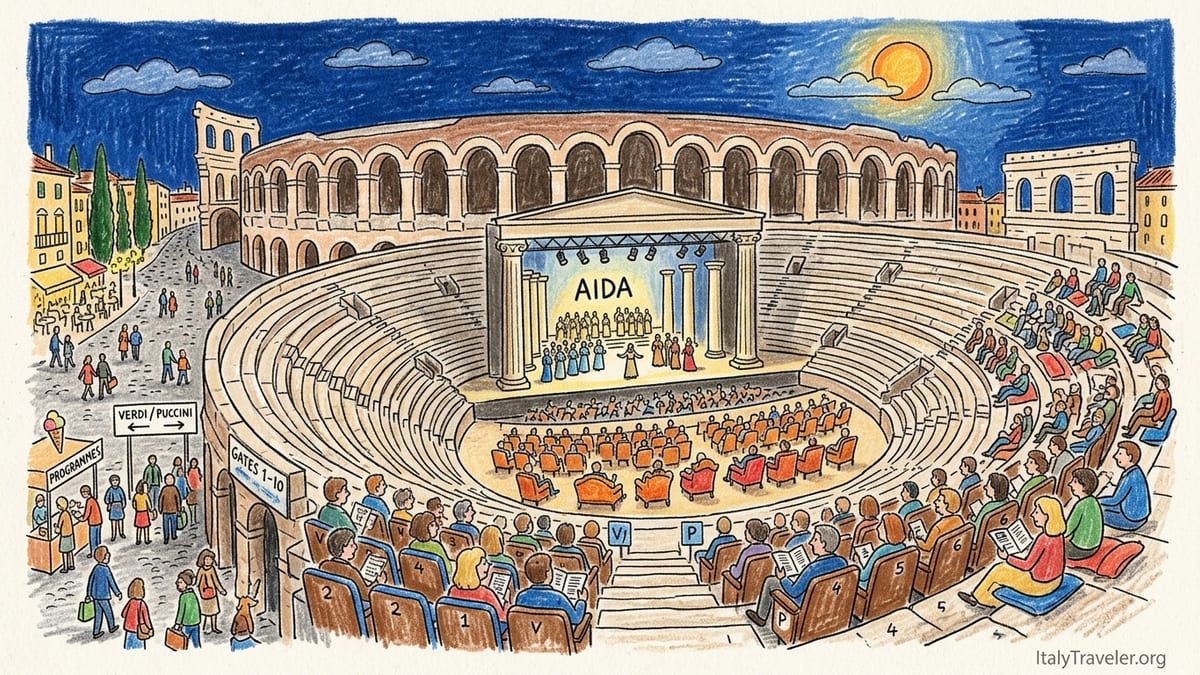
Online, the seating plan makes the trade-offs obvious if you zoom in. The rectangular stage eats into one side of the oval. Poltronissima Platinum and other stalls categories occupy the flat floor directly in front of it, divided into neat blocks. Behind them and up on the steps sit Tribuna and the Verdi, Puccini and Rossini sectors. Around the rest of the bowl, the 4th, 5th and 6th numbered steps curve away into the distance. A tiny legend confirms which colours on the map correspond to plush chairs and which to bare stone.
I briefly flirted with the cheapest option. At 35 euros for a 6th sector numbered step, you access the same performance, the same sky and the same music as someone in a 300 euro Platinum seat. In fact, on a budget, those top steps are still extraordinary value for a world-famous opera festival. But I also knew I wanted this night to be the centrepiece of my trip, not a test of my spine. That led me to a middle ground: a numbered seat with a backrest in the Verdi or Puccini sector, spending noticeably more than the steps but far less than Platinum.
Buying Tickets: Website, Open Tickets and Practical Choices
With the sector chosen, I booked directly through the Arena di Verona website. For 2026 the foundation has introduced a new registration system, and even returning visitors must create a fresh profile before purchase. The online interface lets you choose by date or by production, and then opens an interactive seating map. I selected my July Aida and clicked into the Verdi sector, where individual seats lit up with different price bands depending on the night. A central aisle seat several rows up from the front, priced in line with the Open Ticket Verdi rate, felt like the right balance of view and cost.
Along the way I debated the idea of an Open Ticket instead of a fixed-date booking. Open Tickets for the 2026 season allow you to buy a sector first and pick a date later, subject to availability, within the same category. The official tariff table shows the same 35 to 300 euro spread by sector for these flexible passes. That can be a powerful option if your travel dates are not yet set or if you want to offer a ticket as a gift. In my case, I knew exactly which performance and weekend I wanted, and some popular nights around major events were already showing limited availability, so I opted for a standard dated ticket instead.
The purchase process itself was straightforward: account creation, sector and seat selection, acceptance of the venue regulations, then payment. Shortly after, an email arrived with a print at home ticket containing a QR code and a reminder to bring a photo ID. The regulations, updated for recent seasons, emphasize that tickets must not be resold above face value and that security reserves the right to check bags on entry. It is all dry, but worth skimming, because it also clarifies rules on items such as glass bottles, umbrellas and seat cushions.
Looking back, the crucial decision was not so much the platform, but the idea of booking early. For 2026, with the extra attention generated by the Olympic ceremonies, premium sectors are already in demand. Booking well in advance meant I could choose a central Verdi-sector seat at a mid-range price instead of being pushed either up to the cheapest steps or into much higher categories through lack of choice.
Arrival, Queues and the First Impression of the Arena
On the day of the performance, the paper ticket was suddenly more real than any seating plan PDF. The printed gate number matched the directions on the Arena website: Verdi sector, even-numbered seats through one of the main side gates that serve the lower bowl. Official advice suggests arriving at least 60 to 90 minutes before curtain, and for 2026 the foundation reiterates that timing on its calendar and ticket pages, especially for premiere and gala nights with extra security.
I walked toward the amphitheatre just before 7.30 pm. Piazza Bra was already filling with people holding programs and folding cushions. The queues at each gate moved in bursts. Stewards scanned QR codes, performed bag checks and waved people through to climb the stone steps inside. There is a small but real advantage to the more expensive ground-level stalls here: some Platinum and Poltronissima sectors use their own dedicated entries, with shorter lines and less climbing, something I watched with mild envy from my place in the Verdi queue.
Inside, the transition from the dim corridor to the glowing bowl of the Arena is unforgettable. The stage, framed with monumental columns and lighting rigs, dominated one end. Technicians adjusted spotlights, the orchestra warmed up in the pit, and hundreds of early arrivals took photos on the steps. In the unnumbered years, many visitors have to rush to secure a good stone place in the general-admission sections, but in 2026 every seat in my part of the amphitheatre was numbered, which made the atmosphere calmer. I had just enough time to buy a program booklet and a bottle of water at one of the internal kiosks before checking the numbers on the risers and settling into my seat.
As daylight softened, the logic of the seating map came alive. Platinum stalls sat almost level with the performers, close enough to catch individual expressions but slightly lower than the stage. My Verdi seat rose well above them, giving a full frontal view of the entire set and the curve of the chorus. Farther up, the 4th, 5th and 6th sectors were already scattered with people spreading shawls on the stone, a reminder that the low price of those steps comes at the cost of comfort if you arrive late and must squeeze into the remaining gaps.
Stone Steps, Seat Backs and the Real Cost of Comfort
The defining physical difference between a 35 euro seat and a 300 euro one in Verona is neither exclusivity nor dress code. It is what you sit on and how long your body will tolerate it. The Arena’s cheapest places for 2026 are the numbered seats on the stone steps in sectors 4, 5 and 6. Even though they are now sold as specific seat numbers and not as a free scramble, they remain carved stone, sometimes slightly sloping, without backs or cushions. Looking across at them from my Verdi sector chair, I could see people immediately unrolling the classic Arena survival kit: a thin foam cushion rented or bought at the entrance and a scarf or light jacket used as extra padding.
My own seat in the Verdi sector came with a fixed backrest mounted on a metal frame anchored to the steps. The seat itself was unupholstered plastic, not the padded luxury of the Platinum categories, but it provided real support. Throughout the three-and-a-half hour evening, including interval, that backrest made the difference between occasional shifting and the kind of fidgeting that breaks concentration. In the numbered-step sectors, however, you could see people stretching during every pause, adjusting cushions and leaning on neighbours’ knees for respite.
In the stalls, closer to the stage, smiles looked more relaxed. The Platinum and Gold categories include fully upholstered chairs with backs on a flat surface. There is no need for cushions, and the legroom feels generous compared with the middle amphitheatre. Yet those advantages come with trade-offs: a lower angle on the stage and, in very large productions, a slightly compressed perspective, where complex choreography or massed crowd scenes sometimes look better from the rising curve than from the first rows.
Would I have been happy on the 35 euro 6th sector stones? For a shorter concert or a cooler evening, possibly. For a full grand opera starting around 9 pm, with the second half running past midnight, probably not. The Verdi seat, often around one third the price of Platinum on Open Ticket tariff, delivered enough comfort and view that I never fixated on my body over the music. It felt like the real threshold where paying more began to add diminishing returns, especially if you do not mind climbing a few extra steps.
Weather, Dress, Acoustics and the Interval Atmosphere
Weather may matter more than price in determining your Arena experience, particularly in 2026, when the season is long and Verona summer temperatures can swing from hot afternoons to surprisingly cool nights. For my July Aida, the day peaked well above 30 degrees Celsius, which tempted many people into short sleeves and sandals. By the time the second act ended close to 11 pm, a breeze skimmed across the bowl, and you could spot those who had not read the advice to bring a light layer. Those on the stone steps, especially in the higher sectors, felt it most, perched against the open sky without the little thermal buffer you get from bodies packed in closer down below.
Dress at the Arena is varied. In the Platinum and Gold stalls sectors, men in light jackets and women in summer dresses or tailored jumpsuits were common. On the steps, visitors wore everything from neat polo shirts and linen trousers to T shirts and jeans. The official regulations restrict bulky items and umbrellas rather than policing fashion, and for 2026 the messaging is consistent: focus on practicality. What I was glad to have: a foldable jacket, a compact seat cushion (even with a chair, a bit of extra padding helps), a refillable water bottle and flat shoes for climbing the ancient steps and walking back to the hotel later.
Acoustically, the Arena rewards almost every sector. Verdi and Puccini seats benefit from a strong direct sound from the stage and orchestra pit, balanced by the natural reflection off the top of the amphitheatre. Higher up, the jumps between scenes sometimes felt more atmospheric, with chorus entries washing over the bowl. During a quiet aria, the very top steps heard more stray coughs and chair movements, but they also gained that magical sense of space when a lone voice floats out under the stars. In the stalls, you hear more detail from the pit and individual singers, but you also rely on strategic sound reinforcement to keep everything balanced.
The interval is a performance of its own. At the first long pause, the entire audience rises as if cued. In the internal corridors, small kiosks sell drinks, ice cream and snacks at prices similar to other major European cultural venues. Long lines form quickly, and the people in stalls, with their shorter route to the service areas, often reach the counters first. On the higher steps, many simply stand, stretch and admire the illuminated Roman masonry. Looking around, I noticed how many people from the cheaper numbered steps migrated toward the aisles just to stand for a while and rest their backs.
Leaving After Midnight and Weighing Whether the Price Was Worth It
The final curtain fell sometime after midnight, a typical end time for long operas in high summer. Exiting the Arena is slower than entering. Stewards open multiple gates, but tens of thousands of people stream into Piazza Bra at once. Here, location of your seat influences your exit route. Stalls and lower sectors reach street level sooner and can peel away into nearby side streets more easily. From the upper steps, you must navigate narrow staircases to the corridors and then crowd toward the main gates.
I had deliberately chosen a hotel inside the historic centre, about a ten minute walk from the Arena. That proved more valuable than any incremental upgrade between Verdi, Puccini and Platinum seats. By the time the last applause died away, taxis at the nearest ranks were in heavy demand, and ride hailing apps showed longer wait times and peak pricing. Many visitors simply strolled down Corso Porta Borsari or along the Adige. The streets felt lively but safe, with plenty of other festival goers around, yet older visitors on the steps should consider how comfortable they are with walking and standing after midnight.
Reflecting on the cost, my Verdi sector ticket sat firmly in the mid-range. It was significantly more than the 35 to 40 euro 6th sector stones and still a notable jump from the 30 euro starting price for the very back rows on some non gala nights, yet it was less than half the Platinum stalls rate. Did paying that difference improve the experience enough to justify it? For me, yes. The chair back meant I could focus on the music, the central view captured the scale of the production and the mid height position balanced detail with atmosphere.
If money were no object, I might try Platinum once, simply to witness a production from the very front, especially a more intimate opera or a gala concert where close ups matter. But for a first or only visit, especially in a long festival year like 2026, I would recommend exactly what I chose: a central seat in Verdi or Puccini. It makes full use of the unique acoustics and visuals of the amphitheatre while staying closer to the 100 euro mark than to 300, leaving budget for a good dinner beforehand or an extra night in Verona.
The Takeaway
An evening at the Arena di Verona is not just a ticket purchase. It is a chain of small decisions that shape how you will remember one of the world’s great open air theatres. Reading the 2026 festival calendar and the official seating plan before booking helped me understand the structural differences between a 35 euro numbered stone step in the 6th sector and a 300 euro 1st Sector Stalls Platinum seat. Experiencing a full night in the Verdi sector turned that theory into lived comfort.
Looking back, the key lessons are simple. Choose your opera carefully; classics like Aida and La Traviata show the Arena at its best. Book early enough that you can pick your sector rather than accept whatever is left. Invest in at least a basic seat with a backrest if you are planning to stay fully present until after midnight. Dress in layers, bring a cushion and think as carefully about how you will get back to your hotel as you do about how to get into the Arena. Those details matter just as much as the price difference between one coloured block and another on the seating map.
Most of all, remember that the Arena is an ancient Roman structure still being used for living art. From the Platinum stalls to the highest numbered steps, everyone shares the same sunset over the stone arches and the same final echo of applause under the stars. Your task is not to buy the most expensive seat, but to find the place in that bowl where the trade off between view, comfort and budget feels right for you. In 2026, with a long festival, expanded calendar and clear price tiers, the tools are all there. You simply need to decide how much those extra millimetres of padding and metres of proximity are worth for one unforgettable night.
FAQ
Q1. How far in advance should I buy Arena di Verona tickets for the 2026 Opera Festival
For popular titles like Aida, La Traviata or special events such as Roberto Bolle and Friends, it is sensible to book several months ahead, especially if you want central seats in Verdi, Puccini, Rossini or the stalls. Cheaper numbered step sectors in 4, 5 and 6 may be available closer to the date, but expect limited choice on weekends and around Olympic related events.
Q2. What is the practical difference between stalls seats and numbered steps on the stone
Stalls categories, including Platinum, Gold, Silver and standard stalls, offer individual chairs with backs on a flat floor close to the stage. Verdi, Puccini and Rossini sectors provide numbered seats with backs mounted on the steps. Sectors 4, 5 and 6, sold as numbered seats on the steps, are bare stone without backs, so you will need a cushion and should be prepared for less comfort during a long opera.
Q3. Are the cheapest 6th sector seats worth considering
Yes, if budget is tight or if you simply want to experience the atmosphere of the Arena, 6th sector numbered steps starting around 35 euros for 2026 can be excellent value. You still see the full stage and hear the music clearly. The compromise is comfort and distance; you will sit on stone without a backrest, climb more steps and feel more exposed to wind or temperature changes late at night.
Q4. Is it better to sit close to the stage or higher up in the amphitheatre
It depends on what you value most. Close to the stage in Platinum or front stalls, you see faces, costumes and conductor details, and you benefit from a more intimate connection with the performers. Higher up in Verdi, Puccini, Rossini or even the numbered steps, you gain a panoramic view of the whole production and choruses, plus a stronger sense of the amphitheatre’s shape and crowd. Many repeat visitors prefer a mid height central seat for the best balance.
Q5. How does weather affect what I should wear and which sector I choose
Summer days in Verona can be very hot, but evenings, especially after midnight, may feel cool and breezy, particularly in the higher sectors. If you choose numbered steps in 4, 5 or 6, plan for more exposure to wind and bring layers. In the lower stalls and Verdi or Puccini sectors, the crowd and masonry provide some shelter, but a light jacket or shawl is still a good idea. Avoid high heels because of the steps and cobblestones around the Arena.
Q6. What time should I arrive at the Arena on performance night
For 2026, gates generally open around 90 minutes before the scheduled start time, which is often about 9 pm in high summer. Arriving roughly an hour before curtain gives you time to clear security, find your seat, buy a program or drink and acclimatise to the setting. On premiere nights or during major events tied to the Olympics, consider arriving even earlier to account for heavier security and larger crowds.
Q7. Are Open Tickets a good idea for the 2026 Opera Festival
Open Tickets for 2026 let you purchase a seat category first, from 6th sector numbered steps at 35 euros up to 1st Sector Stalls Platinum at 300 euros, and select the specific date later subject to availability. They are useful if you know you want to attend but have flexible travel dates or want to give tickets as a gift. If your dates are fixed or you are targeting a particularly popular opera or night, a standard dated ticket is safer.
Q8. Can I bring my own cushion, food or drinks into the Arena
Small seat cushions are commonly used and generally allowed, and you can also rent cushions inside. The official regulations restrict large bags, glass containers and some types of umbrellas for safety reasons. Policies on bringing food and drinks can vary, so it is best to plan on purchasing refreshments from kiosks inside the Arena and to keep any personal items compact and easy to check at security.
Q9. What is the best way to get back to my hotel after a late performance
Performances often end after midnight, when taxis and ride hailing services around Piazza Bra can be busy and operating with longer waits. Staying within walking distance inside the historic centre is ideal if your budget allows it, since the streets remain lively with other festival goers. If you are staying farther away, arrange a taxi in advance through your hotel or allow extra time after the show to secure transport from a nearby taxi rank.
Q10. If I return to Arena di Verona, which sector would I choose next time
Based on one full evening’s experience, I would choose a central seat in the Verdi or Puccini sectors again. These offer numbered seats with backs, a strong frontal view of the stage and a good balance between atmosphere and detail, at a price well below Platinum stalls. For a special occasion or a shorter gala, I might consider upgrading to the front stalls once, but for a long summer opera under the stars, the mid height amphitheatre remains my preferred compromise.