


I booked my first real thermal-hotel stay in the Euganean Hills almost on a whim. Venice in July had been beautiful but airless, and the idea of sinking into naturally warm pools with nothing more pressing than deciding between another hydromassage jet or a spritz suddenly felt essential. Abano and Montegrotto Terme are marketed as Europe’s largest thermal area, but I wanted to know what it actually feels like to live inside one of these spa hotels for a couple of days, robe on from breakfast to sunset.
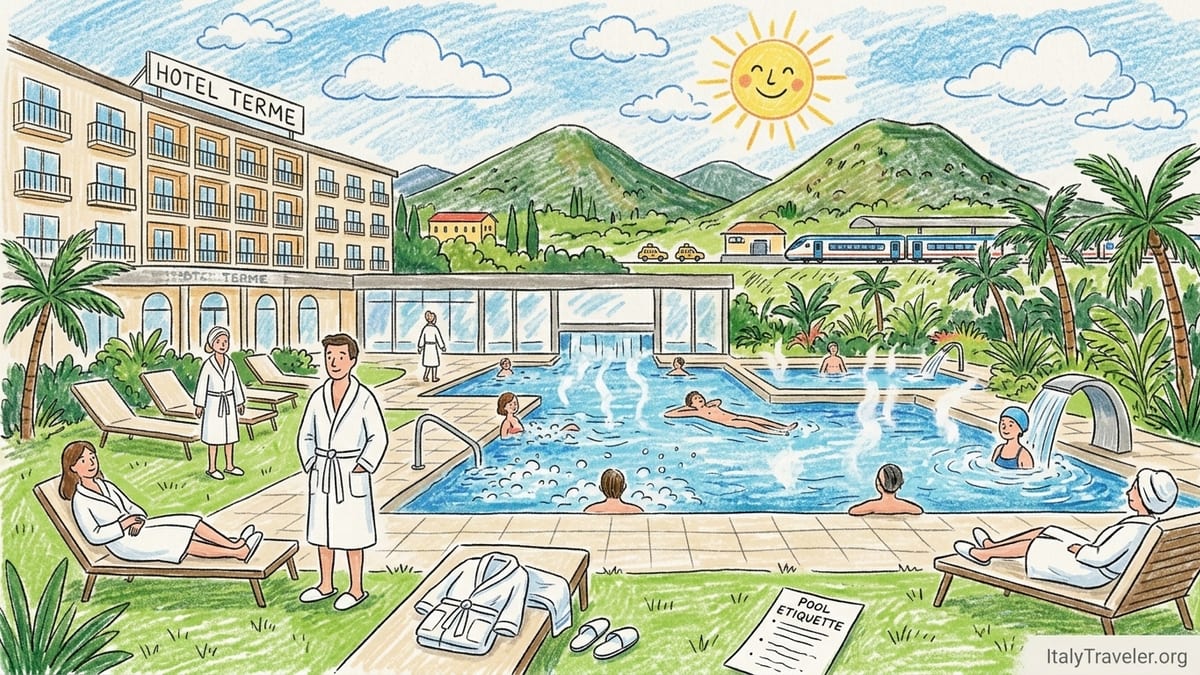
Arriving in Europe’s Largest Thermal Basin
I arrived in Abano Terme by regional train from Padua and a short taxi ride that took less than 15 minutes. As you leave the city, the Euganean Hills rise up as low volcanic cones, green even in high summer. The road into town is lined with hotel signs that repeat the same two words again and again: Terme and Spa. Abano and neighboring Montegrotto are not places where you happen upon a single spa complex. The thermal water is the entire economy. Most hotels, from modest three-stars to polished luxury properties, have their own thermal source and on-site spa department, which is why staying overnight feels very different from booking a simple day pass.
My base was a mid-range four-star spa hotel a few minutes’ walk from Abano’s pedestrian center, comparable in style and pricing to properties like Hotel Firenze Terme, where access to indoor and outdoor thermal pools at roughly 33 to 35 degrees Celsius is included for overnight guests. The taxi dropped me under a portico that smelled faintly of chlorine and eucalyptus, a scent I would come to associate with the entire stay. This was not a design-forward urban spa meant for an hour between meetings. It felt more like a slightly old-fashioned seaside resort, except the sea had been replaced by steaming blue water and the guests padded around in white robes instead of sundresses.
Check-in set the tone. The front desk staff switched easily between Italian, German, and English. Along with the room key and a printout of meal times, I received a one-page “thermal etiquette” sheet explaining pool rules, suggested shower temperatures, and which areas required a cap. The receptionist pointed out the spa desk hours and explained that mud treatments, massages, and medical consultations could still be booked for the following day, subject to availability. There was no perfunctory “fitness and wellness center on level minus one.” Here, the spa was the hotel’s central engine, and everything flowed around it.
Robes, Towels and the Daily Spa Uniform
The first thing I noticed in the room was not the bed or the view but the robe. It was folded on the bed with a pair of spa slippers, very similar to what other Euganean hotels list as standard spa kit for multi-day stays. In some local properties, the robe is a paid extra unless you are in higher room categories, but in my case one robe per person and a pool towel were included. The welcome note made it clear that the robe was not just for the spa wing: guests were encouraged to wear it through the lobby and bar during daytime hours, a local custom that makes first-timers feel underdressed the moment they appear in regular clothes.
In practice, this created a curious sense of intimacy with strangers. The hotel corridors were full of people in identical white cotton, all stripped of their usual markers of profession or status. At breakfast the next morning, only a minority had changed back into streetwear. Most moved from the buffet to their tables with damp hair, bikinis hidden under robes, flip-flops squeaking on the tile. After the first slightly self-conscious walk from my room to the pool, I stopped thinking about it. The robe became a second skin and a visual reminder that the entire purpose of the stay was to slow down.
Pool towels worked on a simple exchange system. On arrival I found one in the room; when it was wet, I could bring it to the spa reception and swap it for a dry one once per day. Extra towels or more frequent changes cost a few euros, which kept most guests from cluttering loungers with stacks of unused linen. Swim caps, required in some thermal pools in the area, were on sale at the spa desk for a modest cost, while basic spa slippers were included. This was utilitarian rather than luxurious, but everything felt geared to the reality that guests would be in and out of water all day, not just for an hour-long appointment.
Living Between Indoor and Outdoor Thermal Pools
The heart of my stay was the connected indoor and outdoor thermal pools, fed by deep underground water that emerges in the Euganean basin at about 80 to 90 degrees Celsius before being cooled to body-friendly temperatures. In my hotel, the main pool hovered between 33 and 35 degrees, a sweet spot where you can stay immersed for long stretches without feeling drowsy or chilled. The indoor section felt like a traditional spa hall, high-ceilinged with large windows framing the palm trees outside. Steps led into shallow areas where many of the older guests practiced slow water exercises prescribed by on-site doctors.
Through a waist-high opening, the pool extended outside into a wide basin edged with hydromassage stations. Curved benches sent bubbles up along your back and legs on a timed cycle. Neck-level jets pounded the shoulders of anyone willing to stand directly underneath. Every few meters, discreet tiles on the edge indicated functions and suggested times, usually a few minutes per station. The first afternoon I dutifully moved from one hydromassage to the next, reading the signage like a tasting flight. By day two, I had found my favorite corner, a semi-hidden bench under a small waterfall spout that hit just the right spot between my shoulder blades.
The air outside was cooler than the water, so even on a breezy evening the steam rose from the surface, catching the pink light of sunset over the Euganean Hills. Around the perimeter of the pool, a lawn with loungers and parasols acted as an extension of the spa. Some guests read under trees between sessions. Others dozed with their feet still dangling into the water. Swim lanes were limited. This was not a place for vigorous lap swimming but for long, meandering conversations punctuated by silent floating. I had anticipated that two hours in warm water would be my maximum. Instead, on both full days I found myself spending four to five hours in and around the pools, broken into generous stretches.
Inside the Spa: Treatments, Mud and Quiet Corners
Abano and Montegrotto are famous for fango-balneotherapy, a system of therapeutic mud and baths recognized by Italian health authorities. Many hotels here operate under medical supervision, and some treatments can be partially reimbursed for residents with a doctor’s prescription. I was curious but also aware that mud therapy is more clinical than glamorous. Rather than committing to a full curative cycle, which typically involves several consecutive days of mud applications and post-mud baths, I opted for a single, shorter mud experience tailored for wellness rather than medical outcomes.
The appointment started at the spa reception, where a therapist confirmed that I had no relevant contraindications and explained that the mud had been matured in dedicated basins for months with circulating thermal water, a signature of the Euganean method. The treatment room itself looked more like a physiotherapy cabin than a candlelit sanctuary. Warm mud was applied in a relatively thin layer to my back and hips, then covered with towels. The sensation was heavy but surprisingly comfortable, somewhere between a heating pad and a weighted blanket, with a distinct mineral smell. After a set exposure time, I showered off under a hand-held spray before stepping into a smaller private tub filled with the same thermal water used in the main pools, slightly cooler to avoid overtaxing the body.
I cannot speak to any long-term benefits after just one session, and the staff were careful not to promise miracle cures. What I did notice was a lingering sense of muscular softness in my lower back and shoulders for the rest of the day, a feeling I suspect was as much about enforced stillness as chemistry. Beyond mud, the spa offered a menu of massages, facials, and inhalation therapies. I added a classic 50-minute massage that, while not inexpensive, was in line with rates at similar four-star Italian spa hotels. The therapist focused on the neck and shoulders that had spent too many hours hunched over a laptop, and I left feeling looser and slightly taller, with the comforting prospect of stepping straight back into the pools rather than navigating city traffic.
Rooms, Meals and the Rhythm of an Overnight Stay
My room was not remarkable in design terms: light wood furniture, a tiled floor practical for wet feet, and a small balcony overlooking a side garden and the neighboring hotel’s steam plumes. Yet its very ordinariness suited the setting. This was a place where you spend more waking hours in water or on a lounger than you ever will at the desk. The mattress was firm, the shutters blocked the morning sun, and the air conditioning was effective without being aggressive, all of which mattered more than bold wallpaper. A compact drying rack on the balcony turned out to be the unsung hero, hosting swimsuits and towels between sessions.
Meals followed a predictable but reassuring cadence. My rate included half board, so breakfast and dinner were served in the main restaurant while lunch remained optional at the poolside bar. Breakfast was a mix of continental staples and regional touches: baskets of bread, croissants, sliced cheese and cold cuts, yogurt, fresh fruit, and a corner with soft-boiled eggs and grilled vegetables. Coffee came from the bar rather than a machine if you asked, which most Italian guests did as a matter of course. Many appeared in their spa robes, heading straight from the buffet to the pools.
Dinner felt more structured. A printed menu offered a small selection of first and second courses, usually with at least one lighter and one heartier option. Over two evenings I sampled a simple risotto with seasonal vegetables, grilled sea bream with lemon and herbs, and a classic tiramisù served in a small glass. Portions were moderate rather than lavish, perhaps intentionally so given that guests spend much of the day relatively inactive in warm water. What stood out was not culinary fireworks but the sense of being gently cared for. The same waiters reappeared at breakfast and dinner, remembering drink orders and asking if I had slept well after that extra hour in the outdoor pool.
Crowds, Atmosphere and How Long I Really Wanted to Stay
One of my biggest questions before arriving was crowding. With so many thermal hotels clustered together and day visitors coming in from Venice and Padua, I had images of packed pools and a fight for loungers. In reality, my July midweek stay felt busy but never cramped. Overnight guests form a sort of stable community, with a predictable flow: early risers claim spots by the outdoor pool before breakfast, there is a second wave around 10 a.m., and then a noticeable lull at lunchtime when many retreat to the restaurant or their rooms. The only time the indoor area felt busy was during a brief afternoon summer thunderstorm when everyone moved inside at once.
The demographic mix skewed older than a typical city spa, with many Italian and German couples in their fifties and beyond, along with a smaller number of younger pairs and solo travelers. A few multigenerational families used the cooler sections of the pool with children, though the quiet zones and spa area were clearly reserved for adults. Noise levels remained low. People chatted, but the combination of water, tiled surfaces, and soft background music kept voices subdued. There were no phones floating in plastic cases, no speaker playing competing playlists. After the overstimulation of Venice’s alleyways, the contrast was palpable.
By the second evening, I understood why so many guests book week-long packages. I had arrived thinking that one overnight would be enough. In practice, the rhythm of pool, rest, meal, and sleep only really settled in on day two. An extra night would have allowed me to explore nearby Montegrotto or take a short walk in the Euganean Hills without feeling I was sacrificing precious pool time. As it was, I left after two nights with the sensation that my body had just learned to exhale fully and was now being asked to sit upright again. If I returned, I would aim for three nights as an ideal compromise between complete immersion and realistic vacation schedules.
Day Visit Versus Overnight: What Actually Changes
Many hotels in Abano and Montegrotto sell day-access packages to their pools and spa facilities, sometimes bundled with a meal or a treatment. It is entirely possible to arrive mid-morning, spend five or six hours rotating between thermal pools, hydromassage benches, and loungers, then head back to Padua or Venice by evening. For travelers with very limited time, a day visit can still offer a welcome pause from churches and galleries. However, staying overnight changed more than I had anticipated.
The first difference was psychological. As an overnight guest with my own room just a few floors above the spa, I felt no need to maximize every minute. I could leave my book and sunscreen on the bedside table rather than guarding them on a lounger. When I felt slightly dehydrated or overheated, I simply returned to my room, took a cool shower, stretched on the bed, and went back later. There was no invisible meter ticking away on my wristband, reminding me that I had until 6 p.m. to extract maximum value.
The second was temporal. Thermal pools like the ones I used often stay open into the evening for guests, which means you can bathe at times day visitors rarely see. My favorite sessions were early morning, just after opening, when the water was still and the only sounds were birds in the trees, and after dinner, when the sky turned dark blue and the steam shone in the pool lights. Both moments would have been impractical without a room on-site. Those quiet hours made the hotel feel less like an attraction and more like a temporary home organized around water.
Finally, there was the cumulative effect. One long day in hot water can leave you pleasantly limp, but two or three days of shorter, repeated immersions interspersed with sleep and decent meals feel different. Even without chasing specific medical outcomes, my joints felt looser and my sleep deeper by the second night. Whether that was due to minerals, warmth, rest, or the absence of email notifications is impossible to separate, but the net result was that leaving after a single day would have cut the experience off just as it began to sink in.
Who Will Love Abano & Montegrotto’s Thermal Hotels
Abano and Montegrotto are not for everyone. Travelers seeking cutting-edge design hotels or nightlife will likely be happier in Milan or along the Adriatic coast. The architecture of many spa hotels here reflects their mid- to late-twentieth-century roots, even when interiors have been refreshed. Lobby bars serve more herbal infusions than cocktails, and entertainment tends toward live piano rather than DJs. The overall pace is slow, and the primary shared activity is moving very gently between bodies of warm water.
Where the area shines is for a few specific types of travelers. First are those genuinely interested in wellness as a daily routine rather than a quick indulgence. The local culture treats thermal bathing and, where indicated, mud therapy as part of a broader strategy for maintaining mobility and easing chronic discomfort. Guests arrive with doctor’s notes and leave after multi-day stays feeling they have invested in their bodies. You do not need a prescription or a specific condition to enjoy the pools, but it helps to appreciate that you are stepping into an established health tradition rather than a purely decorative spa.
Second are couples or solo travelers looking for a decompression stop on a wider Italian itinerary. The proximity to Padua and Venice makes it relatively easy to fit two or three nights into a longer route. I met guests who had come directly from long-haul flights and were using Abano as a way to reset their sleep and joints before tackling more ambitious sightseeing. Others extended their stay after realizing how restorative it was to have no list of must-see monuments, just the quiet choice between a morning in the pool or a gentle hike in the Euganean Hills.
Finally, the region suits travelers comfortable with a slightly retro vibe. There is charm in poolside loungers, tiled corridors, and waiters who have clearly worked the same dining room for decades. The experience feels anchored and reassuring. If your ideal spa break involves rooftop infinity pools and avant-garde tasting menus, other Italian destinations may better match that image. But if what you crave is warmth, repetition, and the simple pleasure of walking directly from your bed to mineral water without passing a single turnstile, Abano and Montegrotto deliver exactly that.
The Takeaway
My stay in Abano Terme did not involve miracle cures or dramatic revelations. Instead, it offered something quieter and in some ways rarer on a modern trip: the chance to let an entire day be structured around listening to the body. Check-in was efficient but unhurried, the robe and towel system practical rather than precious, and the thermal pools a constant, gentle backdrop rather than a one-off attraction. Meals were solid and unflashy, sleep was deep, and time blurred in a way that is difficult to manufacture in a city hotel.
Compared with a single day visit, the overnight experience felt qualitatively different, largely because it allowed the spa to become a lived-in space instead of a facility to be sampled. Small rituals emerged: an early-morning float before breakfast, one specific hydromassage bench that became “mine,” the habit of leaving wet sandals outside the door and feeling cool tile under bare feet. None of these would have solidified without at least two nights on-site.
For travelers curious about Europe’s historic thermal culture, Abano and Montegrotto offer a concentrated, accessible entry point. The Euganean Hills on the horizon, the steady temperature of the water under your skin, and the low murmur of conversation in multiple languages make it clear that this basin has been drawing people for rest and relief for a very long time. You may arrive for the novelty of bathing in naturally warm pools near Venice. If you are anything like me, you will leave already calculating how to build a slightly longer stay into your next route through northern Italy.
FAQ
Q1. Do I need to stay in a hotel to use the thermal pools in Abano and Montegrotto?
Many spa hotels offer day passes to their pools and wellness areas, but staying overnight gives you longer access hours, calmer early mornings and evenings, and the convenience of returning to your room between sessions.
Q2. What should I pack for a thermal-hotel stay in the Euganean Hills?
Bring at least two swimsuits, simple flip-flops, any preferred toiletries, and a light cover-up if you do not want to wear the hotel robe in public areas; swim caps and extra towels are often available on-site for a small fee.
Q3. Are the thermal pools very hot, and how long can I safely stay in them?
Most hotel pools in Abano and Montegrotto maintain water around 33 to 35 degrees Celsius, warm but not scalding; many guests comfortably alternate 15 to 30 minutes in the water with breaks on loungers throughout the day.
Q4. Is mud therapy mandatory, or can I just enjoy the pools?
Mud treatments are entirely optional; you can focus solely on the thermal pools and hydromassage areas, or add massages and other spa services according to your interest and comfort.
Q5. Are the thermal hotels suitable for children and families?
Policies vary by property, but many hotels welcome families in the main pools while reserving certain spa zones for adults; it is worth checking age rules in advance if you plan to travel with younger children.
Q6. How many nights are ideal for a first stay in Abano or Montegrotto?
One full day can be relaxing, but two to three nights usually allow enough time to settle into the slower rhythm, try the various pools, and possibly fit in a treatment or a short excursion nearby.
Q7. Can I combine a thermal stay with sightseeing in Venice or Padua?
Yes, both towns are within easy reach by train or car, and many travelers use Abano or Montegrotto as a restful base for day trips to Venice, Padua, or the surrounding Euganean Hills.
Q8. Do I need a medical consultation to use the spa facilities?
For basic pool access and wellness-focused treatments you typically do not, although some therapeutic mud and inhalation programs are supervised by on-site doctors and may include a brief check-up for residents following medical protocols.
Q9. What is the dress code around the hotel outside the spa area?
During the day it is common and accepted to walk through corridors and even visit the restaurant in a swimsuit covered by a robe or simple clothing; in the evening, many guests change into casual or smart-casual outfits for dinner.
Q10. Is English widely spoken in Abano and Montegrotto’s thermal hotels?
Staff in most spa hotels are used to international guests and generally speak functional English in reception, restaurant, and spa departments, so you can comfortably arrange treatments and ask practical questions.