

On paper, a full-day Amalfi Coast boat tour sounds impossibly dreamy: turquoise water, dramatic cliffs and a couple of leisurely hours in Positano and Amalfi. The reality, at least on the shared small-group tour I took in late summer 2025, was more nuanced. It was still beautiful, but it was also cramped in places, a bit rushed on shore and not always as serene as the brochure photos suggest. Here is exactly what my day on the water was like, from the departure port and boat layout to the sea conditions, swimming stops, seasickness and what I would book next time.
Choosing a Small-Group Boat Tour from Sorrento
I based myself in Sorrento, which has become a major jumping-off point for Amalfi Coast boat excursions because it is on the train line from Naples and has a busy marina at Marina Piccola. The tour I booked was a full-day small-group shared boat that promised a maximum of 12 passengers, round-trip transfers from central Sorrento hotels, two swim stops and free time in both Positano and Amalfi. That structure is now typical of many operators that run between April and October, including companies such as Lubrense Boats and Sorrento Sea Tours, which advertise similar full-day itineraries with capped group sizes of about 12 and eight-hour durations.
I booked my tour about six weeks ahead after comparing several options that all cost in the same ballpark. In summer 2025, many reputable small-group Amalfi Coast day trips from Sorrento were priced around 150 to 190 euros per person, often including drinks and a snack on board but not lunch ashore. That figure lined up closely with current listings through major resellers for 2026 dates, which still cluster in that range for eight to nine hour itineraries with two town stops and swimming. Ferries between Sorrento, Positano and Amalfi remain cheaper point to point but do not offer the same coastal cruising and swim stops.
I deliberately chose a shared tour rather than a private charter because I wanted to keep costs manageable and was curious about the group dynamic. Friends had described their small-group days as surprisingly sociable as long as passenger numbers were kept low and boats were not overloaded. Reading recent reviews of similar Sorrento-based trips, I saw repeated praise for skippers who kept commentary light and flexible, as well as a few warnings about choppy seas in the afternoon and limited shade on some boats. I went in expecting beauty, crowding on deck at peak photo moments and at least a possibility of queasy stomachs.
The tour was scheduled as an eight-hour day, typically around 9:30 a.m. to 5:30 p.m, which matches the published durations of several operators currently running along the coast. That timetable shaped everything about the experience: how long we were really on the boat, how much time we had in Positano and Amalfi, and how rushed or relaxed the day felt at different points.
Departure from Marina Piccola and First Impressions On Board
Pickup from my Sorrento guesthouse was by minibus at around 8:45 a.m., with a short drive down to Marina Piccola where hydrofoils, ferries and excursion boats all jostle for space. The port felt busy but not chaotic, with separate queues for scheduled ferries run by companies such as NLG and Alilauro and a looser cluster of small-group tour representatives holding clipboards. Our group of 12 checked in under a shaded awning, handed over passport details and walked down the concrete pier to a moored boat that immediately looked more compact than marketing photos suggested, though still comfortable.
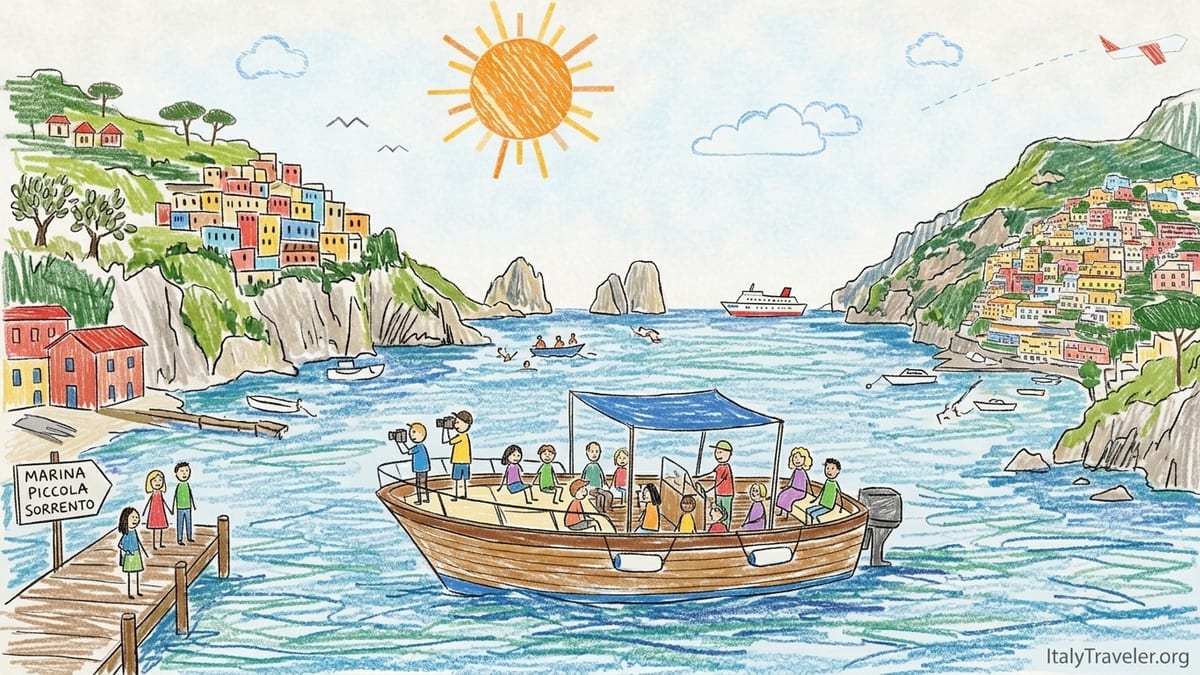
The boat itself was a traditional-style gozzo motorboat, a very common sight on the Amalfi Coast, around 9 to 10 meters long with a wooden hull, open bow sundeck, central cockpit and small covered area aft. There was one marine toilet tucked down a few steps, plus a small freshwater shower near the stern. Operators that advertise a maximum of 12 passengers in this size of gozzo are not exaggerating about the cap, but it is important to understand what 12 people actually feels like on deck. With all of us aboard, every cushion was used, and there was little spare space for spreading out bags.
Seating was bench-style along the sides and around the bow, with foam cushions and no backrests in the sunniest spots. A canvas bimini top covered roughly the rear third of the boat, providing shade for perhaps six people at a time if they squeezed together. The front half was fully exposed, ideal for photos and tanning but unforgiving by midday in August. The skipper and first mate encouraged everyone to rotate between sunny and shaded spots, but in practice the same three or four people stayed under the bimini for most of the day while others took turns at the bow rail for photos.
Once everyone was settled and lifejackets stowed within easy reach, we eased out of Marina Piccola, sliding past high-speed ferries that were loading passengers for direct runs to Capri and Amalfi. The contrast between our small gozzo and the larger catamarans and hydrofoils was immediate. We bobbed more in the wake, felt closer to the water and had unobstructed views, but we were also slower and more exposed to the wind and spray.
Along the Coast: Sea Conditions, Views and Swim Stops
The first hour out of Sorrento was the most relaxed segment of the entire day. The sea in the morning was relatively calm, with only a light swell as we rounded the Sorrentine Peninsula past Punta Campanella and headed into the stretch formally designated as the Amalfi Coast, a UNESCO World Heritage coastline known for its steep cliffs and villages like Positano and Amalfi clinging to the rock. The skipper traced the shoreline at a moderate speed, slowing occasionally near sea caves and tiny pebble coves where other small boats were already anchored.
Our first swim stop came near the Li Galli islets, a small archipelago off the coast of Positano that many operators choose for its clear, sheltered water. The captain cut the engine, dropped anchor and handed out pool noodles and simple masks for around 25 minutes of swimming. With 12 passengers, the ladder at the stern quickly became a pinch point as people climbed in and out, but the water itself felt spacious once we drifted a few meters from the boat. The sea here was a deep blue with excellent visibility, and the cliffs of the mainland framed the islands in a classic postcard view.
Back on board, the crew passed around canned soft drinks, bottles of water and a bowl of fresh cut fruit. That level of refreshment matched what many current small-group itineraries from Sorrento advertise: open soft drinks and basic snacks rather than a full lunch. Prosecco was offered later in the day for a simple toast, but there was no heavy alcohol service, which helped keep the atmosphere more low-key and, practically, reduced the risk of nausea as the swell built in the afternoon.
The second stretch along the coast, from Li Galli towards Amalfi, showcased some of the most dramatic scenery of the day. We passed above the Fjord of Furore, with its arched bridge and narrow inlet, and cruised close to Praiano’s pastel houses. At this point, the boat traffic intensified. Dozens of similar gozzi, plus private speedboats and larger tour vessels, moved in loose convoys along the same route. The sea grew choppier with wake from other craft, and those of us at the bow felt every bump. A few passengers moved aft to the shaded area to brace against the motion, which became relevant later when seasickness began to appear.
Time Ashore: How Long We Really Had in Amalfi and Positano
We reached Amalfi around late morning, joining a queue of excursion boats and ferries waiting to offload passengers at the central pier. This process alone absorbed close to 15 minutes, as the smaller vessels had to slot between ferries run by companies such as Travelmar and NLG that were loading and unloading hundreds of travelers heading to and from Salerno, Positano and Sorrento. Once secured, we were given just over an hour on land with clear instructions to be back at the same floating dock on time. That window matched the “about one hour” that many semi-private tours list today.
An hour on shore sounds generous, but Amalfi’s town center lies a short walk from the pier and the cathedral steps quickly draw crowds. By the time we had walked up to the Duomo, taken a few photos and grabbed an espresso and sfogliatella near the main square, the practical sightseeing time was already half gone. Visiting the Cloister of Paradise or exploring deeper into the backstreets would have required sacrificing a sit-down drink, and a relaxed lunch was simply not feasible. In effect, Amalfi on this tour became a snapshot rather than an in-depth visit.
Back on board, we traced the same stretch of coastline in reverse with a brief photo stop near the Furore bridge before pushing on towards Positano. Arrivals there are even more choreographed because private boats and tours must line up outside the small harbor and come in one by one to a floating pontoon. By early afternoon, the sea had become noticeably rougher, with multiple wakes crisscrossing under us, and three people on our boat started to look pale, clutching the rail as we waited our turn to disembark.
In Positano, we were given around one hour and 30 minutes, which felt marginally more generous but was still tight for anything beyond a simple wander and a quick meal. We walked up from the Spiaggia Grande past boutiques and bars, then retreated to a backstreet trattoria a few terraces above the beach, conscious of the clock the entire time. Restaurant staff near the waterfront are accustomed to boat tour passengers on a schedule, and several were upfront about waiting times when they heard we needed to be back at the pier in under 90 minutes.
Shade, Comfort and the Reality of Seasickness
As the day wore on, the limited shade and compact layout of the boat became more palpable. Only the rear third of the deck was shaded by the bimini, and that area also contained the entrance to the cabin and the cooler with drinks, which meant constant foot traffic. Passengers who felt woozy gravitated to that space, which made it harder for others to rotate in and out. Those at the bow, where the views were best, had no shade at all and were fully exposed to sun and spray.
The return leg from Positano to Sorrento in mid-afternoon highlighted how important sea conditions are to the overall experience. The same stretch of water that had been gently rolling in the morning now had a confused chop from wind and the steady parade of passing ferries and private boats. Spray regularly came over the bow, and the gozzo’s flat hull slapped against the waves. Most of us stayed seated, bracing with feet against the opposite bench. One passenger who had declined seasickness tablets at the start of the day now spent most of this segment lying flat near the stern with a wet towel on their forehead.
The crew did have motion sickness tablets on board and had casually mentioned them at the safety briefing, but the offer was made quietly and not everyone heard. In hindsight, several passengers wished they had taken them before leaving Sorrento, especially those who were not used to small-boat motion. The tour information sheet had described the tour as “not recommended for travelers prone to seasickness,” a phrase that now felt more pointed.
From a comfort perspective, the open design of the gozzo was a mixed blessing. The lack of high railings and cabin walls delivered unobstructed views and allowed the sea breeze to cool us, which mattered in August heat. At the same time, open sides meant more exposure to spray, and there was nowhere truly dry to retreat except under the bimini and partially down the cabin steps. Anyone expecting a yacht-style lounge or enclosed cabin on a small-group shared tour from Sorrento will likely be surprised by how basic, if charming, the typical setup is.
Food, Drinks and How the Day Added Up in Practice
The tour included soft drinks, water, a small bottle of beer for those who wanted it and a simple snack, in our case a platter of sliced fruit and a basket of packaged taralli biscuits. This level of provision mirrors many current small-group tours along the Amalfi Coast, which keep food offerings light and focus instead on swim time and shore visits. There was no formal lunch served on board, and passengers were explicitly told at booking that meals in Amalfi and Positano were at their own expense.
In Amalfi, we only had enough time for coffee and a pastry, which cost just under 10 euros per person at a café off the main square. In Positano, a simple lunch of a shared salad, two plates of pasta and sparkling water at a mid-range trattoria a few terraces above the Spiaggia Grande came to a little under 30 euros per person including coperto. Those prices felt consistent with the wider Amalfi Coast, where restaurants with sea views command a noticeable premium. There was no opportunity to visit one of the destination beach clubs that have drawn recent attention, such as new coastal lounges near Nerano, within the time constraints of our shared tour.
All told, the day ran close to nine hours from hotel pickup to drop-off. Of that, roughly six hours were spent physically on the boat, counting both cruising and time at anchor for swimming. We had about one hour on shore in Amalfi and one and a half hours in Positano. The remaining time disappeared into logistics: boarding, queuing for the pier, and transfers to and from the port. The ratio of boat time to town time felt tilted towards being on the water, which suited those primarily interested in scenery and swimming but left others wishing for more unhurried exploration ashore.
Financially, the experience added up quickly. Factoring in the tour fee in the 150 to 190 euro range, lunches and coffees ashore, and a modest tip for the crew, the total for the day approached 200 to 230 euros per person. In comparative terms, that was still significantly less than a private charter for a similar route, which for a full day on a similar-sized boat often runs to several hundred euros per hour, but it was considerably more than simply buying ferry tickets between the coastal towns and exploring on foot.
Would I Choose Shared Tour, Private Charter or Ferries Next Time?
After a full day on a shared gozzo, my answer is that I would make a different choice next time depending on my priorities. For a first-timer who wants to see the cliffs from the water, swim in clear coves and get a taste of both Amalfi and Positano in one day, a small-group shared tour from Sorrento still represents good value and convenience. I appreciated not having to manage separate ferry schedules, and the skipper’s local commentary brought the headlands and villages to life in a way that a simple ferry ride would not have done.
However, the experience also showed me the limits of the shared-boat format. With 12 passengers on a 9 to 10 meter vessel, personal space was minimal, shade was contested and the group’s needs always came before individual wishes. When two passengers began to feel seasick, for example, the crew quite rightly adjusted our speed to make the ride smoother, which extended travel time and clipped a few minutes from later swim and shore stops. Those traveling with children or anyone particularly sensitive to motion might find this unpredictability stressful.
For a future visit when my main goal is to explore the towns themselves in more depth, I would likely choose ferries instead of a shared tour. Regular fast ferries between Sorrento, Positano and Amalfi in 2026, run by operators such as NLG, Alilauro and Travelmar, offer journey times that often fall between 40 minutes and just over an hour on common routes, with per-leg ticket prices typically far below a full-day excursion. Using those services would allow two or three hours in each town with full flexibility to linger in a church, climb side streets or sit with a drink on a terrace without watching the clock.
If budget allowed and I wanted another day centered on the coastline itself rather than the towns, I would be tempted by a shorter private charter, perhaps a four-hour morning cruise from either Amalfi, Positano or Sorrento. Recent accounts from travelers who booked small private boats along this coast suggest that half-day charters can be worthwhile if shared between a group, granting control over pace, swim stops and shade without the intensity of a full eight-hour day. The cost per person is higher than a shared tour, but for families or close friends who prize privacy and flexibility, that trade-off can make sense.
The Takeaway
My small-group Amalfi Coast boat tour from Sorrento delivered on its big promises. I swam off the boat with the cliffs rising around me, sipped a cold drink as we drifted near Li Galli and approached both Amalfi and Positano from the sea, which remains an unforgettable way to first see those towns. The crew were professional and friendly, the boat was well maintained and the logistics, from hotel pickup to final drop-off, ran smoothly even in the height of the season.
At the same time, the day underscored how marketing language like “relaxed cruise” can gloss over realities such as limited shade, tight seating and the physicality of several hours on a small open boat in choppy afternoon seas. Seasickness affected a quarter of our group on the return leg, and the rush of shore stops left little space for serendipitous wandering. For travelers who imagine a languid seaside lunch or in-depth cathedral visit in the same day as a full coastal cruise, expectations may need adjusting.
If you primarily want to experience the coastline itself, are comfortable on small boats and understand that most of your day will be on the water rather than in the towns, a shared small-group tour like the one I took can still be an excellent choice. Pack seasickness tablets, a hat, high SPF sunscreen and plenty of patience for the boarding queues, and you are likely to come home with the kind of sea-and-cliff memories that define the Amalfi Coast at its best.
If your dream leans more towards wandering lanes, visiting churches and lingering over a meal with your feet on solid ground, then combining ferries with time ashore, or investing in a shorter, focused private charter, may align better with what you truly want from the day. In either case, going in with a clear-eyed sense of how long you will actually spend on the boat, how tight shore time can be and how the sea usually behaves in the afternoon will help transform a beautiful but demanding coastline into an experience that feels not just photogenic but genuinely enjoyable.
FAQ
Q1. How many people were actually on your Amalfi Coast boat tour, and did it feel crowded?
The boat carried 12 passengers plus two crew, which is a common maximum for small-group gozzo tours. With that many people on a 9 to 10 meter boat it felt friendly but quite tight, especially around the shaded area, and there was little spare space to stretch out.
Q2. How much time did you really get in Amalfi and Positano during the tour?
On my tour we had just over one hour in Amalfi and about one and a half hours in Positano. That was enough for a brief walk and a quick drink or meal in each town, but not enough for in-depth sightseeing or a long, relaxed lunch.
Q3. What were the sea conditions like, and did people get seasick?
In the morning the sea was fairly calm with a light swell. By mid-afternoon, after many ferries and boats had been running for hours, the water became choppy with lots of wake, and about a quarter of the group felt some degree of seasickness on the return leg to Sorrento.
Q4. Was there enough shade on the boat for everyone?
Shade was limited. A canvas bimini covered roughly the back third of the deck, with room for about six people to sit in the shade at once. The rest of the seating, particularly at the bow where the views were best, was fully exposed to the sun.
Q5. How many swimming stops did you have, and how long were they?
We had one main swim stop near the Li Galli islets that lasted around 25 minutes, plus a shorter chance to jump in on the way back that some people skipped due to afternoon chop. Climbing the ladder took time with 12 passengers, so the water time felt shorter than the schedule suggested.
Q6. Were drinks and food included, or did you have to buy everything?
The tour included bottled water, canned soft drinks, a small beer for those who wanted one and light snacks such as fruit and biscuits. Full meals in Amalfi and Positano were not included, so we paid separately for coffee and pastries in Amalfi and a simple sit-down lunch in Positano.
Q7. How suitable is a shared Amalfi Coast boat tour for someone prone to motion sickness?
If you are prone to motion sickness, a shared small-boat tour can be challenging, especially on the choppier afternoon return when you cannot choose the route or timing. Taking medication in advance, staying in the shaded rear section and focusing on the horizon can help, but using larger ferries or limiting time at sea may be more comfortable options.
Q8. Did you feel rushed during the day, or was it relaxed overall?
The cruising and swim segments felt relaxed, but time ashore in both towns felt rushed. We were conscious of the clock throughout, especially in Positano where queues for the pier and the uphill walk from the beach ate into our free time.
Q9. Would you book the same type of shared boat tour again?
For a first exposure to the coastline from the water I do not regret choosing a shared small-group tour, but next time I would be more likely to opt either for point to point ferries with longer time ashore, or a shorter private charter focused purely on coastal scenery and swimming.
Q10. What would you do differently if you planned this Amalfi Coast boat day again?
I would bring motion sickness tablets and take them before departure, wear a hat and long-sleeved top for extra sun protection, schedule a separate land-based day for deeper exploration of Amalfi and Positano, and consider a half-day private boat from one of the coastal towns instead of a full-day shared tour from Sorrento.