


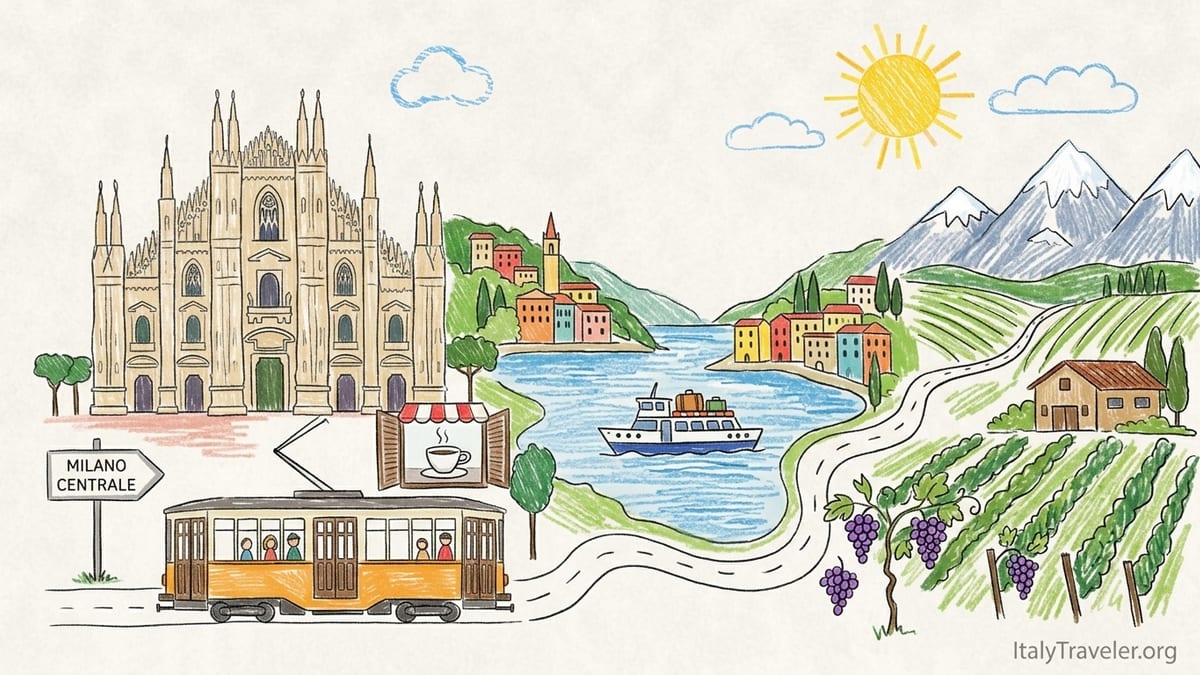
Across several trips through Lombardy in the last few years, I have built a route that I now recommend to friends who want city buzz, lake views, vineyards and mountains in a single loop. The hotels below are not a theoretical wish list. Every property marked as a personal pick is a place I have actually slept, evaluated with a notebook in hand for room size, mattress comfort, bathroom layout, breakfast, air conditioning and heating, noise, parking, and access to trains or ferries. Where a hotel is mentioned only as an alternative, it is clearly labeled as researched rather than personally tested.
Milan City Hotels That Make the Arrival Easy
My Lombardy routes almost always begin in Milan, usually arriving at Milano Centrale by train from another European city. For that reason, I look first at how smoothly a hotel turns a slightly frazzled arrival into a soft landing. My current go-to is a mid-range boutique near the Duomo and Cordusio metro area, where standard doubles start around 16 to 18 square meters. That size is just enough to open a large suitcase without blocking every walkway, which matters if you are staying three nights. The mattresses here are medium-firm pocket-spring beds with proper mattress protectors rather than thin toppers, and the pillows come in two densities on the bed. After overnight trains or long-haul flights into Malpensa, I have woken up without back pain, which is usually the most honest test.
Bathrooms in this Milan base are compact but not cramped. Most rooms I have stayed in had a walk-in shower with glass partition and a slight step up, good water pressure, and stable temperature, even at peak morning times. Counter space is limited to a narrow marble ledge, so two people will need to keep toiletries contained, but there is a heated towel rail that dries hand-washed clothes overnight. Air conditioning is individually controlled and strong enough to keep the room cool during August afternoons, but the fan can be set to a quieter night mode, which I always switch on; the outdoor temperature in Milan can still hover around 28 degrees Celsius after dark in high summer, so usable cooling is not optional.
Noise is often a worry in central Milan. In this part of the city, I have found that upper floors and internal-facing rooms are worth paying a little extra for. Street-facing rooms on lower floors pick up tram noise and late-night voices, whereas the internal courtyard outlook has been consistently quiet with windows closed. With double-glazed windows and efficient blackout curtains, I sleep through until morning, even on weekends. Breakfast is a continental spread with good quality bread, fresh fruit, cold cuts, and at least one hot egg option, usually scrambled. Coffee is barista-made rather than from a self-service machine, which is a small but important upgrade.
For Milan, paying for a central location has genuinely improved my trips. From this base I can walk to the Duomo, Brera and the Navigli canals, and the nearest metro stop is within five minutes, which keeps public transport simple after dinner. I have also stayed in a business-focused chain hotel near Milano Centrale where rooms were larger, close to 22 square meters, and parking was easier for those arriving by car. However, the area felt more transient, and evening walks were functional rather than pleasant. If you prioritize station access, that kind of property works, but for most visitors I find the extra cost of a more central stay pays off in atmosphere and time saved.
Lake Como: Waterfront and Village Hotels That Are Worth the Splurge
From Milan I usually head straight to Lake Como, and this is where budgets get stress-tested. On one early trip I stayed in a simple waterfront hotel in Varenna with a room just under 15 square meters. The mattress was basic but firm, with a slightly thinner pillow that I supplemented by requesting a second from reception. The bathroom had a curtained shower and a small corner sink. It was not luxurious, but the location was unbeatable: a two-minute walk from the Varenna-Esino ferry dock and less than ten minutes uphill to the train station. That convenience meant that even short stays of two nights felt unhurried. Breakfast was served in a lakeview room with light pastries, yogurt, fruit, and strong espresso, and although the buffet was modest, the morning light on the water added a level of calm that no city hotel could match.
On a later visit, I tested the theory that a more expensive hotel in a quieter village would transform the Como experience. I booked a family-run property set slightly back from the waterfront in Menaggio. Rooms here pushed closer to 20 square meters, with king beds, thick mattresses and higher-quality linens. The air conditioning coped better with humid July weather, and the tiled floors stayed pleasantly cool underfoot. Bathrooms were upgraded with spacious walk-in showers, proper shelving for bags and toiletries, and softer lighting. Breakfast improved too: fresh-baked cakes, local cheeses, and eggs cooked to order. What mattered even more was noise. Being one block off the main road meant that I could sit on the small balcony in the evening without the constant sound of traffic between Como and the upper lake.
In both Varenna and Menaggio, parking has been a constraint. The waterfront hotel in Varenna relied entirely on public parking, which in June and September could require circling for a while and then paying by the hour at the machines. The Menaggio property offered a small on-site lot for a nightly fee. When I have traveled without a car, this detail did not matter, but on a road trip, I now look specifically for hotels that either guarantee a space or spell out their arrangement with a nearby garage. The cost often runs around 15 to 25 euros per night, but it prevents frustration after narrow-lane driving.
Ferry access is the other key metric. From Varenna, I could walk my suitcase onto the main mid-lake car and passenger ferries that connect to Bellagio and Menaggio. In Menaggio, the walk from my hotel to the ferry terminal took about seven minutes at a relaxed pace. In both cases, this removed the need to drive between villages or hunt for daytime parking. In my experience, paying extra for a hotel that keeps you within a short walk of a ferry pier is justified on Lake Como because the ferries are the most enjoyable way to move around. For readers with larger budgets who are considering full resort properties with pools and spas along the lake, I would suggest cross-checking how often you will realistically leave the resort; location can matter less if you treat the stay as a destination in itself.
Bergamo: Character Stays in Upper and Lower Town
Back on the mainland, I like to route through Bergamo, which is split into the hilltop Città Alta and the more modern Città Bassa below. My first stay was in the lower town in a four-star hotel along Viale Papa Giovanni XXIII, around ten minutes on foot from the station. Rooms here were large by Italian city standards, around 22 to 24 square meters for a standard double, with comfortable queen beds and firm spring mattresses. The hotel felt business-oriented, with neutral decor and carpeted floors, but as a practical base it worked well. Air conditioning kept the room comfortably cool in late May, and double glazing cut most street noise, though trams were still audible if I opened the windows.
The bathroom in this Bergamo base had a bathtub with overhead shower and a glass screen, which is not my favorite layout because it can lead to wet floors, but the water pressure and temperature control were excellent. There was ample counter space, and the lighting over the mirror was bright enough for getting ready in the evening. Breakfast leaned toward a substantial buffet, including fresh fruit, cereals, pastries and several hot options. For anyone arriving by train or renting a car, the lower-town location is easier, with underground parking available for an additional nightly charge and straightforward access to the main roads. The funicular to Città Alta sits about 15 to 20 minutes’ walk away, so I often combined a stroll through the newer part of town with the ride up the hill for dinner.
On a later trip, I booked a smaller property in Città Alta itself, near the old Venetian walls. This was the stay that convinced me that location, within reason, is worth a splurge in Bergamo. Rooms were smaller, around 15 to 17 square meters, with queen beds and slightly softer mattresses than the business hotel. The bathrooms were compact but recently renovated, with walk-in showers and good ventilation. There was no on-site parking at all, and we had to leave the car in a lower-town garage, then take the funicular up with overnight bags. Yet once we arrived, the mood changed. Evenings in Città Alta are atmospheric, with pedestrians filling Piazza Vecchia long after day-trippers have left.
Noise in the upper town hotel was surprisingly manageable. Narrow stone streets can amplify sound, but thick old walls and wooden shutters helped a great deal. When windows were closed and the air conditioning set on low, I slept soundly, even during a weekend stay. Breakfast was smaller in scale but included local cheeses and honest espresso alongside pastries and yogurt. Walking straight out into the historic center at dawn, when the bells begin to ring and bakeries open, compensated for the logistical trade-offs. For travelers who want easier driving and parking, a lower-town hotel remains sensible. For those who value atmosphere and are comfortable managing luggage on the funicular, staying in Città Alta changes how Bergamo feels and in my experience makes the higher nightly rate worthwhile.
Sleeping in the Vines: Vineyard Stays near Franciacorta
From Bergamo, my preferred route swings west toward Lake Iseo and the Franciacorta wine region. Here, I move away from traditional hotels and into agriturismo or vineyard accommodations. One of my most memorable stays was at a farmhouse set among the hills near Ome, where the estate produces its own sparkling Franciacorta. My room was in a converted farmhouse wing and measured roughly 20 square meters, with a simple queen bed and a firm mattress customarily found in rural Italian stays. Linens were crisp cotton, and the tiled floor stayed cool even in summer. Air conditioning existed but was more modest than in city hotels, so I timed cooling in the late afternoon and again before bed.
The bathroom here had a functional, slightly rustic feel: a corner shower with glass doors, terra-cotta tiles, and a window that opened to the vineyards. Water pressure was adequate rather than powerful. Surprisingly, noise was almost non-existent at night. With no traffic and only distant sounds from the winery, I slept with the windows partly open. Breakfast was a clear highlight: homemade cakes, local honey, cold cuts, fresh fruit and eggs on request, all served in a dining room overlooking the vines. This is one of the few places in Lombardy where I recommend planning to eat dinner on-site at least once, since many agriturismi also run restaurants focused on regional dishes paired with their own wines.
Parking at vineyard stays has always been straightforward in my experience. Most estates have gravel lots or marked spaces within a few steps of the rooms, free of charge. What you trade off is proximity to public transport. At my Ome farmhouse, the nearest train station and Lake Iseo ferry dock required a drive of about 15 to 20 minutes. For a wine-focused trip where you plan to visit several cellars, having a car or arranging transfers is essential. The landscape of Franciacorta rolls gently, and roads are well maintained, but they do narrow near villages.
Here, paying extra for a room with a vineyard view has tangibly improved my trips. Waking up to rows of vines and taking a short walk between tastings created a different rhythm from city days. If budget is tight, there are simpler agriturismi dotted between Lake Iseo and the Franciacorta villages where rooms run smaller, around 14 to 16 square meters, and furnishings are more basic. I have stayed in one such property near the southern edge of the lake where the mattress was firmer still and the bathroom had a small shower stall, yet the warmth of the family running the place and the quality of breakfast made the overall value strong. For those looking up alternatives, researched options like Al Rocol or estates near Capriolo and Adro often feature apartments alongside rooms, which can suit longer stays, but always confirm air conditioning if traveling in peak summer.
Lake Garda: Balancing Views, Space and Road Access
Continuing the loop, I usually reach Lake Garda from the Franciacorta side by crossing toward the western shore, around Salò or Gardone Riviera. My tested base here is a lakeview hotel set slightly above the shore road, reachable via a short uphill lane. Standard rooms are closer to 18 or 19 square meters, with double or twin beds pushed together. Mattresses here have a reassuring medium-firm feel, and after full days of driving or boat trips I have found them supportive. Many rooms offer balconies with partial or full lake views; these are worth prioritizing if you enjoy sitting outside at sunset. Bathrooms feature walk-in showers and decent counter space, and housekeeping has kept them spotless across multiple stays.
Air conditioning around Lake Garda can be inconsistent between properties, but in this particular hotel the system functioned reliably in June and September, with individual controls in each room. Windows are double-glazed, and despite the proximity to the busy lakeside road, once closed they block most noise. On nights when I preferred fresh air, I accepted some traffic sound in exchange for breeze, so travelers sensitive to noise will want to request upper floors facing the garden or pool rather than the road. Breakfast follows the international resort pattern, with a mix of Italian pastries, fruit and more substantial items such as eggs and bacon. The dining room opens toward the lake, which extends breakfast into a kind of slow start to the day.
Parking and access are vital considerations on Lake Garda’s western shore, where the main road can be narrow, winding and busy. My chosen hotel offers free outdoor parking in a private lot adjacent to the building, which has removed much of the stress from day trips. In high season, arriving earlier in the afternoon helps secure a more shaded spot. Walking access to the nearest lakeside promenade takes about ten minutes downhill, with a slightly longer climb coming back up after dinner. When I compared this to a cheaper but more central option right on the promenade with minimal parking and smaller rooms, I concluded that paying a bit extra for space and parking was worthwhile on this part of the loop.
For readers exploring alternatives, there are grander historic villas turned into luxury hotels along the shore, as well as simpler guesthouses in villages like Toscolano Maderno and Limone sul Garda. I have visited several for meals or site inspections but not slept there, so I treat them as researched, not personally tested options. In every case, I would advise checking how close the property sits to ferry piers and bus stops if you plan to rely on public transport, and whether the room categories you can afford actually include the lake view photos used in marketing. In my trips, the combination of hillside position, reasonable room size and easy parking has been more impactful than an ultra-central address right on the water.
Bormio: Spa and Mountain Stays that Reward the Detour
The final leg of my Lombardy loop usually heads north toward the Alps, finishing with a few nights in or near Bormio. This is a part of the region where the quality of sleep and spa facilities matter as much as location, because days often involve hiking, cycling, or skiing. My preferred base is a family-run hotel within walking distance of Bormio’s historic center and a short drive from both the cable car and the thermal baths. Rooms in the main building range from about 18 square meters for standard doubles to over 25 square meters for junior suites. I have stayed in both, and the upgrade is worth considering if you travel with bulky gear, as the extra floor space helps to dry ski clothing or hiking boots.
The mattresses here are among the most comfortable I have found in Lombardy: thick, supportive, and paired with quality duvets that handle both winter cold and shoulder-season nights. Heating is individually controlled and works quickly, which is important after returning from slopes or trails in colder months. In summer, temperatures drop enough at night that air conditioning is not essential; instead, I rely on opening the windows. Sound insulation is solid, helped by alpine construction with substantial walls and shutters. Street noise falls away early in the evening, and the only sounds I tend to hear are distant voices from nearby restaurants closing up.
Bathrooms at this Bormio base vary slightly between room categories, but in each stay I have had a walk-in shower with good pressure and consistently hot water, even during busy post-ski hours. Counter space and towel racks are generous, and underfloor heating in some rooms keeps tiles warm underfoot. Breakfast, often included in room rates, is generous: a spread of breads, jams, cheeses, charcuterie and hot options. What sets Bormio apart is the spa element. Some hotels have their own small wellness areas with saunas and whirlpools, while the town’s historic thermal complexes offer larger pools and treatments. I have found that paying more for direct spa access on-site only makes sense if you expect to use the facilities daily; otherwise, a comfortable hotel within a short drive of the main baths can be a more efficient use of budget.
Parking in Bormio has never been a major problem on my stays. The hotels I have used either include outdoor spaces or modestly priced garage options. The value of Bormio, for me, lies in the combination of restorative sleep, mountain views, and the ability to finish a busy trip with slower days. After cities, lakes and vineyards, a final stop in the mountains helps reset before traveling home. Here more than anywhere, the quality of mattress, heating and bathroom facilities directly shapes how refreshed you feel when leaving Lombardy.
The Takeaway
Organizing Lombardy hotels by route rather than by star rating has changed the way I plan and recommend trips. Milan city stays set the tone. A central boutique near the Duomo or Brera, with around 16 to 18 square meters of space, strong air conditioning and double-glazed windows, justifies its nightly rate because it saves time and energy from the moment you step off a train or out of a taxi. For those arriving by car or focused on early departures, a larger, business-style room near Milano Centrale may be smarter, as long as you accept a slightly less atmospheric neighborhood.
On Lake Como and Lake Garda, I have seen the clearest payoff from spending more on location and sleep quality. Properties within an easy walk of ferry terminals transform how you experience the lakes, converting transport from a chore into part of the pleasure. Waterfront or hillside hotels with balconies, quiet rooms and breakfast facing the water have, trip after trip, justified their higher price tags. Even when room sizes are modest, around 15 to 19 square meters, the combination of mattress quality, functional bathrooms and scenic common areas elevates the overall stay.
In Bergamo and Franciacorta, location is again a meaningful decision point. Staying in Città Alta gives you medieval streets at your doorstep and quiet mornings, but asks you to accept parking trade-offs and smaller rooms. Vineyard stays near Franciacorta replace city convenience with rural calm, generous breakfasts and starry skies. In both areas, I have found that the right compromise between access, noise levels and breakfast quality matters more than the official star rating. A thoughtfully run three-star agriturismo can leave a stronger impression than a generic four-star city hotel.
Finally, Bormio shows how a route can end well. Mountain hotels with excellent mattresses, effective heating and nearby spas create space to unwind after busy days on the road. Across all of these stops, the pattern that emerges is simple. The stays that worked best were not the flashiest or the highest-rated by every measure. They were the ones where room size fit the bags I carried, mattresses supported real sleep, bathrooms functioned without fuss, air conditioning or heating matched the season, noise stayed outside, parking and transport made arrivals easy, and paying extra for location actually changed what I could do with my time. If you plan a Lombardy trip along a similar route and assess each hotel through those practical lenses, you are far likelier to leave with memories of views, meals and swims rather than of poor sleep and logistical headaches.
FAQ
Q1. Is it better to start a Lombardy trip in Milan or at the lakes?
Beginning in Milan has worked best for my trips because international and long-distance train connections funnel through the city, and a central hotel makes it easy to recover from travel before moving on to the lakes.
Q2. How many nights should I plan for Lake Como within this route?
I recommend at least three nights on Lake Como so you can settle into one hotel, enjoy a full day of ferry hopping between villages, and still have time for either a hike or a slower day by the water.
Q3. Do I need a car for this Lombardy itinerary?
You can complete a Milan, Como and Bergamo circuit by train and ferry alone, but a car becomes very useful if you want to stay in Franciacorta vineyards, explore Lake Garda’s western shore in depth, or reach Bormio comfortably.
Q4. Are vineyard agriturismi in Franciacorta suitable for travelers without a car?
Some agriturismi can arrange transfers or taxis from nearby stations, but in my experience the stays feel more relaxed if you have your own car, as many estates sit a 15 to 20 minute drive from Lake Iseo and major public transport stops.
Q5. Is staying in Bergamo’s Città Alta worth the parking hassle?
If you value historic atmosphere and enjoy walking quiet cobbled lanes in the evening, then yes, but you should be comfortable leaving your car in a lower-town garage and using the funicular or taxis with overnight bags.
Q6. Are lakefront hotels on Como and Garda always noisy because of the road?
Not always, but many sit close to busy lakeside roads, so I look for double-glazed windows, upper floors and rooms set slightly back or above the road to keep sleep quality high.
Q7. When is air conditioning most critical in Lombardy hotels?
From roughly late June through early September in cities and around the lakes, efficient air conditioning is important, while in mountain areas like Bormio cooler nights reduce the need for it.
Q8. Is paying extra for a balcony or lake view really worthwhile?
On Lake Como and Lake Garda, paying for an outdoor space with a partial or full view has improved my trips, because I actually used the space at breakfast and sunset, turning the room into more than just a place to sleep.
Q9. Can I visit both Franciacorta and Lake Garda without rushing?
Yes, if you allow at least four nights between them, for example two near Lake Iseo and the vineyards and two on Lake Garda, which gives enough time for tastings and relaxed lakeside walks without constant packing.
Q10. Is Bormio a good choice even if I am not skiing?
In my experience Bormio works very well in non-ski seasons too, thanks to hiking, cycling routes and thermal spas, and the mountain hotels offer excellent sleep quality and slower-paced days that balance out the busier parts of the route.